By Lenny Osler, News Editor
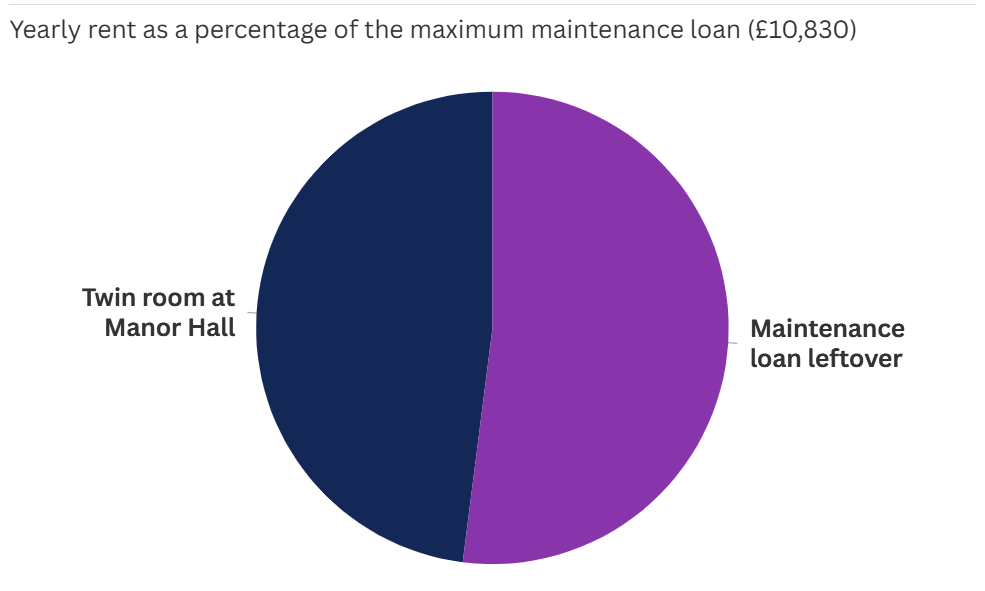
A report by Student Sterling, a student financial advice website, revealed that 40 weeks of rent at the University of Bristol’s cheapest hall of residence were equivalent to 50% of the maximum government maintenance loan.
The report compared 104 UK universities to see how far student finance can support rent costs in halls of residence.
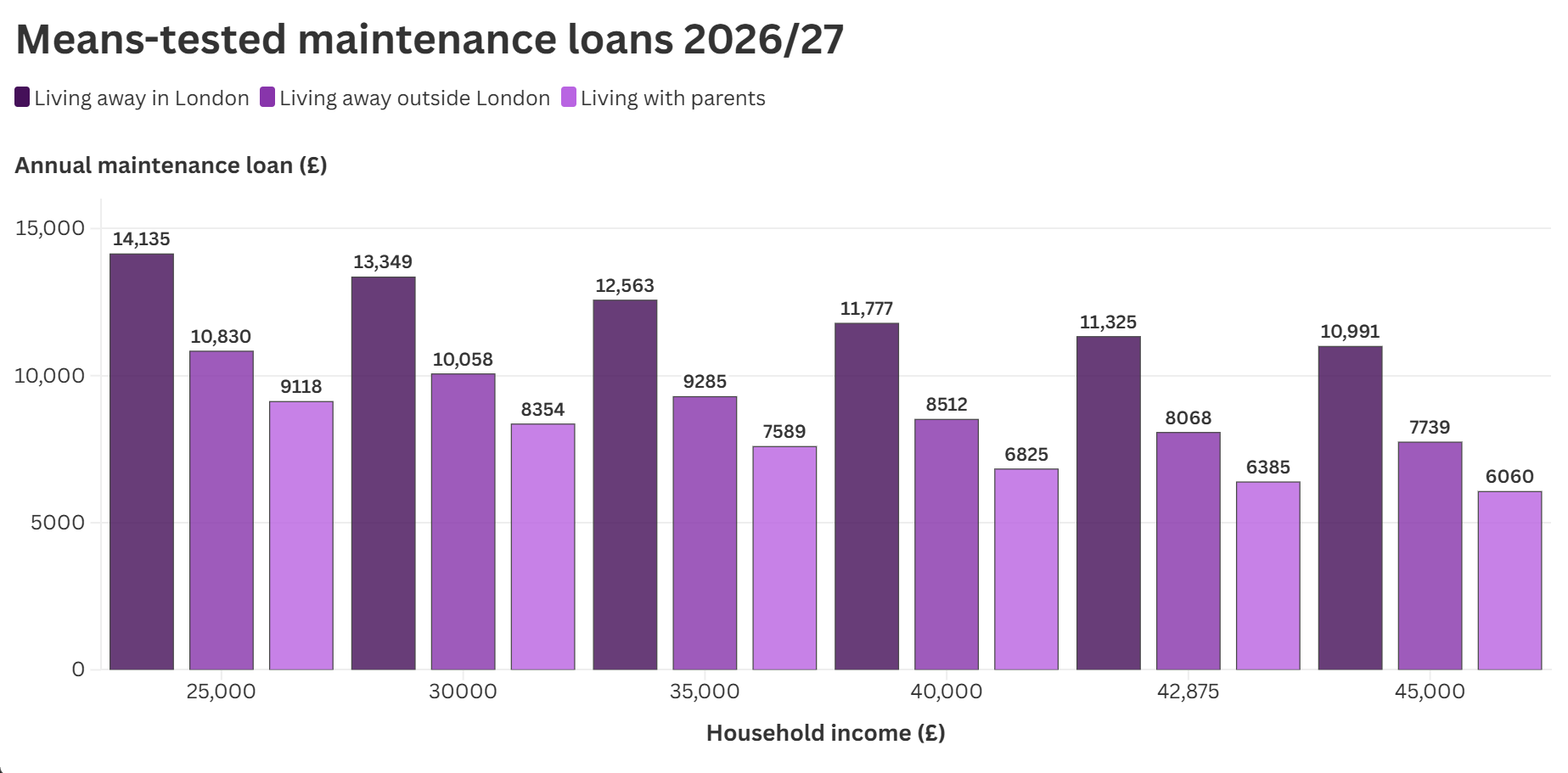
At over half of the institutions surveyed, the standard 40 weeks of rent would take between 50% and 111% of the maximum loan - which is currently £10,830 per year for students outside of London, and £14,135 in the capital.
Most students get less than the maximum, since student finance is adjusted according to household income.
Manor Hall is the University of Bristol’s cheapest accommodation, with twin rooms at £136.50 per week and £148.19 for a single bed, on 38-week contracts.
So, a twin room at Manor Hall takes just under half of the maximum yearly loan - leaving students around £134 of loan money per week for other costs.
Known as one of the more affordable accommodations, Manor Hall is consistently oversubscribed, with many applicants allocated to newer halls where covering rent through their loans is even more difficult.
Metal Works is one such accommodation. Opened in 2024, it is the University’s largest halls of residence, housing many students who were not given any of their accommodation choices - and had potentially set their budgets much lower.
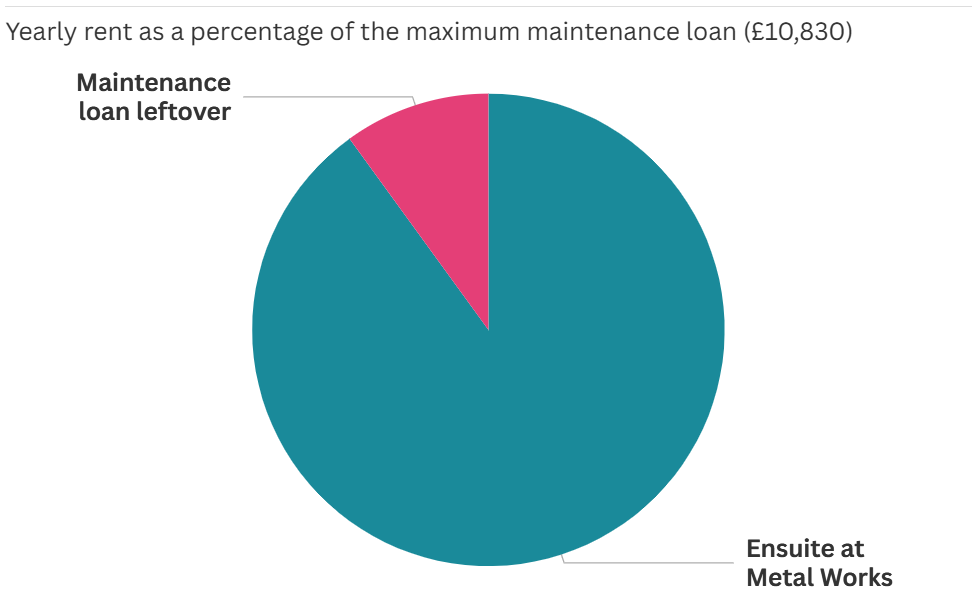
With rooms priced at £9,713.76 for 2026/27, rent at Metal Works takes almost 90% of the maximum yearly maintenance loan.
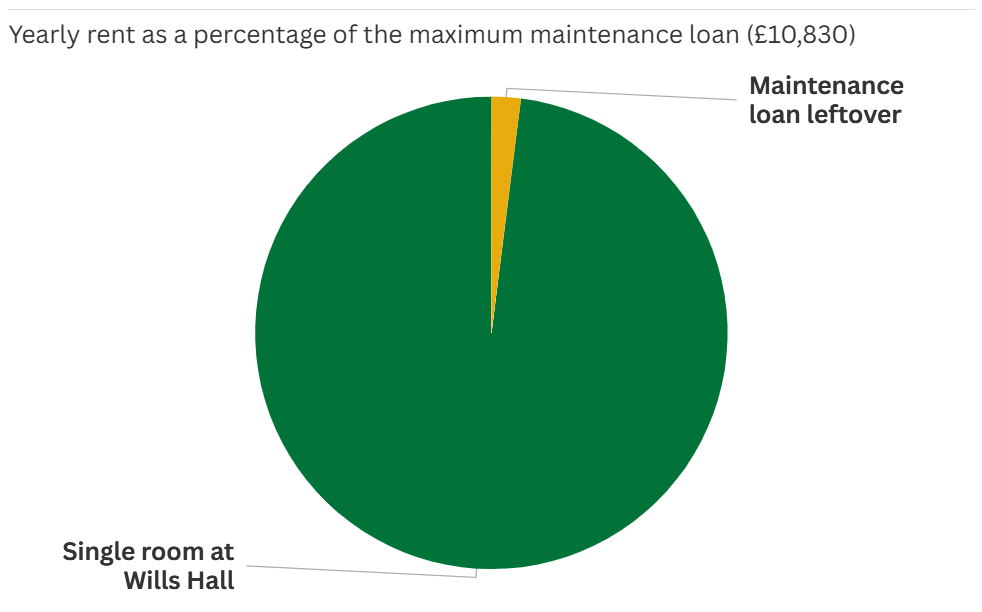
The price is even higher for residents of Wills Hall, where a single room costs £206.01 per week, and £231 for an ensuite - not including the £2,731.06 yearly catering fee.
This puts a single room, the most common lodging in Wills Hall, just shy of £10,560 per year including catering - 98% of the maximum loan.
Manor Hall’s 2-bedroom flats are the most expensive accommodation at £346 per week, or £17,646 per year. Designed for couples and families, they remain an option for mature students who, if receiving maintenance support, would pay yearly rent nearly double their loan.
Meanwhile, around half of the Russell Group universities have a ‘cheapest’ accommodation more expensive than a twin room at Manor Hall - pointing to wider lacks in maintenance support across the UK.
In last year’s budget, the government reintroduced debt-free maintenance grants to relieve pressure on students from lower-income households.
However, only students on select courses are eligible, and the maximum grant available is £3,569 - which will have varying utility for students depending on their halls of residence.
After the 2026 budget, students on Plan 5 loans (for undergraduate courses beginning after August 2023) will repay 9% of their income above the £25,000 yearly threshold, while postgraduates pay back 6% of their income above £21,000.
As Plan 5 graduates on minimum wage begin repaying maintenance loans that struggled to cover their living costs, should the government reassess its noticeably inefficient student finance provisions?
 Grace Bourne

 Megan Mitchell

Featured image: Epigram / Finley Dyer