By Grace Rose, Community Subeditor
On Monday 14th September, self proclaimed ‘Christian Pro-life Remigration activist’ known on social media as ‘Young Bob’ visited the University of Bristol Campus for the second time. Bob (whose real name has been cited as both Thomas and Gregory Moffit) is the eighteen-year-old ‘activist’ and supporter of Rupert Lowe’s hard-right party, Restore Britain. Both the party and Moffitt himself promote an unapologetic xenophobia, and take hard stances against legal rights such as abortion. Ultimately, Moffitt is a street-level campaigner perpetuating such garishly discriminatory rhetoric that makes it hard to look away. Which is, distressingly, precisely what he is dependent on.
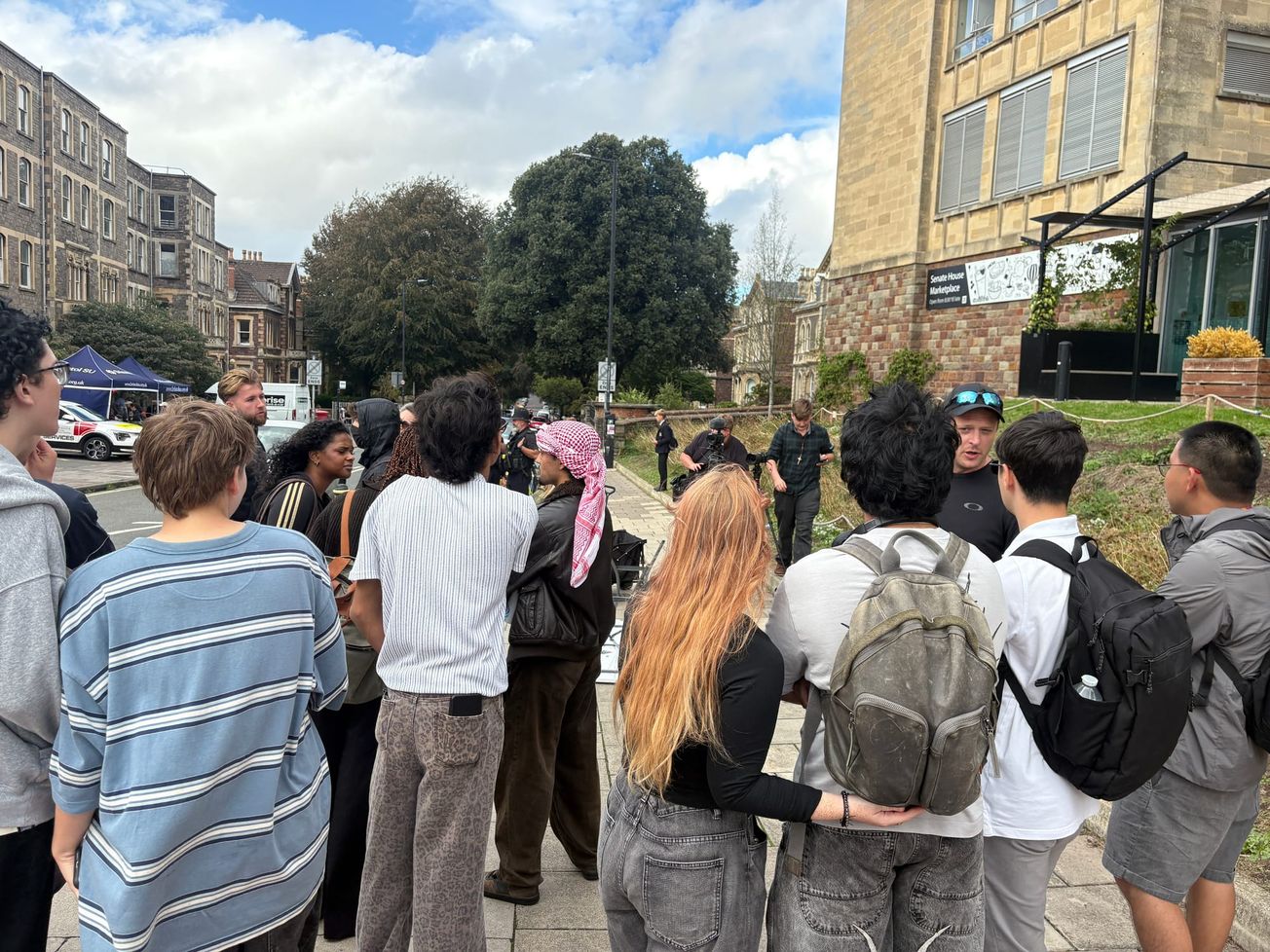
I do not want to give a wealth of space to Moffitt’s politics in a University newspaper whose city votes majority Green (and because I personally find them ludicrous), so instead will discuss what I observed of the aims of his performance. Having arrived on the scene close to the conclusion of Moffitt’s display, I got to observe close up how the social media personality presents himself when the camera is off.
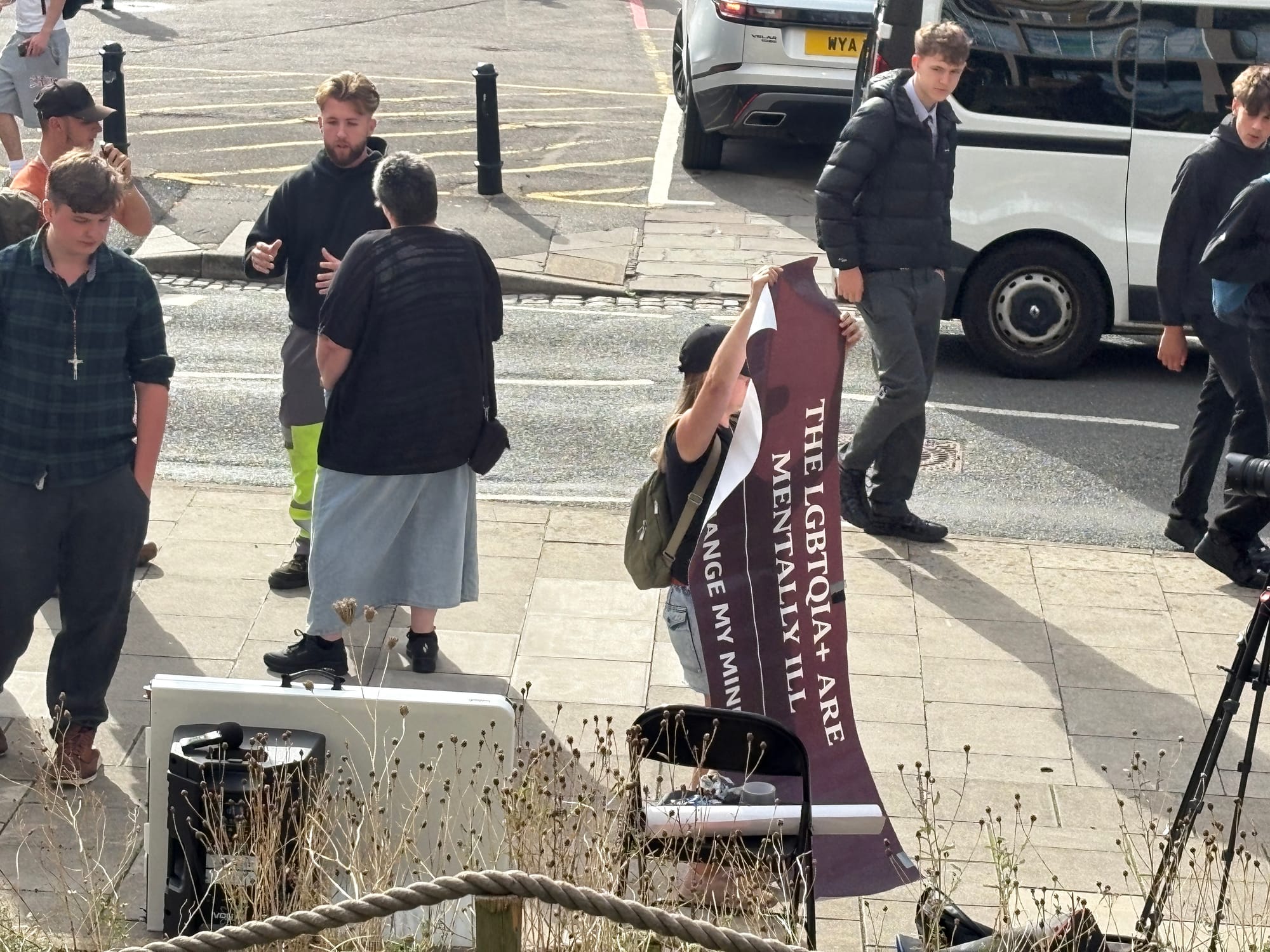
Moffitt stood in front of his foldable table, with the face of a man unmarked by the fine lines of post-adolescent experience. A thick rosary with an iphone sized cross hung around his neck as he stood uncomfortably leaning on nothing, with one hand in his pocket and the other clasping his phone. His head hung down, fixated on the screen. What struck me most is how awkward he looked. He had at least two ‘security’ with him; men dressed plainly who were at least two decades his senior, and a man and woman appearing to be the camera operators. He talks to none of them. He glanced up from his phone every once in a while and looked vaguely around, with a crowd of around twenty just a meter away, observing solely him. The cameras were off and he was not passionately engaging with the crowd who were there for him, nor opening up conversations in a genuine attempt to change the minds of those around and bring them to an understanding of the politics he claims to be so steadfast on. He looked like a first year student lingering around campus on iphone maps desperately trying to locate his first lecture without drawing attention to the fact that he’s lost. He looked lost.
Still, it is both surprising and sadly unsurprising that when surrounded by students of what he later calls via instagram ‘the most wokest’ University, he is not jumping at every opportunity to rationally argue (if this is even possible) his beliefs and grow his support. Is this not the goal of the traditional political activist? Would it not speak to his activist prowess if he could come to ‘most wokest’ university and have a sophisticated conversation with those most likely to oppose him? Instead he stands like a nervous teenager lacking the confidence to engage with the adults at the family gathering.
During his visit to us last year, Moffitt was allegedly assaulted by a curry in the face from one student. Given the impatient timing of his visit during welcome week this year and the presence of what can only be described as henchmen, one can assume that his appearance was little more than a hurried attempt to save face, and an opportunity to film content in an adversary setting. All signs point to the protection and expansion of his personal brand. This is, quite clearly, his primary objective. Whether a motivation for his online presence is financial or egotistical, it does not appear to be a serious desire for activating ‘boots on the ground’ change, more than it is to amass a following.
This is not to disregard the hateful content of his rhetoric and the frightening implications of the volume of his support. This is, in fact, why I am writing of him in the first place. While the rise of this kind of extremism globally is of course, harrowing, I intend largely to draw attention to the inadequacy of those delivering it at street-level.
Moffitt has jumped on the bandwagon of the rising career of the baseless social media activist, following American counterparts such as those elucidated in Louis Theroux’s ‘Extreme and Online’ 2022 documentary. Since the release of this documentary, this kind of online presence has only amplified as politics polarise further, but from what I saw, the reality of its face (in Moffitt’s case) is awkward and uncommanding when it is not hurling childish insults. Perhaps, should he return, the student body’s most effective retaliation may be in refusing to engage, thus refusing to provide him with content for his faceless online disciples. However, the polarising nature of his banners ( ‘all abortion should be banned’, ‘we need to deport millions’) understandably makes this difficult for such a passionate student population. Perhaps upon his unwelcome return, Moffit will have achieved the insight required of a small-teamed street activist, but I’m not holding my breath.
Featured image: Epigram / Grace Rose
Do you see value in debating with extremists?