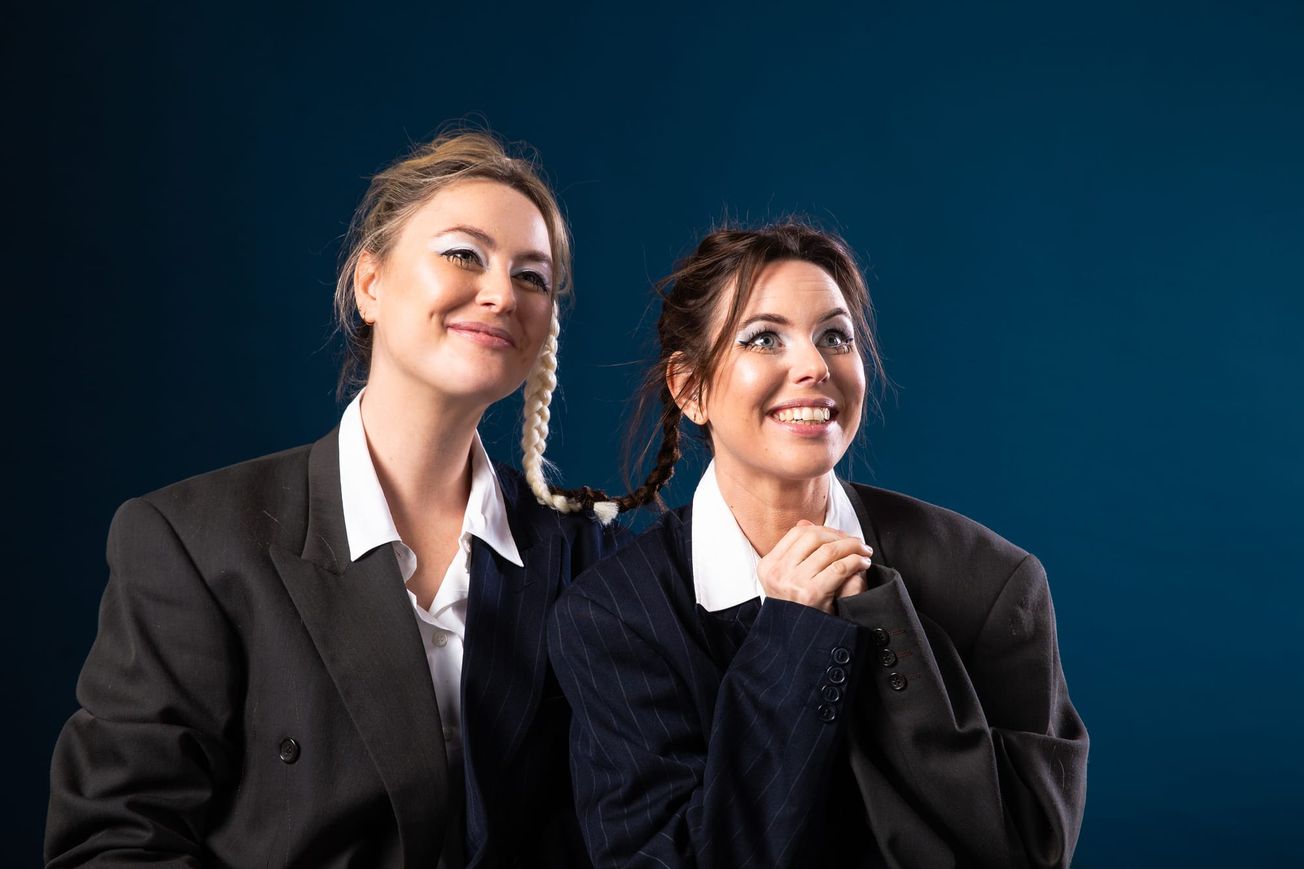
Sisters Marina and Maddy Bye deliver welcome whiplash in ‘Siblings: Dreamweavers’, in which their eccentric characters have designed a machine which allows them to see into the audience’s innermost dreams. Their fusion of clown, improvisation, innate talent and sisterly chemistry forges an addictive sense of accidental excellence. I interviewed the sisters before I had the pleasure of catching their show at The Wardrobe Theatre.
By Connie James, third year Theatre and English
Magnetic from the word go, their spark is equally contagious on stage and over zoom. They easily flitted between serious discussions about gender in comedy and hilarious anecdotes about their failed attempts at performance, and offered me a fascinating insight into their dynamic as sisters and co-clowns. Marina reminisced ‘our career started when I was six and Maddy was nine’ on long car journeys where ‘for 13 hours straight we would just do different characters… we started to impersonate a lot of people. So anyone we met wasn’t safe’. Their sisterly synergy is palpable and certainly offers a uniqueness to their partnership. They describe their onstage relationship as ‘sort of telepathic’, and I agree. I don’t think I have ever seen a comic duo so in sync before. They describe their partnership beginning with the question ‘who’s the funniest person I know that I could do a double act with?’ And the answer, inevitably, was each other.
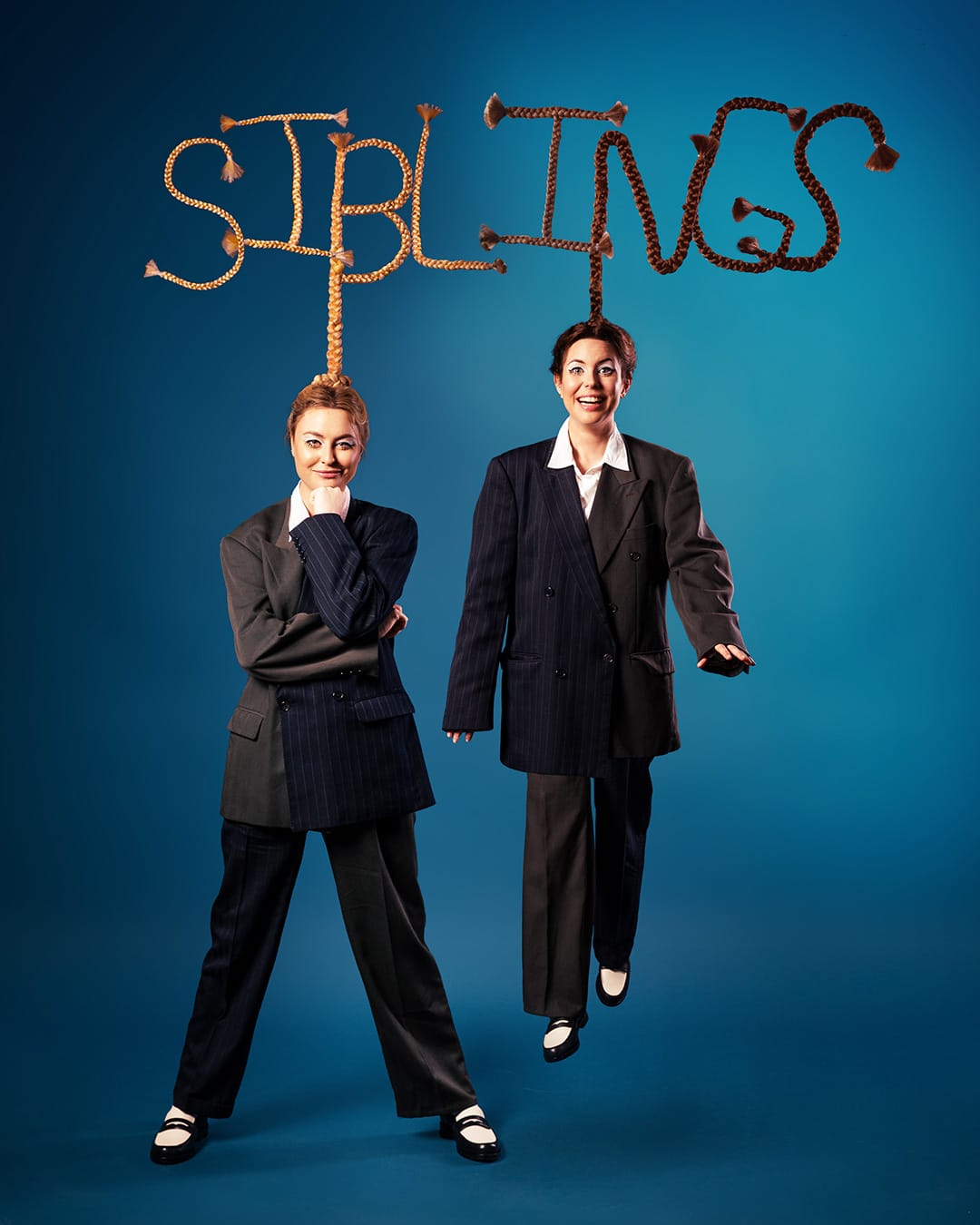
The show itself is appealingly undefineable. In their own words, ‘it is sketch - it’s mainly character, there’s a bit of clown, and there’s also singing. And improv. But we’re also improvising as characters’. But the show isn’t all unfounded absurdity. The audience find themselves in a test-run with scientist Dr. Gargle (played by Marina) and his work-experience kid Raph (played by Maddy) who introduce to us a brand new state-of-the-art invention (a decorated colander) which, once placed upon someone’s head, allows us to see their dreams. The parameters they set themselves are conducive to masterful audience interaction, as they supposedly gain the ability to see into the audience’s heads. It’s a clever concept which grants the performers a sketch-structure, so each dream can be its own comedic vignette, and as random as the two please. Their overstated characters are derived from anywhere and placed in any context, and this exhibition of their skillful character acting had a real edge of French and Saunders about it. The best part about the invention is that the performers can deflect all responsibility of the ‘dreams’ they act out. If they go too far, they can point at the audience member wearing the machine in disgust. In their own words, ‘it’s a gateway to be more vile’.
Their integration of clown technique gives their performance its wonderfully ludicrous edge. Many of my favourite moments in the show I identified as clowning, most notably their habit of repeating a phrase which won them a laugh over and over, in more overstated and hilarious ways, pushing the moment to its comic limits. The two were playing with the time and space they were in - never in a rush, or stuck to the script, but fluid and open to new and unexpected paths to laughter. The pair recognise failure as a crucial part of their process, with Marina admitting ‘over time I learnt to drop my ego… and bask in the flop’, and this sense of experimentation is integral to the show’s charm. As an audience, our laughs were rewarded and seemed to feed the production and fuel the performers. The more we laughed, the funnier it became. Every so often our response seemed to push the performers into corpsing - and there’s nothing more rewarding than feeling like you’ve made the performers break with your own infectious laughter.
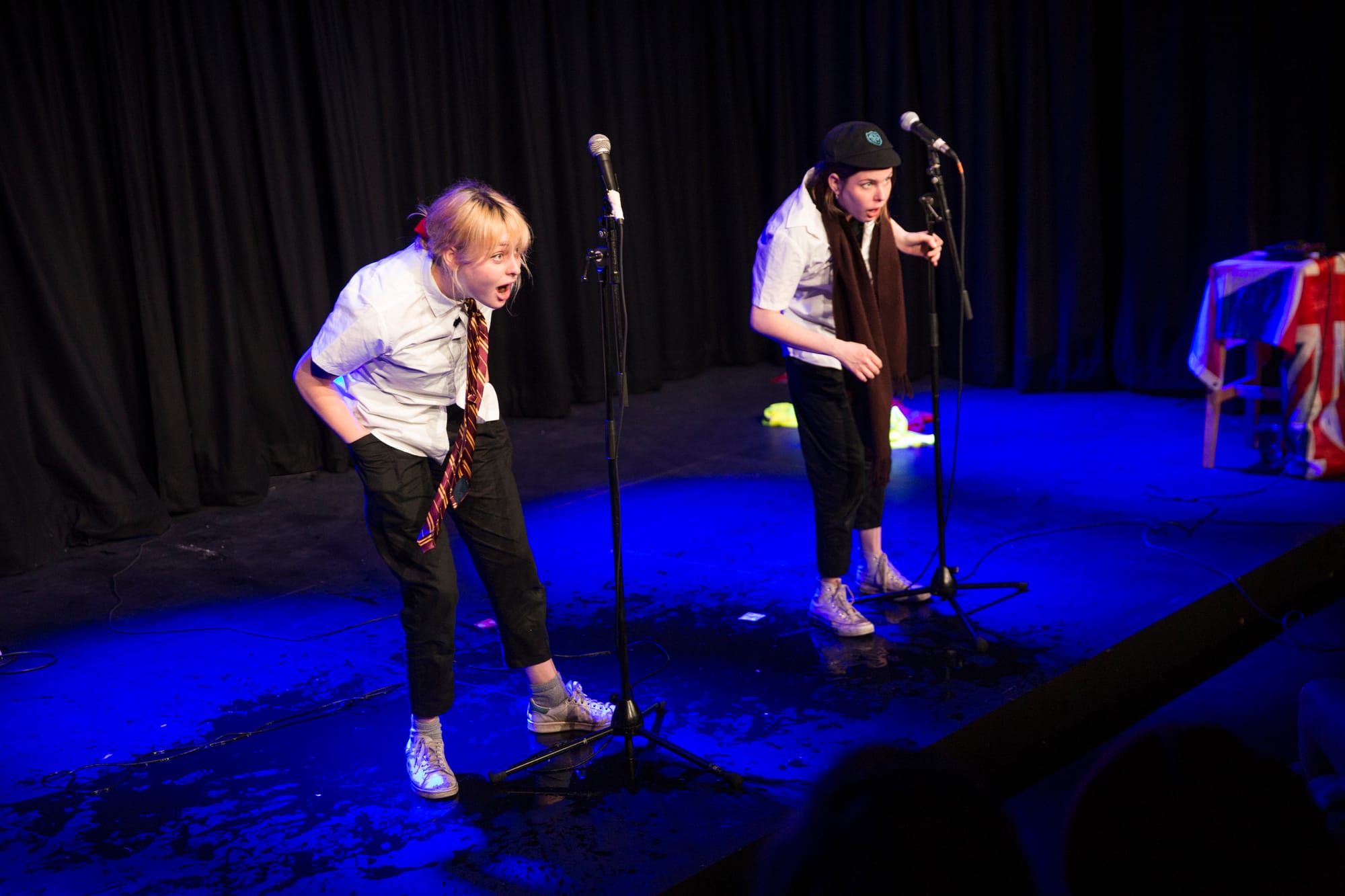
The very best of Maddy and Marina is their authenticity. They welcome you into their ever-changing process - between breaking onstage into contagious laughter and genuine unscripted moments - it’s hard not to want to join in. You can feel the moments they teeter on the edge of acting on their in-the-moment ideas, and that suspense is delicious - I don’t think I’ve ever felt pulled in so many different directions by a comedy show. Maddy and Marina don’t tell you what to laugh at - they let you find funny what you ineffably find funny, and then they get to work enhancing that. They cleverly converge the unpredictability of clowning with excellent and accurate characterisation all while giving in to their improvisational impulses - and this grants them the audience’s undiverting attention. I never wanted to look away for fear of missing a well-timed glance or an impossibly malleable facial expression which would set the room off into another round of ungovernable laughter.
In our interview, the sisters offered compelling insight into their relationship with comedy as women, but also as clowns, as women playing a lot of male characters, as lovers of slapstick and absurdism. They recognise French and Saunders as offering a gateway for comics like them, as ‘it was very male dominated back then in the 90s- and then there’s two women playing men and being gross and being vile. A lot of their stuff is weird’. The two took ‘a lot of inspiration from them’. Especially when they played men, and especially when they broke down that barrier. ‘I think our show is majority drag king. We love playing boys’. I found their gravitational pull towards playing men very interesting, and upon asking them to expand, they expressed ‘if it’s a funny idea, we’re gonna try it, whether it’s a man or a woman... what we do is write for the funny. Nothing stops us from doing that - Yeah, we’ll put on a moustache and off we go. That is actually quite feminist’. The siblings locate an empowerment in the bizarre. In playing men they unlock a genderlessness that allows them to surpass the label of being ‘female comedians’. In their words, when playing men, ‘you can’t help but feel quite free’.
Maddy identifies clowning as another inaccessible form of comedy for female comedians, reminiscing ‘at clown school - to be a boy doing clown is way easier than to be a woman in clown’. She put the phenomenon perfectly, explaining ‘I always think that if a boy got on stage, and he stood on a rake and it bashed him in the head and then he fell forwards and a pie went in his face - everyone would laugh. If I copied that, moment for moment and did exactly the same thing – no one would laugh… As a boy I feel like maybe it does open up a door to be a bit more slapstick and to physical comedy’. Through this lens, the show sparkles with feminist significance. The sisters have masterfully overcome gendered barriers and in doing so forged a compelling originality and even divisive style. As they put it, ‘a lot of our career has been people watching us going - I don’t understand what I’m seeing but I like it, and I don’t understand what I’m seeing and I hate it’.
But, barriers and setbacks seem to fuel the two. Marina expresses ‘you feel like a pioneer for women. It kind of encourages you to go further. You see sadly small minded people who think women aren’t funny break through the other side and think ‘I can’t help it, this is ridiculous.’ You think, ‘ok, maybe I can change your mind.’
 Katie Asha
Simply, the sisters are paying homage to ‘women doing characters - I just get the buzz. It’s kind of rare. It’s not a big part of the industry. It’s depressingly niche’. I agree - this small corner of the industry feels unsung and seems to be dwindling, but the siblings are reviving it. It seems Siblings Comedy are the answer to the ‘depressingly niche’ eccentric female character comedians. The two represent the ludicrous corners of comedy, often inhabited by male sketch troupes, that female comedians don’t get full access to. Silly and self-assured, the two give the Monty Python boys a run for their money when generating their intoxicating nonsense, and it feels as though they are boldly paving the way for a rising army of female nutters.
It’s easy to imagine the two migrating to the screen, but I think the charm of their show is in its liveness. Embracing the innate comedy of fluffed lines, corpsing and the failure of ‘the flop’, Dreamweavers is inexplicably human. If you’re heading up to Fringe this year I implore you to catch their show - you’ll leave the theatre sparkling and dizzy. Life-affirming in its bizarreness and empowering in its inventiveness, ‘Siblings: Dreamweavers’ is bound to generate electricity with a Fringe audience.
Feature Image: Epigram/ Dylan Woodley
Will you see 'Dreamweavers' at the Edinburgh Fringe?