
By Bethan Parry-Jones, Third Year, Spanish and History
Having taken a gap year or not is one of the first defining and dividing factors when starting university. Bethan Parry-Jones explores not only if anyone really cares that you ‘found yourself’ in the mountains of Peru but the lasting impacts of a gap year on the university experience as a whole and whether it truly changes a student's perspective of university after the first couple of months.
During freshers week I turned twenty, a dire occasion which I allowed to be (discreetly) celebrated by the kind group of then strangers with whom I had just moved in. I felt old. By Wednesday, I had put myself on bed rest, unable to drag myself down and then back up Constitution Hill to wait in a mile-long queue to get a half pint of Thatchers. My girlfriend recently enlightened me that this may have been due to being an ‘old (or elderly) soul’, rather than having had a gap year.
While sources such as The National refer to the reduced popularity of the gap year, the results of the 2025 UCAS end of cycle survey showed 32 per cent of respondents deferred or had considered deferring. Additionally, these figures do not include those who went straight into a gap year and applied for university during this year off.
Is a gap year still a fashionable thing to do?
Of the eight of us in my first-year flat, we were all at least 19 and had all taken a gap year in some shape or form. Of the most common travel destinations for keen-to-experience-the-world 18-year-olds, including Australia, Thailand, New Zealand and Peru, between us we had ticked off each one. Was our experience starting university then different from those who had arrived straight from school, some of them barely 18?
In some ways, yes. We perhaps had more experience of caring for ourselves, as well as managing our own time. Having worked for a year, some of us came into university with a better idea of budgeting and how far your money goes- in Bristol, not that far. This may have made us feel more mature, but that veneer of maturity that a gap year allows you to create often does not outlive those first couple of weeks. Settling into university is an experience shared by those who have had a gap year and those who have not: the excitement, the anxiety, the homesickness and, of course, the terrible FOMO you experience, feeling you must join on every outing and opportunity. We adapt and adjust to our environment, alongside our peers, for better or worse (we still forget our washing has piled up and realise we have no clean underwear).

It would be tone-deaf of me at this point to ignore the reality that the true ‘gap year divide’ refers to the socioeconomic inequality which divides young people into those who can and those who cannot afford to take a year off before university, just as there is a divide between those who can afford to go to university or not. Over 20 per cent of students feel they are not in the position, for financial reasons, to commit to a year out and only 10 per cent of students that take a gap year, fully fund it themselves. Coming from a state school in a privileged area, of my friends from home, the vast majority now go to university, and a significant number of them had a gap year. The social homogeneity of those who attend university and of them, those who take a gap year before doing so, is often without exceptions. There are, however, widely different versions of ‘the gap year experience’, just as peoples’ experiences of school differ. The gap year experience is affected often by the reason for having a year out in the first place, whether this is to travel, to recharge after exams, to save money or even to develop maturity (not to be taken as a guarantee). It is also worth mentioning that the effect of the pandemic on gap year figures is considerable; a 2021 Prospects Luminate survey of +300 students and graduates noted that one fifth of those deferring until 2022/23 had done so directly as a result of the COVID-19 pandemic.
The Covid pandemic has had a direct impact on students choosing to take a gap year

One of the big questions surrounding a gap year is whether the break from scholarly pursuits makes you academically rusty? In my experience, no. As a humanities student, particularly of modern languages, I found that a year off gave me time to build my confidence and confirmed why I had chosen to study a language - to speak it. I spent a couple of months as an au pair in the north of Spain, and a short period in Central and South America (via Machu Picchu, of course). The idea of academic rust and skill decay, however, is most often discussed in relation to the STEM subjects. That said, having spoken to Cerys Roach, a Biology student, this is not necessarily the case. The recovery period often needed after the universal A-level burn out can be a number of months. The break from education also offers a chance to unlearn various A-level techniques, something which is often recommended when you start university. I did, however, find it to be true that my attention span had reduced after a year away from education, calling for an adjustment period for those first few weeks of classes and set readings.
Does having a gap year fundamentally change your university experience? No. While you may start university slightly closer to the final growth of your frontal lobe, a year out, well spent or not, will not magically make you a fully functional adult. The gap year you did or did not have will not be the be-all and end-all, and we all miss home after two weeks.
 Rai zhang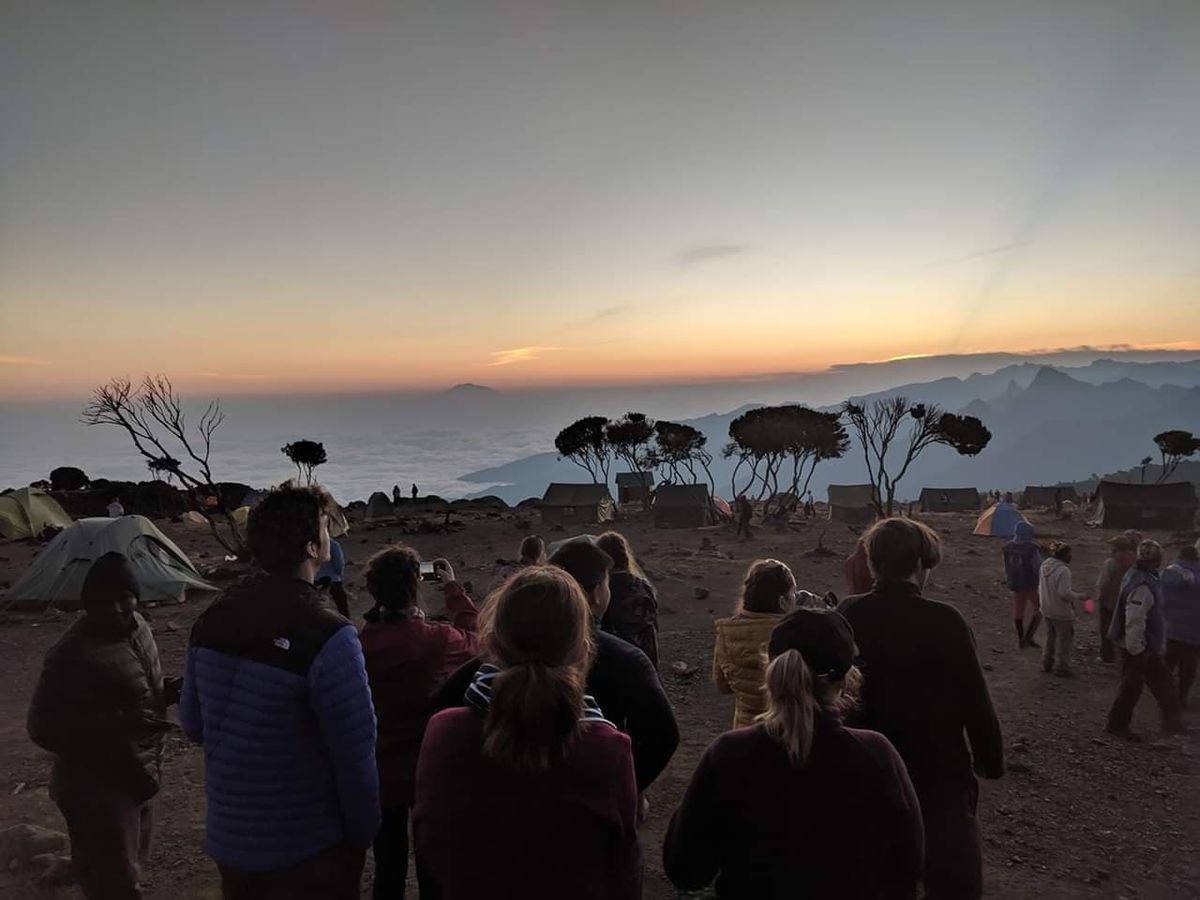
Featured Image: Mantas Hesthaven / Unsplash
Has your gap year affected your university experience or has not doing one impacted your time at University?