By Lila Sood, Second Year, Criminology
We are living in a world where young people have shortening attention spans; most of us don't even watch tv without scrolling on our phones or playing games on iPads. We struggle to concentrate when a TikTok is longer than 30 seconds, yet the number of podcasts are rising, with young people often choosing to listen to episodes that are at least an hour long.
Statistics have demonstrated the huge surge in the number of podcasts being produced, with 82,642 new podcasts being launched in the first half of 2026. Consequently, there has also been an increase in the number of people listening to podcasts, for example, in 2025, it was reported that more than half of the UK population were monthly podcast listeners.
These statistics even seem to ring true within the University of Bristol. A recent Epigram poll revealed that 60 per cent of readers regularly listen to podcasts, with 28 per cent saying they listened on occasion. Moreover, the vote also demonstrated that 78 per cent of students would choose to listen to a podcast over the radio.
But why do we choose podcasts?
The majority of podcasts that gain popularity are hosted by our favourite influencers and celebrities. Perhaps it is the fact that we already feel we know the host, this fabricated personal connection means we can listen to them talk for such long periods of time. In the digital world, the lines can be blurred between influencer and consumer, with us often falling into parasocial relationships with celebrities.

Simultaneously, one of the benefits of a podcast is its ability to fit into a busy lifestyle, as you can listen anytime, anywhere, while getting on with your day-to-day activities. For example, statistics have demonstrated that the majority of podcast listeners rely only on audio as opposed to video podcasts, it definitely allows for more flexibility.
New contributor to the Burst radio station, Phoebe, who is a second year student at the University of Bristol, commented on the key differences between podcasts and traditional radio. She mentioned the rise in the number of podcasts being produced perhaps being affected by the attraction of the guarantee of a ‘redo’ when needed, and the ability to ensure the whole episode goes to plan, contrary to radio where the live nature of the production inevitably leaves room for error.
When asked about the impact of podcasts on the future of radio and journalism, she argued that the ‘pre-planned nature of podcasts as opposed to live radio could be seen to be taking away the authenticity of journalism’ and perhaps the live mistakes, or ‘going off track’ is what actually makes radio journalism more enjoyable and ‘human.'
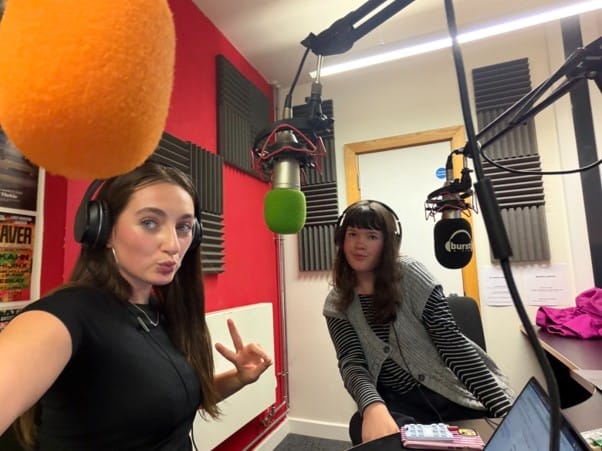
Phoebe also suggested that the appeal for podcasts does stem partly from the hosts, saying that:
‘people can feel as if they relate to them as they have followed their social media.’
A recent survey revealed some of the main reasons people choose to listen to podcasts, with some saying that the appeal comes from the fact that ‘you can listen anywhere’ and while doing other things, and others saying they liked to listen to their favourite celebrities.
However, ultimately, when asked if it was the host or the content that drew people to the podcasts, 75 per cent of students answered that it was a mixture of both.
While it was pointed out that podcasts can be under-researched, most students liked that they could choose particular topics to listen to, and argued it was possible to find ‘intellectual debates’ to help them learn.
So it appears that there are a myriad of reasons we may choose to tune into a podcast, and their popularity complicates the idea that young people are losing the ability to concentrate. Whichever way we are drawn in, whether through the hosts or the flexibility, overall it seems that podcasts are useful media sources that allow us to keep up with topics that interest us in our increasingly busy lifestyles.
 Epigram

 Emma Coleman

Featured image: Epigram / Ella Joshi
Do you listen to podcasts more than other types of media?