By Anna Dodd, Features Editor and Lenny Osler, News Reporter
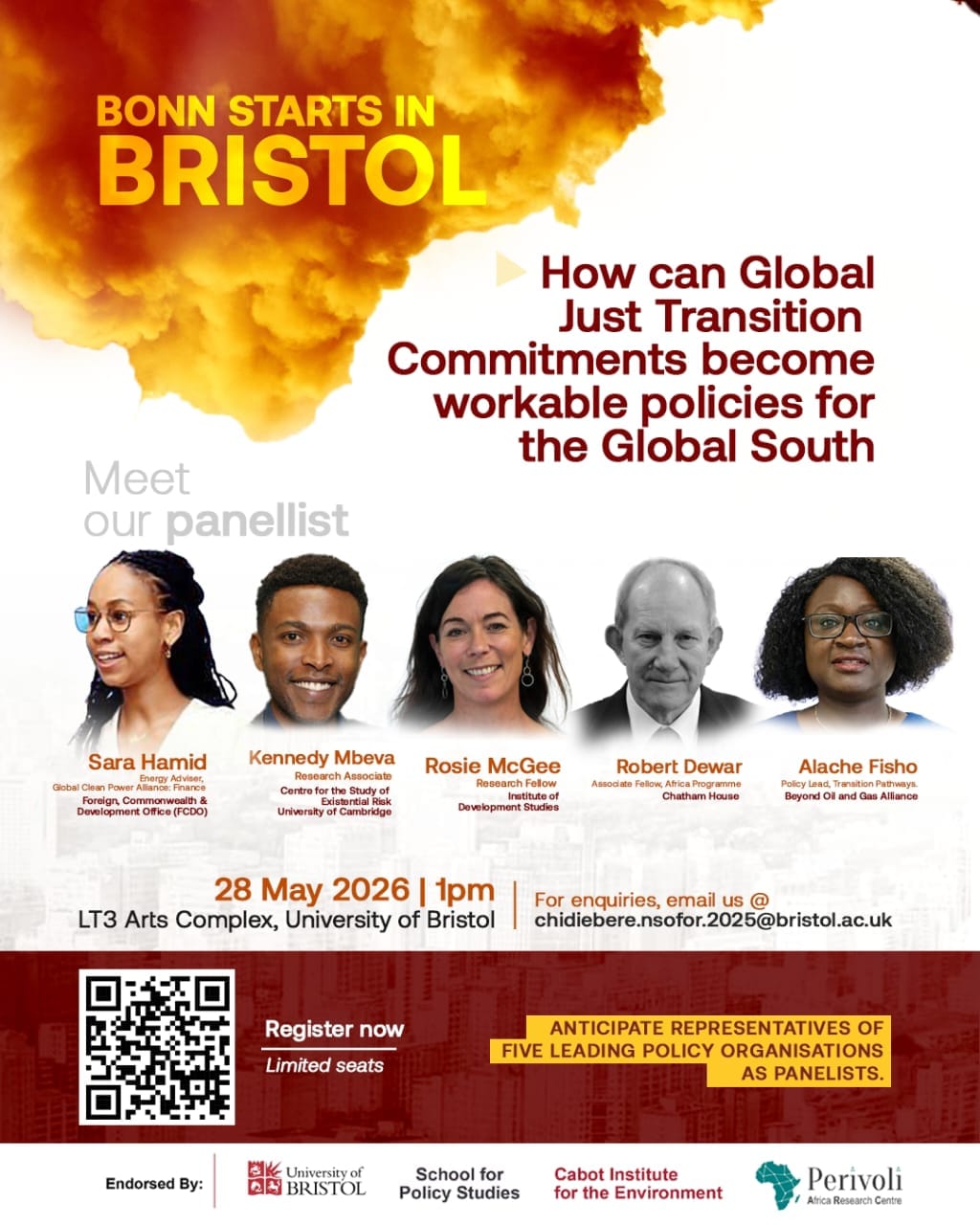
The upcoming UN Climate Change Conference taking place in Bonn is set to bring together governments, researchers, NGOs, and other stakeholders to advance negotiations on climate policy ahead of COP31. In the leadup to the Bonn conference, Chevening and Commonwealth Scholars at the University of Bristol organised a policy dialogue on 28th May to start the conversation, centred around the key question ‘How can Global Just Transition Commitments become workable policies for the Global South?’.
Chevening Scholar Liza Kouassi reached out to Epigram, offered the privilege to attend the event and gain insight into some of the most exciting discussions happening in climate policy today.
Bringing together students, policymakers, and climate and governance experts from different universities and institutions across the world, the event marked the gathering of a vast range of people from different backgrounds united by a shared interest in taking climate and environmental questions seriously. The panel sat at the cutting edge of discourse in policy studies, moving beyond abstract and theoretical discussions to consider real workable policies that will have an impact on lives in the Global South.
Prof. Michele Acuto, the University’s Pro Vice Chancellor for Global Engagement, kicked off the panel with an introduction recalling his previous work at COPs, and placing the event within the broader climate action plan driven by different schools in the University. He emphasised the importance of honesty and pragmatism in formulating this, a theme that rang true throughout later discussions in the panel.
‘A brilliant student-led event bringing together a star panel, with fantastic support from our School of Policy Studies, showcasing how the University of Bristol convenes global conversations on climate action.’
Epigram contacted Prof. Acuto for comment following the event, he said:
‘A real burst of optimism and commitment from our Chevening and Commonwealth Scholars. A brilliant student-led event bringing together a star panel, with fantastic support from our School of Policy Studies, showcasing how the University of Bristol convenes global conversations on climate action. Looking forward to seeing these ideas shape discussions in Bonn!’
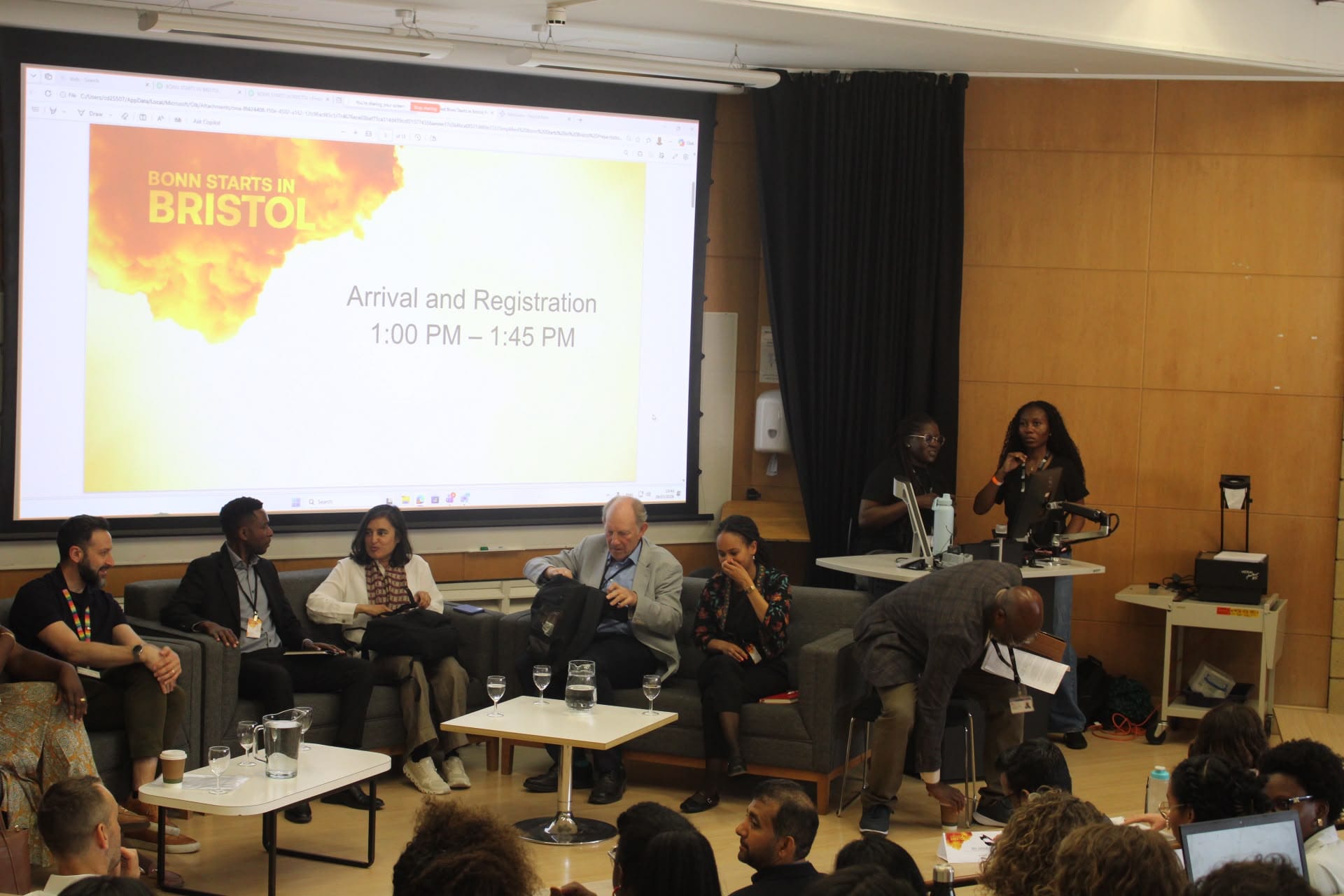
Prof. Chukwumerije Okereke, from Bristol’s School for Policy Studies, moderated a panel of five guests: Sara Hamid, Robert Dewar, Seleha Lockwood, Kennedy Mbeva, and Alache Fisho, all experts in their respective fields of renewable energy, climate finance, existential risk and leading policy. They began by discussing the just transition concept, which in the last five to seven years has moved from the realm of activism to key areas of policy. As Hamid identified, there is a growing consensus that this is the only way to achieve a sustainable transition for everyone, but the difficulty lies in how this ‘just transition’ is enacted in practice on the ground in the Global South. The key goal is to consider how the UK can support state-led action to drive change and ensure the energy transition includes involvement from countries in the Global South.
Dewar, an Associate Fellow at Chatham House, emphasised the necessity of retaining an optimistic view and having hope in these trying times, where climate change rhetoric is often excessively negative and focused on blame. Both him and Lockwood highlighted the importance of systemic approaches, particularly when it comes to the economy.
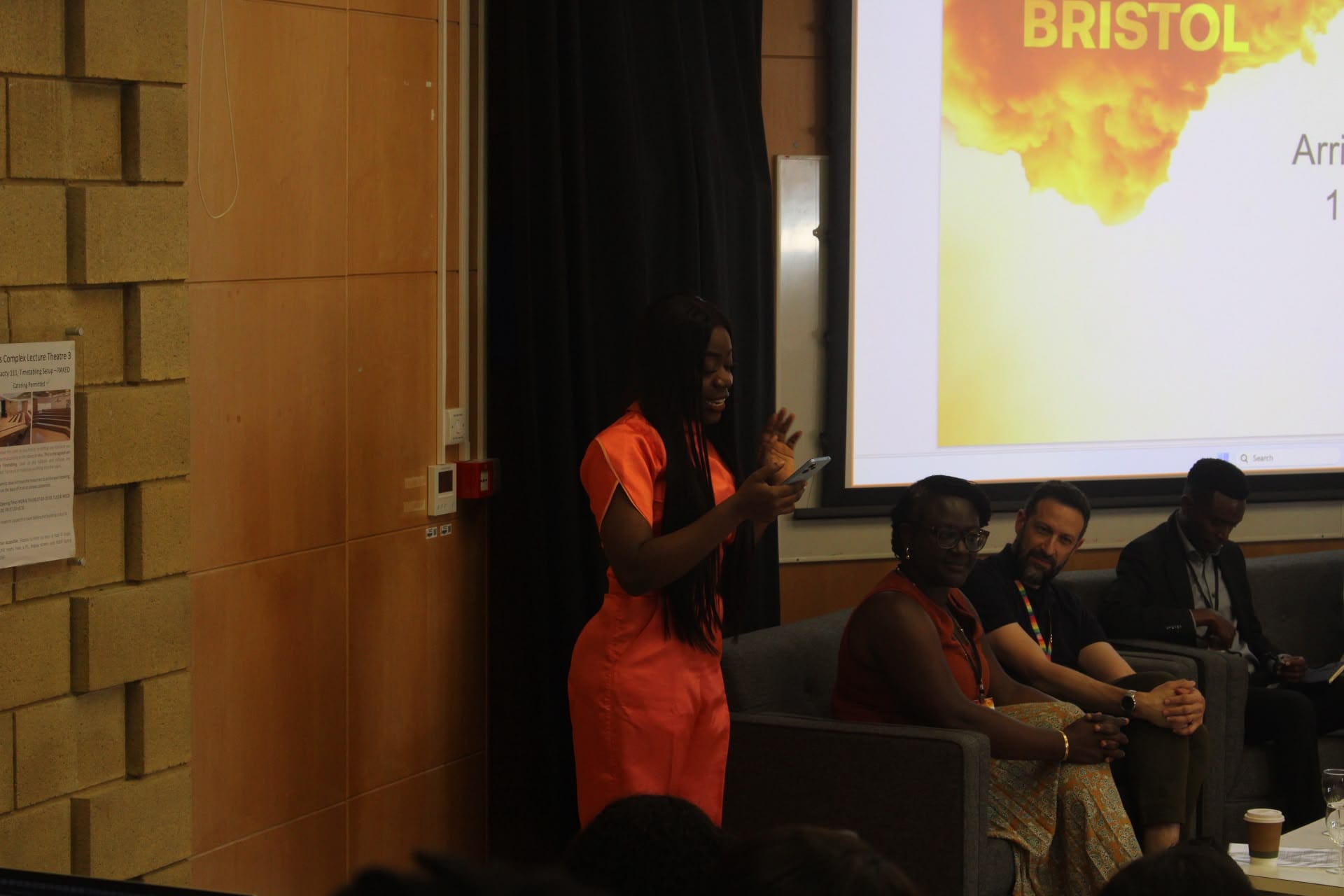
Economics took up much of the day’s discussion. Fisho brought her knowledge and expertise from her role as policy lead for transition pathways at the Beyond Oil and Gas Alliance, looking towards an economic transformation involving new ideas not previously explored in developing countries. For Fisho, diversifying the economy is essential to find new sources of revenue and jobs in new sectors for workers from the oil and gas industry. She also stressed the importance of inclusive conversations; to consider why some voices are louder than others, and ensure solutions are reached in collaboration with developing states rather than imposing policies.
The panellists discussed how conflict, political strife, and other international disasters can significantly affect progress towards a just transition. Geopolitics can affect how fundraising operates, and many countries are forced to waste time and money spending up to 20% of their budget on taking up debt to pay debt, creating a vicious cycle.
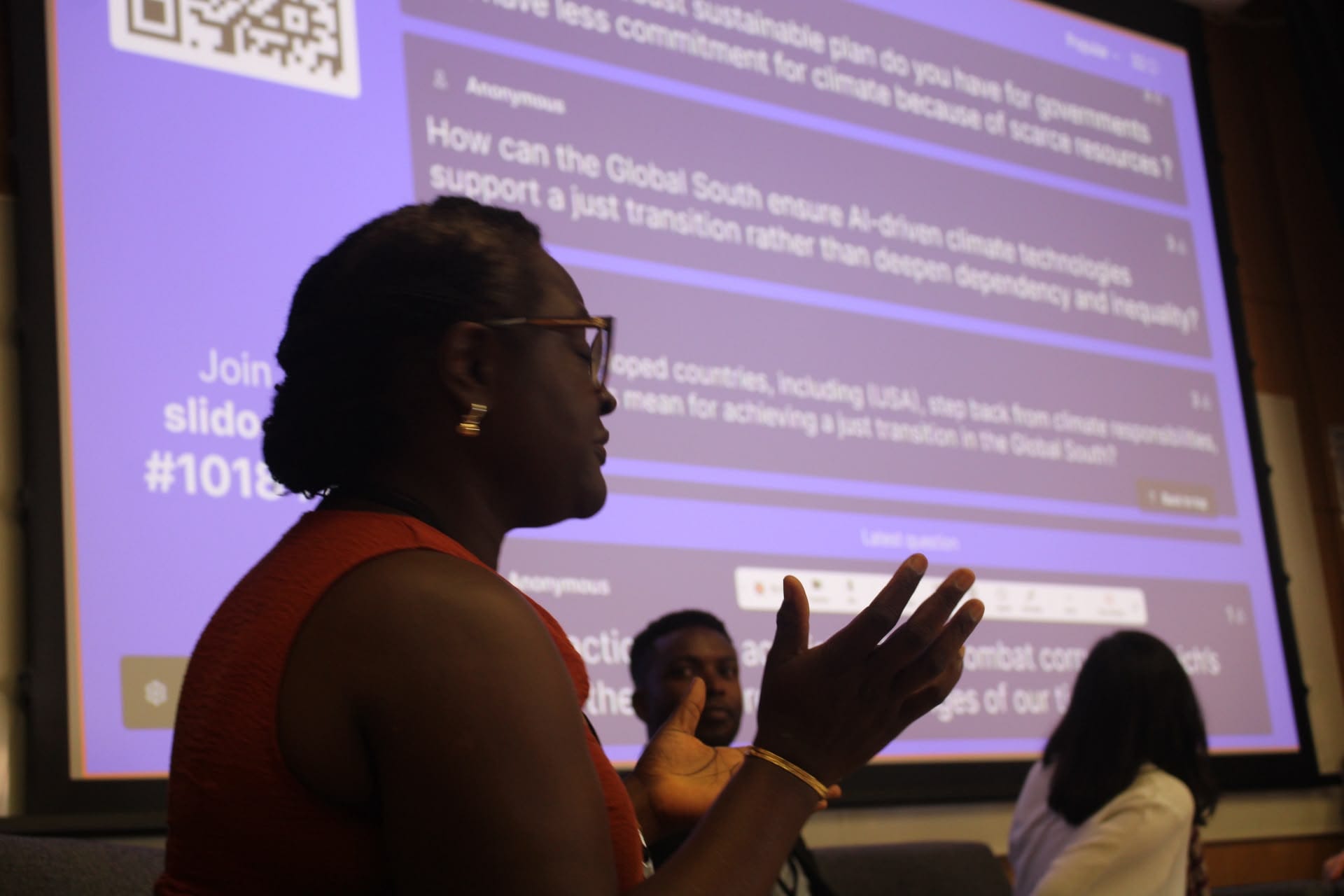
This is where the importance of context and equity comes in, and all the panellists made it clear that there is no ‘one size fits all’ method of change; policies must be tailored to respond to the issues each country faces. As Mbeva puts it, the just transition is not a destination, but a means of managing ongoing change and recognising who is carrying the costs.
‘Each panelist brought a different aspect of the just transition discourse[...] from the talks about finance, we spoke about governance in terms of political will and leadership in terms of the institutions, the systems around it, and the language being used in policy’
The just transition is a political struggle as much as it's an environmental one, and the panellists considered how the current oil crisis and war in Iran exemplifies the necessity and relevance of renewable energy pathways. Hamid articulated how renewable energy is currently cheaper, more reliable, and can be domestically produced, so offers many practical benefits.
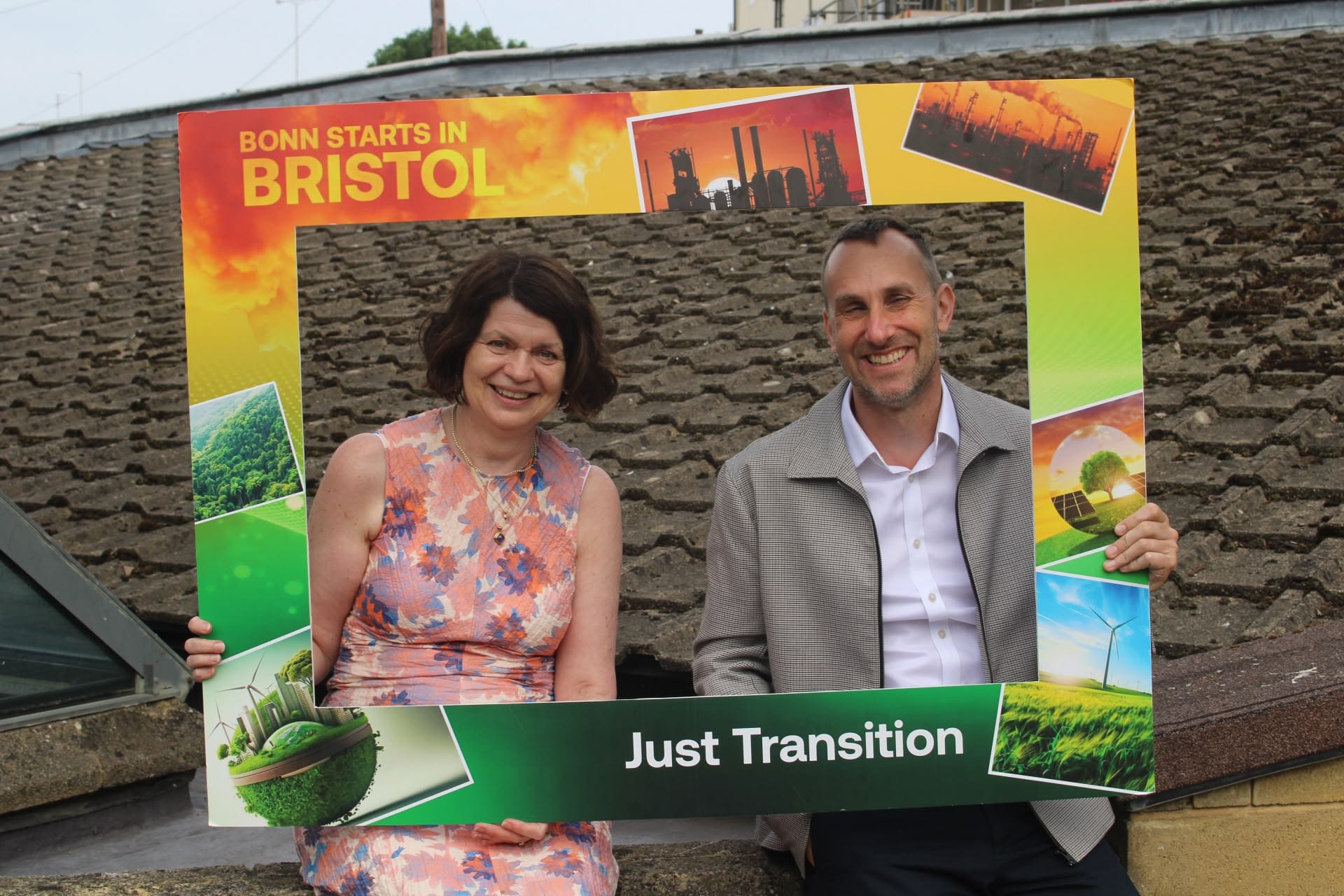
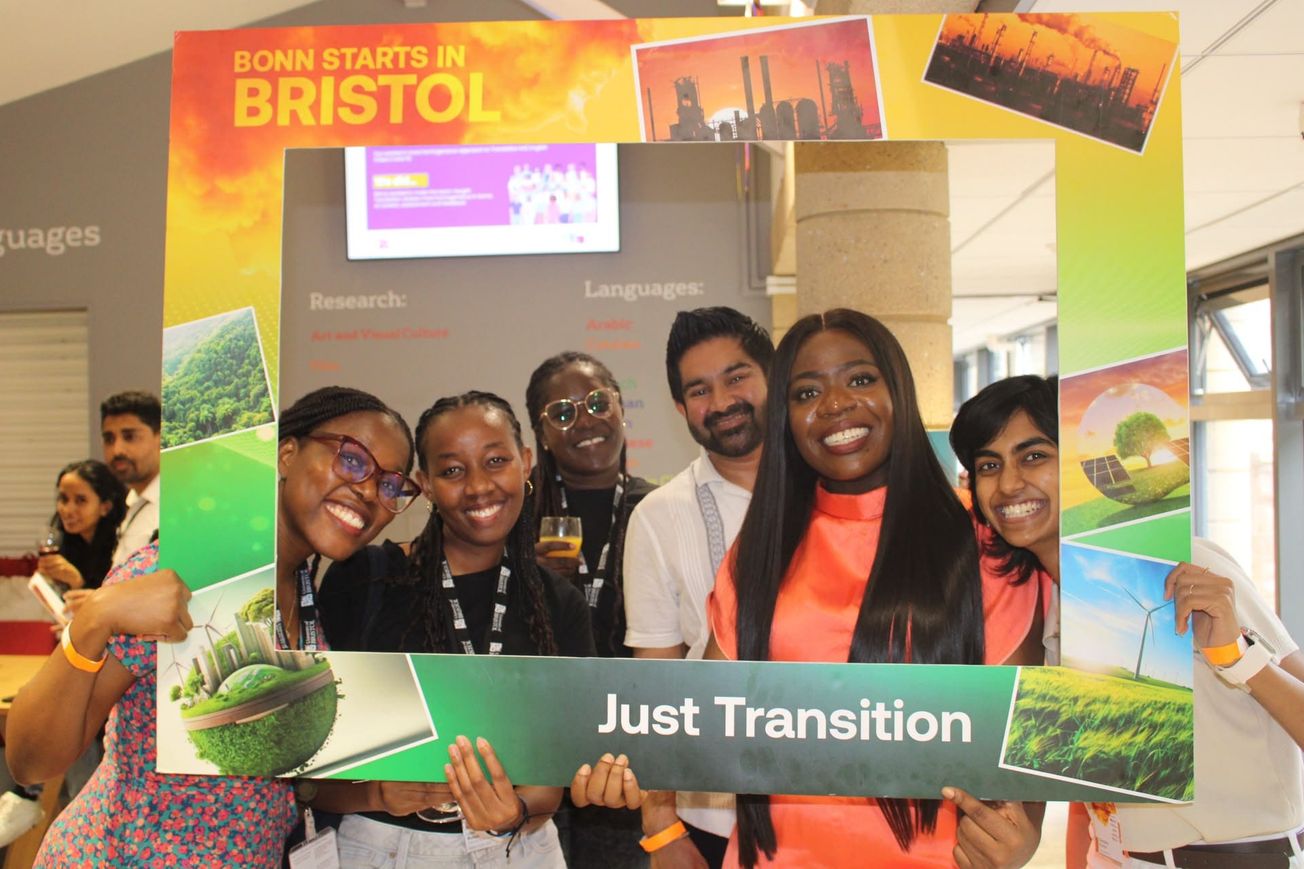
In the networking session that followed Epigram spoke to some of the student attendees present to hear their main takeaways from the event.
Second year biology students attended the event in hopes of seeing how their degree may be put into practice and applied socially to issues such as the climate crisis. They came away with new insights regarding the transition, with one student remarking how the event shifted her understanding of how green industrialisation ‘could actually be quite a positive thing and quite an opportunity if it entails more diversification’ in turn conferring stability on the country's economy.
Postgraduate student Whitney was struck by this emphasis on contextualising policy, an idea she found particularly poignant as someone from the Caribbean: ‘when we speak about the Global South, Latin America and the Caribbean, we're usually not as forefront in the discussion as I would like us to be, so her mentioning and emphasising really the importance of context really struck me and I could link the broader discussion to our economy and context and what our people go through.’ She was moved by the acknowledgment of the simple but significant value of ‘having policies that are designed and developed for the people, by the people’.
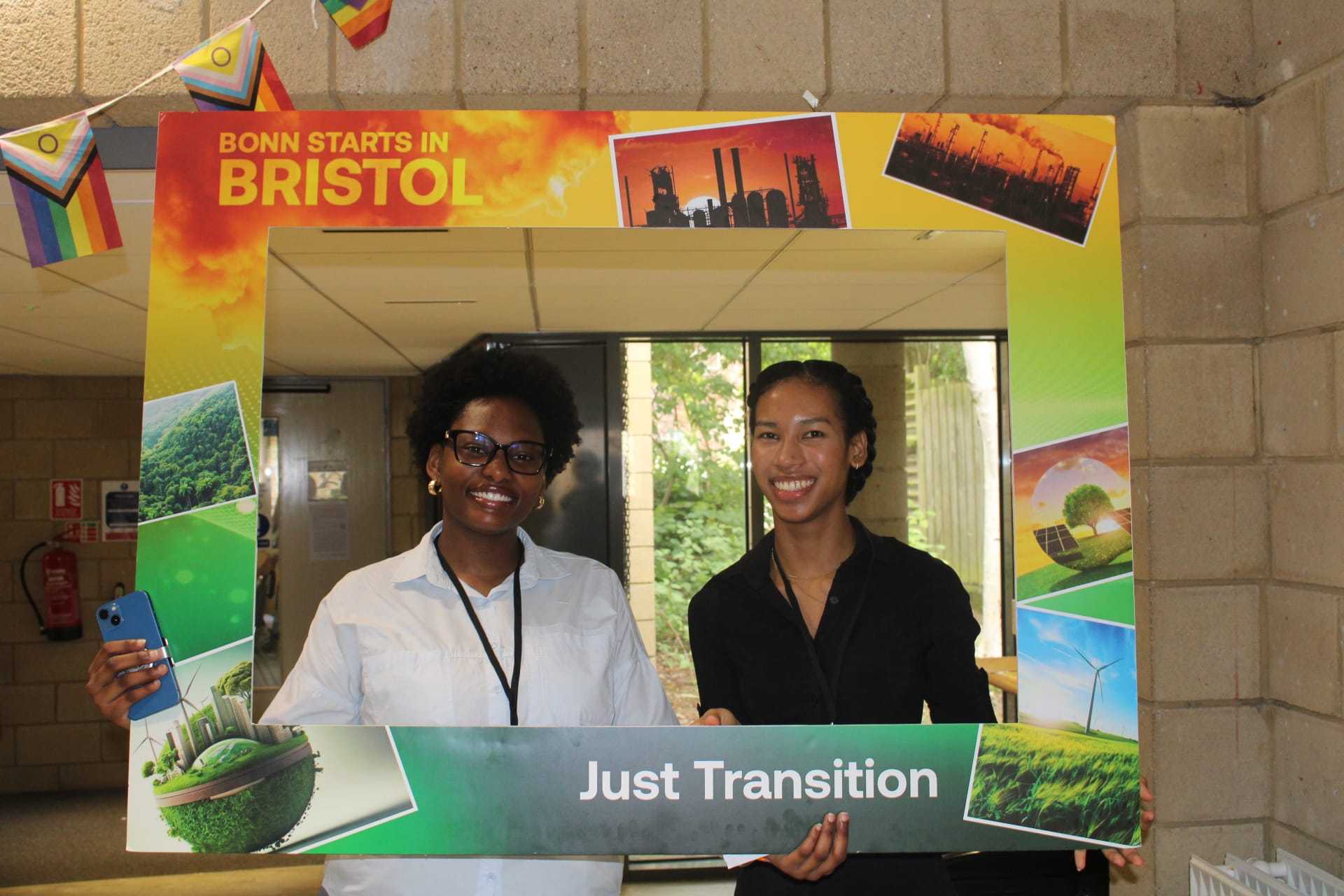
‘To me climate justice is recognising and acknowledging the intersectionality of the climate justice issue.[..]and then working towards a climate justice plan that involves all of us and the different stakeholders in society and how that impacts us in different ways.’
First year law student Rebolokeng similarly considered how ‘it's very easy to take a generalised approach when you hear sustainability or climate change, to just say one thing and then expect each country to just do that’. The panelists went beyond this line of thinking she noted, driving the point home that ‘there needs to be more nuanced and understanding of the actual needs of the countries we're talking about before we can apply anything, before implementation can take place, so context is everything.’
 Beth Robinson
She left with a profound feeling of optimism so often lacking when it comes to climate justice: ‘what gives me hope is these conversations even taking place, the fact that everyone took the time out of that day to come and even talk about this gives me so much hope because it shows me that the things I'm doing on my own, the articles I'm reading, the articles I'm writing, have a place, because they're discussed with the most esteemed people here.’
Rebolokeng's sentiment was seemingly shared by the whole room as the event drew to a close. When it comes to the climate crisis, it is essential that dynamic and innovative thinking continues to be shared in spaces such as this, and the Chevening and Commonwealth Scholars enthusiasm and positive attitude was palpable until the end.
To follow the just transition conversation forward to the UN conference in Bonn, see https://www.carbonbrief.org/bonn-climate-talks-key-outcomes-from-the-june-2026-un-climate-conference/ for updates.
Featured Image: Epigram / Lenny Osler
How has this article changed your views about the just transition conversation?