
By Emily MacLean, Second Year, English
Reading habits in the United Kingdom are at their lowest ever recorded rate. The National Year of Reading 2026, run by the National Literacy Trust and the Department for Education, aims to reconnect us with reading and engage us in broader dialogues about why reading enjoyment declines with age. As students, whose main barrier is admittedly ourselves, that statistic is both sobering and quietly discreetly empowering. What's at stake, and what would a return to reading actually involve?
When was the last time you read for pleasure? Many of us buried beneath deadlines, job applications, and day-to-day functioning, would opt for a quick dopamine rush above cracking open a Dostoevsky doorstopper - despite knowing what the better choice may be.
Reading enjoyment can’t be manufactured. While many of us are acutely aware of the dangers of instant gratification, mindlessly scrolling through another batch of anti-doomscroll videos, berating ourselves before reflexively swiping onward, it’s difficult to pull ourselves into an intrinsic desire for long-form content. Knowing that reading improves your attention span, increases your cognitive capacities, and has the enticing allure of equipping you with the vocabulary and cultural references to make you sound like the most educated (or infuriating) person in the room, unfortunately isn’t enough to make us choose it over any other activity.
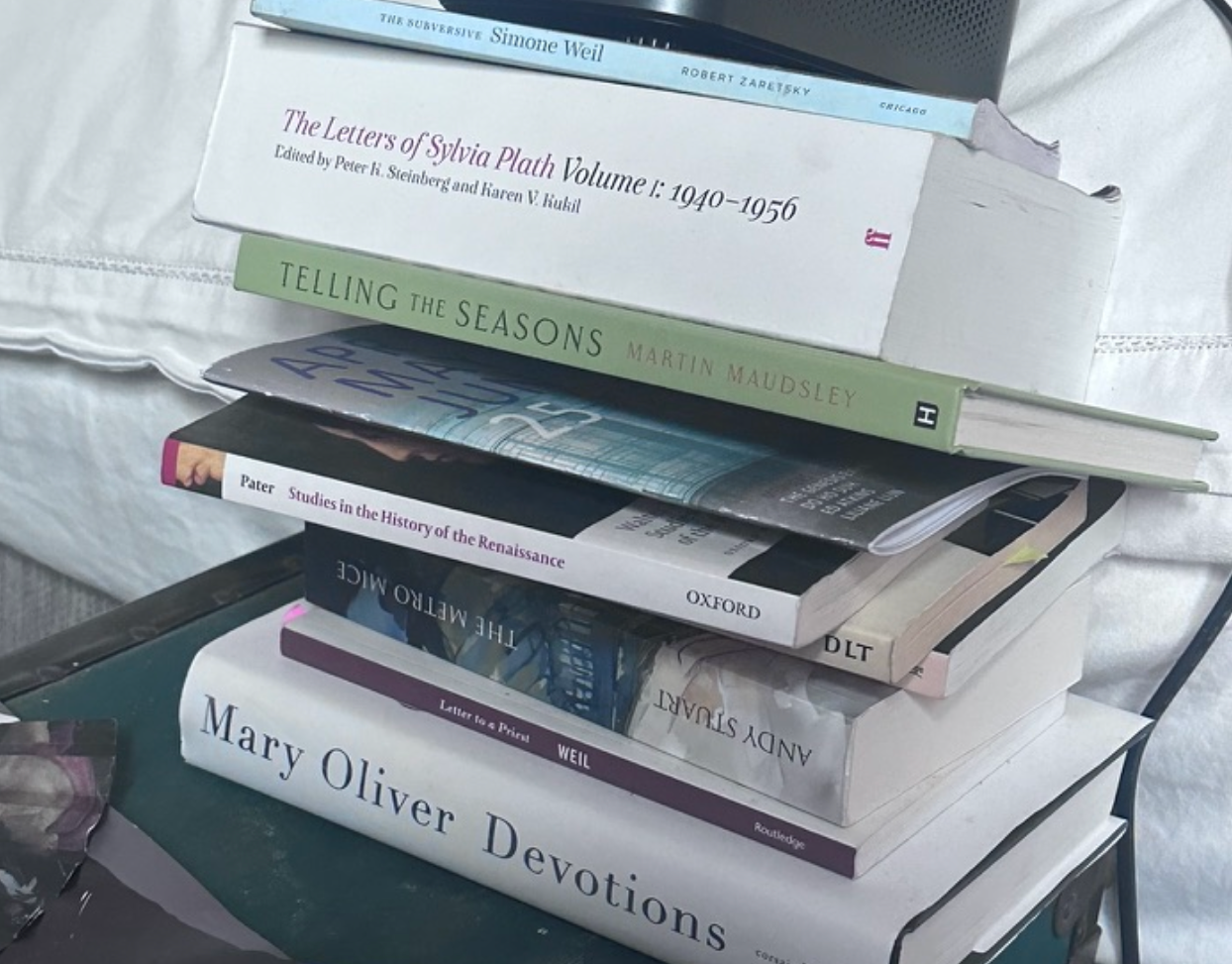
Each novel challenges us to confront ourselves to come to grips with alternative world views which, yes, isn’t as streamlined and smooth – but is more real.
In a social climate which favours efficiency over depth, reading offers a subtle revolution – a chance to embark on a journey, standing alongside characters, and inhabiting new perspectives.
Reading is challenging, but in a far more exciting way than the academic rigor it’s been bogged down with by years of English GCSE mark schemes: it’s defiantly human. Each novel challenges us to confront ourselves to come to grips with alternative world views which, yes, isn’t as streamlined and smooth – but is more real.
There’s a great pleasure that comes from untangling human language (although I may have pleaded otherwise as I stumbled through Sir Gawain and the Green Knight in first year after a particularly heavy night in OMG). It’s refreshing to be challenged at a time when everything is tailored to placate you, from ChatGPT indulging all your delusions, to personalised Spotify mixes for what seems to be every emotion you could ever experience.
A student expresses that ‘reading was much more than an enjoyable pastime; it was a source of comfort for when things felt too tough to deal with.’ Reading requires a different type of thinking – it blends the personal, interpersonal, and academic – fitting in how you desire to be shaped by it without moulding itself to appease you.

There are very real barriers to reading, such as a lack of free time and the stressors of modern life, and it’s important to acknowledge the systems underpinning individual habits. However, the average student spends over five hours on their phone a day, mounting to a depressing 25 years of life. Consuming endless curated content not only steals our time, but adds unrealistic burdens to everyday actions.
Reading takes time, but it also gives something back.
Contrary to what Instagram would have you believe, reading isn’t a performance - it doesn’t require a specific location, perfect fairy lights, or any audience. Stories happen in the mind in a mystical way, and they don’t need to be romanticised to be enjoyed. Relieve yourself of the pressures to purchase the latest clothbound editions of books, finding the most idyllic reading spot, and prioritise the immaterial exchange between you and the author.
Reading takes time, but it also gives something back. A University of Sussex study found that reading reduced stress levels by 68%, beating listening to music, a cup of tea, and even taking a walk. Given that you're likely already spending that time on your phone anyway, the trade-off is worth moving from the mood board into daily life.
There are so many simple ways to enrich your life with reading. Damian Hughes recently published seven micro-habits worth experimenting with, from making books more visible in your environment to habit-stacking. And, if you’re fortunate enough to secure a seat in the library, pick up a book from ‘Bristol Reads’, a low-commitment starting point with no syllabus attached.
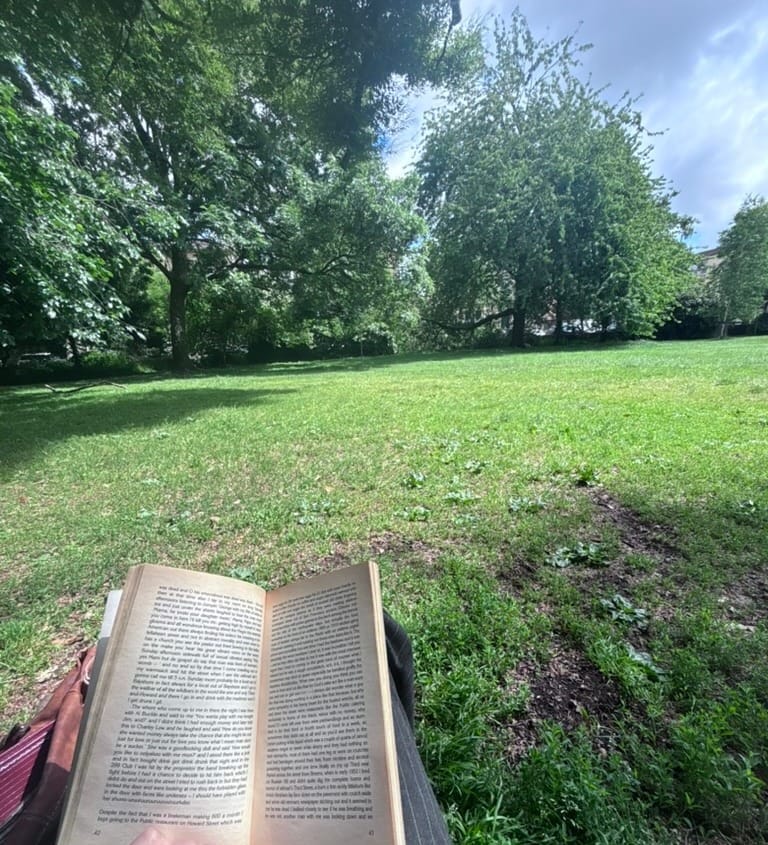
Books have long been seen as medicine. The Ancient Greeks inscribed the maxim 'medicine for the soul' on the Library of Alexandria, and the tradition of bibliotherapy has endured ever since - given to soldiers, recommended by therapists, and championed by libraries as what sociologists call 'therapeutic landscapes': places where it's possible to reconcile the need for social contact with the need for solitude.
This is exactly the kind of infrastructure the National Year of Reading is fighting to protect — championing libraries during a time of severe budgetary constraints, so that these spaces remain available to everyone, not just those who can afford alternatives.
If you want social exposure beyond sitting in bibliothecal silence, Bristol has no shortage of welcoming book clubs to explore. It can be far lower stakes than that; sharing a favourite quote and sparking a conversation about what you're reading can be more enriching than another dinner-table exchange of brain-rot references. Reading has a forgotten social legacy – why not ‘go all in’ and revive the 18th century tradition 'spouting clubs' and perform favourite extracts aloud?
 Francesca Scott
 Ruby Wright
The National Year of Reading's broader ambition is to directly support 1.5 million children and young people from disadvantaged communities to read for pleasure, because reading is one of the few tools that genuinely expands opportunity beyond socioeconomic circumstance. Research by sociologist Mark Taylor found that reading is the only out-of-school activity for 16-year-olds linked to better career prospects.
As a student, you likely already have access to what others are actively campaigning to obtain. Engaging with this movement, even in the smallest way, is a gesture of solidarity as much as self-improvement.
For those without access, reading for pleasure is something worth fighting for. For you, it's already within reach – all it takes is a page and a moment of resistance against the scroll.
So, are you ‘all in’?
Featured Image: Epigram / Anna Dodd
Are you hoping to change your reading habits?