By Anna Dodd, Features Editor 25/26
At the end of their degree, many third-year film students undertake the immense task of putting together a graduate practical project, an assignment that requires diligent effort and passion; it is a notable achievement for anyone. For a select few though, the films have the potential to make an impact far beyond the walls of the University campus, and every year a couple of student film makers are recognised for their outstanding work and are given the opportunity to have their film be professionally supported and refined by an external company.
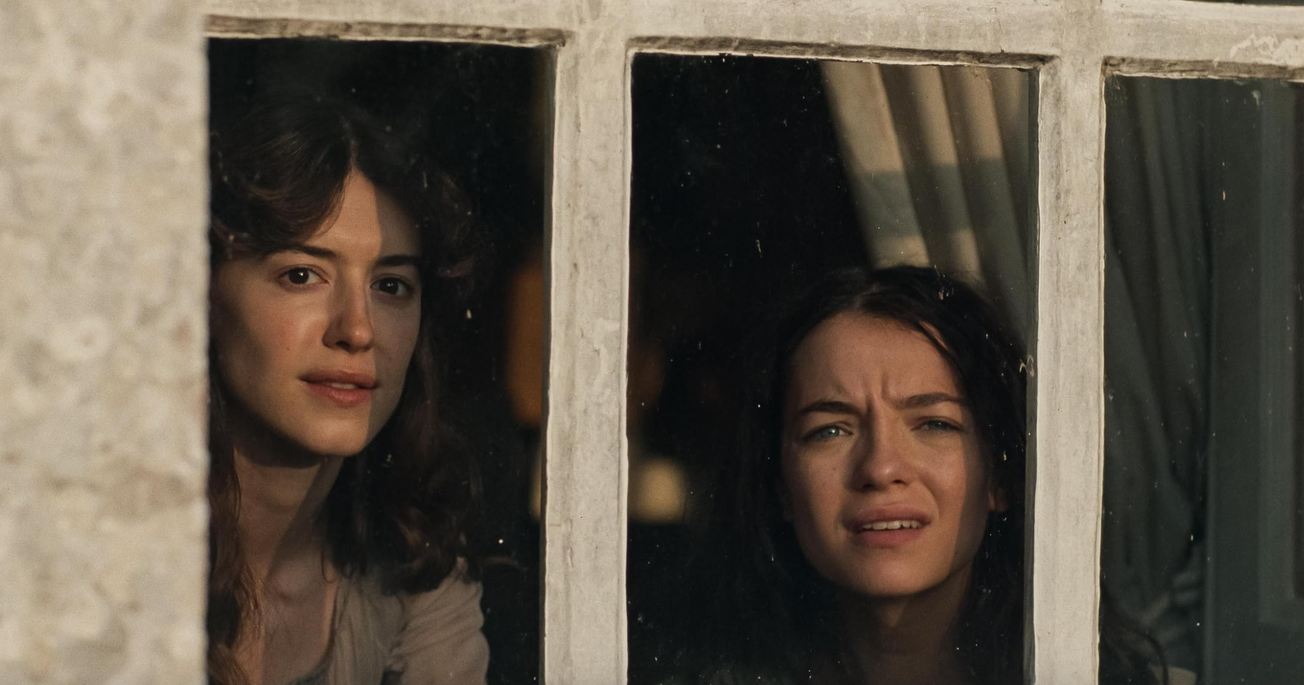
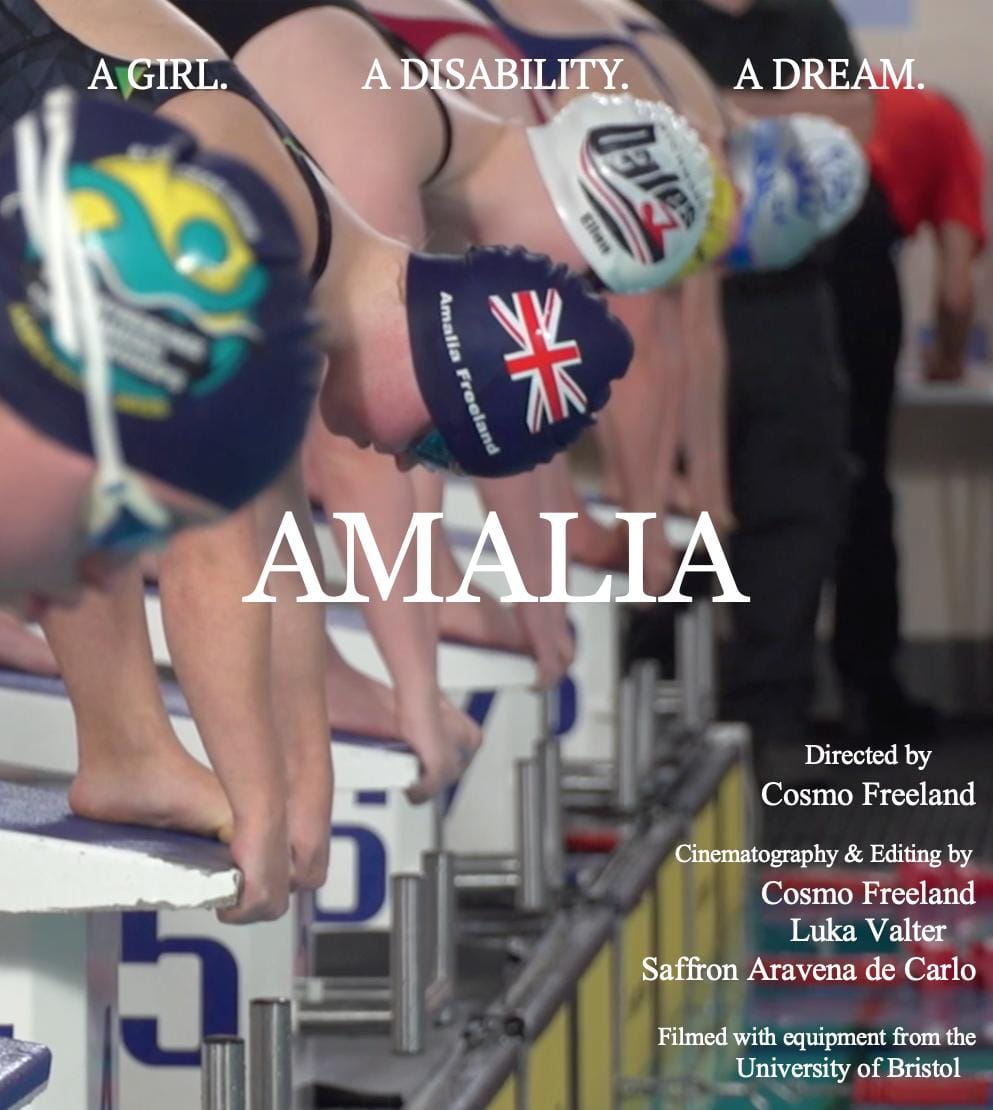
This year one of these selected students was Cosmo Freeland, whose short documentary ‘Amalia’ is centred around his younger sister who has Down syndrome and her experience swimming competitively for Great Britain. I sat down with Cosmo to learn more about Amalia and her backstory, and to discuss the importance of this film in representing the Down syndrome community.
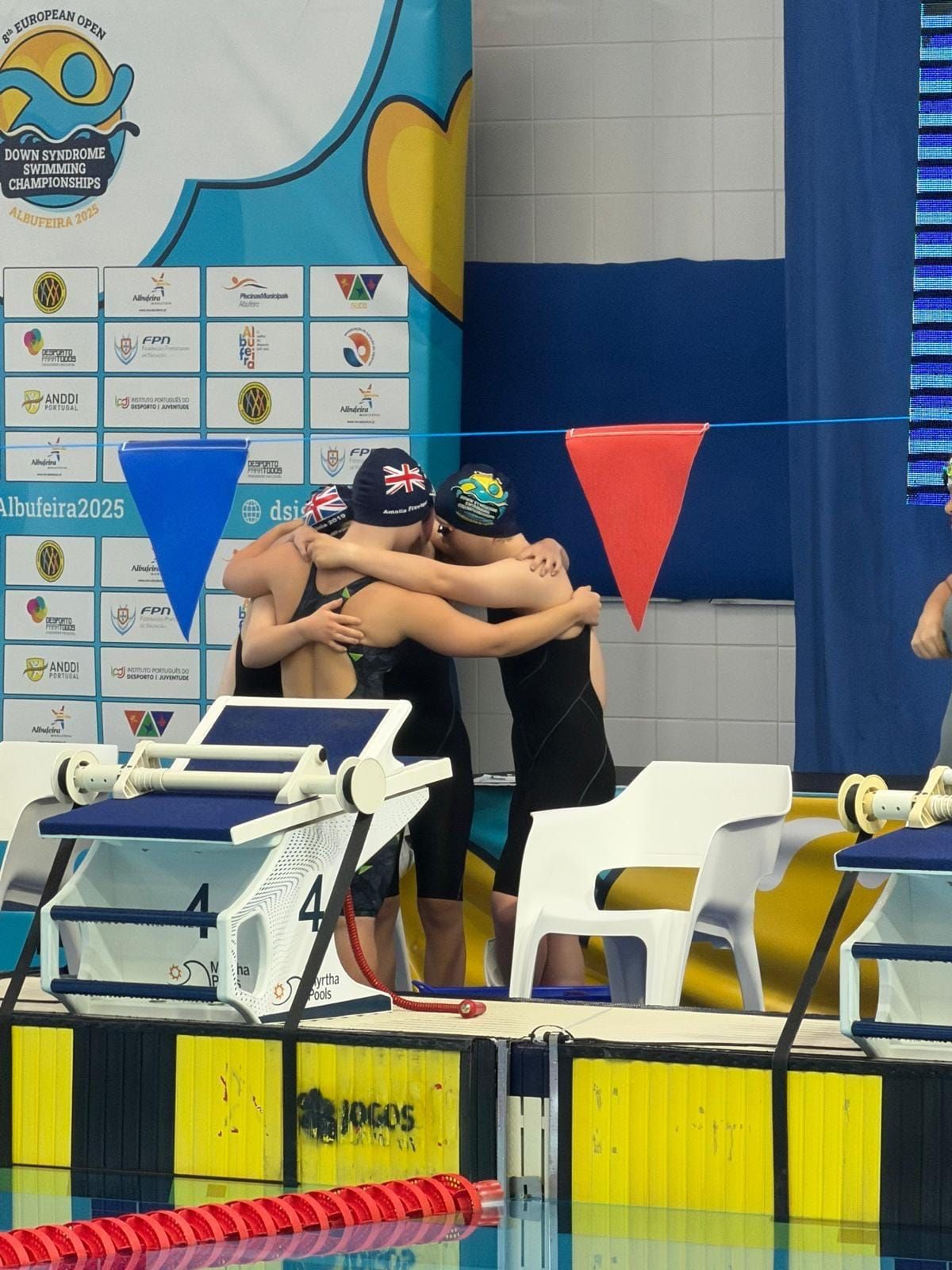
We began by talking about how the film came about and the process of beginning the graduate practical project. He decided to base the film around Amalia and her swimming, and realised he already had a vast archive of material from their childhood at his disposal. He pitched the idea to his coursemates Luka Valter and Saffron Aravena de Carlo, and they began filming in November 2025 at the British Down Syndrome Swimming Championships. Over the next few months with steady support from his supervisor, Piers Leigh, the group carried on shooting footage and carried out interviews with Cosmo’s parents, whose voices run throughout as a recurring commentary. Eventually the narrative started to take shape, with the fifteen-minute film touching on Amalia’s childhood, her emergence into swimming, and the subsequent impact the sport and the team have had on her life.
Swimming is something that runs in the family Cosmo tells me, as both he and his Dad are avid swimmers, but Amalia’s journey with the sport has gone far beyond local clubs, ‘I think she saw me winning and being happy in a team and wanted that for herself as well’, he explains, so she enjoyed swimming in the same clubs, and began to swim competitively just before the COVID-19 pandemic.
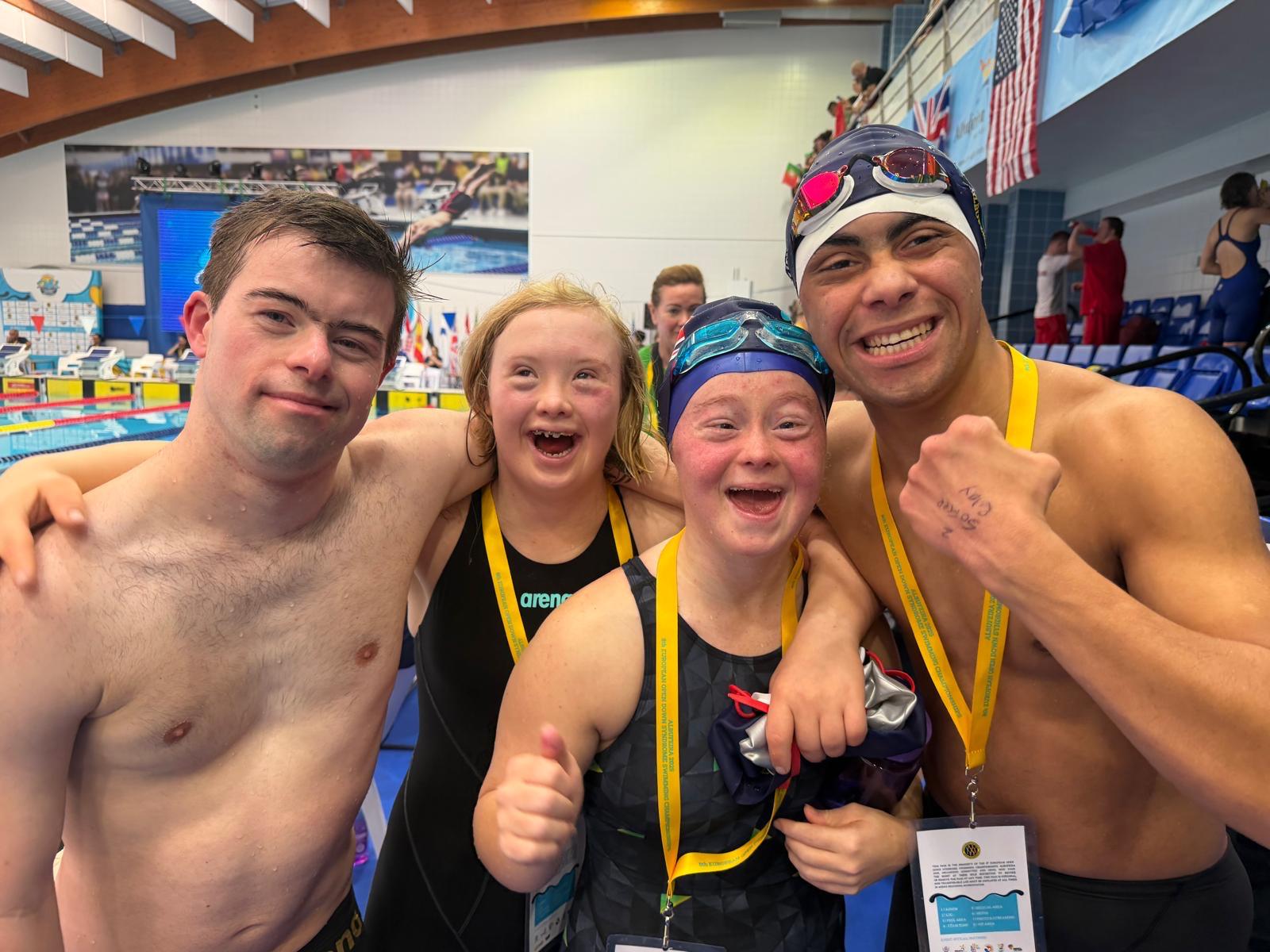
‘I realised, wow, I've never seen so many people with Down syndrome in one space, and they all seem like such a great team…a lot of them are in their late 30s and are still swimming’ so there’s an age gap of over twenty years between them, ‘and they’re like a family.’
The country went into lockdown shortly after Amalia had been scouted by Great Britain for Down syndrome swimming, putting a pause on her journey, but by 2022 she was a solid part of the community and attending training camps with other athletes with Down syndrome. Cosmo recalls the impact he felt upon seeing the community this had brought together: ‘I realised, wow, I've never seen so many people with Down syndrome in one space, and they all seem like such a great team…a lot of them are in their late 30s and are still swimming’ so there’s an age gap of over twenty years between them, ‘and they’re like a family.’
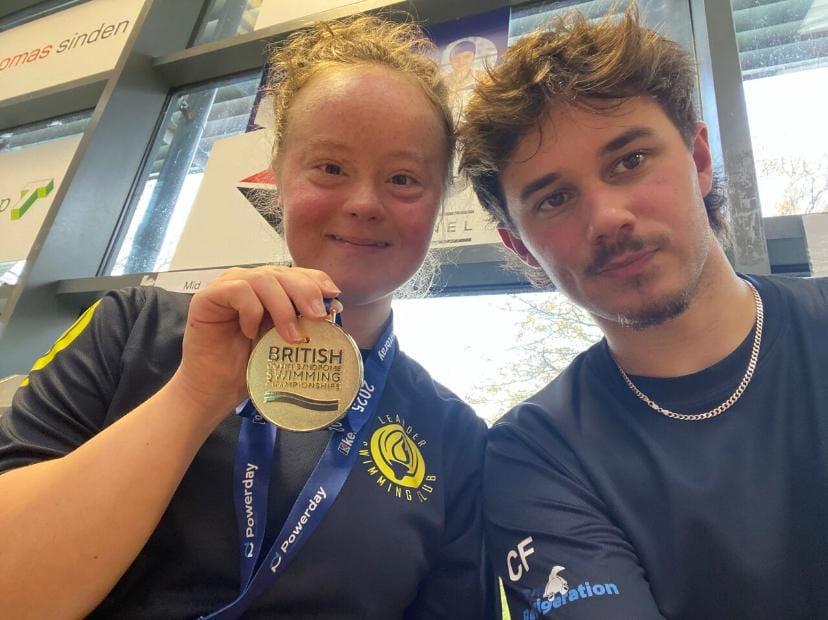
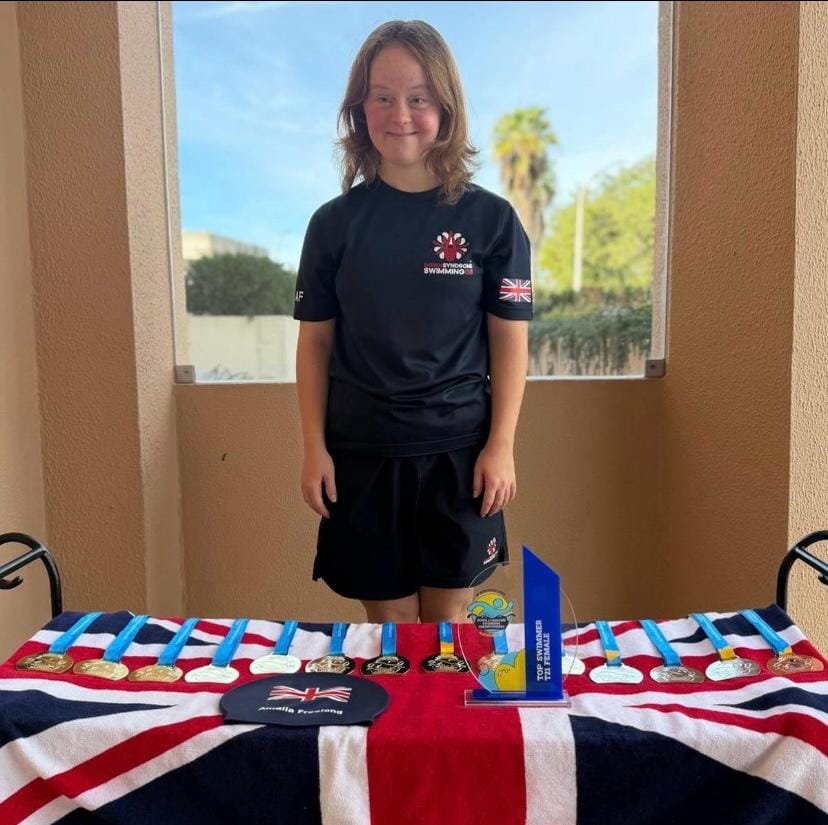
In 2022, Amalia won her first international medal at the European Championships in Portugal and broke her first European record in Italy in 2023. At the most recent European Championships in November 2025 in Portugal she won ten golds, three silvers and one bronze medal. In total she now has eight world records to her name, including both individual events and team relays.
We discussed the general impact swimming has had on Amalia’s life, beyond just the joy of winning medals. As is touched on in the film by their mother, it’s often hard for Amalia to communicate how she’s feeling, but her life can often be lonely, especially due to the wider institutional neglects of Down syndrome. To be able to have a team of like-minded people who share the same passion and have so much in common has had a profound influence on her life.
Cosmo hopes that the film will shed light on not only the swimming but additionally the hidden aspects of Down syndrome that many people don’t consider or aren’t aware of. There are many physical and mental health issues that can arise when there aren’t enough sources of wider support, such as councils. Thinking about her next steps in life, Amalia and her mother have recently been trying to get help from their local council in London with college, but this experience has proved difficult. If the film can make even a small impact in exemplifying where institutional care is lacking and reach local councils in some way, then that would be momentous.
Regarding the conversation of Paralympic inclusion which the film closes on, there are many other swimmers beyond Amalia’s story who aren’t being fairly recognised and honoured by the current system. Cosmo explains that this contention has been ongoing for decades, with groups campaigning for a new category to be created in the Paralympics to give athletes with Down syndrome a fair chance. As it currently stands, they compete in the S14 category against people whose disabilities don’t impact them physically/physiologically (for example autism) which creates an unfair disparity and means they very rarely qualify at Paralympic level.
As Cosmo points out, ‘at the moment, you never really see someone with Down syndrome performing at that level...no one has any idea what they’re capable of’. Down syndrome athletes having their own category in the Paralympics would be revolutionary and would allow them to compete at the highest level on the world stage, ultimately increasing visibility and recognition for the disability more broadly.
Right now, there is hope that a new category with the name ‘S21’ (as reference to the extra chromosome in Down syndrome) will be implemented in the 2032 Paralympics at Brisbane. But this isn’t guaranteed as this stage, which is why it’s so important that the fight continues, and projects such as Cosmo’s film can contribute to the conversation.
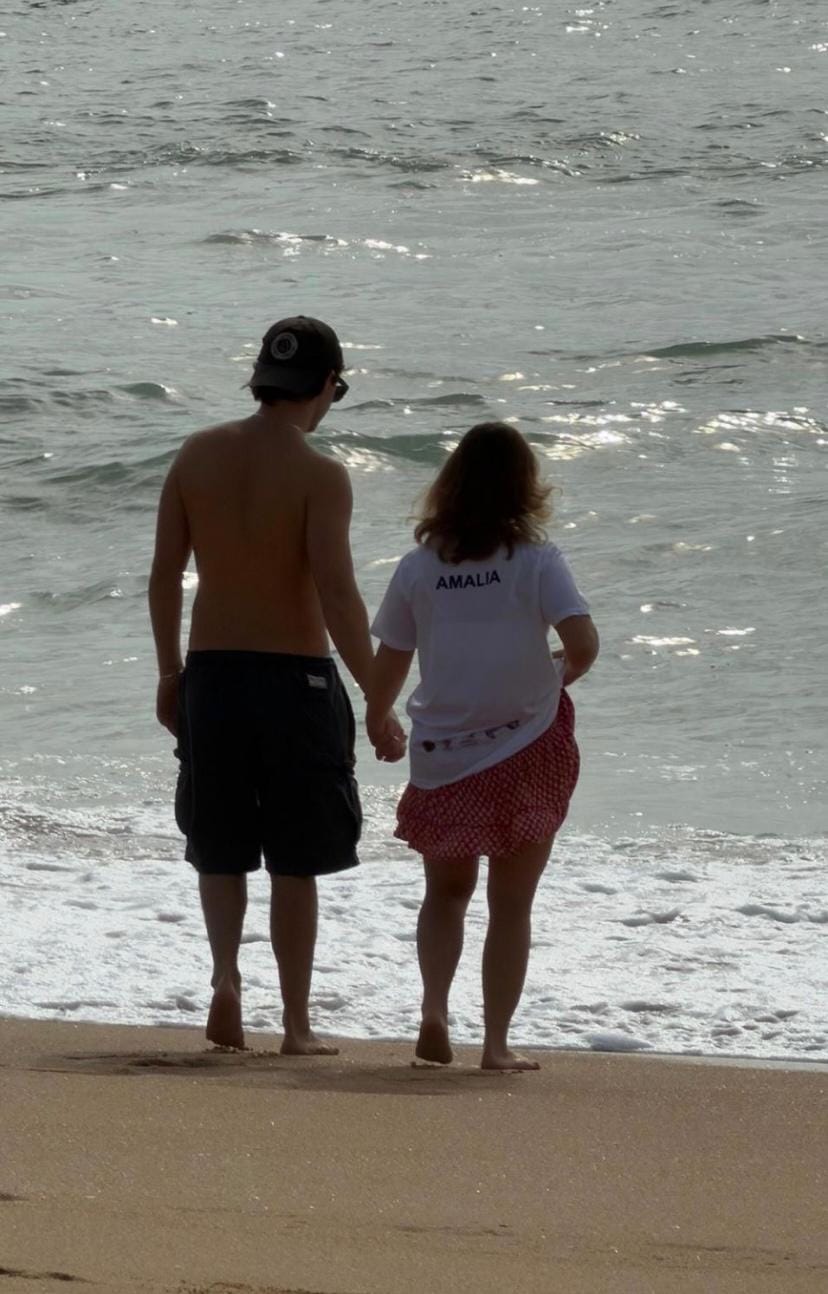
We got back to speaking about the film itself and where he is hoping it will go next. After being selected by the film department to be sent to an external company, he attended a meeting with ‘Films @ 59’, whose name may ring a bell for many Bristol students, as their office is right next to the campus. As the director of the film, the refinement process will involve him sitting in on studio sessions that begin in September. This means he has the agency to have the final say on decisions but also gets the valuable experience of working with people in the industry.
Beyond this, Cosmo’s supervisor has selected the film to be taken to ‘OnAir’, an international broadcast event in October, where the University has the chance to show what films Bristol students have been making. His work has additionally been shared all over Europe amongst notable swimming coaches in Portugal, Spain and Italy, all of whom recognise the important value of the film’s message and the potential impact it could make. He also plans to submit it to some local festivals around the Southwest and London, to make the most of available outlets and have it reach as many eyes as possible.
 Matilda Collard
Ultimately, Cosmo hopes the film can be relatable in a time of widespread loneliness and mental health issues, to show that these are things people with disabilities go through too: ‘it's all about the people and the fact that Amalia has grown so much, she's developed so much with this team’. Amalia has had periods of loneliness in her life, he continues, ‘and to be able to say that now she is much more socially capable, physically capable, and just an overall, much happier person because of this team as, you know, I think that is universally relatable.’
Readers can support the cause by watching Cosmo’s film here, any views or shares is much appreciated!
Featured Image: Epigram / Cosmo Freeland
What do you think of Cosmo's film?