By Harriet Tommony, Third Year, Classical Studies
Warning: Spoilers for the film
17 years after the making of Coraline (2009), Laika studios’ latest creation - Wildwood (2026) - emerges as a beautifully crafted echo of its most renowned film.
It is easy to see how Laika continue its legacy with each moment of Wildwood’s 139-minute runtime acting as a constant reminder of the intense dedication and ingenuity put into making such breathtaking stop-motion animation. The production of Wildwood spanned over a decade from over 1,000 contributors, exceeding the 6-year input from roughly 450 creatives for Coraline and making it Laika’s most aspiring invention to date. Almost 4,000 handmade feathers were fashioned for the giant eagle known as ‘The General’ (Angela Bassett), whilst the main character Prue (Peyton Elizabeth Lee) had approximately 140,000 different facial expressions, exceeding Coraline’s 6,300.
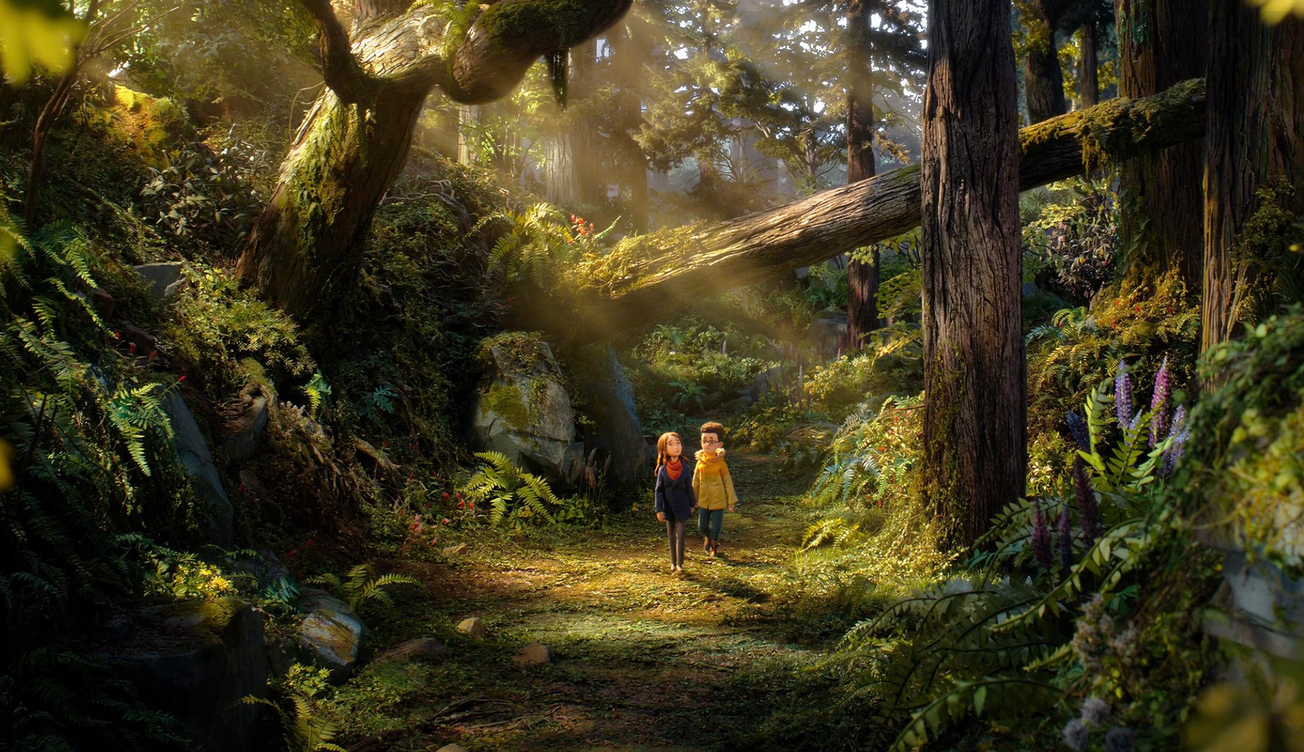
Beyond the puppets, Wildwood’s stage-set world indicates further towards their mastery. From the urban city of Portland with its independent shops and natural backdrop to the infinitely stretching rows of trees in the magical Impassable Wilderness, Laika’s ability to render an immersive world that blends reality and fantasy cannot be understated. In a climate where the integration of AI within filmmaking appears on the rise with film distributors like A24 partnering with Google’s DeepMind as a tool for many creative decisions, Laika’s authentic commitment to artistry stands out, providing imaginative stop-motion animation even to the very last moment with the end credits.
As a Coraline enthusiast, parallels to Wildwood’s older relative seemed to discernibly emanate when watching it. Most obviously, Wildwood takes on the same locational setting, within the state of Oregon, allowing for a pleasant continuity of Coraline’s moody, natural landscape that environmentally reflects in the unsettling events of both films. Similarities between Prue and Coraline also seem to evidently translate, especially in terms of their strong-willed characters.
Whilst Prue’s moodiness stems from frustration over her lack of independence and Coraline’s comes from her isolation as an only child, both utilise their obstinate traits to win back their stolen familial relations. A corresponding point in the midpoint of both films I really enjoyed was the sudden loss of this determination, where both Coraline and Prue return to the real world and, along with the audience, feel that all hope is lost. Yet they both proceed to regain courage, insisting on a return to the other-worldly realm to complete their difficult endeavours.
The completion of Coraline and Prue’s tasking expeditions are facilitated by their male counterparts, Wybie and Curtis (Jacob Tremblay). Despite the help that Coraline and Prue gain from these male characters, both female leads are still allowed to direct the narrative in their assertiveness and not become overshadowed by male involvement. Yet Wybie and Curtis must still prove their heroism and worthiness by the end of the film. Beginning as seemingly timid characters who shy away from the female protagonist’s quest, they become crucially involved in saving the female characters during the film’s climax.
Wybie crushes the Other Mother’s hand away from Coraline’s face and Curtis stabs a coyote (Tom Waits) that attempts to kill Prue. Laika doesn’t allow these scenes to take away from the female leads’ independence, instead feeling more like the male characters’ moment in the spotlight before a return to the female leads. From these ‘saving’ scenes, Coraline and Wybie’s and Prue and Curtis’ initial bickering is allowed to blossom into a mutually assured friendship based on respect.
The corrupted maternal figures of the Other Mother in Coraline and Alexandra (Carey Mulligan) in Wildwood also compare well. Both attempt to disrupt familial units through the thieving of its members: for Coraline, it is her parents and for Prue, it is her baby brother, Mac. Yet Laika does still divert from a complete replication of the Other Mother in the form of Alexandra. In Coraline, the Other Mother is never provided a back story to contextualise the reasons for her actions yet Wildwood’s Alexandra is granted one.
Alexandra wants to sacrifice Prue’s brother Mac to bring back her dead son, who we are shown falling off a cliff as a young boy. Succeeding scenes present a strong demonstration of Alexandra’s grief that only intensifies with the loss of her husband. In some ways, Alexandra’s actions become validated in a way that allows her to become a figure of complexity. This possibly fits better with Laika’s aim to make Wildwood a more adult film where characters’ nuances could be better understood than a simplified black-and-white reading of villains.
Wildwood’s mature depictions of an already dark, Laika world continue further with death becoming a more visible force. In Coraline, death holds no visual presence: even when one of Mr Bobinsky’s mice is killed by the cat, it is shown to be a fake, sand-filled rat and so never truly alive. Alternatively, Wildwood does not turn away from its morbid depictions. The death of ‘The General’ - when she is shot by one of the coyotes while carrying Prue to the mystics - stands out as one of the most devastating scenes in the film.
 Vaishnavi Chandrashekar
The battle scene at the end also allows for death to be repeatedly shown on screen, along with the death of Alexandra’s child and the death of Alexandra at the end. Perhaps because Prue aims to be older than she is, her quest must include the facing of reality and death by extension. By comparison, Coraline must instead learn the importance of her real world over that of destructive, escapist fantasies so presentations of death would not permit for an optimistic return to reality.
All in all, Wildwood’s power lies in its ability to resuscitate the beloved world of Coraline, whilst still being able to flourish into its own story that holds poignancy in its dealings of more complex, harrowing issues. Laika once again shows its capacity for producing a world that completely entices and absorbs its viewer, through both unbelievably detailed animation and gripping storytelling.
Featured image: IMDb / Wildwood
Did you think that Wildwood lived up to the likes of Coraline?