
By Max Bruce-Ball, Second Year, English & History
It's an annual ritual. One evening in early August, I prepare my Fantasy Premier League (FPL) squad for the new season. This year, along with 75% of other players, step one was to add Manchester City's totemic striker Erling Haaland to my team. Step two? Well, here's the issue: after Haaland, I hit a roadblock. I simply had no clue who my other 14 players should be.
Bruno Fernandes appealed, of course, but the £12.5m price tag made him undesirable, having already spent £15.5m of my £100m allowance on Haaland. Chelsea's Cole Palmer and Morgan Rogers were next on the list, but would they both be guaranteed starting spots under their new managers?
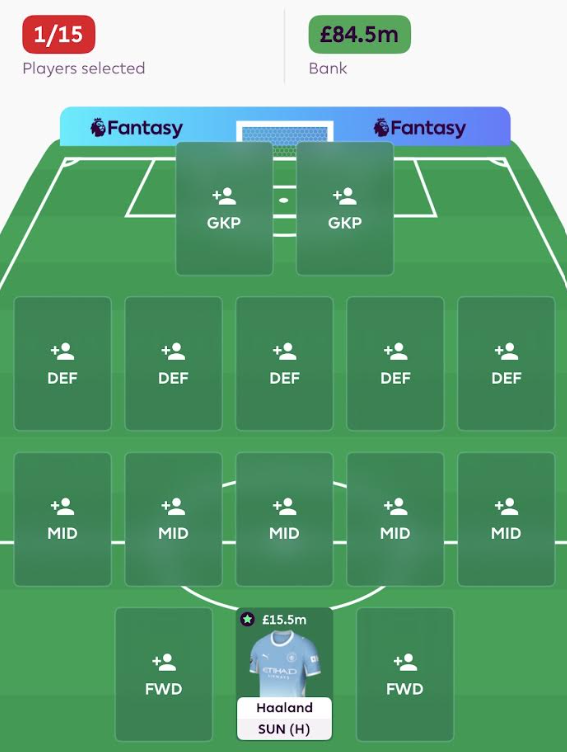
Eventually I completed my squad for the start of the season, but I was left with a nagging feeling of underwhelm as I looked over the team sheet staring back at me.
Perhaps this disappointment was rooted in the summer's World Cup. Yes, the tournament was won by a Spanish team famed for its collective brilliance, but in truth it was a World Cup for the stars. Lionel Messi, Kylian Mbappe, Erling Haaland, Jude Bellingham, Harry Kane, Ousmane Dembele and Vinicius Junior scored 48 goals between them in the Americas, accounting for just over 15% of the goals scored at the tournament. Selecting my fantasy team for that tournament in June and July was a difficult task for a completely different reason: there were simply too many stars to choose from.
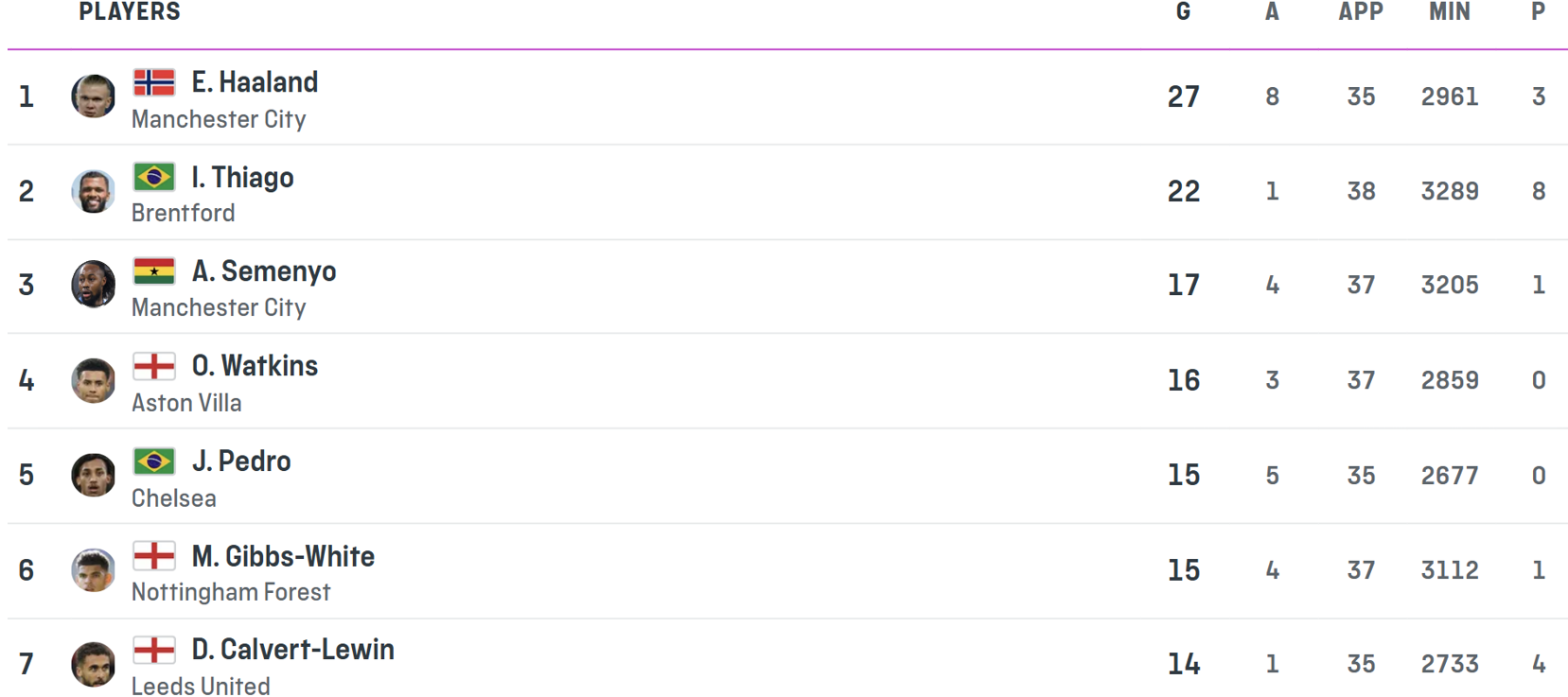
Compare that list to the top scorers in the Premier League last season. Brentford's Igor Thiago was second (behind Haaland), with Antoine Semenyo, Ollie Watkins, Joao Pedro and Dominic Calvert-Lewin also featuring in what is, frankly, an unexhilarating list.
So why is this the case?
Take Semenyo and Joao Pedro as examples: players signed by Manchester City and Chelsea from Bournemouth and Brighton respectively last season, for a combined fee of £124m; more than three times the amount that originally brought them to the Premier League. 'Big Six' teams, it seems, are unwilling to take a risk on players lacking Premier League experience, preferring to pay premium fees to other clubs within the English top flight.
One hundred per cent of Tottenham Hotspur's and Manchester United's spending this summer went to clubs whose players had already featured in the Premier League last season, their recruitment teams choosing to overlook talent across the continent. One example is Mamadou Sangare, signed by Brentford, who starred in Pierre Sage's Lens side last season in Ligue 1. Sangare ranked among the 15 best players in the league for possession won in the final third and recoveries per 90, and averaged a staggering 7.35 duels won per 90 across the season. Compare this to Sandro Tonali's 3.49 duels won per 90, nowhere near the top 50 for either possession won in the final third or recoveries per 90, and Spurs' decision to sign the Italian instead seems baffling, particularly given Thomas Frank's high-tempo system.
This is 'experience tax' in action, and it is contributing to a less exciting Premier League. Think back to being a child, to the fuzzy excitement and anticipation of Christmas Eve and what Santa Claus might bring. That feeling is mirrored, albeit on a different scale, when a new player arrives in the Premier League from abroad for big money, as Sergio Aguero or Paul Pogba once did.
These 'mystery' signings feel like they are at an all-time low, especially given the financial power of the English top flight. It is simply harder to get excited by the transfers of Elliot Anderson and Enzo Fernandez because we already know exactly who they are and what they do.
A counter-argument is that with more money in the game, the Premier League has become more competitive, so why should top sides look elsewhere when the best talent is already within the league, with the added benefit of weakening rivals? The rebuttal is that this is simply a self-perpetuating cycle. Players are recycled within the league, and the money paid to clubs like Brighton and Bournemouth allows them to invest heavily and grow stronger in turn. So the gap between the 'Big Six' and the rest of the league narrows, as the players bought by the so-called elite sides are often only distinguished from those signed by 'mid-table' clubs by Premier League experience. The more competitive the league becomes, the less elite the top sides appear.
But surely a more competitive league is a good thing? Yes and no. While a season more unpredictable than ever is exciting from a viewer's perspective, the resulting lower points and goals tallies at the top of the table feed this sense of 'elitelessness' within the English game. Arsenal won the league last season with 85 points; Liverpool the season before with just 84. Since 2011, only Leicester City have won the league with fewer points (80). Perhaps more strikingly, Mikel Arteta's side scored just 71 goals en route to their first title in 20 years, the lowest tally for a champion in well over a decade. You have to go back to the 2008–09 season, when Manchester United won the league scoring just 68 goals, to find a title-winning side that scored fewer.
Interestingly, in the early 2000s it was the norm to win the Premier League with fewer than 80 points; no title-winning side between 2000 and 2006 amassed a total bigger than 79. This coincided with a dry spell for English sides in Europe. A somewhat mediocre Liverpool side were the only English team to win either the Champions League or the UEFA Cup in this period, and no team that won the league went on to repeat that success in Europe during the same season.

This pattern is echoed in current European competitions. While English teams are dominating both the Europa League and the Conference League, Arsenal are the only Premier League side to have made it past the quarter-finals of the Champions League in the past three seasons. The reason seems clear: while the Premier League and English football as a whole is as strong as it has ever been, its top sides are clearly lacking in something. By prioritising Premier League experience, many clubs are overlooking players with European pedigree, favouring those who can fit a system over those who can change a game.
Ironically, it is the increased competitiveness of the league, the levelling out of the 'Big Six' with the rest, that is driving the trend towards signing players with Premier League experience. Victor Gyokeres and Florian Wirtz are examples of high-profile, costly signings from Europe (the Portuguese Primeira Liga and the Bundesliga respectively) who struggled to adapt to the pace and physicality of the Premier League when they arrived in England last season. A 'bedding in' period is often mentioned with regard to players arriving from the continent: the supposed uniqueness of the English game does not easily allow managers to plug in a new signing and expect instant results, with some players taking up to a season to match their previous form.

This explains the apprehension around new Liverpool signing Bradley Barcola. What would ordinarily be a marquee signing, shrouded in anticipation, is instead overshadowed by the lingering possibility that he could fail to live up to the hype, much like Florian Wirtz last season. For rival fans, the 'flopping' of a new signing has become its own phenomenon: the viral 007 meme, which originated after Jadon Sancho failed to register a goal or assist in his first seven games for Manchester United, has become a stick used to poke at clubs who dared to take a risk on a player from outside the Premier League.
And so clubs prefer to avoid the risk altogether, with the current Premier League mindset prioritising short-term success over longer-term rebuilding projects. The appetite for risk is at an all-time low. And so the cycle continues.
What happens when no one is willing to take a risk? Not much.
If it's any consolation, fans are probably just as guilty as these Premier League clubs. My eventual FPL selection was largely based on the most-selected players in the game, including the aforementioned Semenyo and Joao Pedro. Why opt for Mamadou Sangare, who has never played, and therefore never scored, in the Premier League, and is less likely to rack up points as a result? Subconsciously, Premier League experience picked my team for me.
So today's Premier League has an initiative problem. Nobody wants to blink first or break the status quo, leading to tactical battles rather than dazzling individual performances.
That said, Arsenal's 2-1 victory over Chelsea on Sunday was exhilarating and end to end, at least in the first half. Once Arsenal took the lead at the 50-minute mark, the match settled into a familiar pattern: Arsenal's resolute defence shutting out wave after wave of opposition attack. And ultimately, it worked.
So why should they change? What's the point of spending over £100m on a player who might improve the side when you've already got a winning formula?

As long as the formula works, it will persist. Premier League football will remain mundane until something other than mundanity prevails. My hope, honestly, is that Arsenal don't win the league again, or I fear this feeling won't subside for a long, long time.
Featured image: Pexels / Ilian Martin