
By Mia Goldberg, Fourth year, French and Spanish
This summer felt endless. I soaked up the sun, pottering around Bristol in shorts and flip flops. But by August, it was hard not to complain about the dystopian sight of the downs or castle park; the grass turned barren and lifelessly brown.
In England the relentless heatwaves showed us what has been clear elsewhere for decades; climate change is knocking at our doors. Therefore, it’s only natural to consider whether there’s anything more we should be doing to decrease our carbon footprint. Despite this, it doesn’t feel like there’s quite the same buzz around veganism as there used to be, and I want to explore why…
I think there are many reasons, from protein focused gym culture to veganism becoming more accessible and more normalised, and therefore requiring less conversation.
Veganism is not just a diet but a lifestyle choice with undeniable benefits for the environment and animals. I have many friends who were committed vegans and vegetarians for years, but upon writing this I realised that none of my friends are vegan anymore. However this doesn’t mean we’ve all switched to steak for breakfast, lunch and dinner - whilst none of my friends use the vegan label any longer, many of them still buy and eat vegan alternatives.

The thing is, I don’t think this transition is entirely negative. In fact, this makes total sense. As vegan options are more readily available, it has become easier to reduce the amount of animal products we consume. Perhaps many of us are adopting a more flexible attitude towards limiting our meat consumption - that something is better than nothing. On the other hand, many people still eat meat and dairy products, myself included. Maybe we reduce the amount we consume, or try to reduce our carbon footprint elsewhere; trains instead of planes, e-bikes instead of taxis, cutting down on plastic purchases and shopping local.
Some may not feel bothered to make any effort to reduce their carbon footprint at all, maybe feeling as if climate change is not their problem (but it will be). This mindset is a symptom of our current model of late stage neoliberal capitalism– the hyperindividualist ‘survival of the fittest,’ outlook, which removes our responsibility to look out for other people to the benefit of corporations, millionaires, and billionaires. This is propagated through diet and gym culture online, subtly advising us on how we can be an ideal employee.
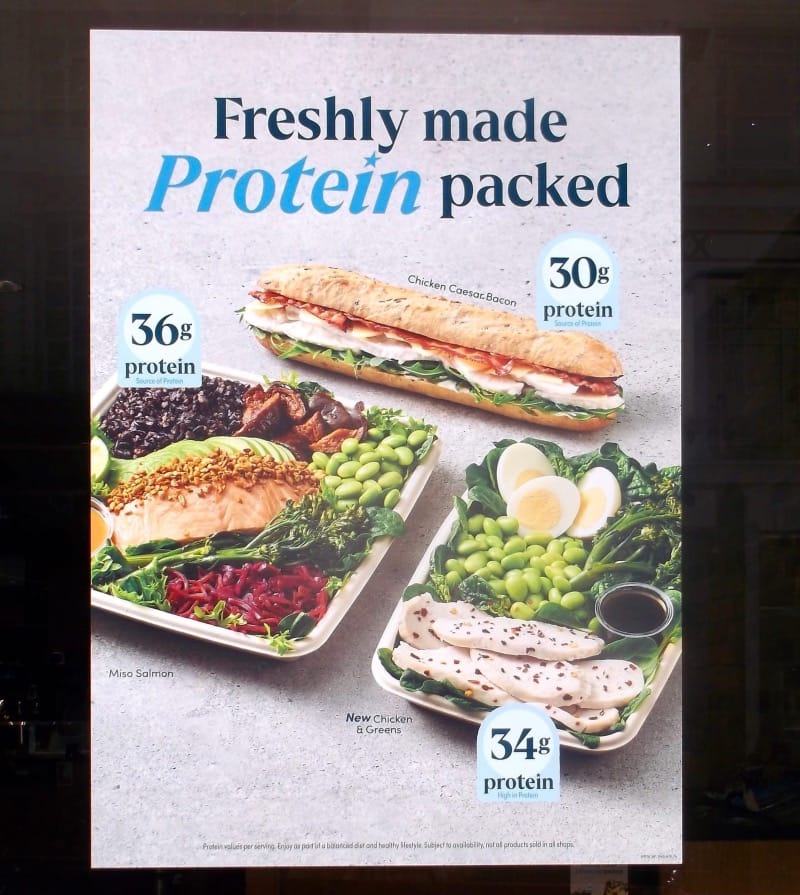
In recent years, there has been a cultural obsession with protein, specifically animal-based sources. Fitness influencers often recommend much higher levels of protein than the NHS and British Heart Foundation recommends as part of a healthy and balanced diet. This shouldn’t come as a surprise as diet culture has consistently been aesthetic based as opposed to health focused. Where the diet and fitness world once pushed processed Weight Watchers microwave meals and Fibre One 90 calorie cake bars, it now offers Fuel protein bowls and Huel meal replacement drinks.
Veganism, in its simplest form, contradicts this notion. It not only promises to reduce your carbon footprint, and ensures that animals are not needlessly mistreated for our benefit nor to the detriment of the planet, but can be your escape from the push to strive for a certain aesthetic.
You no longer need to be as strict as Freelee the ‘Banana Girl’ and her raw vegan diet. You don’t have to purchase pricey fake meat options, supermarkets like Lidl offer their own, alongside the less processed tinned pulses, grains, and beans. The normalisation of vegan alternatives suggests that the movement is an accessible way to do our part.
After a climate change sponsored summer, why haven't we been discussing whether or not we should all switch to veganism? This may reflect how many are already doing what they can, and that we have grown out of the extreme online rhetoric that once followed the vegan label.
Nonetheless, at the end of the day, as much as the individual can play their part, much of the power to create change lies in our government.
 Emily MacLean

Whilst Bangladesh suffers from flooding and droughts year on year, and France catches fire, the government approves unregulated AI data centres. Whilst England is ‘[one of the leading countries] demonstrating sustained emissions reduction,’ we are outsourcing production that is not climate conscious to countries in the Global South, damaging their land and lives and hiding the consequences of our actions.
We have a lot to feel angry and hopeless about. However, let this not discourage you from taking small actions and steps. Changing everyday habits to contribute to systemic change are key in highlighting to ourselves and those around us that we do have autonomy, agency and power.
Opting for a mostly plant-based diet can benefit our planet, as well as yourself. Taking these small actions are an important part of turning the wheel towards definitive change.
Featured: Epigram / Mia Goldberg
Has this article inspired you to take the steps towards a more plant-based diet?