By Lewis Burley, Third Year Theatre & Performance
The demon barber of Fleet Street slashes through the Winston Theatre in MTB’s production of Sweeney Todd. Often cited as Stephen Sondheim’s favourite musical from his own body of work, it is a cautionary tale of the futility of revenge. Returning to London in a search for Judge Turpin (Elliot Arbibe) who abused his wife (Phoebe Taylor), who he is told is dead, Sweeney (Tomos Hawkins) enters in a murderous business arrangement with the failing pie shop owner Mrs Lovett (Oliva Moss) in a seek for revenge that leads them to hell.
We attend the tale even before lights up thanks to pre-show performers walking around the foyer and the auditorium, attempting to immerse the audience in the world of Sweeney Todd as London street workers. This is the audiences first introduction to director Katie Shallcross’ intervention to extend Fleet Street beyond the stage and into the whole auditorium. Cast members entered and exited from the theatre’s main entrance doors and seating walkways throughout the performance adding dynamism to proceedings while reinforcing the endeavour to transport the whole of the Winston, and those in it, to Fleet Street.
The stage itself, curated by Aesthetic Designer Eli Grundy, was stripped back to student theatre’s black box roots. The Winston’s stage becomes the great black pit of London, evoking the dark god Sweeney it is said to serve, increasing the sense of death and misery Sondheim’s musical revels in. The set pieces themselves were likewise sparse. The pie oven upstage, a few draws and a table for the pie shop itself were overshadowed by the stairs leading to the second floor. Here on the set’s second tier, Sweeney’s bare barbershop housed his fancy chair. Looming over proceedings the barber chair featured a trap door and slide mechanism that ejected Sweeney’s victims down to Mrs Lovett’s pie shop below, keeping this show in line with all other major productions of Sweeney Todd. Impressive as this mechanism was, its need to be raised to a sufficient height led it to claim victims of its own. Namely, the spines of the audience members in the back rows who had to stoop down in order to see the faces of the actors stood on the platform.
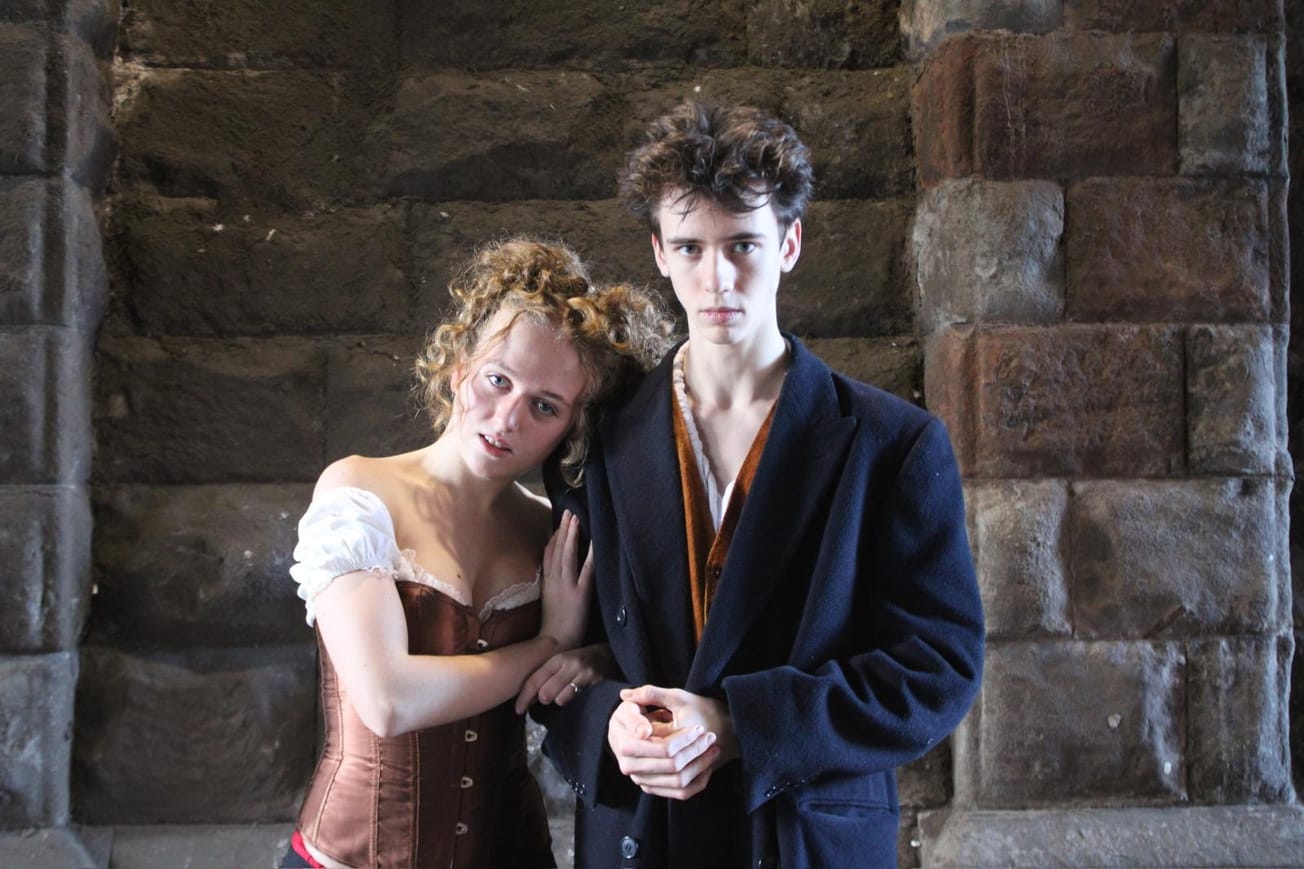
Shallcross presided over a talented cast who all delivered Sondheim’s lyrics with impeccable vocal dexterity. Moss embodied every facet of Mrs Lovett effortlessly gliding between witty permissiveness, vulnerability and maternal care, all while sadistically revelling in Lovett’s cannibalistic enterprise. Hawkins’ Sweeney mastered melancholic brooding as he painstakingly waited for Turpin to arrive under his razor, conveying a great emotional depth when in song with an almost operatic grace, shining in every number. But for such a murderous character a feeling of threat was never quite there. Hattie Parkinson as Tobias Ragg was magnetic, commanding the audiences gaze with her talent. Parkinson has a remarkable ability to portray an improvised merchant boy so convincingly.
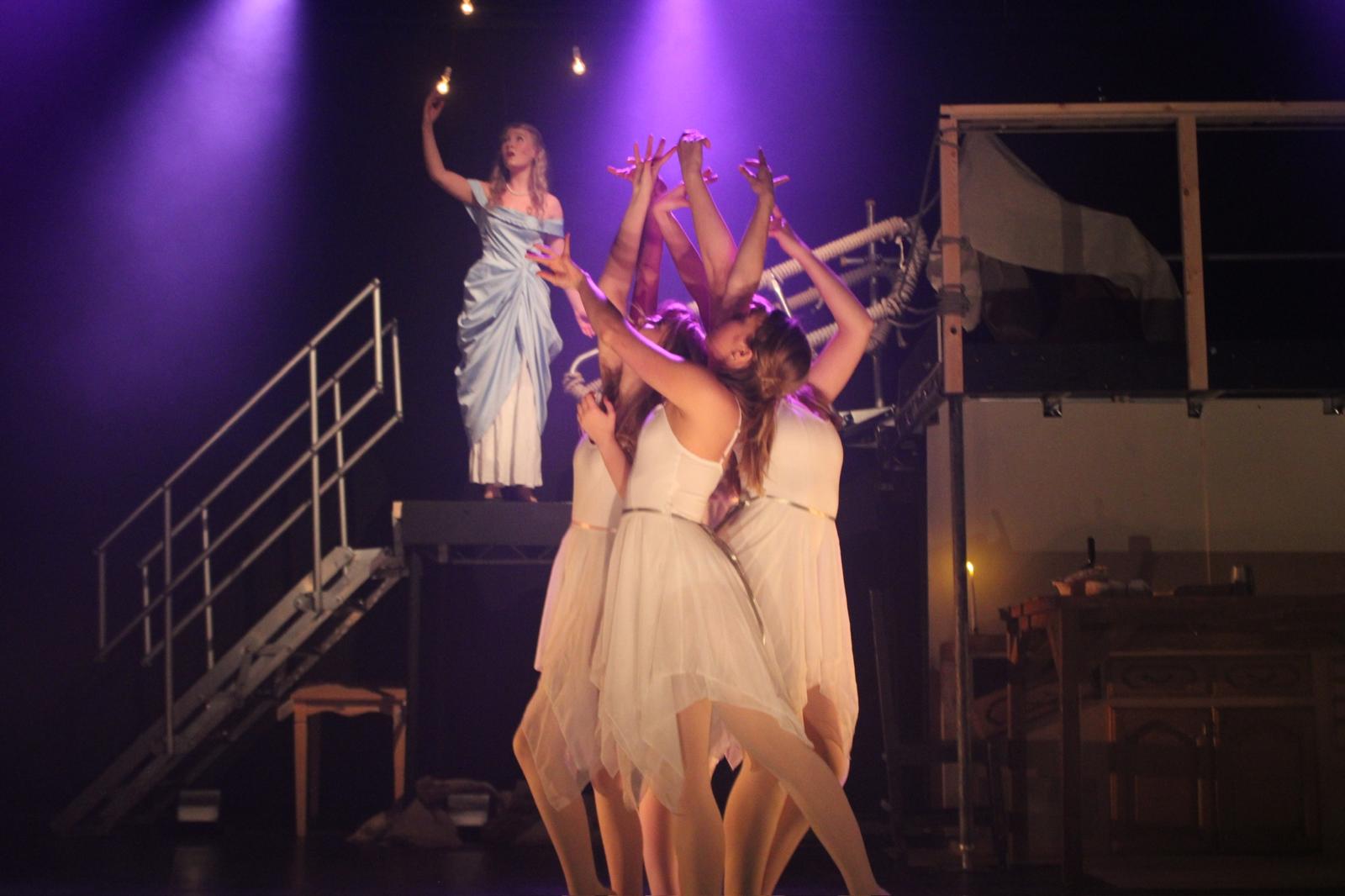
Parkinson’s first appearance as Ragg was also a highlight for Izzy How’s choreography which injected a great shot of energy into the performance as well as moments of comedic levity. This was a welcome break from the high levels of anguish that feature throughout the performance. As was a beautifully choreographed ballet sequence while Johanna (Tilly Collard) sings dreaming of greater freedom. The purity of the character and the elegance of the lyrics mirrored through the delicacy of the movement was an obvious but effective device. The sheer size of the ensemble cast did leave little room for manoeuvre when they were all on stage, hampering what was possible from a dance perspective. Despite this, the ensemble cast’s performances amplified the sense of foreboding during their time on stage. Whilst rudimentary at times, the ensemble scenes also got the best of the lighting team’s (led by Issy Walker) design which featured richly atmospheric states. The use of footlights, and a series of footlights on the second-floor handrail to supply Sweeney’s barber shop with menacing shadows, was ingenious.
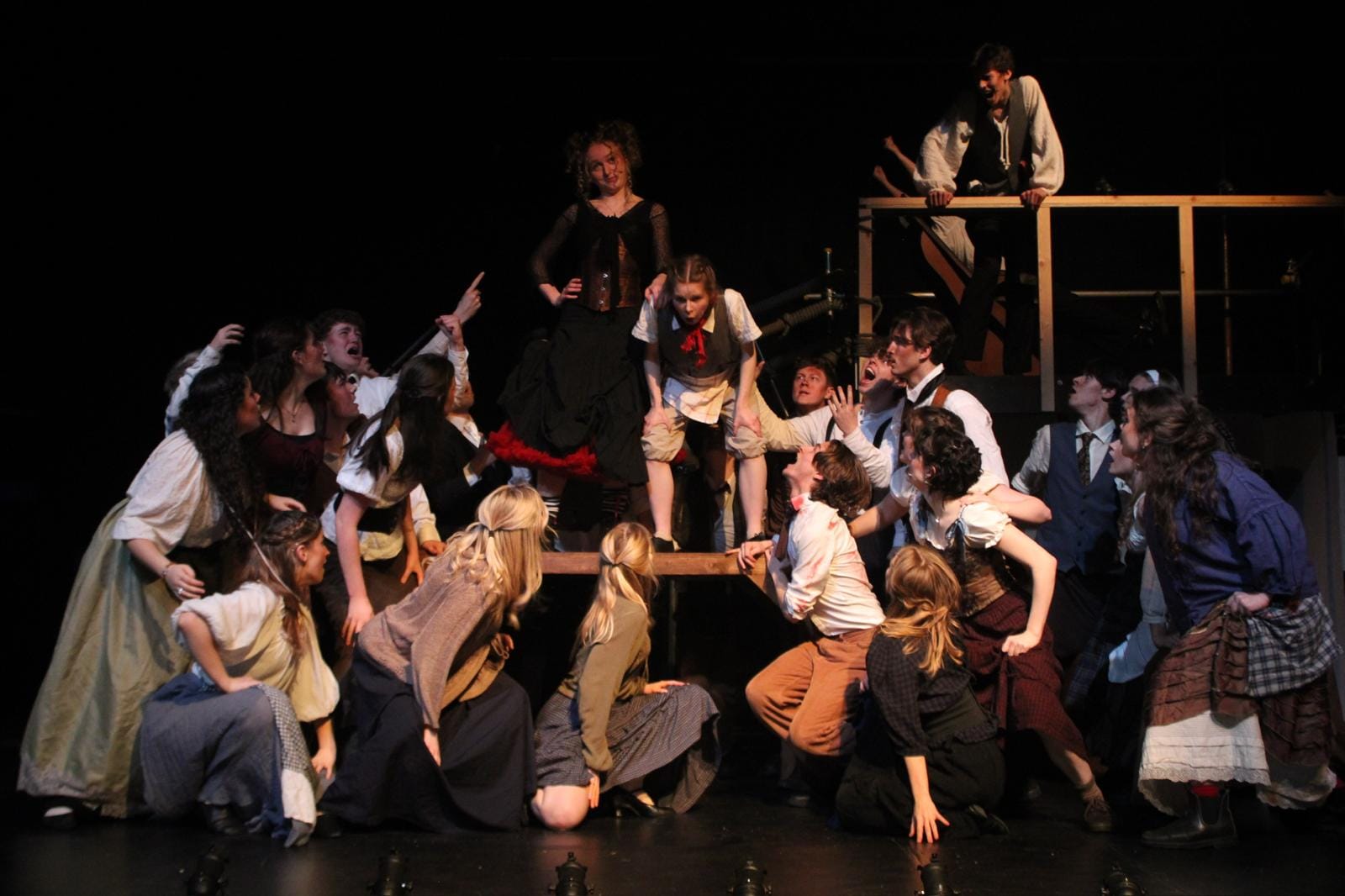
The action on stage was masterfully underscored from the music pit by Music Director Finlay Cooper and the whole of the band. Displaying great prowess and ability as they blustered the audience with Sondheim’s music. However, despite the band's brilliance, a theme of the night was audio mixing. The sometimes-bombastic levels of sound emanating from the music pit was not offset by the majority of cast or by the level of their mics. This imbalance disappointingly rendered whole verses, key lyrics and passages of dialogue completely inaudible. A problem which plagued the whole run of performances.
 Juniper Gardner
The production was a faithful rendition of Sondheim’s personal favourite. Focused not on reimaging or revolutionising the musical, this production sought to deliver entertainment via a popular and familiar staple of musical theatre to audiences who favour just that. It achieved this through shrewd direction, a talented cast and a dedicated production team. It is an impressive feat staging a musical with 35 cast members along with a full band, plus the associated time and labour needed to costume, tech, rehearse, choregraph, vocal coach, schedule and learn the show. Regardless of its few defects, it is a show that deserves commendation and it is a strong addition to the UoB theatre canon. The rehearsals until 11pm were worth it.
Featured image: MTB / Emma Conway
Did you watch MTB's Sweeney Todd?