By Janine Tan, Second year, Law
It’s a good time to be alive! It’s been eight years since Brad Bird last directed a film (2018’s Incredibles 2) and it’s been a long, cold, lonely winter. Debuting with the tender-hearted The Iron Giant (1999), Bird went on direct to the crème de la crème of the Pixar canon - The Incredibles (2004) and Ratatouille (2007).
But even before this, just as we have ideas we dream up as children and never let go, Bird wrote the story ‘Ray Gunn’. It was originally meant to be produced in the 1990s but was shelved and relegated to the corner of development hell. After being dormant for decades, the film premiered this October, 35 years after its original conception.
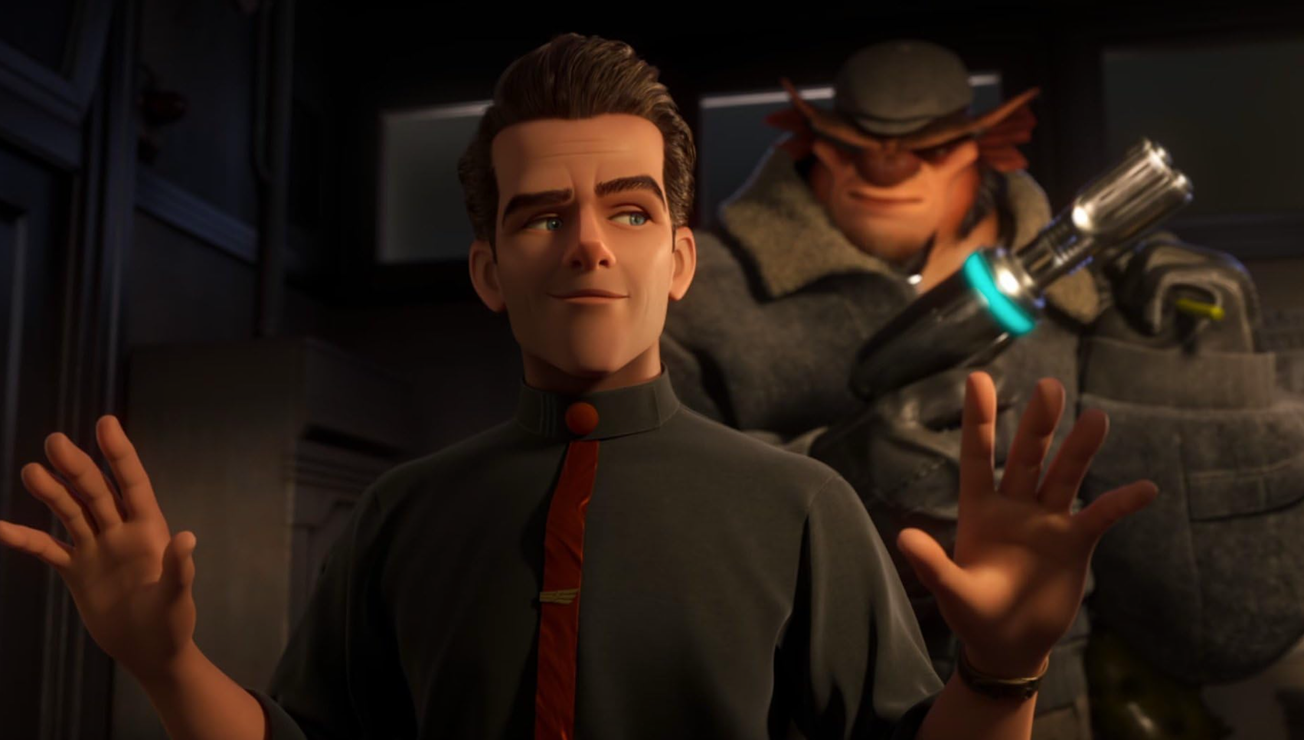
In a futuristic world with aliens and humans alike, Ray Gunn (Sam Rockwell) is the last human private eye. His industry grows more corrupt and nefarious by the day with most either jumping ship or cashing in. But, just like Mr. Incredible and Remy from Ratatouille, Ray is Bird’s favourite kind of leading man: one who must struggle for his ideals. At the cost of running an ethical practice, Ray and his alien partner Eyera (Tom Waits) barely get by until a lucrative case pops up. That is - one entangled with the world’s biggest pop star: Venus Nova (Scarlett Johansson).
It’s hard to be normal about this. The film’s great pleasure lies in knowing, from the animation alone, that Bird is back. Right off the bat, we see Ray jump into action, going toe to toe against aliens. The characters move and fight like a dance, so fluid in motion and design. We are led through the fictional city of Metropia, which is truly sci-fi at its best - holograms, flying cars and beautiful vintage 30s colours.
The result is euphoric. It feels good to see such playful art on the screen, to listen to blasting horns from what can only be Michael Giacchino and to hear the timbre that Rockwell and Waits bring to the buddy duo. There's so much to take in but nothing is wasted. Every little detail seems webbed and weaved intricately into the mystery, taking their turns to propel Ray to the truth.
Bird’s careful approach is clearer than ever in the dialogue. The only way to describe it is honey on a wound. His characters sound like they’re having real conversations - not all is revealed at once to us but, in patience and through observation, we learn what we need. Every line need not be happy and sassy and quick. This is desperately welcome in an industry caught up in what animation Journalist Bob Miller calls the “attitude of panic, for short attention spans".
 Zoe Lewis
Bird is indeed a master of so many arenas but seems to falter in one: it’s unclear what the film’s message is. It flops back and forth between its central idea of truth and the smaller ideas tacked on towards the tail end. One of which uses a … unique metaphor for discrimination? It’s odd but not particularly odd for Bird. At his worst, he’s still able to bring us a sincere and important message, albeit muddled.
Perhaps I’m being a little generous, but it’s hard to find fault in a project with so much heart. There are too many things in it that speak to the child in you, no matter your age. Should I mention Giacchino’s score again? No? It’s just exciting to see Bird return with another world to get lost in, and I hope we don’t have to wait as long for the next one.
Featured image: IMDb / Ray Gunn
Did you also originally think this film was about Rachael Gunn - the Australian Olympic breakdancer?