By Rebecka Melvin, Third Year, Philosophy
There is hardly a better way of encapsulating the legendary return of Oasis than through the opening song of their tour: ‘Hello (it’s good to be back)’.
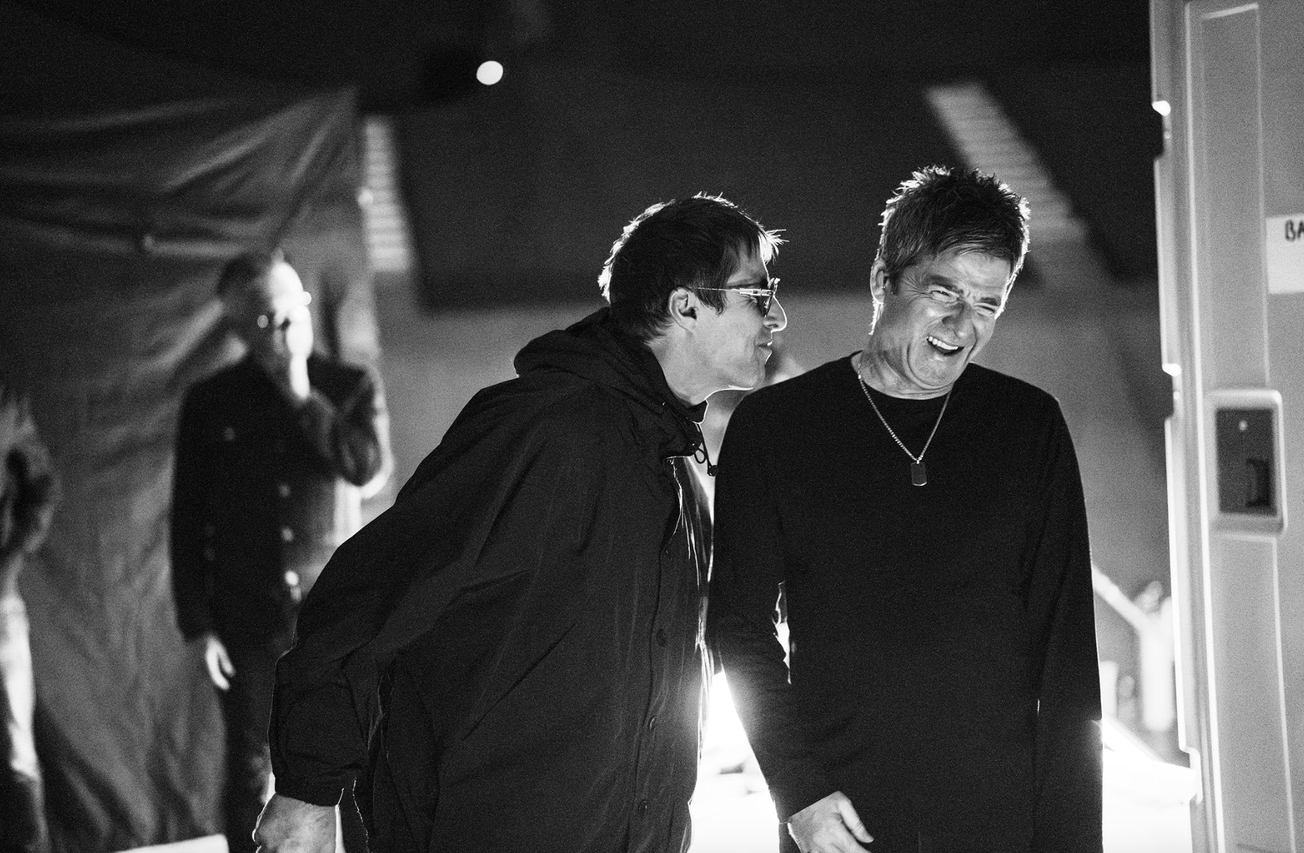
This 2026 documentary follows the Gallagher brothers’ revival from studio to stadium, focusing on the international impact of the band and the lessons learnt from their success. But what becomes amusingly apparent throughout the documentary is the irony of the duo’s inability to take their own advice when it came to their brotherhood.
This film details the questionably unproblematic lead up to and follow through of Oasis’ 2025 world tour. Having fallen out dramatically in 2009 during a festival in Paris, the Gallagher brothers had been on a hiatus from playing together as a band. Using old concert clips from fans along with clips recorded throughout the current tour, directors Will Lovelace and Dylan Southern encapsulate the 2025 Oasis tour as a wistful return to the stage, where old wounds are mended through music.
While the documentary has weaknesses in failing to address the elephant in the room of what brought the brothers back together, it shines in evoking the same themes Oasis’ music centres around: nostalgia, home-coming and the British tradition of answering life’s difficulties with the two-finger salute. Primarily, the documentary evokes nostalgia through the interplay of clips of a 20-year-old Liam Gallagher passionately spitting lyrics into the mic while singing about living forever and shots from the 2025 concert of his now 54-year-old self singing the lyrics with the same militant snarl.
However, the directors take equal consideration for the fans of Oasis as they do to the singers, including heart-warming shots of older fans unwaveringly belting the lyrics to the songs, feeling as young as they did when they first listened to the band. The overwhelming idea that fills your mind while regarding the different generations that filled the crowd of the tour is that music carries through the ages. The documentary is an Oasis time capsule, filled with small pleasures like clips of Liam swaggering into the rehearsal studios, singing exactly as he did 16 years ago in the same outfits he wore as a 20-year-old.
It is difficult to not feel sentimental as shots linger on Noel’s reaction to his brother's natural musical talent, having seemingly developed a newfound respect for Liam’s incorruptible nonchalance and authenticity. Watching the documentary seems to be a full circle moment, where their own songs have manifested to reality. We may say that the Gallagher brothers seem to have left their dark days behind and are now living through their ‘brighter days’.
The documentary spans multiple countries as locals describe what Oasis's music means to them. A sense of homecoming builds as we see that, while the Gallaghers may have no personal ties to places like South Korea or Sao Paolo, their songs do. Their music has created a home of its own for people across the world, where like-minded fans find each other and build a community. On the flip side, the brothers themselves experience homecoming by performing in their hometown Manchester, where the directors teasingly incorporate a sermon detailing brotherly forgiveness without further elaboration.
Perhaps more touching was the reception of the brothers in Dublin, with 80,000 fans bellowing the tune of ‘The Auld Triangle’ to welcome the brothers back to their land of heritage. There is a reciprocity between fan and artist, where, in exchange for their music, they receive community. Yet this is also drawn out through the theme between fellow artists, who, through music, are rewarded with the mending of relationships. What brought the brothers back to one another remains a mystery. Perhaps they took a page out of their own book and decided to ‘not look back in anger’ as the name of the documentary blatantly suggests. Or perhaps their overwhelming love for being a ‘rock ‘n’ roll star’ beckoned them back to the stage.
 Eluned Darwin Goss
Southern and Lovelace seem uninterested in exploring the multitude of reasons for Oasis’ return, instead focusing the storytelling on the effect their music has had. While this strengthens the escapist and optimistic themes Oasis were adamant in spreading, it is also the initial sign of the documentary walking a thin line between starry-eyed optimism of Oasis’ music as a saving grace rather than as a tool to bring together community. The choice to fade from religious sermons and scenes of crowds mourning the Manchester bombing, to Oasis’ concert suggests the surface-level attention to detail the directors wanted to pay to deeper issues.
While this is not inherently bad, it can account for the repetitive aspect of some of the anecdotes from Oasis fans, where the incorporation of a diver describing her love for humming the Oasis tunes while swimming makes you question how long is left of the film. Nonetheless, it is a reminder of the importance of family and a sweet reminder that you can always find your way back home.
Featured image: IMDb / Oasis: Don't Look Back in Anger
What does Oasis’ music mean to you?