By Daisy Forbes, Second Year, Film and Television
A woman who has sent one of the most powerful messages to an entire generation without really saying anything at all, Phoebe Waller-Bridge is most known for her bold depiction of women, unabashed exploration of sexuality and complex characters and themes.
It is this complexity that makes her one of the most enigmatic women in the industry. Much like the relationships she creates on screen - messy and convoluted in nature - her ideas expressed are just as disorganised. However, it's this unapologetic nature that emits a sense of unconventionality. You can’t discuss Waller-Bridge without her unmistakable yet multifaceted links to feminism as her resistance to adhere to norms is inherently feminist.
The question of whether this resistance is conscious or unconscious is largely irrelevant as, by being unashamedly herself, she has made a space where women feel they can do the same. It is in this way that she has acted as a generational voice by simply existing, self-exploring and projecting what she’s found in the characters she’s created.
While this remains prevalent in all her work, her TV show Fleabag (2016-2019) is a prime example of how this complexity plays out. The show follows an unnamed woman stricken with grief and guilt over the loss of her best friend as she simultaneously deals with a complicated relationship to sex, her family and the practice of being a good feminist. In the second season, we see her attempts to find love - a concept Waller-Bridge explores in a characteristically messy yet sublime way.
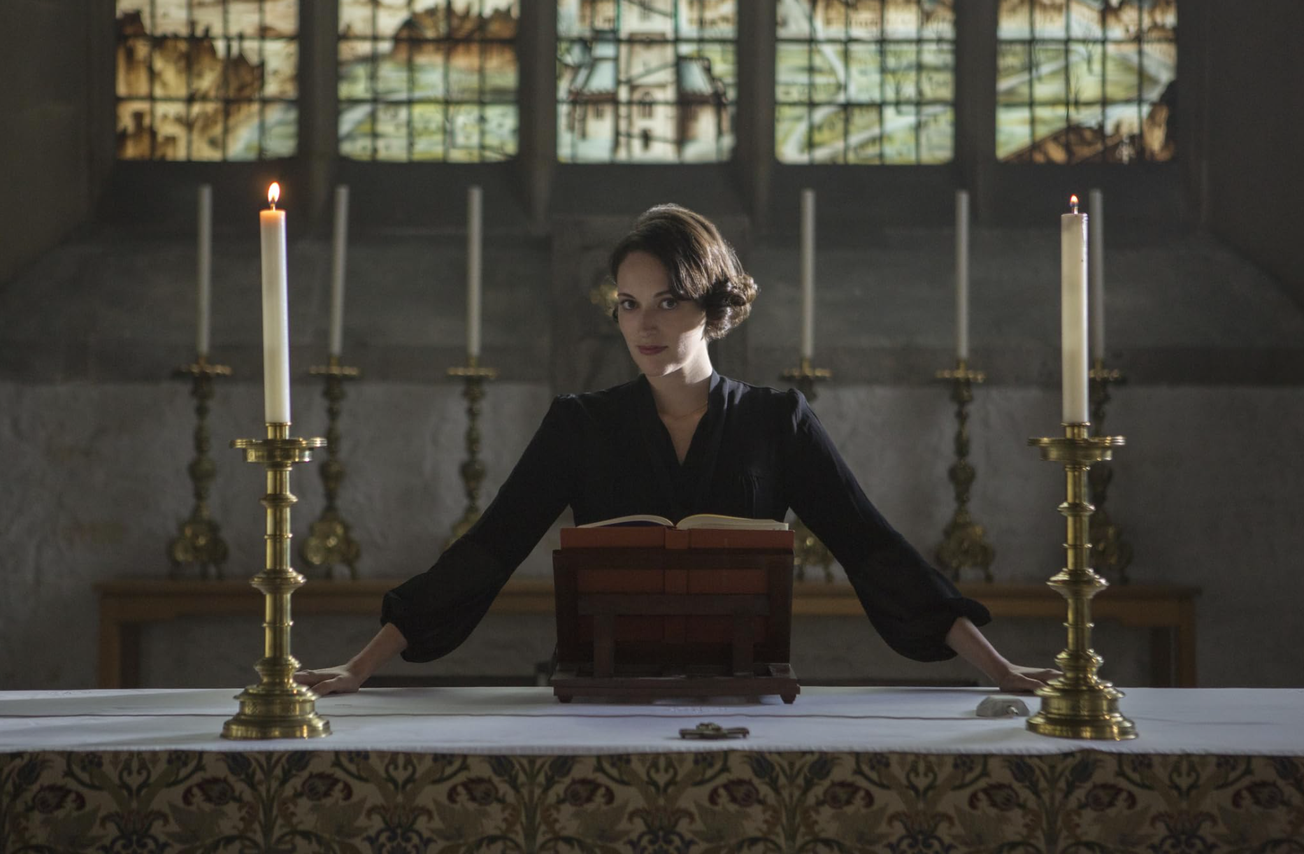
Throughout the show, by being a truthful voice unafraid of societal reception, she signalled a new era of how women are presented in the media. To me, the scene where her character is taken by the Lord to express her purest thoughts is one of the most feminist scenes I have ever witnessed, especially her line ‘I sometimes worry that I wouldn't be such a feminist if I had bigger tits.’
This scene represents the meeting of honesty and shame that truly represent the way so many women think. It embodies the guilty feeling of wanting superficial things that are only desired because of the patriarchy and the following self-loathing for the truth of the want. It’s a comment on the intricacies of womanhood and a statement that there isn’t one clear-cut way to be a feminist. Perhaps the only uniting factor between the different interpretations of feminism is the acceptance of this.
Author Alison Espach made the observation that to question whether Charlotte Brontë’s canonical 1847 novel Jane Eyre is a feminist piece of work is to misunderstand what feminism is. And I think the same applies to Waller-Bridge. To look at her as one thing is to misunderstand the entirety of what she represents. She is raw and true in a way that we both aspire to be and dread really being. It is this is the complexity that I admire most, especially how she made an entire generation of women willingly align themselves with a nameless character who’s only verbal comparison is to a bag of fleas.
This is what so many women see themselves as but is that necessarily a bad thing? She’s enacted an air of acceptance, almost wanting to be raw and messy because at least it’s truthful. The adage ‘an entire generation’ might be a stretch. However, just as I was sat in a café writing this article, I overheard a woman on the table next to me say to her friend ‘So I finally watched Fleabag season 2’. So let that speak to the widespread nature of the show’s effects.
Killing Eve (2018-2022) - a show Waller-Bridge acted as show-runner on for its first season - can be met with the same regard in its exploration of themes, such as morality, sexuality and feminism. The show follows MI5 agent Eve (Sandra Oh) and assassin Villanelle (Jodie Comer) in a deadly cat and mouse game that results in an obsession and infatuation with one another, leaving a trail of victims behind.
In rereading an essay I once wrote, I realised I made the same mistakes that Espach criticises. In trying to discern the main messages of Killing Eve, I contemplated the show's messages surrounding femininity and mortality. Aspects like reversed gender roles and fearless women said one thing but the equating of female power with abjection and criminality said another. And, while I still agree the takeaways remain convoluted, the fault lies in trying to understand them at all, much like Waller-Bridge herself.
If I were to write that essay again, I would make a similar argument to Espach - that, when it comes to Killing Eve or any of Waller-Bridge’s work, the question of being a feminist or not, or even of being moral or not, is futile. Instead, you should look at it as a representation of womens’ relationship to feminism itself. And in doing so, the message I take away is that this will never be one thing. To ask whether Waller-Bridge's work is feminist is to misunderstand feminism itself because her work stands as a piece in the myriad of the ideology and an ode to its nuances.
In an interview with Katie Glass, Waller-Bridge echoed this, saying that ‘We’re more interested in asking the questions than having the answers’ with Vicky Jones, her writing partner, adding, ‘The truth is massively conflicted anyway, the best you can do is talk honestly about it.’ In fact, Waller-Bridge's success is also a testament to the power of her creative collaboration with Jones, seen in the two's cohesive and boundless relationship. In search of creative freedom, the pair created the theatre group DryWrite, where they went on to make Fleabag in its initial form - a one-woman show at the Edinburgh Fringe, directed by Jones and starring Waller-Bridge.
 Leanor Allon
However, what is most fascinating about their working dynamic doesn’t necessarily lie in their work but rather how said dynamic defines the tone of said work. In the same interview, Glass said ‘It’s hard to know where Phoebe stops and Vicky begins.’ This is yet another example of how Waller-Bridge's mere existence in both what she does and who she does it with so clearly guides the experience of the characters she creates. For example, in Fleabag, the character of Boo (played by Jenny Rainsford) is based off Jones
This reveals the power of self-exploration as a catalyst to storytelling and the idea of art as an introspective device. But, most importantly, through her and Jones' close relationship and subsequent work, Waller-Bridge, without even having to say anything at all, sheds light on the importance of the relationships behind the relationships we see, be that between characters or the one you have with yourself.
Featured image: IMDb / Phoebe Waller-Bridge
What's your favourite thing Phoebe Waller-Bridge has done?