By Charles Hubbard, Second Year, Theatre & Performance
It’s no secret that David Lowery has a slight obsession with ghosts. In fact, if the tagline for his most recent effort is to be taken at face value, it’s a reputation he’s very much aware of and is potentially getting a little tired of. This may be conjecture on my part but when you sell your new film as ‘This is not a ghost story’ after your biggest critical success was called A Ghost Story (2017), it certainly feels like you’re inviting people to interpret you that way.
Like George Romero with zombies and Francis Ford Coppola with vampires, Lowery has sought to use ghosts as studio-friendly workarounds to dive into every elevated horror fan's biggest sweet spot - psychological trauma. Though, unlike his fellow A24 whores Alex Garland and Ari Aster, Lowery never uses the smokescreen of ‘serious issues’ as an excuse to extend the runtime past its breaking point while still using the same cheap horror shorthand.
In fact, describing the film as a horror movie at all feels somewhat misleading and reductive - it has about as much use for a jumpscare as its protagonists do for politeness. Changing genres with the ease and confidence of a career cabbie navigating traffic, Mother Mary (2026) leads the audience down a twisted path that never quite seems to zag where you expect it to - Lowery delights in constantly surprising his unsuspecting ticket-buyers to the point where the world outside the film’s main location seems as unreal as the monsters trapped within the main characters’ bodies.
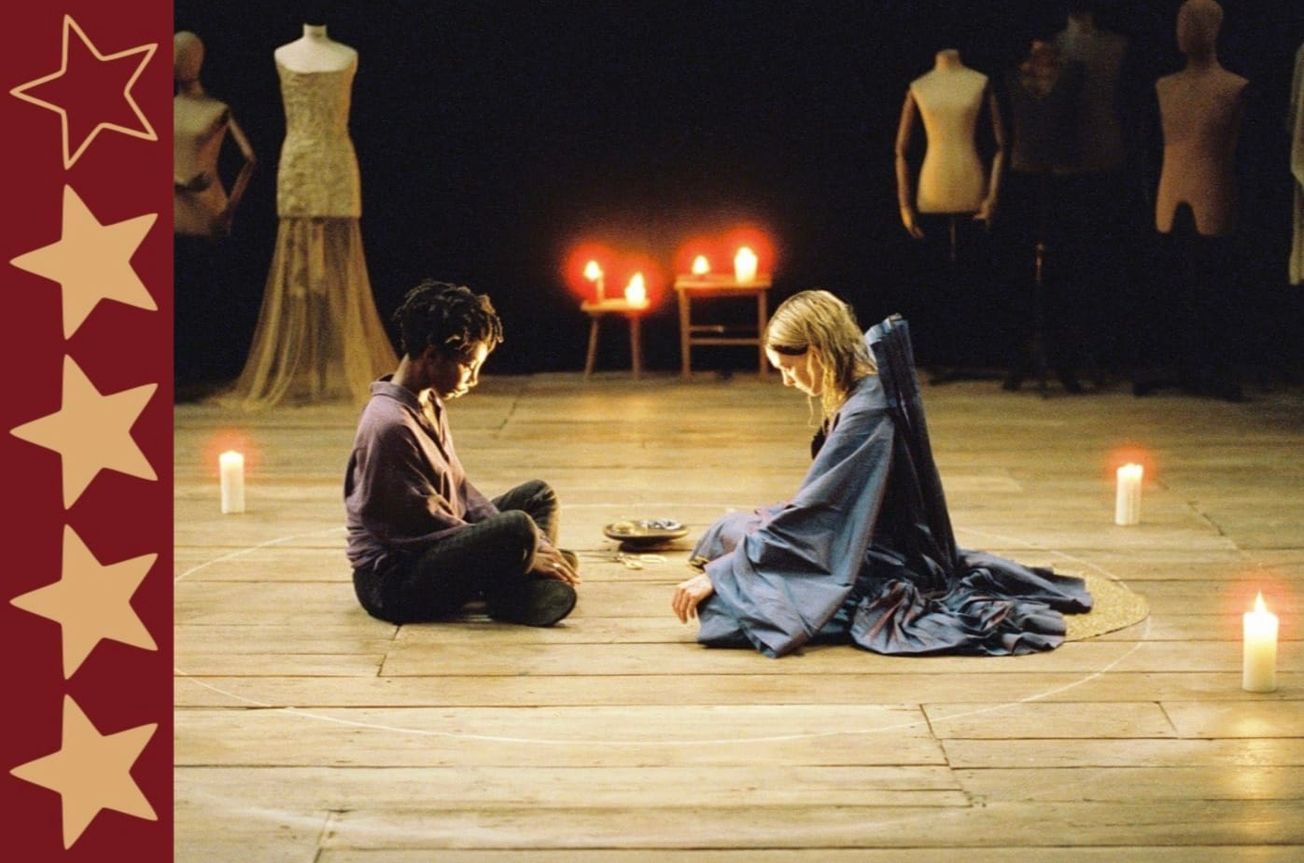
Mother Mary (a characteristically vulnerable Anne Hathaway) is a pop star of an undefined stardom, undefined age and not even given a name outside the one she’s known by on stage. All we know about her is that she combines the performance art stylings of Lady Gaga, the inverted catholic imagery of Madonna and the hyper-electronic vocals of Cher. In other words, her only notable identity is a patchwork of other people’s. Remember that - it’ll be important later. The only person who seems to have any read on her is Sam Anselm (a simply astonishing Michaela Coel), the acclaimed costume designer who helped shape Mother Mary’s look (single-handedly, if you were to ask Sam).
Yet the two had a dramatic but mostly unreferenced falling out whose origins and specifics are left a virtual mystery to the audience, even as the film winds to a close. But back through Sam’s door Mary walks to request that she define the dress for what Mary hints will perhaps be her last performance. What follows is a viscerally intense duelling match between two of our finest living actresses and one that goes far beyond a simple relitigation of a platonic breakup.
What’s most gratifying about Mother Mary is that Lowery has no time or patience for the parts of ghost movies that normally drag the most. There’s no refusal of the call, no one’s disbelief or doubts have to be overcome and, when Sam decides that a full-blown exorcism is necessary (sadly no Max von Sydow), Mary goes along without much resistance. This allows it to get straight into gnarly dissections of the supernatural without much foreplay, and when you have a director this adept at portraying haunting, beautiful beasts of the undead, the less buildup, the better.
However, when Lowery plays around with a lot of the thornier imagery here, such as non-literal depictions of self-harming and queer-coded visuals, you start to question his control over his creation just a little bit. In an age where self-harm among young women in the public eye is becoming the rule, not the exception, it’s potentially irresponsible to have your protagonist cutting herself open be the climactic moment of positive catharsis in your movie about that same woman struggling to deal with anxiety and panic attacks.
Similarly, the film flirts with a great deal of vaguely queerphobic imagery, including the main ghost (who is explicitly called a ‘she’) entering Hathaway through her mouth, and a conjuror’s physical closeness to Mary during the scene where they summon the ghost for the first time is presented as menacing and suspect. My touchiness on this account might be due to the fact that, because Lowery is a straight, white man, I somewhat doubt his bona fides to deal with this material, even if he handles it with more sensitivity and nuance than most filmmakers of his colour and creed.
The film exists as a showcase for its two main performers first and foremost. And thank god because it’s been far too long since we’ve seen either get handed the calibre of material they so richly deserve. Hathaway, an actress too long dismissed as insincere or ‘the Queen of effort’ (which I’ve always seen as a feature not a bug), is a perfect fit for a pop star who’s a little too serious about her own material.
Considering she became an A-list star at 20 (at a time when Hollywood brutalised young actresses even more than it does now), she’s probably had some less than great days in the industry and that kind of weariness fully comes through when portraying a character who’s burned herself right down to the nub. It’s just very funny that a movie about Hathaway having a complicated relationship with the extravagant dresses she wears is coming out just a week shy of The Devil Wears Prada 2 (2026).
However, if anyone was ever talented enough to blow peak Hathaway right off the screen, it’s Michaela Coel. In her long-awaited return to the top of the call sheet after the breakout success of I May Destroy You (2020), Coel is nothing short of transcendent in the role, handling the verbose monologues of Lowery’s script with exquisite panache and relish while always keeping her cards close to her chest. If she isn’t making Best Actress shortlists come November, I’ll know we have a huge problem.
My few problems with the film, such as Lowery’s positionality as a white man and the questionable decision to give the final dramatic denouement to Hunter Shaffer rather than the two leads, are paltry when compared to what a wonderful tapestry it weaves in the spaces between them.
 Sophie Robinson
As someone who can’t often enjoy horror films due to their clear disdain for their audience or glib handling of sensitive material, it’s nice to walk out of a genuine seat-lifter not wanting to immediately drown your sorrows. Lowery’s quietly one of the best directors we have right now, and all the better for never getting boxed in by the constraints of his chosen genre.
Featured Image: IMDb / Mother Mary | Illustration by Epigram / Sophia Izwan
What did you think of Mother Mary?