
By Luke Beaumont, SciTech Subeditor
It’s your third evening in Bristol. You’ve met two people, accidentally joined three group chats you’ll never use, and eaten pesto pasta three nights in a row because you still haven't found out where the closest Aldi is.
You then open Instagram for five minutes before bed. Somehow everyone else appears to be at the perfect flat party. They are surrounded by twenty new best friends. Within minutes, excitement turns into a question: ‘Have I already fallen behind?’
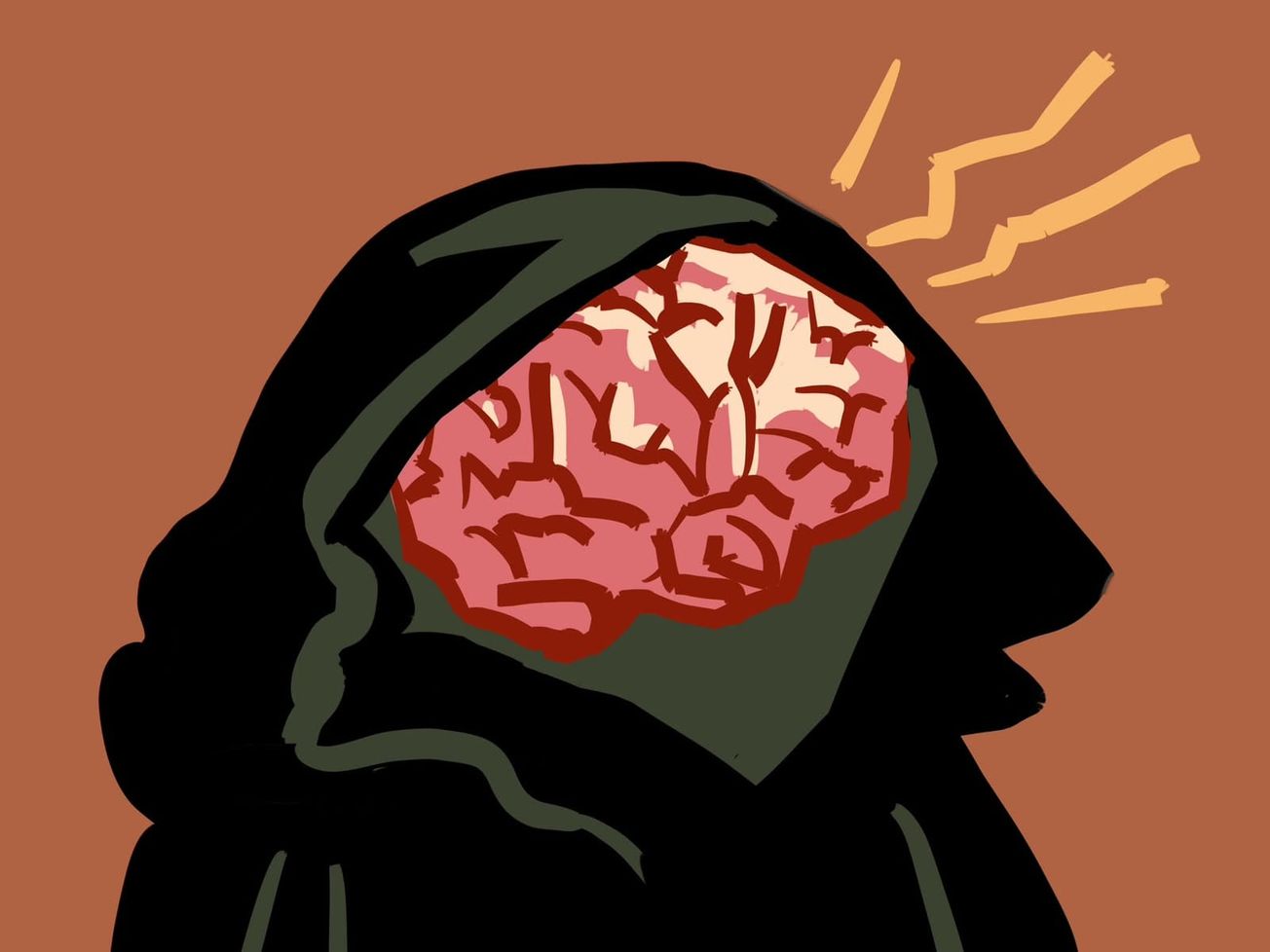
But why does scrolling through someone else’s Freshers’ Week feel emotionally worse than actually being alone? Why do we feel FOMO (fear of missing out)?
Why Your Brain Cares So Much About Belonging?
Humans are fundamentally social creatures. For most of our vast evolutionary history. Belonging to a group wasn’t simply comforting; it was essential for survival. Being excluded from your ‘tribe’ could mean losing protection, food, and opportunities to reproduce. Although university accommodation is thankfully less dangerous than prehistoric life (ignoring the viscous prices), your brain still treats social belonging as incredibly important.

Freshers’ Week amplifies this vulnerability, as almost every aspect of your identity changes at once. Your brain is overwhelmed by living in a new city, surrounded by strangers, learning unfamiliar routines, and trying to build an entirely new social network. Modern psychologists have long known that people compare themselves with others most strongly when they are uncertain about their progress. During freshers, uncertainty is everywhere.
The Algorithm Isn’t Showing You Reality

This is where social media enters the picture.
Many people assume that Instagram or TikTok simply reflects one's reality. In truth, they present a version of reality rigorously selected by both users and algorithms. Nobody uploads the evening spent awkwardly eating a Pot Noodle alone in their room or the afternoon they felt too anxious to leave to attend a society social. They post a themed-outfit night, the packed flat party, or a perfectly timed group photo hanging off the Gromit outside Wills Memorial Building.
The algorithms then learn exactly what your attention captures.
If you pause on photos of parties, friendship groups or freshers events, the platform interprets this as success. It then responds by showing you even more of that content. After a while, your entire feed is covered in an endless stream of people apparently having the best week of their lives.
The important thing to consider is that this isn’t an accurate depiction of student life. It is rather an engagement-maximised highlight reel.
Ironically, while you’re convinced everyone else is making lifelong friends, thousands of other students are sitting in their accommodation scrolling through the same content, wondering why everyone except them seems to have it all figured out.
But Why Can’t You Stop Scrolling?
Part of what makes social media so difficult to put down lies in the brain’s reward system. Every refresh offers more uncertainty. Most of the time you’ll see something ordinary. Occasionally you’ll find a hilarious video, a message from someone you’ve just met, or the occasional iconic freshers post.
This unpredictability of excitement keeps us checking.
Neuropsychologists call this phenomenon variable reward, and it is remarkably effective at holding our attention span. It is the same principle utilised by gambling machines. We don’t keep refreshing because every scroll is rewarding. We keep refreshing because the next one might be.
Unfortunately, this created the perfect conditions for FOMO. Every new post that crosses your screen is another opportunity to discover an event you weren’t invited to or a friendship group that seems to have formed overnight.
Everyone Thinks Everyone Has It Figured Out
Thankfully, your mum was right: appearances are often deceptive.
Psychologists describe something called the spotlight effect: our tendency to overestimate how much other people notice and evaluate us. During freshers, it’s easy to believe everyone is judging whether you have found friends quickly enough or whether you are going to enough events.
In reality, people are far busier worrying about themselves.
The confident-appearing student introducing themselves at the first lecture may have actually spent an hour on a call with a friend from home discussing what they were going to say beforehand. The flatmates constantly posing for photos on nights out may actually return home feeling as lonely as you do. Ultimately, social confidence and social certainty are not the same thing.
Our brains also rely on a mental shortcut known as the availability heuristic. We estimate how common something is based on how easily examples come to mind. If Instagram shows you fifty parties in one evening, your brain automatically concludes that everyone must be partying tonight – apart from you!
But that’s simply because parties are more often photographed than quiet evenings cooking dinner, calling home, or watching Netflix with one new friend. The ordinary moments that make up most of university life rarely appear online.
The Freshers’ Week You Don’t See

Perhaps the greatest irony of Freshers’ Week is that it feels like a race, when in reality it isn’t.
Many of the friendships that last throughout university aren’t formed during the first week at all. They slowly develop through seminars, societies and shared trauma during exam season. Social media compresses these gradual relationships into a series of images that make connection appear instant.
So, if your Freshers’ Week doesn’t resemble the one on your phone, pause for a moment and don’t assume you’re doing university wrong.
Your brain evolved to monitor belonging because, for thousands of years, belonging kept us alive. Social media algorithms have learnt to exploit that instinct by continuously showing us the moments most likely to capture our attention. The result is a perfect psychological illusion: everyone else seems socially successful while you feel left behind.
 Annie McNamee
 Luke Beaumont
But remember this. Your feed isn’t showing you the average university experience. It is showing you the most engaging version of it.
Sometimes the healthiest thing you can do is not to compare your life to what appears on your screen. It is to close the app, knock on your flatmates’ door, and remember that the person on the other side is probably wondering the same thing as you.
This article is not medical advice. If you, or a friend, are feeling low, University of Bristol student counselling services are available for mental health support. In the case of mental health emergencies, contact 999, the University of Bristol security services (+44(0)117 331 1223) or the Samaritans (24/7 hotline: 116 123).
Featured image: Unsplash / Aleksandr Popov
How often does scrolling make you feel FOMO?