By Sonal Korlipara, Literature Columnist
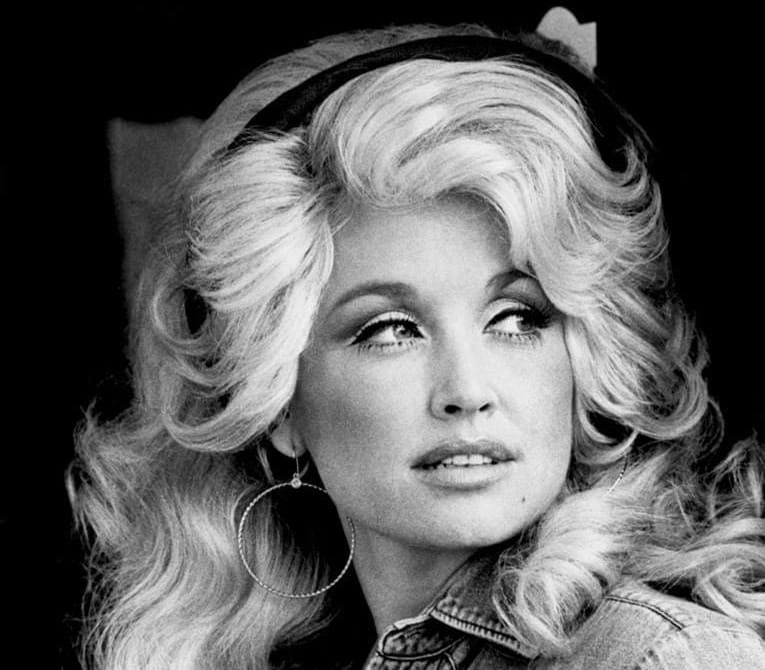
Out of a two-room cabin in Locust Ridge, Tennessee, Dolly Parton was born. A doctor risked his life to ride on horseback through wind and snow, reaching the Great Smoky Mountains in time to save a dying mother. The parents, living in a house so humble that they went without water or electricity and sometimes caught fireflies in jars just for light, could only offer a sack of cornmeal in exchange for his brave service. Parton would go on to write one of Tennessee’s official state songs about this place, My Tennessee Mountain Home, with its newspaper-insulated walls and tin cups, designed by her mother and built by her brother.

Parton chased butterflies, whittled toy cars, listened to Bible stories and Appalachian folklore. She sang ancient ballads and church music, and by age five she had made her first song about a corncob doll her mother had crafted: Little Tiny Tasseltop. Not yet able to write or read, her mother sat down as scribe to her childish wisdom.
In her autobiography, she writes, ‘There’s a funny thing about mountain folk. There’s an awful lot that is never said out loud’. Her father would declare his love through a light punch on the shoulder and, even when directly confronted by Parton’s words of love, he would still respond in the ‘usual nonverbal, look-at-the-ground Parton way’. Frustrated, she took his head into her hands and made him look her in the eye. ‘You tell me you love me’, she demanded. It’s no surprise that Parton, writer of timeless love ballad I Will Always Love You, yearns for more than the subtle, wordless acts of love. While they may symbolise the most profound of emotions, they cannot quite replicate what language gives us: a forthright translation and expansion of everything that is felt inside.
The day after her graduation, Parton stepped on a bus heading for Nashville with only her guitar and three paper grocery bags to hold her possessions.

I remember that on the morning after she passed I was absentmindedly singing Jolene, which must have secretly slipped into my mind after scrolling online. My little brother, hearing me in the kitchen, couldn’t understand why I was mourning a singer that I hardly interacted with, professing that she looked MAGA anyway. Trust a boy to fixate on looks. Parton is a known philanthropist, first founding the Dollywood Foundation in 1988, which provided scholarships for kids in East Tennessee as an effort to keep them in school.
In 1995, she established Dolly Parton’s Imagination Library, which is dedicated to gifting free books to children from birth to age five – and since, has given 300 million out. The programme stems from a personal misfortune as Parton’s father never learnt to read or write, which stopped him from achieving his own dreams. She remarks that all she ‘ever saw growing up was poor people in overalls and brogan shoes and ragged clothes’, but in her books ‘[she] would read about kings and queens, with their velvet clothes and big diamond rings. That’s how [she] knew there was a world outside the Smoky Mountains’. Parton understood how to spark ambition in children, especially those of lower class, because she lived it – instead of looking up towards the already uber-rich for inspiration, whose wealth only thrived on suffering, she looked towards the imaginary, the glass ceiling.
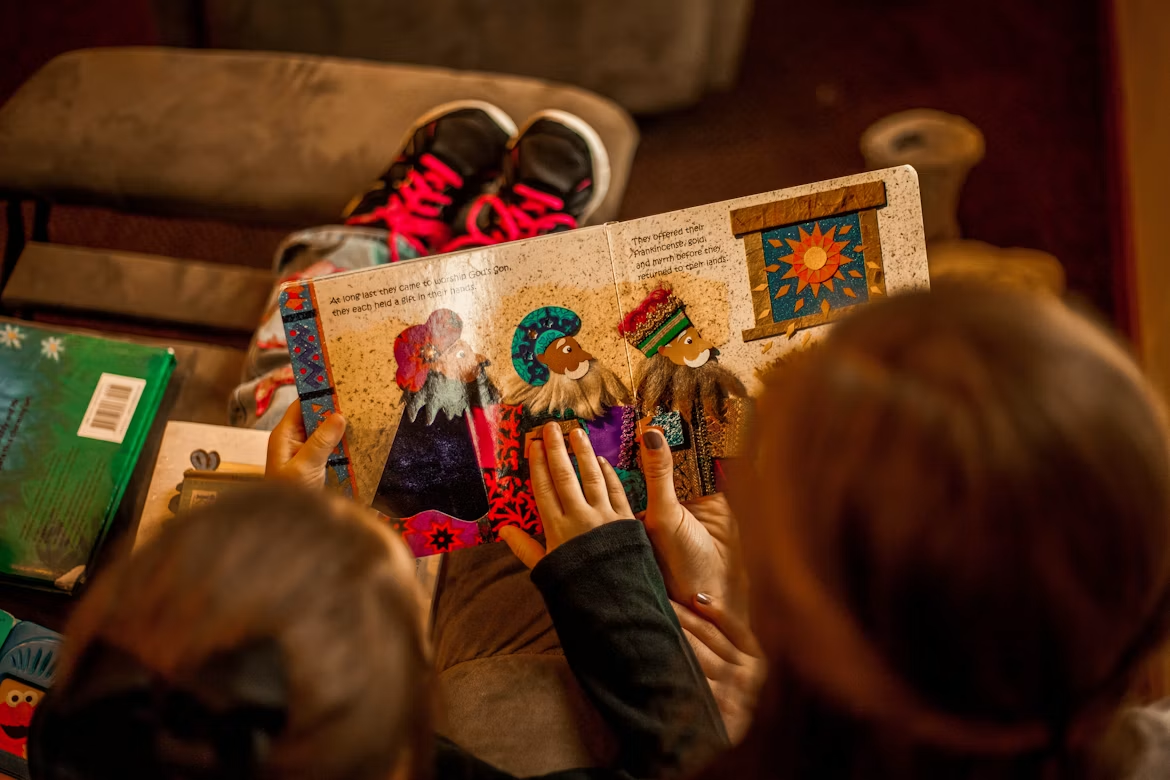
The programme spans the globe. From Perth Andover in Canada, CBC reports that the Imagination Library has become especially important for rural communities as their public library operates on reduced hours, but this program delivers straight to the child’s door. The BBC reports that in Australia, a toddler with speech delay spoke her first word ('orange') after receiving a book on colour, while a blind child in America learnt how to read braille through the program – a feat, considering that only 10% of blind people even have the chance to learn.
The books are reportedly well-curated, with topics that help children with social and emotional development (for example, Parton’s own book: I Am A Rainbow), including same-sex families, encouragement on bravery, bullying, and different identities. Parton made sure that, more than just improving their speech, children were learning to understand each other and the world around them.
In her TED Talk, Beth Ann Fennelly projects the question ‘What’s the Use of Reading?’. Her answer is simple and true: it teaches empathy. A study from 2020 found that 15,000 students were 40 per cent less empathetic than those in the past – and perhaps in result of this, the Guardian reported in 2024 that thousands of university jobs were cut in humanities and social sciences (820 for the former, and just under 3000 for the latter).
A more in depth study by Dr. Natalie Philips proved that reading did almost physically put us in the shoes of our protagonists. People were given Jane Austen to read during an fMRI to track blood flow – she found that the temporal lobe lit up for language processing, as well as the motor cortex when the character began to run and the olfactory bulb when the characters smelled a scent. The readers experienced exactly what the protagonist did, and if we were to read fiction on characters with varying indentities, we might also learn to sympathise with and understand their experiences. In Italy, they studied the attitudes in children after giving them a Harry Potter extract on Draco calling Hermione a ‘mudblood’. The following week, their perspective on immigrants had greatly improved.
 Jasmine Symes
Parton is lucky to have gotten her flowers while she was still alive, but the singer herself has asked that we do not bring flowers to her grave too. Instead, she asked for donations. The Imagination Library is only partly funded by The Dollywood Foundation, which means that each branch also has to secure funding and partner with non-profit organizations – I suggest that you, reading, consider giving up your next sweet treat to donate to the UK program. Moreso, if you care about the education of Bristol's children, you might consider contacting a Regional Director to set up a program in the area, as we do not yet have our own branch.
James Baldwin once said in his novel Giovanni’s Room, ‘you think your pain and heartbreak are unprecedented in the history of the world, and then you read’. If you know any families with young children that may benefit from Parton’s free books, reach out to them about the Imagination Library.
Featured image: RCA Records / Public Domain
Will you donate to The Imagination Library?