By Alex Wildee, MA Student, Translation and Intercultural Studies
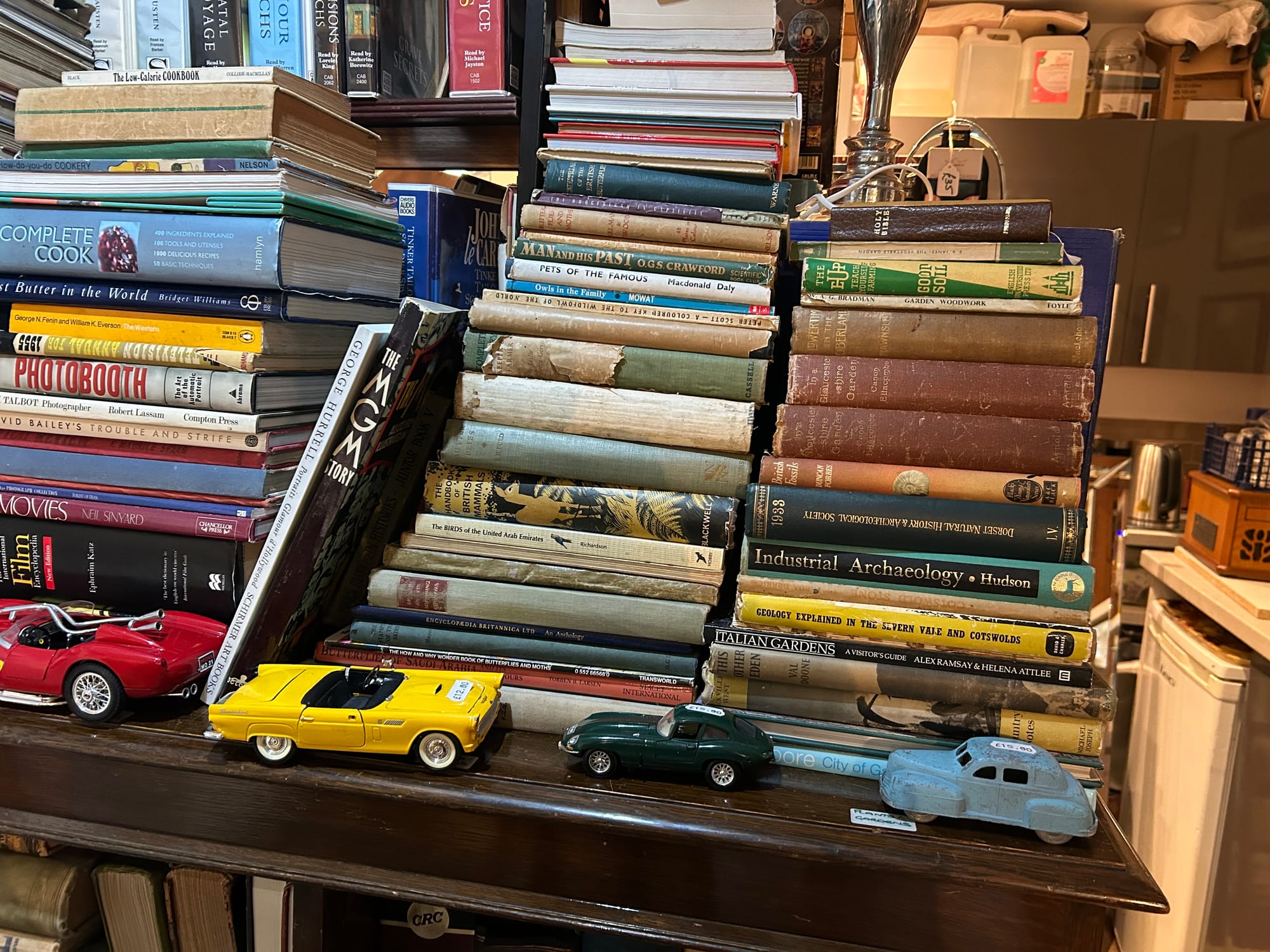
In the last few months, bizarre bulk orders of thousands of books at a time have plagued second hand and independent booksellers across the USA, UK and Europe. With purchases ranging from James Joyce to Joy of Gardening, the alarm bells sounded and provoked an investigation by the digital journalism company, 404 Media. They placed a tracker in a box of antiquarian books purchased in one of the mass orders and found that the books were hauled to an Amazon warehouse in Las Vegas where, upon a simple google maps inspection, the symbol of a dinosaur preparing rip off the spine of a book is proudly stamped on the glass windows.
Unsurprisingly, this is a warehouse in which books are fed into a machine that removes their spine and scans each page individually, ‘digitising’ the contents, before disposing of the loose pages. The content of each book is then used to train AI’s large language models. However, generative AI is already heavily integrated in modern day society, why is it only in recent months that this pattern has emerged?
This is because in June of 2025, after the collaboration of several authors who found their literature had been pirated online and used to train AI, this destructive method was essentially legalised. In Bartz v. Anthropic PBC, the US District Court found Anthropic’s use of a digital conversion of purchased print books to train Claude’s large language models to be ‘fair use’, despite the pirating of digitally downloaded copies being illegal. The ‘transformation’ of the books’ contents to a digital version was not deemed a breach of copyright as Anthropic does not share these versions and only one copy exists at any time. Furthermore, Claude was only trained from this content and does not reproduce it when asked. Finally, the First-Sale Doctrine of the Copyright Act allows the destruction of any physical book by its owner, rendering their slashing of a book’s binding, the most time efficient and destructive method, perfectly reasonable.
During the trial, it was revealed that Anthropic’s secret ‘project Panama’ was an ‘effort to destructively scan all the books in the world’. The creation of these data sets, or ‘shadow libraries’, of books published before 2022 ensures that AI models are trained on human craft rather than its own regurgitations which may have infiltrated media forms since. However, it was claimed that ‘none of our data acquisition programs buy and destroy rare or antiquarian books’.
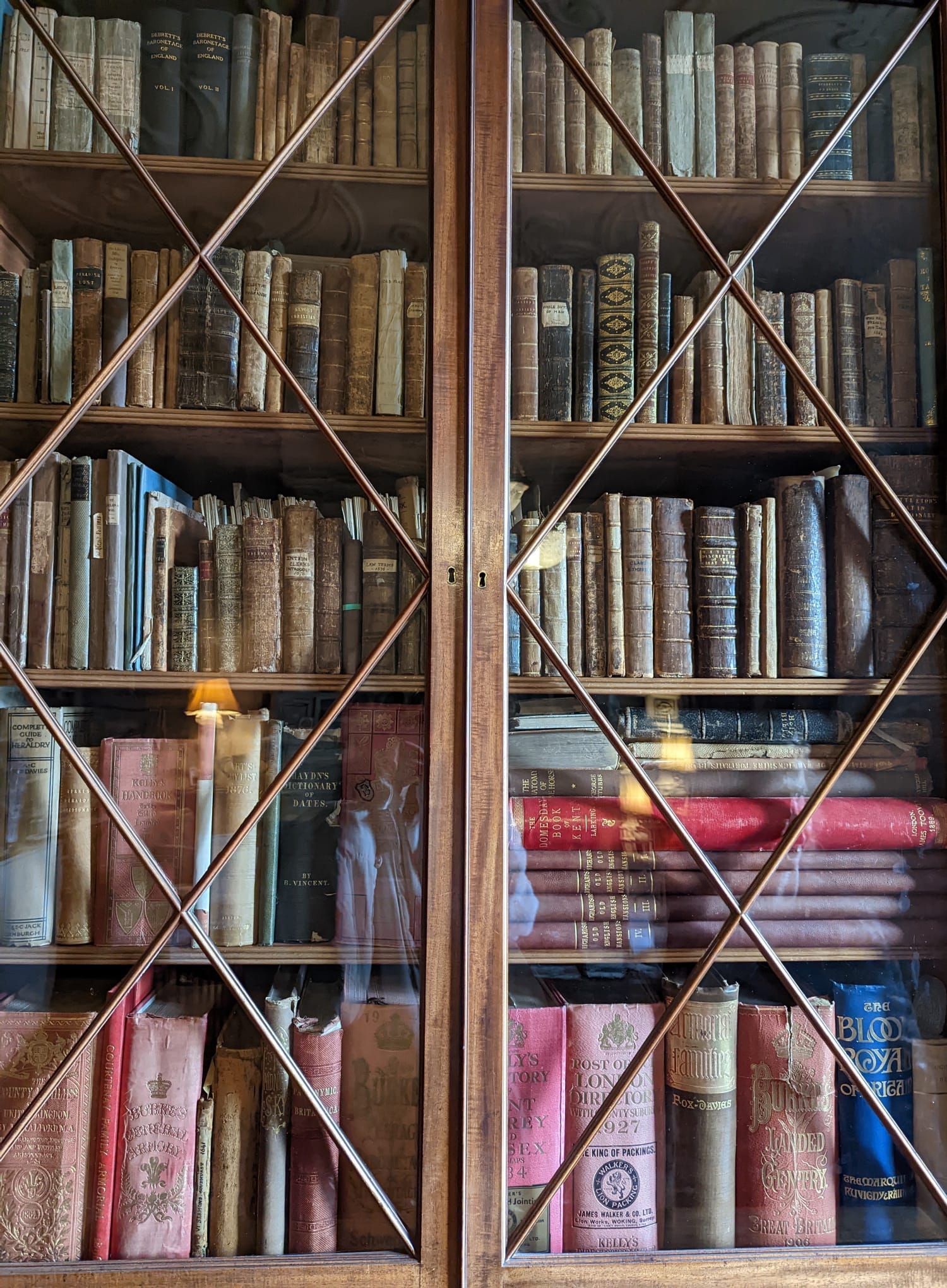
404 Media’s investigation declares otherwise.
Although, it must be noted that the order of these books is allocated by ISBN number, which explains why they appear so random. Therefore, they must be published after 1970 when the ten-digit code came into international use. This does not change the fact that many of these books may still be rare or antiquarian. For example, they may be the last of their print run or the only surviving edition of a text written before the invention of the ISBN number. Since this information cannot be accessed outside of the company’s private, digital version, it causes a loss of certain books to the public. These companies become hoarders of human knowledge and work that can only be accessed by something inhuman.
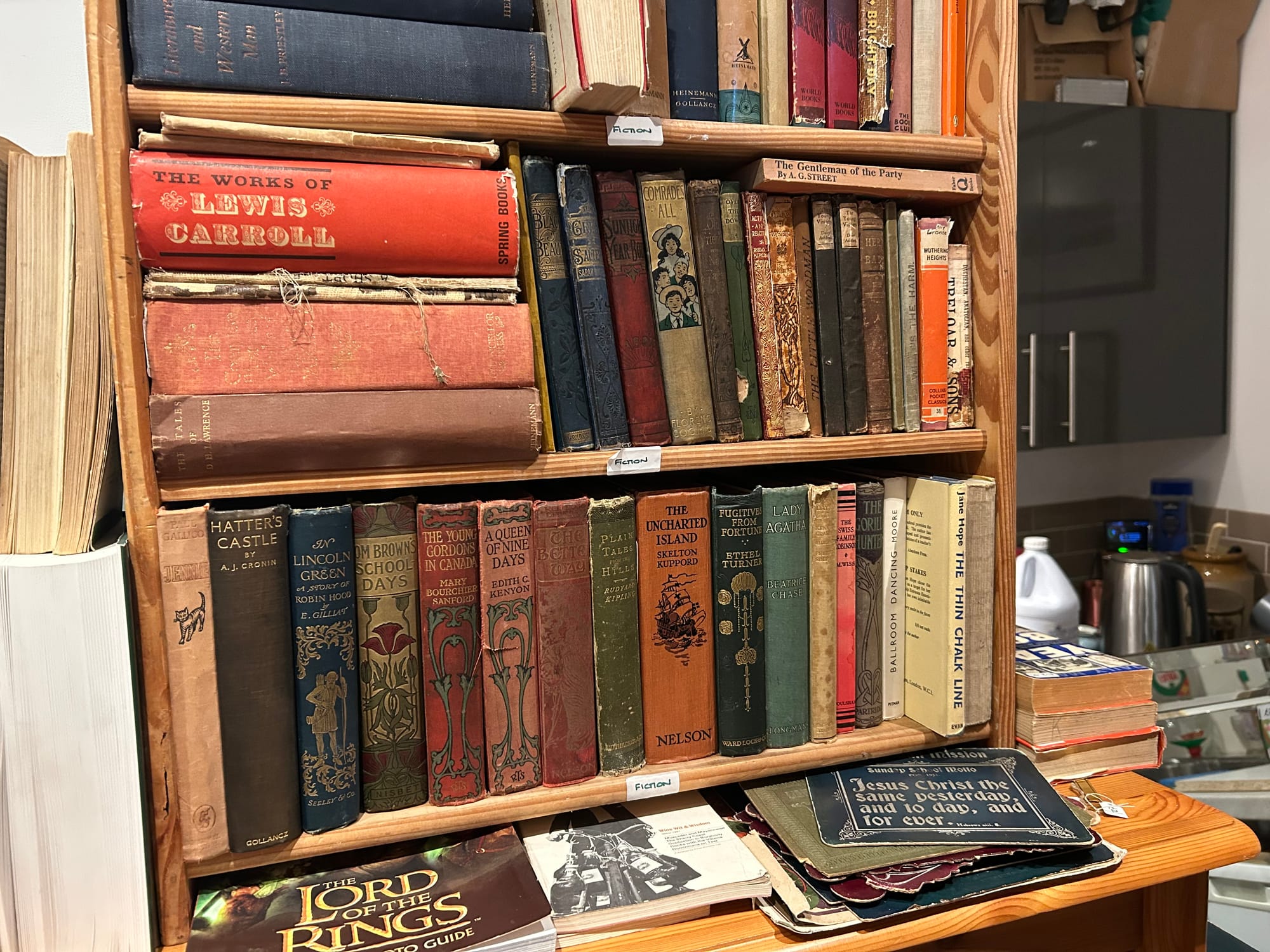
It is not the first time that books have been mass digitised. In 2005, Google set up Google Books by borrowing from libraries books whose copyright had expired. To do this they used a v shaped scanner, and the books were later returned. Companies such as Anthropic and Amazon have instead prioritised time and money over the preservation of physical and accessible media.
 Meg Pantry
AI has become not only a threat to literature, but a threat to the value of human creation, a threat to the reasonable access to human work. These companies may not ‘own’ the digital copies they create (that intellectual property still belongs to the author for now), but they are unable, and in the future, most definitely unwilling, to share them without a price. As multibillion dollar organisations violently consume human knowledge and limit its redistribution, our ownership, and right to human creation become frighteningly perilous.
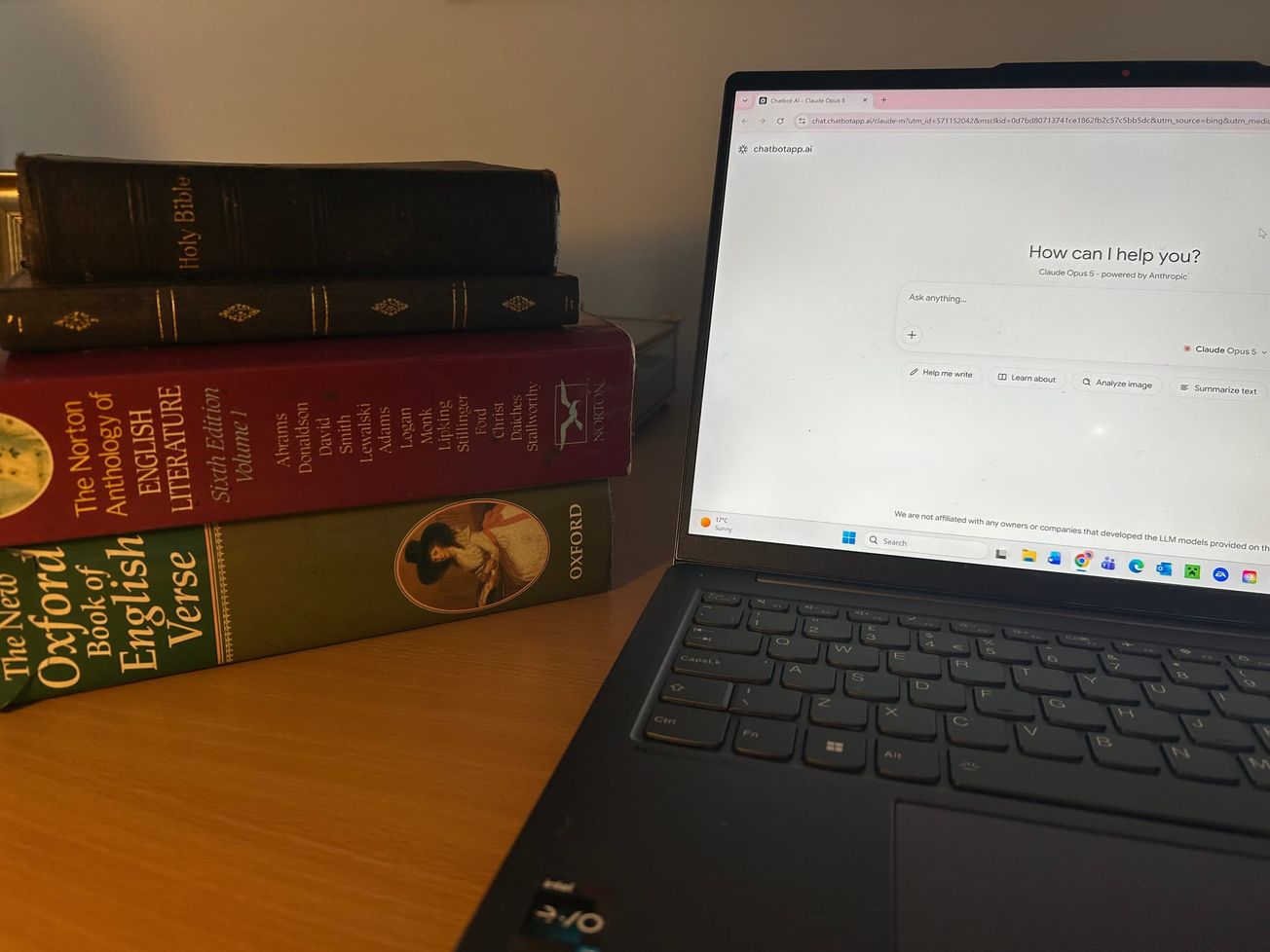
Featured image: Anthropic's ai chatbot 'Claude' next to a stack of old books | Epigram / Mary Allen
What do you think about Anthropic’s use of a digital conversion of purchased print books to train Claude?