

By Megan Pantry, Third Year Law
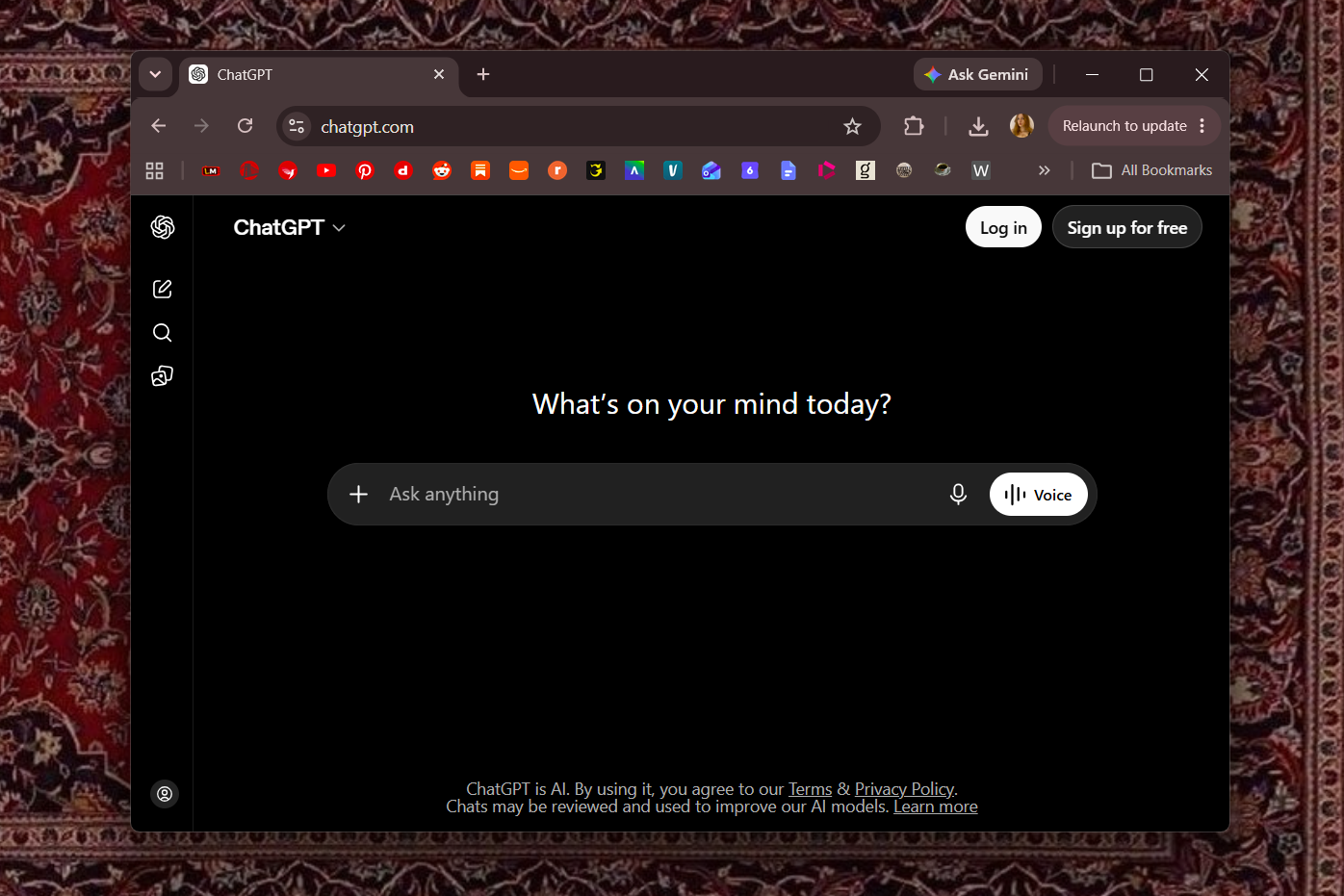
The frequency with which Artificial Intelligence (AI) is misused by students has been the subject of much debate, but what I find striking is that one of the most important questions seems to be absent from the conversation: why? Why are some of the most selective academic institutions worldwide struggling with an epidemic of students not wanting to learn?
It is not exactly controversial to say that the misuse of AI is ubiquitous in universities. It is increasingly rare to have a group project discussion without the words ‘just ChatGPT it’ being spoken; to see a library without an Large Langauge Model interface open on a laptop screen; or to have a conversation with a friend that does not feature a shameless confession to cheating on an assessment with generative AI.
The statistics tell the same story, too: according to The Student Eye, the University of Bristol has issued 686 penalties for AI misuse since 2021, and it is not the only institution dealing with this problem. The Times revealed that over 2000 undergraduates at Russell Group universities faced sanctions for AI misuse in the last academic year, and that even the University of Cambridge has seen a fourfold increase in academic misconduct allegations since the launch of ChatGPT.
But, AI misuse can’t be viewed as one isolated problem. I think it’ s a symptom of something bigger that universities fail to address: a culture of academic apathy among Gen Z. Anecdotally, upon starting university I was dismayed to find that very few of my peers seemed excited or passionate about their chosen course. Embarrassing as it may be to admit, my teenage self’s fixation on ‘dark academia’ Pinterest boards, the Beat Generation, and Donna Tartt novels had given me a very romantic notion of universities – as hubs of intellectual curiosity for bright-eyed and bushy-tailed swots – which was very quickly shattered upon realising that the majority of students I spoke to simply did not want to be there.
I’m not saying that all of my fellow students are philistines, but rather that something has gone wrong if so many people pursuing higher education find no joy in it. I can think of some possible culprits: the effect of social media on young people’s attention spans (resulting in education being understimulating) combined with a rise in ‘hustle culture’ (which rewards productivity and financial success above all else).
Interestingly, although it feels like I rarely encounter curiosity, I see ambition everywhere. It seems that every course will have a handful of students who somehow juggle endless society committee roles, ambassadorship positions, networking events, work experience, etc. And, while I do find these students unbelievably admirable, I find it telling that their dedication often appears to be divorced from a passion for their subject and instead tied to a goal of maximising employability — updating their LinkedIn or perfecting their CV.
For me, this is the clearest cause: hustle culture’s prioritisation of productivity above all else has contributed to a culture where intellectual curiosity and the importance of the learning process is downplayed, resulting in students turning to AI. And, considering that studies show that 58 per cent of Gen Z experience ‘productivity anxiety’ multiple times a week as a result of this mentality, perhaps it is not surprising that so many students are taking shortcuts to be as productive as possible.
So, what does investigating the reasons behind AI misuse tell us about how universities should respond? Mostly, that simply burying our heads in the sand by trying to pry all AI out of students’ hands is not enough. For one, the two main methods of doing this – AI checkers, and a return to closed-book, in-person exams – each have their shortcomings.
One study found that Turnitin, one of the most popular AI checkers (and the one used by the University of Bristol) only has a 61 per cent accuracy rate, and the company itself admits that false positives can occur.
 Clarrie Terleph
 Grace Bourne
On the other hand, replacing open-book and coursework-based assessments with closed-book, in-person exams often results in excessive workloads, as students are forced to memorise curriculums that have not been properly adapted for this examination style. It also fails to account for the fact that every student willing to use AI to get ahead at university is potentially a future doctor, lawyer, engineer, etc. willing to use AI to get ahead in their career, where such obstacles would not be in place to deter AI use.
So, the best solution is for universities to target the real motivations behind students’ misuse of AI by encouraging genuine curiosity and passion about the course content and the pursuit of learning for its own sake, while also educating students about why AI should be avoided in certain contexts. In one of my first year modules, for example, the formative assessment involved writing a critique of an AI-generated essay about the course content, which lets students discover for themselves how AI can hallucinate sources and misrepresent facts. Hopefully, the University of Bristol can continue to employ similar methods of targeting the motivations underlying AI cheating while using AI detectors as a final check (rather than as the primary method of discouraging AI misuse).
But, even if universities were to change the way they think about AI, I am doubtful this problem will be solved. AI cheating is linked to a much deeper cultural problem of prioritising productivity over curiosity. And it will remain an issue until this culture changes.
Featured Image: Epigram/Megan Pantry
Are you worried that AI misuse is tied to hustle culture?