By Sophia Lee-Baum, Third year, Neuroscience
9am lectures from October onwards feel impossible to attend. Waking up in dark, leaving the house in the dark, and on a busy day, going home in the dark. Foreboded by the dreaded ritual of the clocks going back, the steady decline of daylight hours in the colder months tend to leave a staple sense of damp on my outlook of the weeks ahead. In a world with space travel, AI and robotic surgery, I’m keenly awaiting the BBC broadcast that summer days have been manipulated to hang around all through the year.
Is the cynical outlook on the clocks going back maybe a tad dramatic? Or are we biologically wired to detest the sunlight deprivation that the Earth inflicts on us seasonally?
To comfort (I’m sure) many Bristol students: no, the number of early lectures you’ve struggled to make it to at the start of this term are not solely to be blamed on disobedient alarm clocks. Additionally, that low mood many of you may have also felt lingering through winter could also have something to do with your surroundings.

Changes in photoperiod (daylight hours) over the course of the year are the result of the axial tilt of the Earth on its orbit. In the northern hemisphere, winter is the period in which we spend more time tilted away from the sun. The clocks go back principally to maintain working hours within the daylight period, to ‘save daylight’ for when it’s needed, and spring back forward once the lighter months roll around. The idea was originally adopted by Canada in 1908, then Germany in 1916, which the UK and other countries followed suit. A very logical and practical solution to changing photoperiods, but not one which has any implication on the phenomenon of seasonal affective disorder (SAD, as it’s fittingly abbreviated to).
SAD is the psychiatric disorder pertaining to the development of depressive disorders in alignment with seasonal changes. The associated symptoms of lower mood, decreased motivation, overeating and fatigue are common experiences, and don’t necessarily require therapeutic intervention, but for some severe sufferers, can be debilitating. Neuropsychiatric research has implicated depleted serotonin levels as the primary culprit, but there are still some areas for speculation within the field. Serotonin is a key neurotransmitter (messenger molecule), necessary for a huge amount of daily functioning, and popularly known as the ‘happy’ chemical of the brain.
During the winter months and shorter days, serotonin turnover and production have been found to be significantly decreased, and increases back in turn with increased luminosity. Additionally, the use of serotonin-targeted therapy has been found to improve symptoms for SAD patients. However, some further evidence has indicated an element of mystery, with some mechanistic doubts on the changes to serotonin machinery, and how disorder severity is linked to serotonin changes. Unaltered levels of serotonin in SAD patient cerebral spinal fluid tell a story that doesn’t quite match up with what we currently understand about the disorder.
In a black and white perspective on SAD, Norwegians experiencing the zero-daylight hours polar night would be in big trouble. The correlation between latitude and incidences of SAD is not clearcut however, and some puzzling cross-border studies have struggled to conclusively claim a directly positive correlation between seasonal day length and seasonal mood deficits. Additional factors such as genetics and cultural practice are likely to influence data. In short, it isn’t straight forward - but I know I would not be feeling chirpy with less than four daylight hours for months.
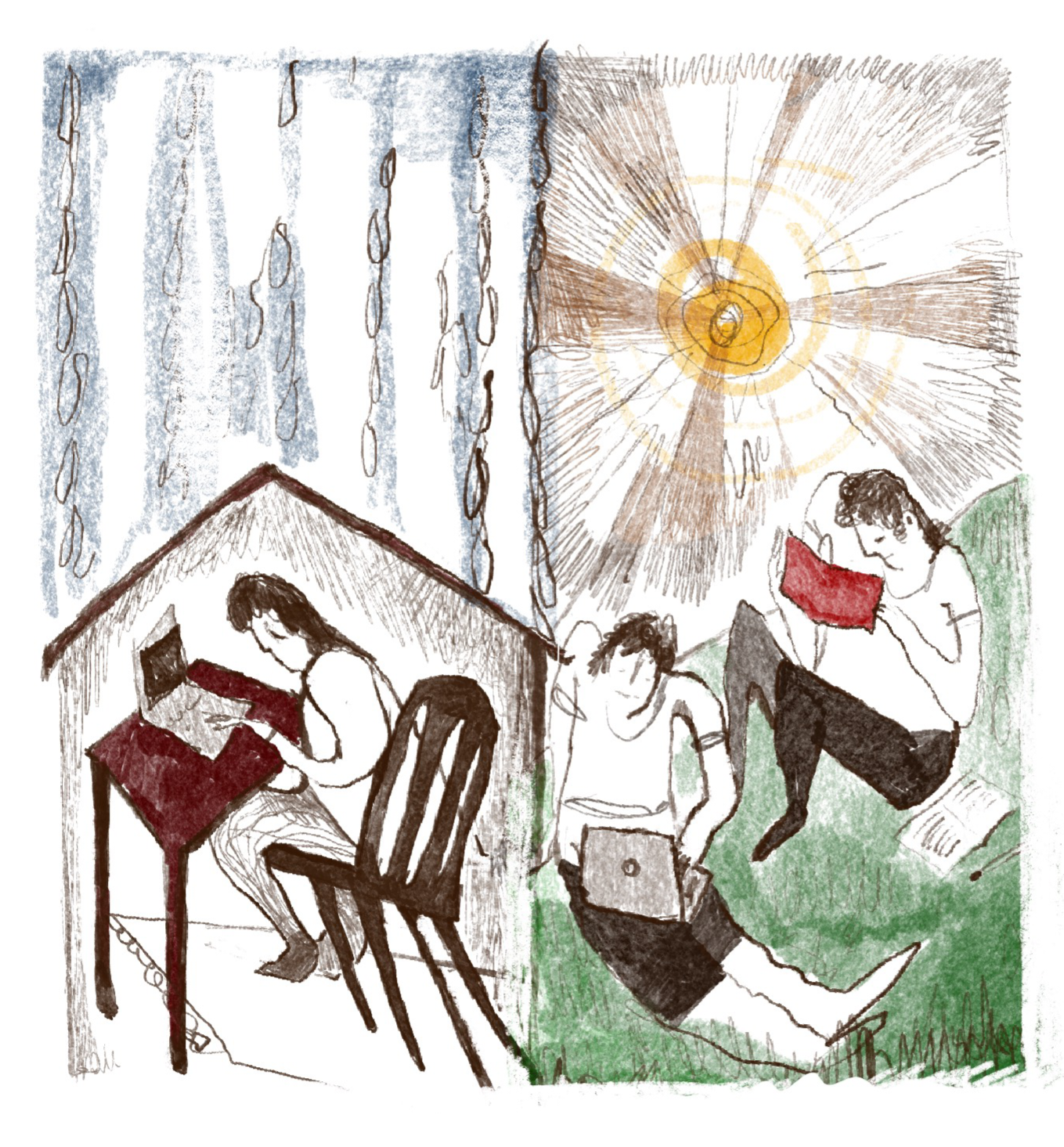
Despite the lack of Sci-Fi style year-long summers, there are some DIY methods to reduce the negative impact of winter on mood and productivity. Light can be relatively easily harnessed to intervene and improve the demoralising state winter can put us in. Aligning yourself as much as possible with daily light rhythms (a chronotherapeutic approach), by getting out and about during daytime hours, reducing blue light exposure late at night and trying to maintain regular exercise, is highly likely to improve mood and other symptoms.
 Kashvi Cox
 Dabrowka Nowak
If your maintenance loan hasn’t been too drained already, vitamin D supplements and light therapy lamps are on the rise in popularity for directly tackling the deficiencies indicated in SAD and symptom experience. All of these considered, it can be very difficult to get through the long winter months, especially with deadlines and productivity anxiety. Being gentle with yourself over the darker period and seeking help from student wellbeing if needed should always be kept in mind. Thankfully, winter solstice was back in December, and longer, lighter days are just around the corner!
Featured Image: Epigram / Merle Greany
What helps you fight the winter blues?