
By Alex James, Second Year, English and Spanish
Meet the legendary cricketer who is the namesake for your favourite Bristol Wetherspoons.
Cricket is a ridiculous sport. It is played across five days and four innings, with daily lunch and tea breaks, whilst constantly at the mercy of the weather which can halt proceedings at any moment. Yet simultaneously, it is arguably the most mentally challenging sport in existence; as a batsman, one mistake and your match is all but over. As a bowler, you might toil for hours on end for a wicket, only to have to go and get nine more the next day. One must be a fool to play this game, you might - quite understandably - be thinking.
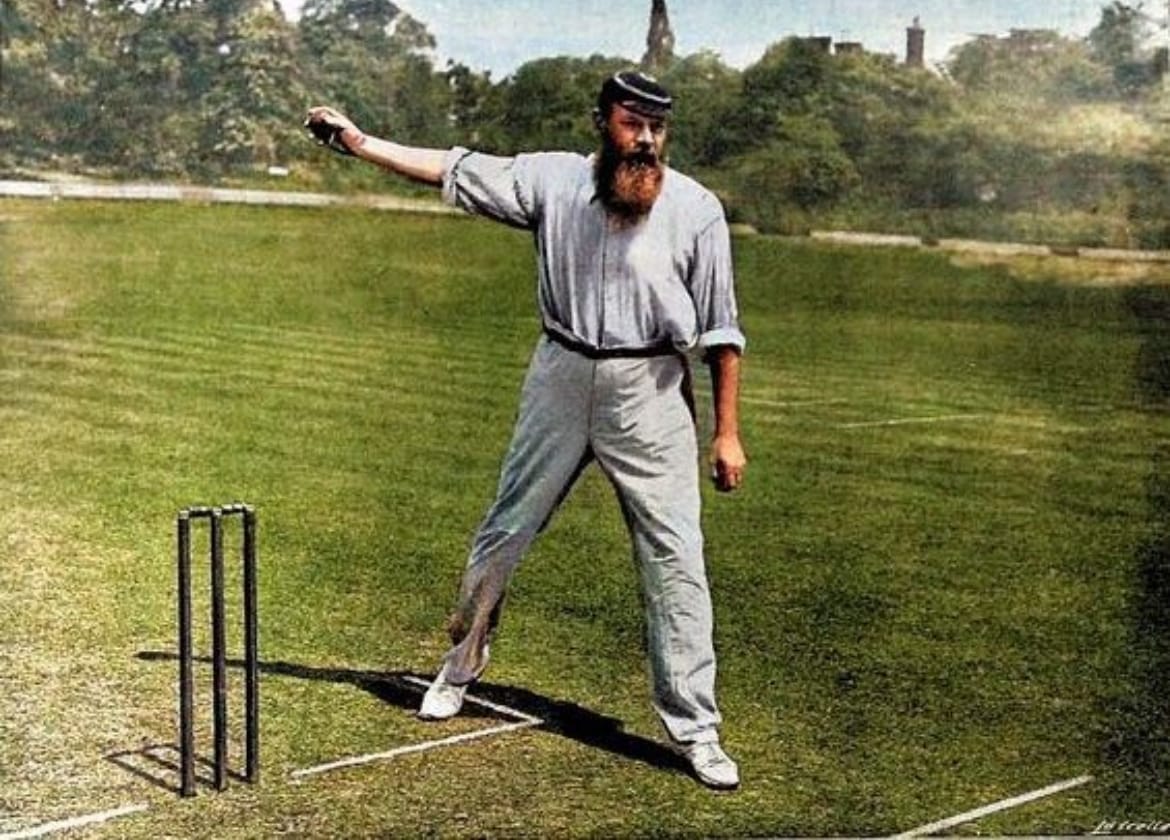
Enter William Gilbert Grace, a bearded, barrel-chested, Bristol-born Victorian gentleman who would have looked more natural on a reindeer-drawn sleigh than a cricket pitch. Appearances can be deceiving, however. In his youth, he was an impressive athlete, once scoring 224 for the Gentlemen of England before travelling straight to an athletics meet and dominating the field in the 440 yards hurdles. All in a day’s work, as they say. Later in life, he became the first captain of the England bowls team and developed an enthusiasm for golf and curling. Undoubtedly though, cricket was his raison d’être, and it’s also why he is still talked about to this day. So how did W.G. become the most famous cricketer in Victorian England, and in doing so build a legacy that transcended the sport, leading to his name holding a special place in the hearts of so many Bristol uni students today?

The first and most obvious answer would of course be his extraordinary talent for willow wielding, by which I mean batting. Grace played his very first cricket match at the age of 8, right here in Bristol. That day he achieved a score of 3. But by the age of just 27, Grace had scored 50 first class centuries (hitting 100 runs or more at the top level of the game). You’d have to combine the centuries of the next 13 most prolific batsmen over the same 10-year period to equal that tally. Although these stats are impossible to reasonably compare to players in the modern era due to how dramatically the game has developed, that level of dominance is practically unparalleled in cricket. The only man who could possibly be put on a par with W.G. in that regard was Sir Don Bradman, a man with an average score of 99.94. Grace was also more than handy with the ball, becoming the first player to twice take all ten wickets in an innings.
One could fill this entire article and more with a list of W.G. 's cricketing achievements from his incredible, 44-year first class career, but what’s most important is that he brought about a completely new style of batting by looking to turn defence into attack. This laid the foundations for the way modern batters play today. You might even say that W.G. was the original bazballer.
However, W.G.’s unorthodox batting technique was not the only way in which he broke the conventions of cricket, a sport founded on gentlemanly behaviour and impeccable sportsmanship. He was notorious for throwing tantrums upon losing his wicket, and even at times intimidating umpires into giving him not out through his glowering presence and imposing reputation. Most famously of all though, he ran out an Australian batsman who had wandered out of his crease thinking that the ball was no longer in play. This was, at least in W.G. 's time, considered to be against cricket’s code of honour, as he should have instead given the batsman a warning not to repeat his error (as to what extent this code of honour should still have been adhered to on a certain day in July 2023, I’ll let you decide). This sparked a revenge-fuelled comeback from Australia, who went on to win the game, prompting a London newspaper to write a mock obituary for English cricket, which in turn gave us the Ashes.
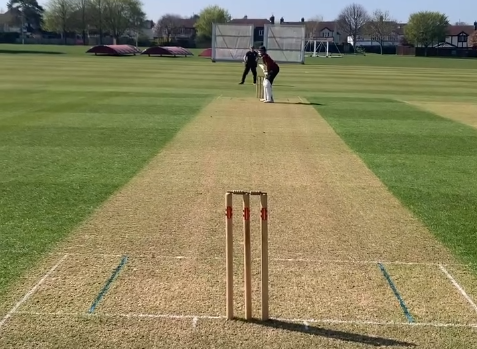
For those readers who are (unforgivably) unaware, this is the origin story of one of the fiercest rivalries in any sport, which occurs when England plays Australia in the test (five day) format of the game. Over the course of the next month and a half, England will attempt to win back the highly coveted, comically minute urn in the 74th edition of the Ashes, which, before it has even begun, is proving to have lost none of the passion and anger that Australia showed on the occasion of Grace’s act of defiance.
Off the field however, precious little is known about Grace. This was mainly due to his own complete lack of interest in himself and his unwillingness to share anecdotes with his two ghostwriters. He did write poignantly on the game, giving us useful insight into his rigorous and attack-minded approach to batting, though sadly these writings were not widely published or shared within the educated upper echelons of society, who, along with the cricket establishment, had dismissed him as ‘unanalytical’.
Another, this time justifiable, strike against his reputation came from Grace’s propensity for using his reputation to leverage the most amount of money from playing cricket as he could. This was completely hypocritical to his status as an amateur and was greatly frowned upon by many of his contemporaries.
So, national hero, or cricketing scoundrel? I think the only appropriate response is that W.G. was both. But in my view, he could hardly have been one without the other. For all his immense skill and talent, it was W.G.’s maverick approach to the game that brought him his super stardom. Admittedly, this came with some morally questionable conduct, but who doesn’t want to watch a Nick Kyrgios or a Tiger Woods just because they may not be the most perfect gentlemen?
So, next time you’re in the W.G. Grace, spare a thought, between sips of lager, for the mighty man who changed the game of cricket forever.
Will you be tuning into the ashes now you know about its dramatic beginnings?
Featured image: Instagram / @oldenglandincolour