By Cara Hene, Digital News Editor
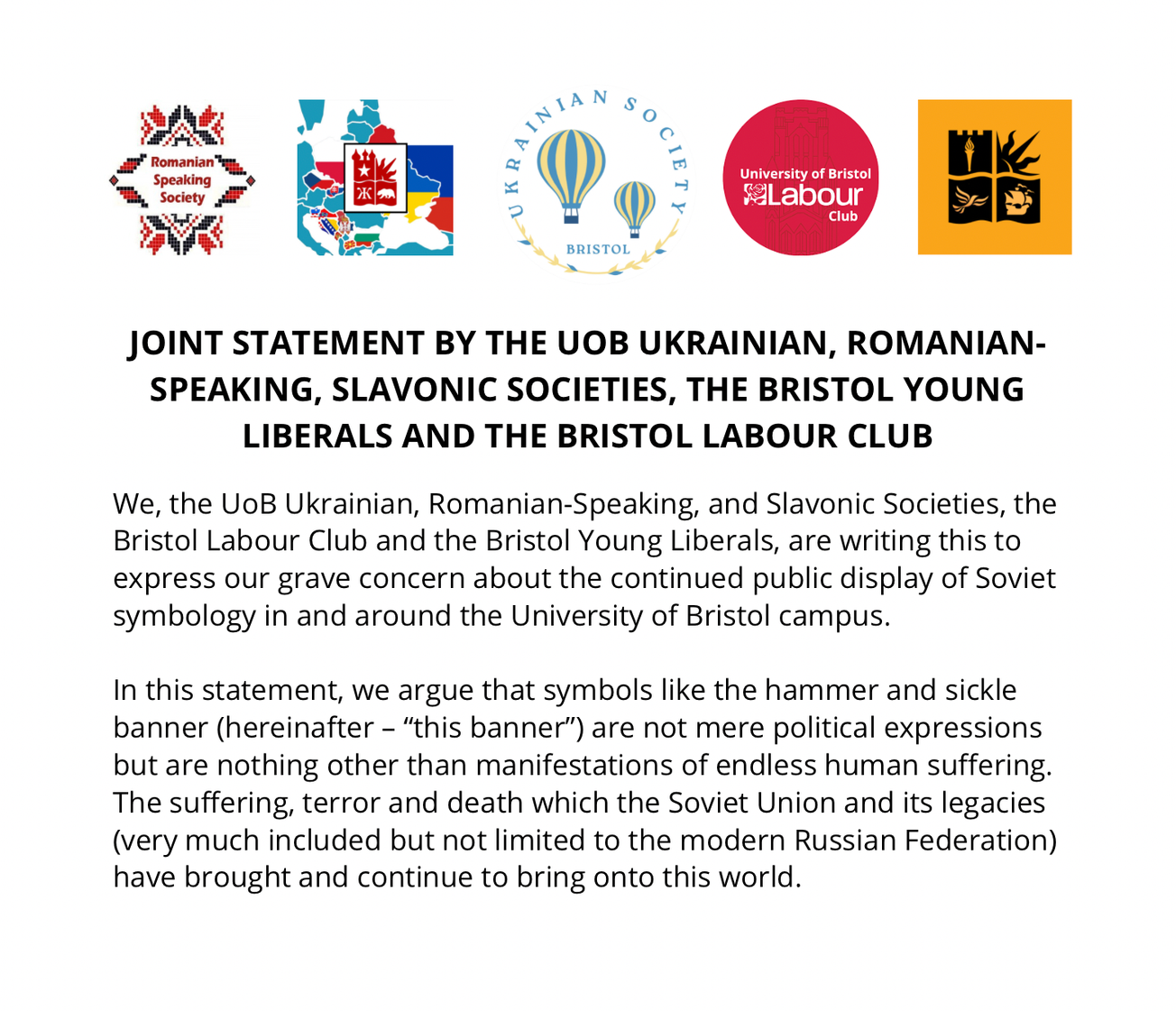
The University of Bristol Ukrainian, Slavonic, Romanian-Speaking, Labour and Liberal Democrat societies posted the joint statement to Instagram on October 10, which calls on the University to ‘explore all legal means to ban and/or restrict the usage of these symbols on campus.’
The joint statement also requests that protestors and communist organisations in Bristol refrain from publicly displaying ‘Soviet symbols’.
The societies say that these symbols, in particular the hammer and sickle, ‘invokes something horrific, the memories of crimes inflicted upon Eastern Europe and beyond, as well as Russian imperialist revisionism and the crimes it is bringing upon Ukraine as the reader reads this statement.’
‘To be clear, this statement is not intended as an attack on communist ideology in general, but as an expression of concern, caused by the normalisation of specifically Soviet symbols on UoB campus’, the statement goes on to read.
A Bristol Students’ Union spokesperson said that while they sympathise with the concerns raised, ‘the use of such symbols falls under freedom of expression, and Bristol SU does not have the authority to ban them’.
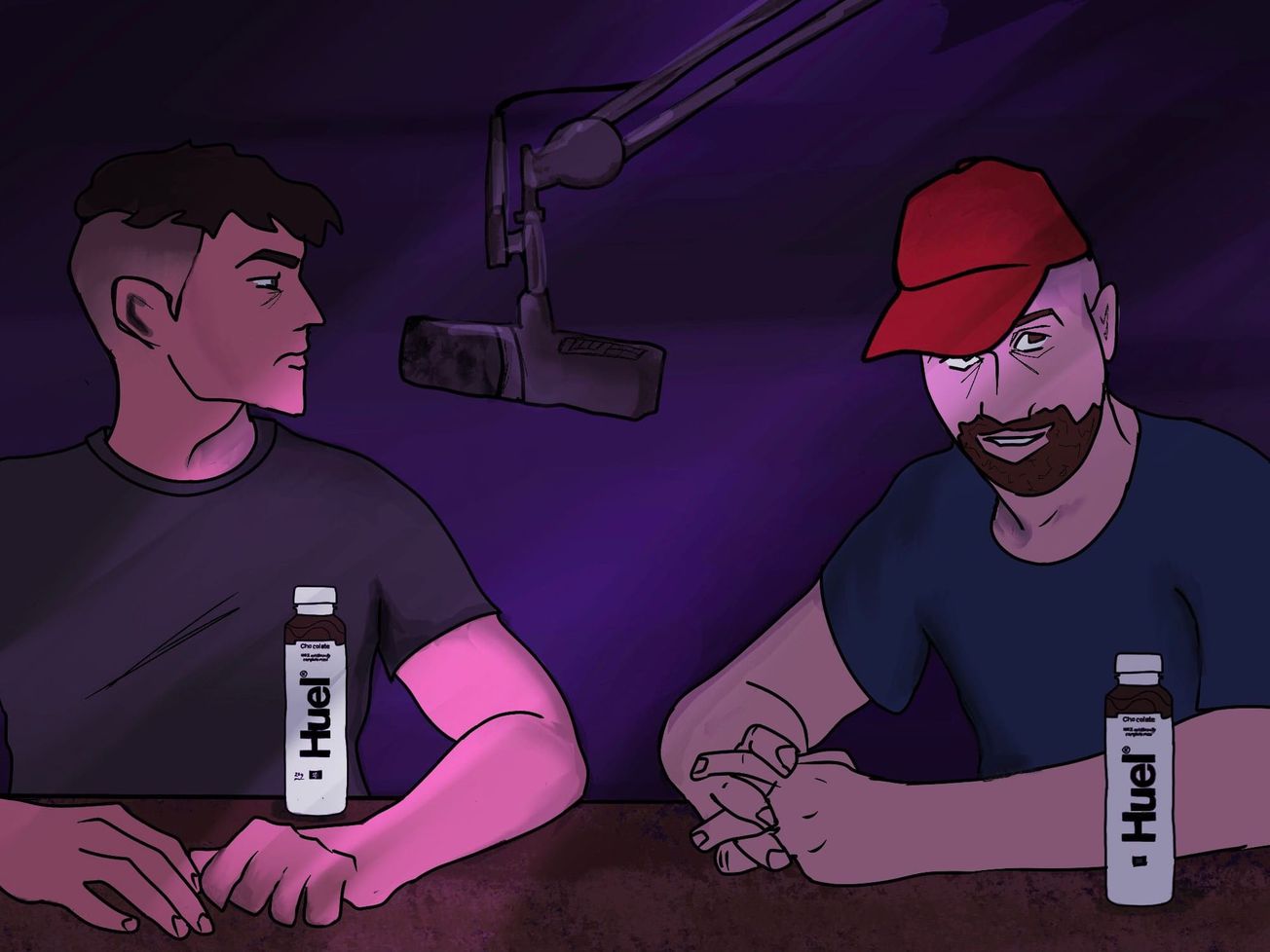
Epigram spoke to the pair behind the joint statement, Igor Radchenko, President of Ukrainian Society, and Zack Denysenko, Social Secretary of Ukrainian Society.
They said that members of Ukrainian Society had been sending in photos of these symbols on campus, including the hammer and sickle, multiple times a month, nearly every month over the past year.
Radchenko and Denysenko claimed that the materials in these images often come from the Bristol arm of the Revolutionary Communist Party, one of ‘many drivers’ behind their decision to write the statement.
Several of these same members ‘ran away from those symbols to [the UK] and they still see it on the streets’, Radchenko said to Epigram.
The Revolutionary Communist Party has no affiliation with the Students’ Union, or the University of Bristol. Epigram reached out to the group for a comment but received no response.
The joint statement also includes a photo of a Communist Party of Great Britain Marxist-Leninist, or CPGB-ML, flag raised during a pro-Palestine student protest outside Senate House on September 24. The CPGB-ML is also not affiliated with the University or the Students' Union.
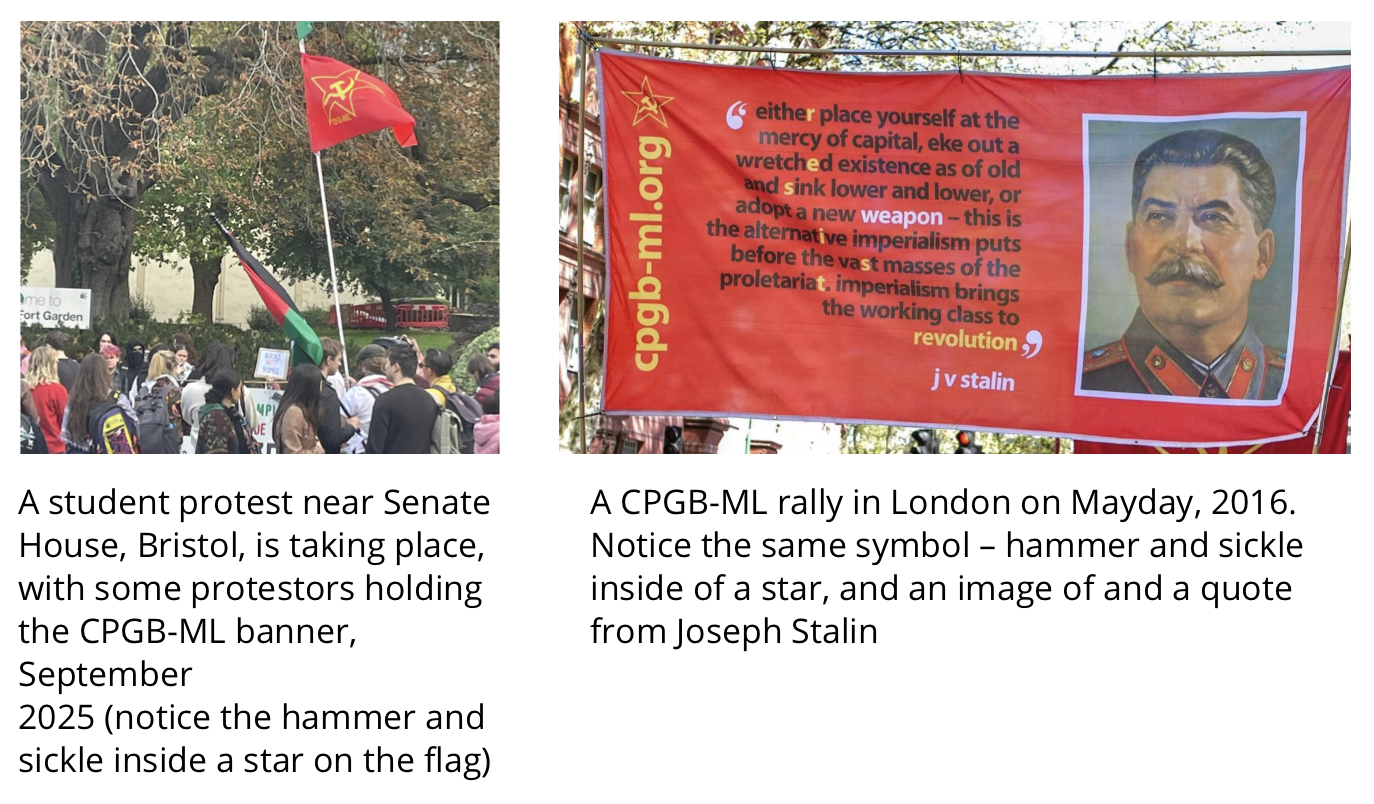
Denysenko told Epigram that these banners are ‘not necessary as a political vehicle, and also cause significant distress to our members and generally to people from Eastern Europe.’
The joint statement highlights that CPGB-ML banners often feature Soviet leaders such as Joseph Stalin and draws a comparison between the banners with similar flags used by Russian forces in Ukraine following the 2022 invasion.
Epigram can verify that this flag was present at the September 24 protest; it can be seen in our reporting of the event.
 Cara Hene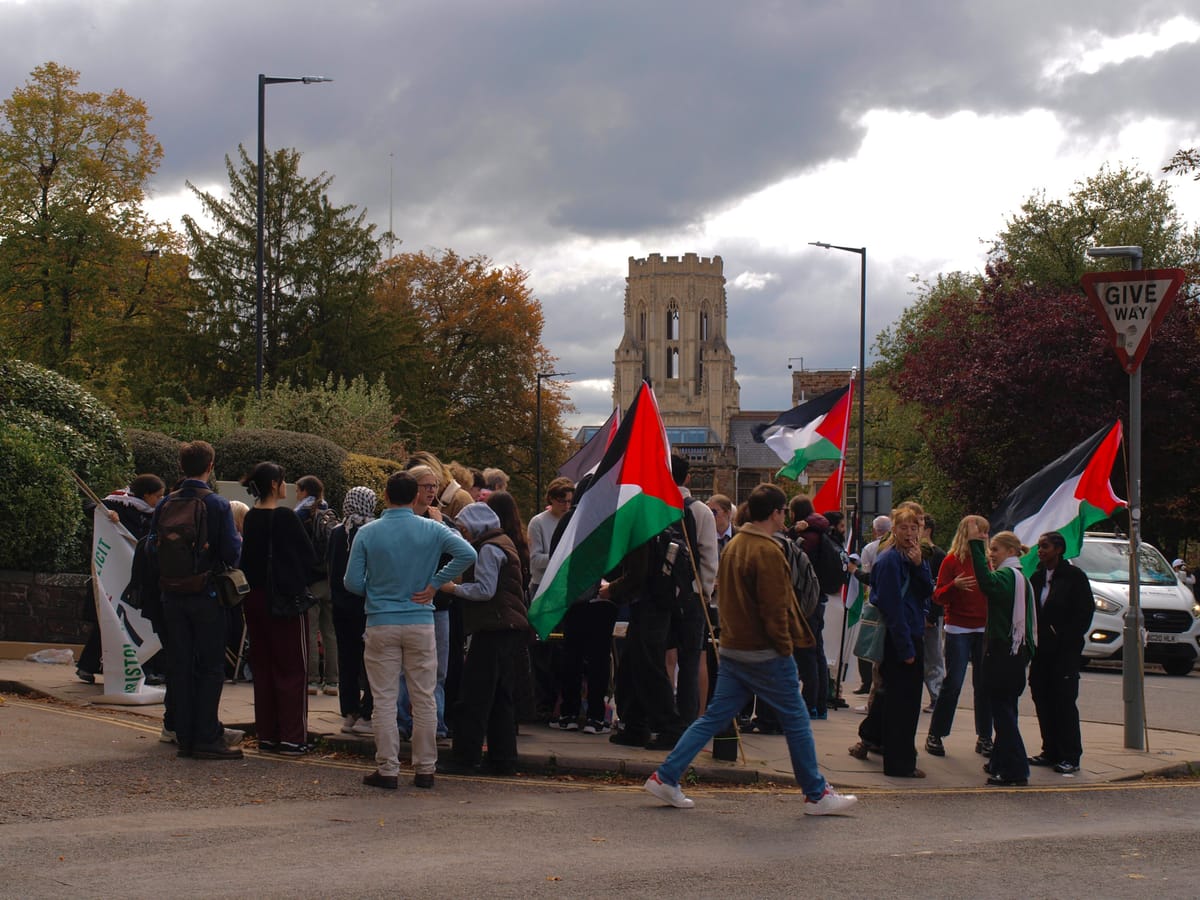
‘It is not even about a protest itself or a specific person. That specific person waved the flag for his own reasons. It’s more about the symbols that that flag contains,’ Radchenko said, keen to stress the statement was not targeted towards any particular ideology.
This sentiment was echoed by James Buskell, President of Slavonic Society, which has members from many former Soviet countries, such as Belarus, Ukraine, Russia, Latvia, and Lithuania.
He told Epigram, ‘The decision to criticise these groups on their usage of the symbol is not based on the fact that they’re left or socialist or communist.
‘[These groups] are selling themselves short by using this symbol, and in doing so excluding so many people that could potentially be on board with a lot of things they stand for.’
Epigram reached out to the Students’ Union for a statement, they said:
‘We sympathise with the concerns raised by the Ukrainian Society, Romanian-Speaking Society, Slavonic Society, Bristol Young Liberals, and Bristol Labour Club. We recognise that for many Eastern European students, symbols linked to the Soviet Union can evoke deeply distressing memories, and we’re sorry that some members of our student community are experiencing this.
‘Bristol SU is committed to student wellbeing and to fostering an inclusive environment. We’re working to better understand these issues and our International Students’ Officer, Jessie, has reached out to give support.
‘However, the use of such symbols falls under freedom of expression, and Bristol SU does not have the authority to ban them. Many of the groups displaying these symbols are not affiliated with the SU, which limits our ability to engage directly.
‘If you have concerns about an SU-affiliated group, you can submit a complaint. You may also wish to raise a motion at one of our upcoming democratic events.’
Featured image: Igor Radchenko and Zack Denysenko