By Charles Hubbard, Second Year, Theatre & Performance
Benny Safdie’s first solo directing effort is a refreshingly quiet and tender character study, following a man doing his best to move on in the wake of a crushing defeat.
The Rock hasn’t exactly been covering himself in glory lately. His recent output, Red Notice (2021), Black Adam (2022), Jungle Cruise (2021), has come to represent the absolute nadir of Hollywood cinema, making him Public Enemy Number One for many film critics. Even the major studios seem to have soured on him after his notoriously unprofessional behaviour on the set of the abysmal Red One (2024) cost the production $50 million in delays and reshoots. Perhaps for this reason, the Samoan wrestler-turned-movie-star has taken his first proper gamble in over a decade, starring in an A24 biopic from an arthouse auteur. The Rock working with a legitimate director in a role that actually challenges him as an actor is music to my ears, and exactly the kind of thing that will undoubtedly be catnip for Oscar voters. On the surface, this may make The Smashing Machine (2025) easy to dismiss as a transparent attempt by The Rock to get back into people’s good books. In practice, however, what director Benny Safdie (Good Time (2017), Uncut Gems (2019)) brings to the table makes the film far richer than simple awards fodder.
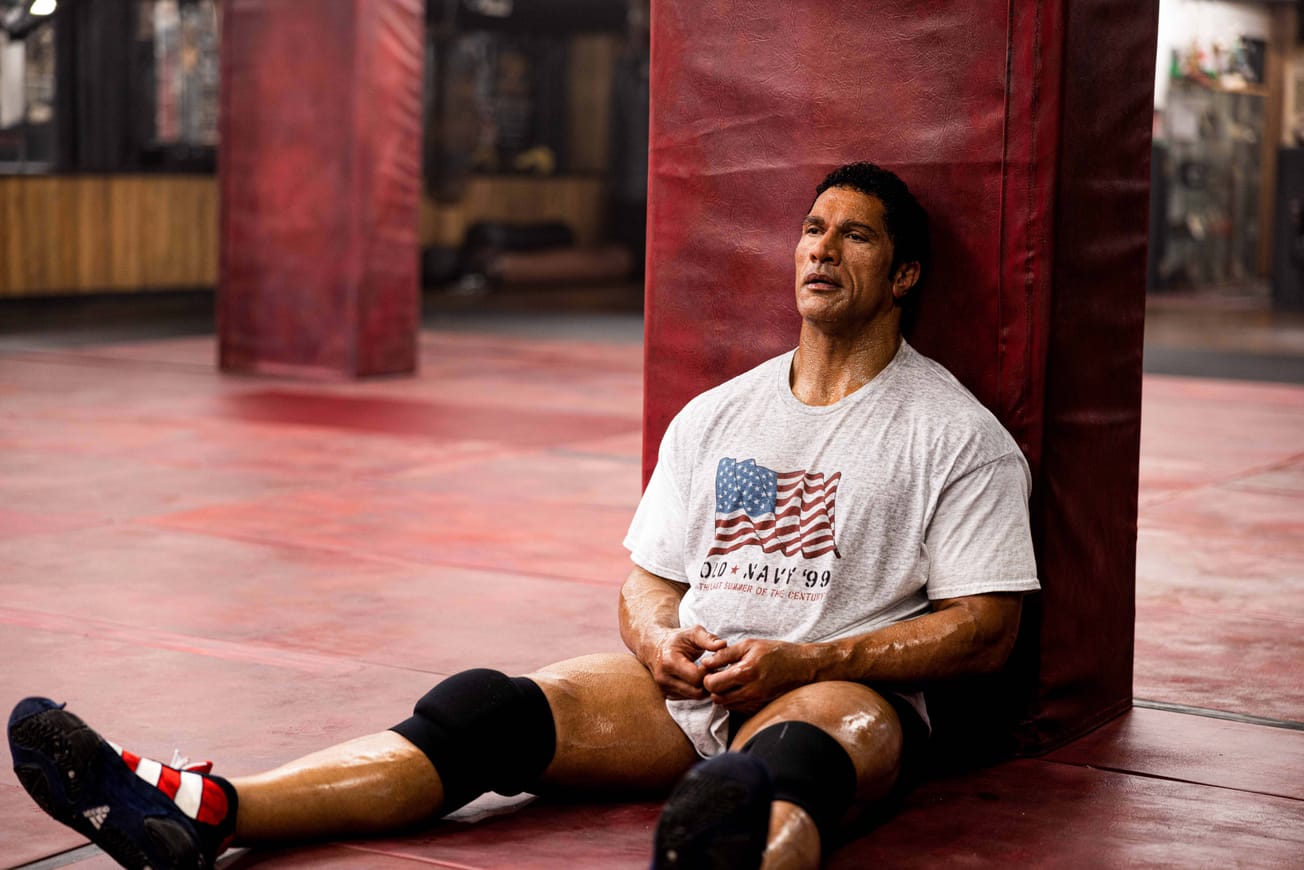
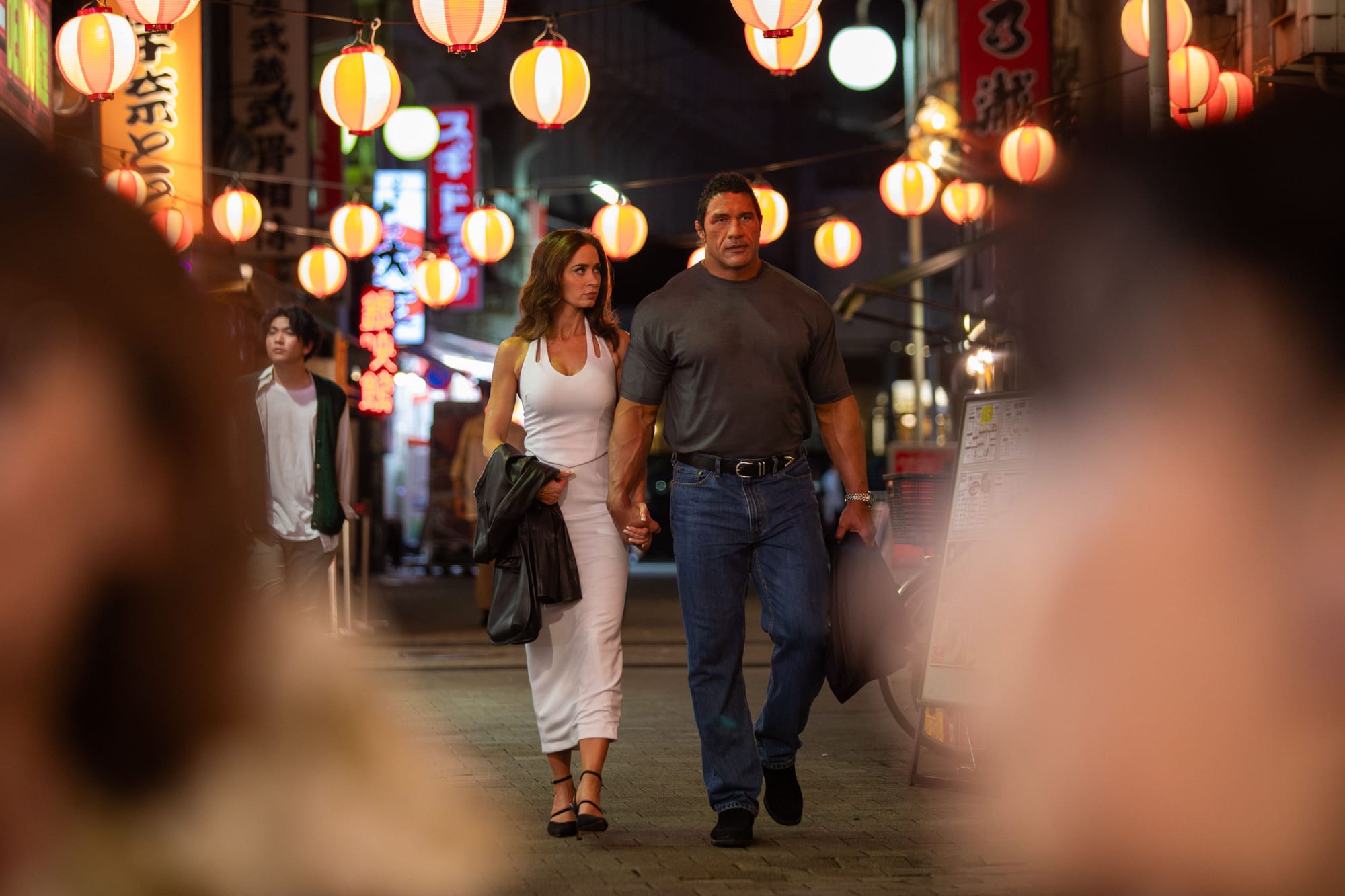
The film tells the real-life story of Mark Kerr (The Rock), one of the foremost pioneers of the Ultimate Fighting Championship and the gentle giant whose enormous shoulders every future MMA superstar would stand on. After an unexpected defeat to a UFC rival, Kerr is forced to reckon, for the very first time, with the fact that he is not as indestructible as he seems. Returning home, he grapples with his escalating painkiller addiction, his strained and difficult relationship with his wife Dawn (an embarrassingly side-lined Emily Blunt), and doubts about whether to enter the ring again after his last fight left him physically and emotionally shattered. On paper, this might read like high melodrama, yet Safdie consistently resists the impulse to overcomplicate things or let the characters’ primal emotions drown out the reality of the situation. He understands that he is dealing with real people and that allowing them to become soap-opera caricatures would betray the very individuals he aims to depict, even if a lesser filmmaker might not care about the integrity of a 'mere wrestler.'
The film contains everything great about Safdie’s previous collaborations with his brother Josh (whose own sports biopic, Marty Supreme (2025), will come out later this year), gorgeously grainy 16mm photography, an unconventional yet fitting score, and a flawless deployment of its central star. Safdie understands that everything making The Rock charming and lovable is also what could make him menacing under different circumstances. Kerr can grin triumphantly seconds after beating a man’s face to a pulp, yet his stomach is too sensitive for a rollercoaster. It’s this contradiction that lies at the heart of the central character, who remains something of a cipher even until the very end. While I didn’t find The Rock’s performance quite as magnetic as his career-best turn in Michael Bay’s Pain and Gain (2013) (you think I’m joking, I am not), it would be difficult to argue that he hasn’t earned his inevitable Academy nomination here. The makeup and prosthetics used to subtly bridge the gap between The Rock and Kerr’s faces are so seamless they’re almost invisible — a unsurprising feat, considering they were designed by legendary Japanese makeup artist Kazu Hiro, who won Oscars for his equally extraordinary work on Darkest Hour (2017) and Bombshell (2019).
For a film about one of the most gruesome and violent sports in the world, it’s pleasantly surprising how little personal conflict exists between the fighters. If his opponent cheats slightly, Kerr is still willing to pose for a picture with him. If he has to fight a long-time friend, he shrugs and gets on with it. This approach frees the film from forced, unnecessary side plots, which works wonders for a story much more interested in what’s happening inside Kerr’s head than in the ring.
If the film has an Achilles’ heel, it’s in the character of Dawn, Kerr’s girlfriend, who is so underwritten it feels as if Safdie wrote her dialogue exclusively on lunch breaks while doing Wordle. Roles of wives and girlfriends in biopics about difficult men are often reduced to how much, or how little, they support their partner, and Dawn is no exception. At one point, Mark Colman, Kerr’s right-hand man, dismissively tells her, 'Just be there for him,' and it becomes glaringly apparent that the film wants nothing more from her than that. It’s a shame to see a brilliant actress like Blunt, who brought the house down in a similar role in Oppenheimer (2023), wasted on a character the script treats with such contempt, doing everything it can to get her out of the way for the final showdown.
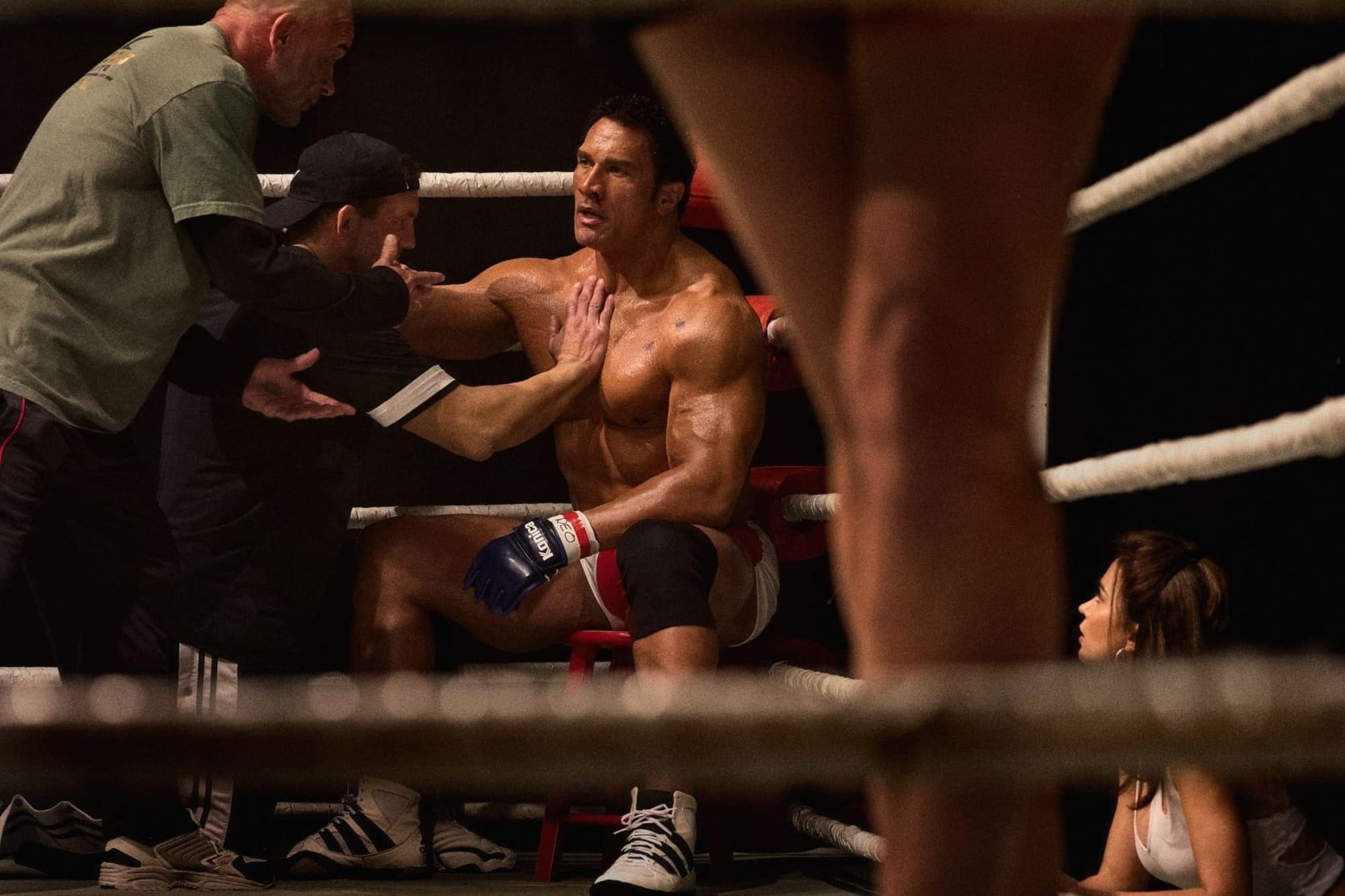
In short, the film does very little you haven’t seen before. I personally found similar territory covered with more depth in Sean Durkin’s The Iron Claw (2023).However, there’s a patience and focus here that’s often missing in other biopics. Compared to films about real-life figures that burn through years of rich history in a single montage, desperate to move from one iconic moment to the next, The Smashing Machine almost feels avant-garde in its restraint, avoiding over-dramatic twists and turns. If The Rock is truly done starring in ugly, bloated $250 million brand investments destined to die on your Netflix watchlist, I’ll be as happy as the next viewer – he’s a really good actor when he wants to be.
Feature image: A24 / IMDb