By Francesca O’Connor, Arts Subeditor
CW: Discussions of violence/gore
Horror is a film genre which has, historically, failed to receive serious critical recognition. It is a genre constantly in conflict with itself, with the recent swing towards the “elevated horror” subgenre suggesting its need to suppress a frivolous predecessor. However, the policing of the horror genre is not a recent trend, instead its roots can be traced to the discourses on 18th-19th Century Gothic literature.
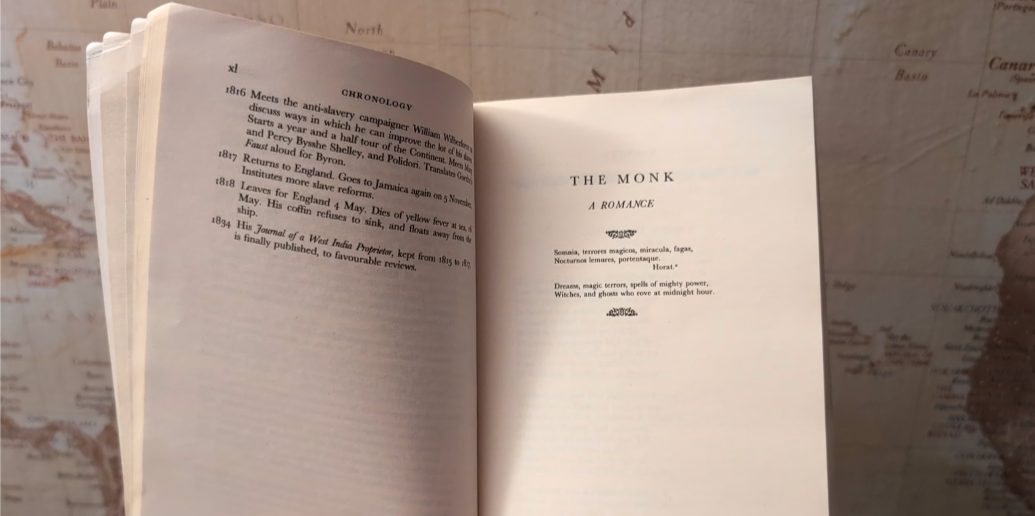
In her critical essay On the Supernatural in Poetry (1826), the acclaimed Gothic author Anne Radcliffe distinguished between the poetics of terror, which were superior in their use of atmosphere to “excite forlorn, melancholy and solemn feelings" and works of horror, which prioritise shock over producing the “deep and solemn” invoked through terror. Whilst Radcliffe’s critique was aimed against the sensationalist techniques of her contemporaries, especially Matthew Lewis, her praise for “sublime” terror above graphic depictions of violence and sexual taboo bears parallels to some modern debates within the horror film genre, particularly relating to the genre’s reliance on gore, jumpscares and obscenity.
Looking first at terror in cinema, I have chosen Suspiria (1977) and Black Christmas (1974). The story of a veiled coven and a voyeuristic killer hiding in a sorority house respectively, both films exemplify Radcliffe’s theory of terror since they rely on obscurity and atmosphere to stir the viewer's imagination.
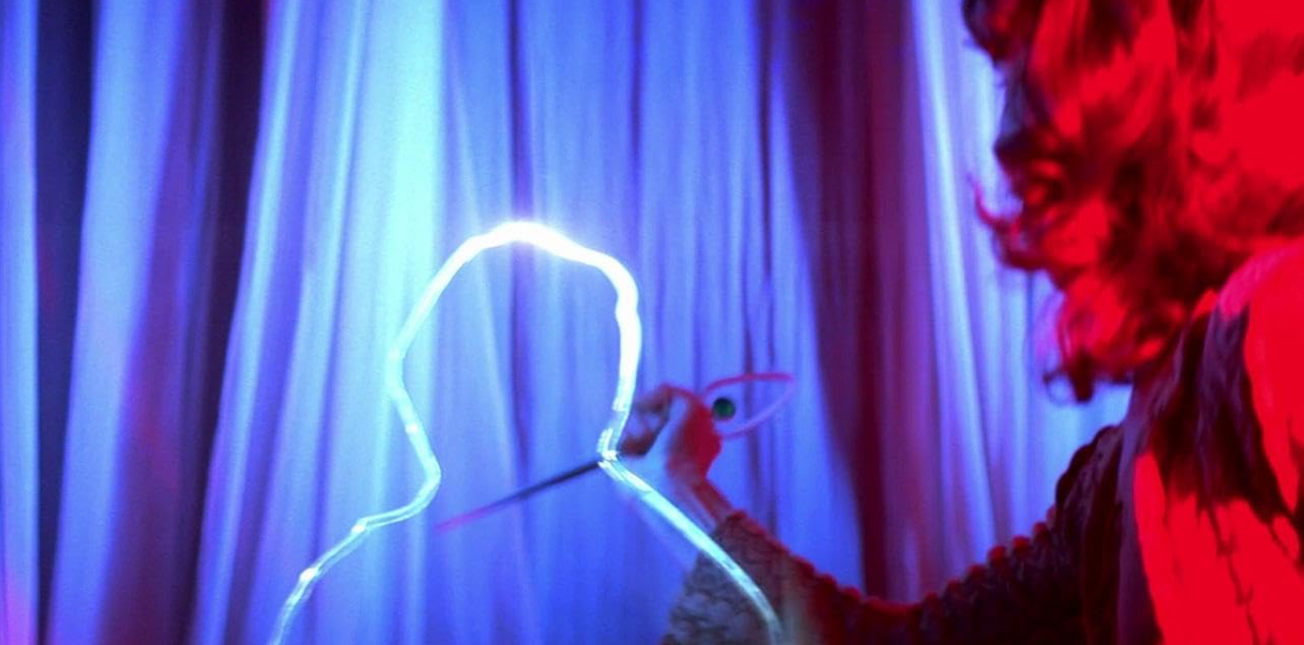
To construct a terrifying villain, both films rely on absence. Suspiria is often likened to a Phantasmagoria (an early form of horror theatre which used lanterns to project frightening images) and this is best seen in the shared bedroom scene, where the ancient witch, Helena Markos (Lela Svasta), is reduced to a shadow behind a sheet. Alongside her strange rasping snoring, shadows and outlines of the Mater Suspiriorum are the only representations of the witch in the film until its final scene. This aligns with Radcliffe's notion of terror, where an absence of images produces a much more unnerving picture in the audience's mind.
Similarly, in Bob Clarke's slasher film, Black Christmas, a shaky POV-shot is used to introduce the killer, who scales the girls' sorority house and hides in their attic. The killer's identity remains hidden and his presence in the home is unknown to the girls. Once again, terror is constructed through anonymity, where the identity of a malevolent villain is obscured for both the characters within the film and the viewers.
Alternatively, Radcliffe’ characterises “horror” by its reliance on revulsion. Due to its use of shocking and vulgar imagery, it is looked at with disdain; horror, for Radcliffe, does not produce a lasting or meaningful effect. To exemplify horror I have picked Clive Barker’s Hellraiser (1987), whose unrestrained portrayal of sexual unorthodoxy, human sacrifice and bodily mutilation would certainly not appeal to Ms. Radcliffe. But, I would argue, some of the sublime qualities which Radcliffe seeks from terror can be found in this confrontational form of horror.
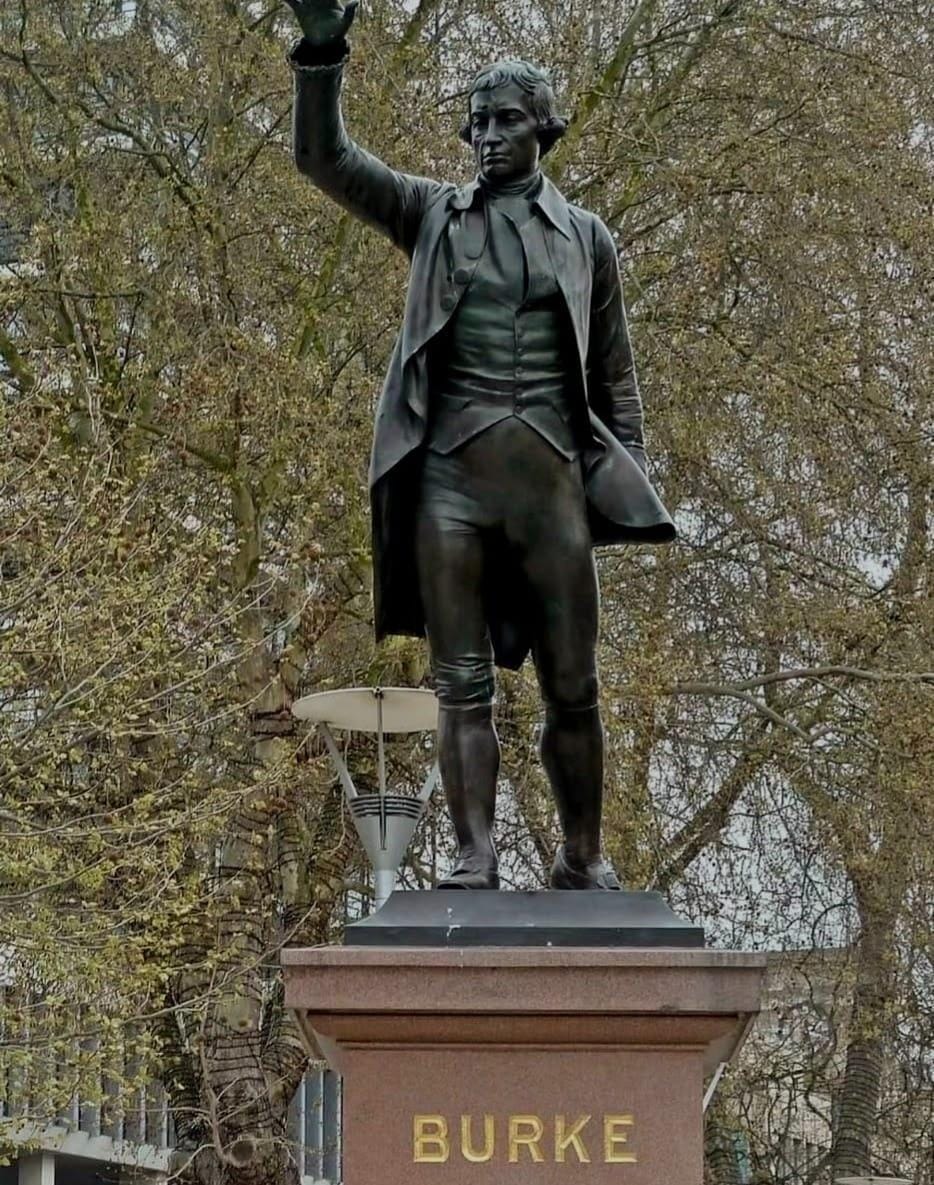
Radcliffe pursues Edmund Burke’s interpretation of the sublime, the powerful effects of which he rooted in an artwork’s use of “uncertain and confused” qualities to stir a viewer, or reader’s, imagination. For this reason, Radcliffe sees that the sublime work of terror should rely only on ambiguity and strange environments to produce a deeper level of fear. Ambiguity and the unidentifiable are also key to Julia Kristeva’s exploration of horror and her theory of the “abject”. Kristeva describes the abject as a destabilising feeling where boundaries – between life/death, self/other – are broken down. Horror is produced through a transcendent confrontation with death, which is usually evoked by depictions of bodily excretions, mutilation and “the greatest concentration of abjection”: the human corpse.
Both Burke and Kristeva elevate the transcendental capabilities of horror, yet Kristeva’s notion of the abject, which produces discomfort precisely through confronting the viewer with an image of their own mortality, would not fit under Radcliffe’s superior notion of atmospheric terror. Still, Kristeva’s abjection theory provides a defence of gore in horror. The disgusting, yet incredible, practical effects used in Hellraiser provide us with explicit images of skin-tearing and “re-fleshing” among other things, but to dismiss this gore as a cheap scare tactic is completely wrong. In the film, Frank’s (Sean Chapman) undead, mangled body represents the destruction of the boundary between life and death, and Frank’s ascension to the realm of ultimate pleasures, whose practices are unacceptable within his human society. The elimination of such boundaries is key to Kristeva’s theory of the abject whose undefinable nature makes it ideal for strange and supernatural horror narratives.
 Katie Asha
Therefore, whilst Radcliffe clearly asserted the superiority of slow, atmospheric terror above the vulgarity of horror, I would not be so quick to dismiss the sublime powers of horror.
Featured image: Suspiria (1977) | IMDb
What do you think, is terror really a deeper feeling than horror?