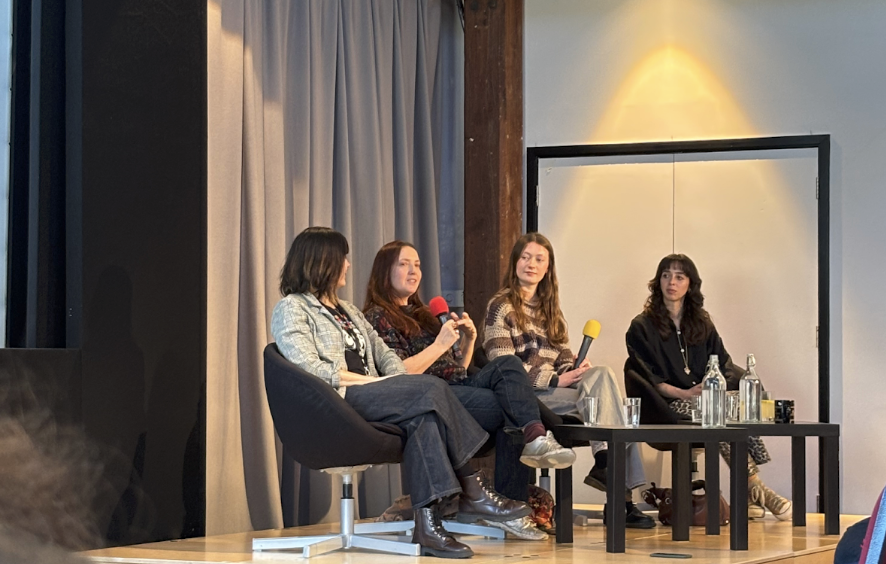
By Daisy Guilor, Third Year, MSci Business and Management with Innovation
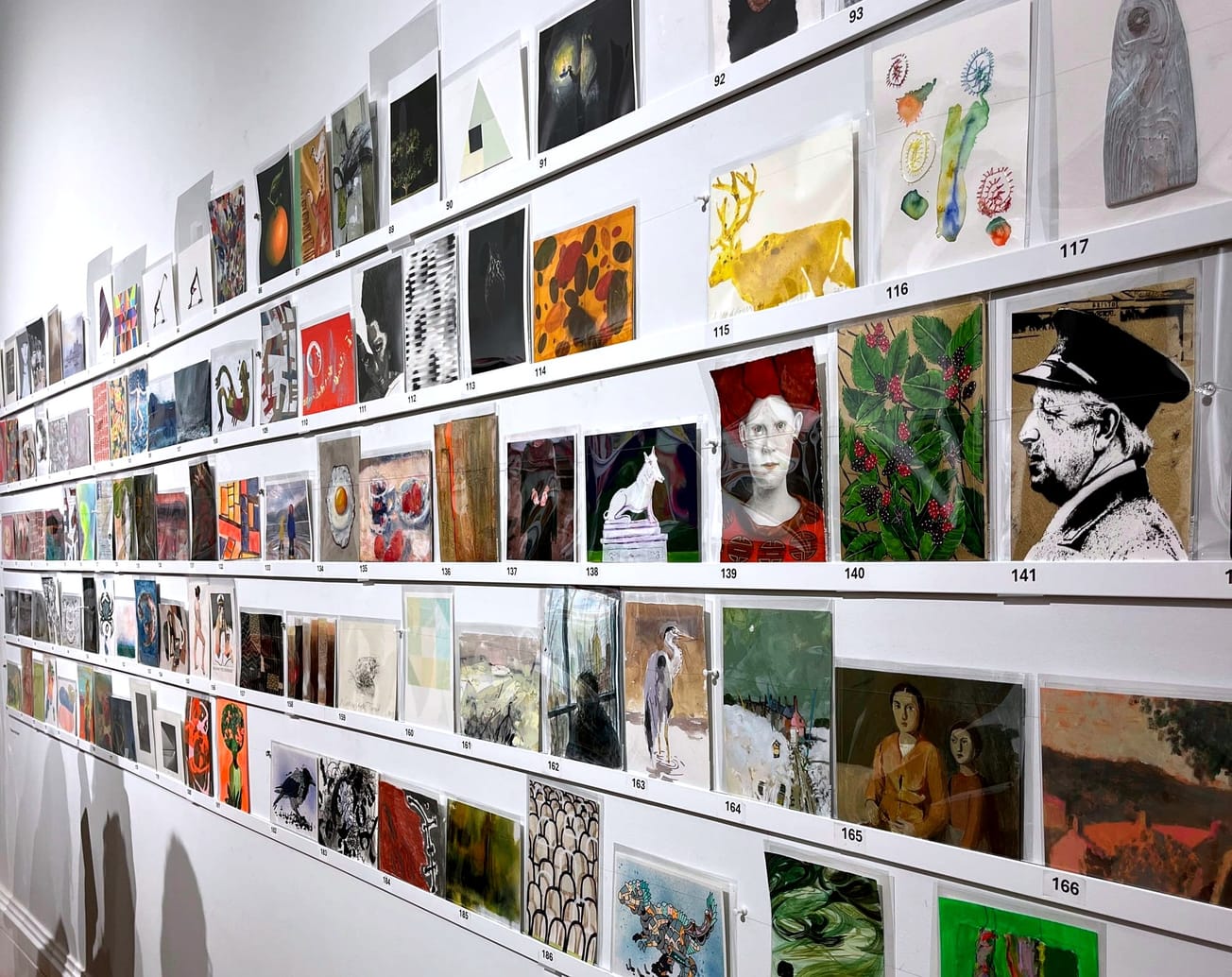
At the RWA this November, hundreds of postcard-sized artworks have been displayed in the Kenny Gallery; deliberately anonymous and assorted. Online, bidders have been battling it out to purchase original works without knowing who created them until the sale closes. The After-Hours party at the gallery on Thursday celebrated the climax of the auction which raised upwards of £92,000.
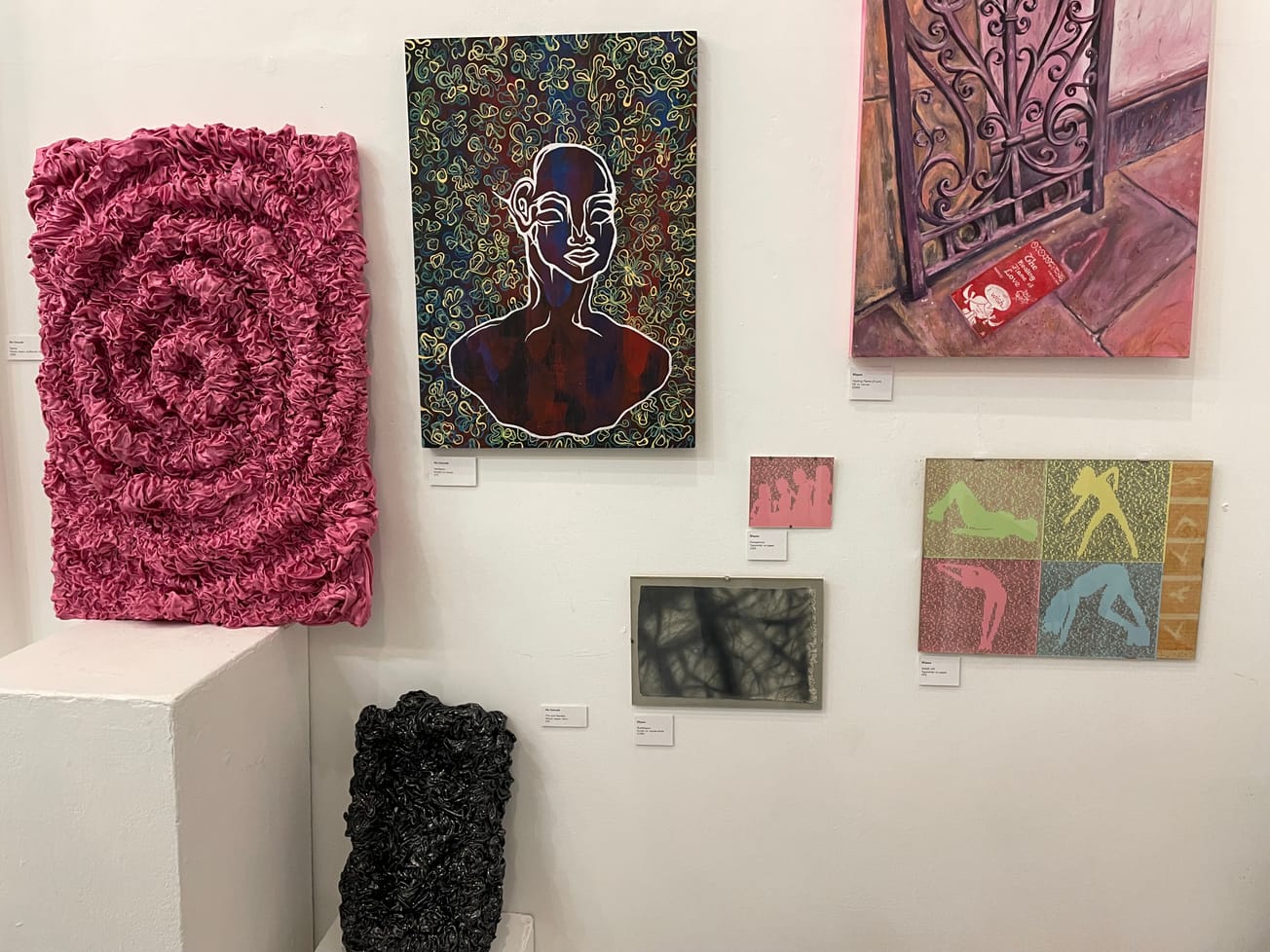
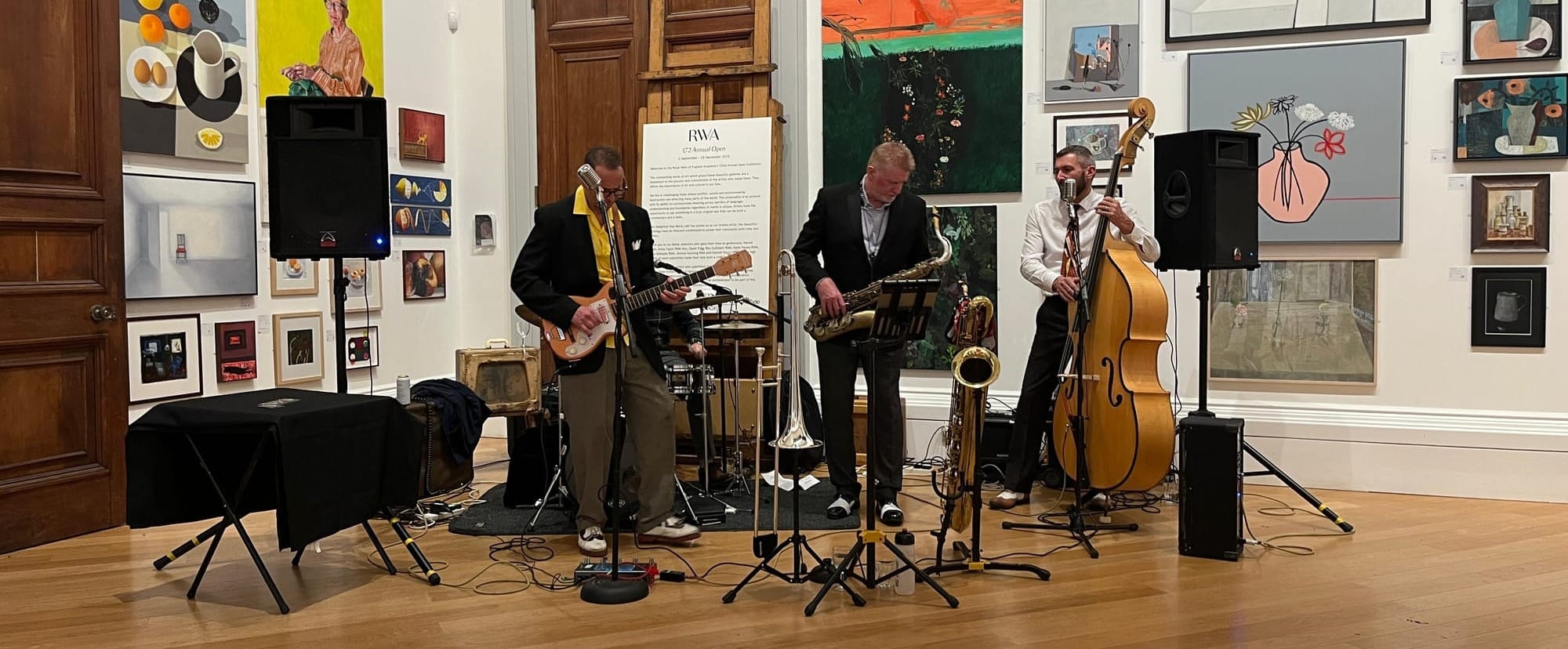
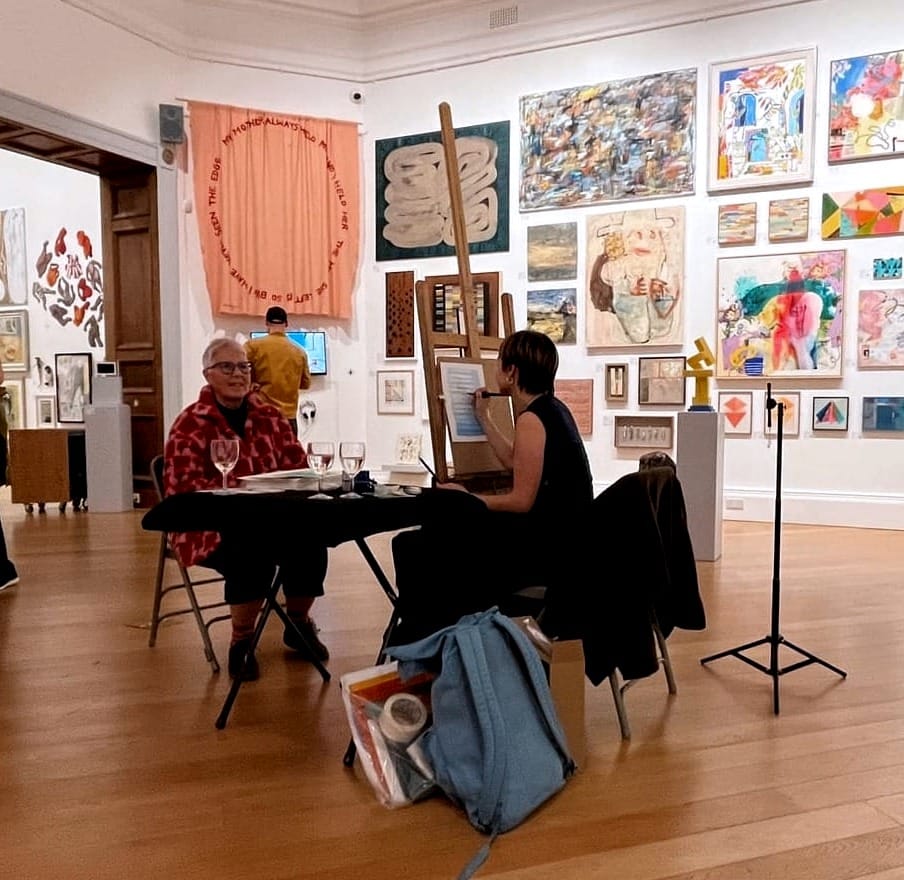
The gallery was humming with an air of anticipation as guests picked out their favourite pieces, guessed the artist behind the work and placed final bids. In the main gallery, celebration was in full swing complete with a jazz band, a quick-drawing portrait artist, Alice Dunn Ribiero, and live tours of the Annual Open Exhibition.
There’s a certain weight to traditional auctions, where buying a piece means committing to its size, name and its permanence. Ren Renwick, the gallery’s director, explains that the postcard format dismantles those barriers; ‘the size of these works invites anyone to take part, people feel familiar with the concept of a postcard and are much more able to connect with it compared to larger pieces.’
The layout of the exhibition, with so many pieces in a small space, also lends itself to discussion. Unlike the hushed tones of a conventional exhibition, the Kenny Gallery buzzed with quiet debate, each wall a new conversation starter. Ren mentioned the joy she takes from the style of this exhibition with a vast variety of works; ‘when I enter the gallery, I’ll see people falling in love with pieces that I, personally, would have overlooked, comparing and debating choices with others; we’re each drawn to what speaks to something inside of us.’
‘The characteristic hierarchy of the art world is blurred as works by established artists, Sir Quentin Blake and Sir Antony Gormley hang beside those of local students’
The characteristic hierarchy of the art world is blurred as works by established artists, Sir Quentin Blake and Sir Antony Gormley hang beside those of local students, sharing the same modest space and dimensions. In the Kenny Gallery, the significance of anonymity had gravity. Viewers picked out favourites purely on merit and connection, momentarily suspending status - Ren feels that this ‘levels the playing field and is a more democratic way of looking at art.’ One of the artists reflected ‘as an emerging artist, it’s so cool to have my pieces sitting among works of the greats and still get some bids!’ Another contributor described the event as ‘such an enjoyable thing to participate in, both as an artist and a bidder.’ They noted that while some iconic works drew high prices, the evening felt refreshingly outside the commercial art world: ‘for once, it’s just about the work.’ The authenticity of this event feels rare in the art world, perhaps that’s what makes it so special.
That sense of openness isn’t new to the RWA. Founded in 1854 by Ellen Sharples as a space to make life drawing accessible to women, the gallery continues to champion inclusivity. In the modern world, this looks like opening opportunities for adults with complex needs, young people with special educational needs and disabilities, and emerging artists. For this reason, support from artists and bidders is abundant. Jemma Gunning, a printmaker and RWA academician, contributed because ‘it’s a great way to support the gallery and keep creativity thriving.’ Ren’s ethos is to ‘foster a lifelong journey with art – for everyone,’ and funds from events like the Secret Postcard Auction are vital to that mission.
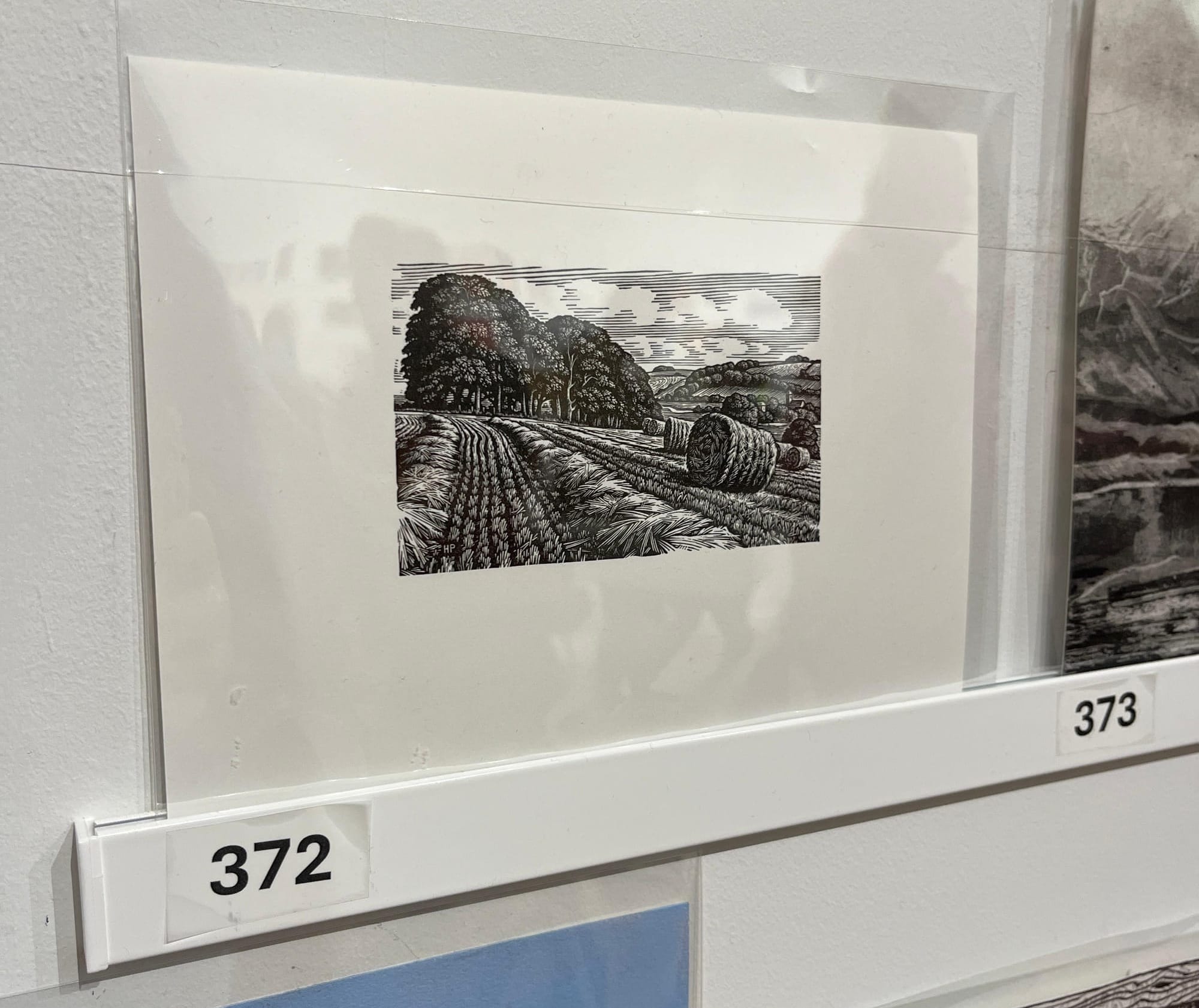
The artists’ names will be revealed only once the postcards have reached their new owners, but perhaps that’s the point. The art has already done its work, sparking curiosity, connection and conversation.
 Sofia Athena Roberts
‘Buy for love,’ says Ren, ‘because art becomes part of your life, the backdrop to your story.’
Featured image: Epigram / Daisy Guilor
Would you attend the RWA’s secret postcard auction?