By Charles Hubbard, Film & TV Deputy Editor
The pipeline from pretty-boy teen idol mocked by critics and audiences alike to experienced, learned male movie star is a trend as old as Hollywood itself. It’s easy to forget that, before they got their sea legs working with major filmmakers on now-beloved films, Robert Redford, Tom Cruise, Brad Pitt and Leonardo DiCaprio were all largely dismissed by critics who derided their alleged lack of acting ability.
And I suspect this longstanding transformational staple isn’t going anywhere. Mark my words, in 10 to 15 years, everyone will have accepted Timothee Chalamet as a legitimate movie star and stopped dismissing him as some loutish child.
But never has this metamorphosis been quite as striking as in the case of Robert Pattinson, who is having a hell of a year. The Drama (2026), his delightfully twisted rom com about a shocking pre-wedding revelation, exponentially exceeded expectations, making $132 million at the worldwide box office. His wickedly funny and scenery-chewing turn as the cowardly, snivelling Ithacan suitor Antinous in The Odyssey (2026) was perhaps the best performance in a film stuffed to the gills with tremendous performances. And his new film Primetime (2026) just received a 10-minute standing ovation at the Venice Film Festival. And with Dune: Part Three looking to make a huge splash later this year and his second outing as Batman finally filming after long delays, Pattinson’s star is only going to get brighter.
Because of this, it might be easy to forget that, even as late as 2018, to bring Pattinson up in conversation as a legitimate actor would get you laughed out of the room. Only 19 years old when he was cast as handsome golden boy Cedric Diggory in Harry Potter and the Goblet of Fire (2005), Pattinson virtually had teen stardom handed to him on a silver platter. And it wasn’t long before Catherine Hardwicke swept him up to play brooding vampire Edward Cullen for her 2008 adaptation of Stephanie Meyer’s young adult best-seller Twilight (2005).
While Pattinson’s performance in the first Twilight (2008) is commendably weird, he’s quickly sanded down by the film’s increasingly expensive (and increasingly tiresome) sequels, which needed Pattinson to play a much more conventional romantic lead. By the time the Twilight franchise ended with Breaking Dawn: Part 2 (2012), Pattinson’s name was used exclusively as a punchline. It didn’t help the actor's lack of clout that his non-Twilight films at this time, such as Remember Me (2009) and Water for Elephants (2011), were all largely flopping or being quickly forgotten.
It’s worth noting that this specific brand of ire and derision is reserved only for male actors whose films appeal to a majority-female fanbase. For example, Leonardo DiCaprio was viewed as such a ’women’s star’ in the wake of Titanic (1997), he had to pivot hard to working on more stereotypically masculine material like The Beach (2000) and Gangs of New York (2002) in order to claw back some critical respectability. The misogynistic double standard here is obvious. Actors like Robert Downey Jr, Christian Bale and Matt Damon are never accused of being empty pretty-boys because their genres of choice traditionally appeal to male audiences first and foremost.
The first time most critics started to reconsider Pattinson was his powerhouse turn in Josh and Benny Safdie’s 2017 crime thriller Good Time, in which Pattinson plays a strung-out bank robber dragging his developmentally disabled brother across town. While such an obvious handbrake turn towards gnarly material would seem self-consciously try-hard in the hands of a different actor, Pattinson’s casting in the role feels entirely natural due to his signature balance of transfixing charm and off-kilter alienation.
Pattinson spent the next few years of his career being the infinitely more charismatic second banana to much greener stars. He outshone Timothee Chalamet in The King (2019), John David Washington in Tenet (2020) and Tom Holland in The Devil All the Time (2020). And this was all while he was holding his own against screen legends, like Willem Dafoe in Robert Eggers’ The Lighthouse (2019). While Dafoe gives a career-best performance as a psychotic, fart-loving lighthouse keeper, Pattinson proves to be more than his equal in a turn that garnered him several well-deserved nominations from critics’ groups.
And then came The Batman (2022). For most staunch Batman fans who hadn’t been following his post-Twilight career, the announcement in January 2019 that Edward Cullen himself would be playing the Caped Crusader might as well have been the first sign of the apocalypse. And yet any question regarding his lack of suitability for the role was promptly silenced the minute the film opened. Pattinson’s turn as Bruce Wayne is one of his very best, perfectly tapping into the character’s introverted, vampiric shyness and his searing, upsetting physical brutality.
After a three-year hiatus, his fantastic turn in Bong Joon-Ho’s Mickey 17 (2025), it only added yet another arrow to his quiver, proving him to be a brilliant comedic actor. While critics had many qualms with the film, Pattinson’s hysterical turn as a hapless military grunt who is cloned every time he dies was certainly not one of them. And his equally funny turn as Jennifer Lawrence’s compulsively strange husband in Lynne Ramsey’s psychological thriller Die My Love (2025) later that year was just the icing on the cake.
And there you have it - a complete transformation from a critical punching bag known only for headlining the most detested franchise of the early-2010s to a nigh-universally beloved actor able to single-handedly shepherd even the most expensive and least commercial auteur projects to the big-screen. While it’s easy to point to the dissolution of the Twilight franchise or Pattinson coupling himself to arthouse darlings as the source of his newfound critical respectability, I believe the true answer to be a lot simpler - he just got older.
It’s somewhat hard to believe but Pattinson is now 40 and it’s striking how much more generous film critics are to actors once they’ve entered early middle-age. There’s always a major pushback when an actor becomes a major movie star before they’ve reached 30 - why shouldn't we feel a little jealous of someone pulling down $10 million pay checks when other people their age are struggling to get on the property ladder? Conversely, the minute they turn 40, get married and start having kids, it’s as if every film critic on the planet simultaneously agrees that they’re here to stay.
 Charles Hubbard
And here to stay Pattinson is. He’s at the peak of his powers and represents instant financing for any weirdo arthouse auteur scouting for a bigger budget for their next passion project. He’s certainly a shoo-in for an Oscar nomination this year - the only question is for which film? And all from a man who didn’t make a well-received film until 2017. So next time you feel yourself calling Austin Butler, Jacob Elordi or Paul Mescal a talentless pretty-boy, just remember that this is exactly how everyone talked about Hollywood’s new favourite leading man before he turned 35.
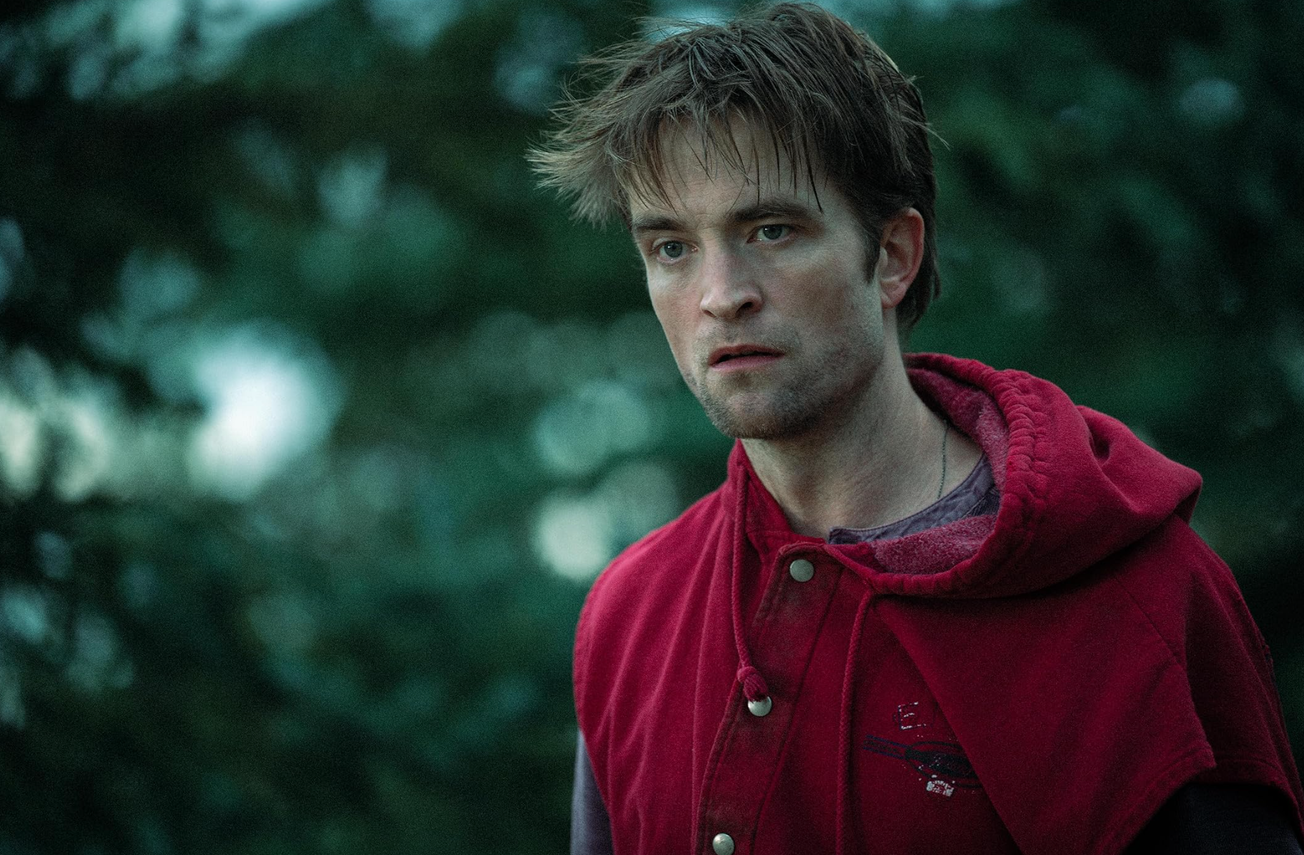
Featured image: IMDb / Robert Pattinson
What's your favourite Robert Pattinson performance?