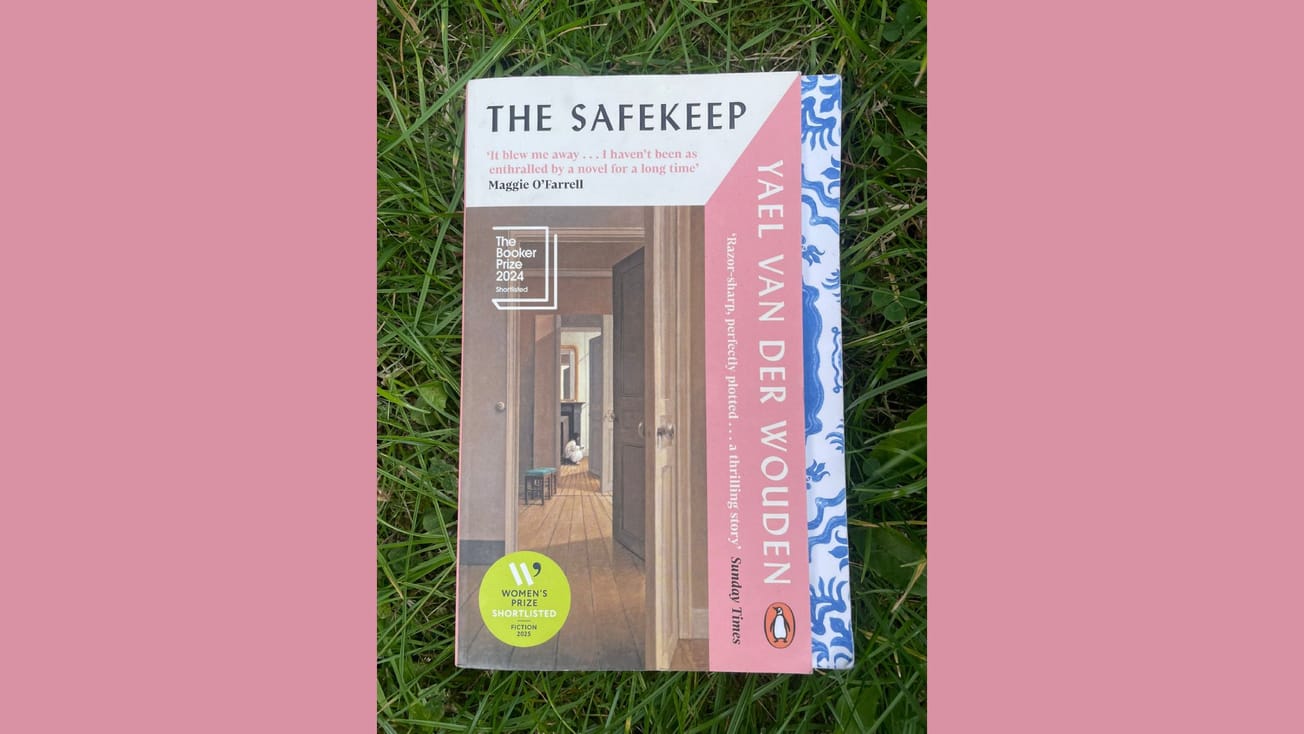
The Safekeep by Yael van der Wouden joins a list of much-beloved novels like Hamnet (Maggie O’Farrell), Piranesi (Susanna Clarke) and We Need to Talk About Kevin (Lionel Shriver) as winner of the Women’s Prize for Fiction. The Women’s Prize aims to champion female writers and readers alike and is also a charity.
The Safekeep tells the story of Isabel, the proud, single occupant of her family home, dealing with her younger brother’s new girlfriend, Eva, staying for - shock horror - the whole summer. This massively disrupts Isabel’s routine, which has no place for dynamic, vivacious Eva since she prefers to be left alone to keep the house just so. But an unlikely bond begins to form between the two, one that is enigmatic, unexpected, tense yet deeply alluring, and it is slowly revealed that first impressions may not have been correct.
I loved Hamnet, though I admit I found some of the extensive descriptions difficult to cope with. I studied Hamlet at A-Level and while it will forever have a special place in my heart, I can find long, winding passages of description difficult to cut through to find the actual plot. However, The Safekeep’s prosaic style is almost dream-like - the vocabulary isn’t extravagant and not a clause is out of place, making it accessible while never skimping on the beauty of the story.
I enjoy things that can engage even a tired brain and are easy to remember when I pick them up again the next time
I do the bulk of my reading on the tube late in the evening, because over the summer I work full time in hospitality, often finishing at 11pm. This has shifted my personal requirements for a good book. I enjoy things that can engage even a tired brain and are easy to remember when I pick them up again the next time. Anything funny and with a good plot twist is a bonus too - for example, some of my favourite train reads last year were Butter by Asako Yuzuki and And Then There Were None by Agatha Christie.
I’m pleased to say The Safekeep ticked all of those boxes, with an added bonus of a feeling of its sophistication. The delftware design under the front cover was a lovely artistic way to pay homage to the history of the Netherlands where the book is set, as well as a visualisation of what is one of the most crucial props of the story, a shard of a blue and white plate decorated with a pattern of hares.
Finally, I really liked the exploration of post WW2 Europe - Isabel’s family had moved from Amsterdam to the countryside for safety. While van der Wouden describes swinging 60s pop music on the radio, the aftershocks of war are still felt throughout the house. The genius of the story is that while a work of fiction, it feels something like the conflicted relationship between Isabel and Eva, sprung from kept wartime secrets, could have really happened in uncertain, cold post-war Europe.
If you’d like to learn more, the Women’s Prize website has a reading guide for The Safekeep and other shortlisted novels.
Featured Image: Epigram / Imogen Day
What did you think of 'The Safekeep'?