By Amelie Patel, Deputy Comment Editor
This Thursday, I attended DramSoc’s opening night production of Edward Albee’s Pulitzer Prize-winning absurdist play A Delicate Balance at the Pegg Theatre. Excitingly, it's the first production of the society’s 2025/26 season.
The play presents the domestic life of the married couple Agnes and Tobias, and Agnes’ alcoholic sister Claire, who maintain an uneasy equilibrium together at home. The ‘delicate balance’ of these relationships is interrupted by the arrival of their friends Harry and Edna, and their middle-aged daughter Julia, forcing the characters to come to terms with each other and their pasts.
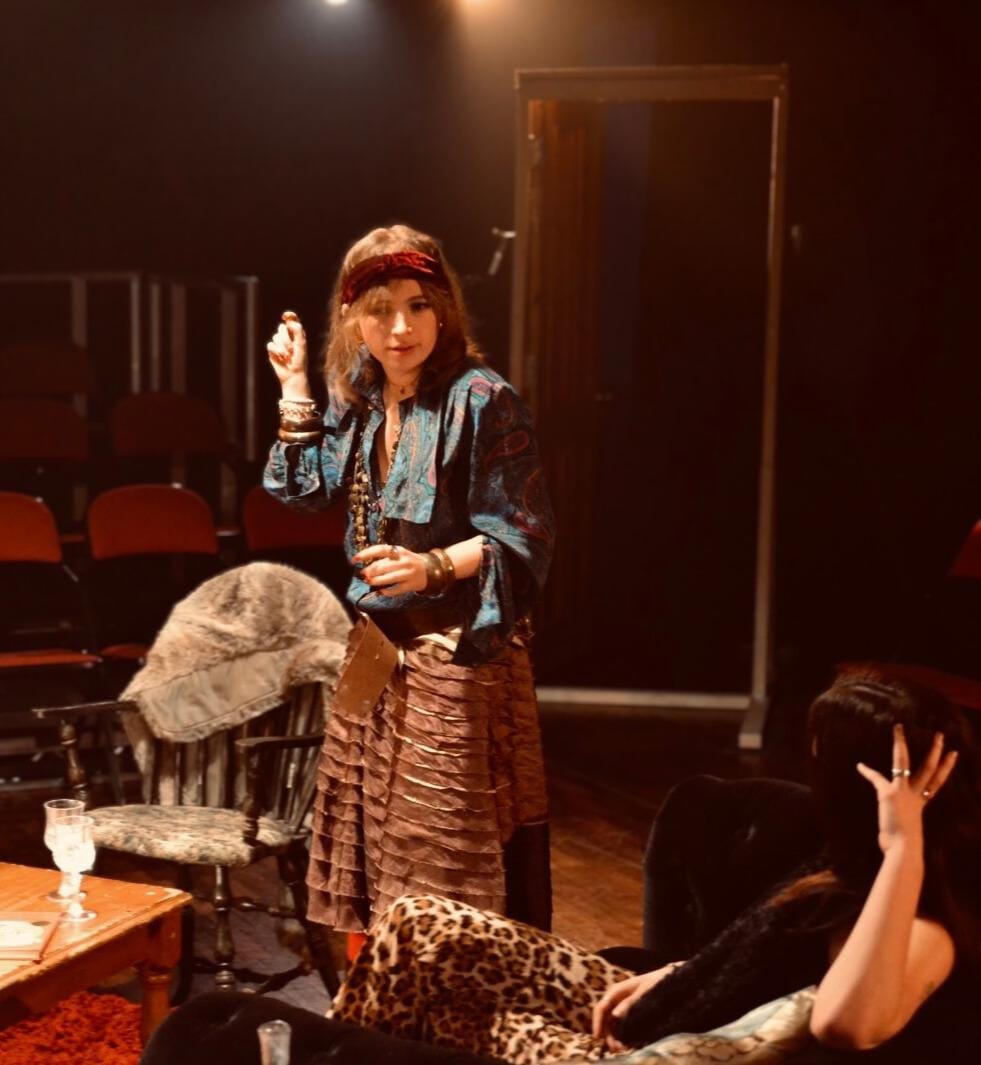
The play opens with Agnes (Isabella O’Neill) and Tobias (Sam Holmes) sending casual quips on married life back and forth across the intimate, evocative set designed by Amelie Etherton; a living room which transports you to the suburban realm of the 1960s, with its paisley print armchair, plush cushions and character’s dress. Soon Claire (Lily Robinson) arrives and takes centre stage with her dramatic persona, oscillating between flamboyance, insouciance and bitterness, and steadfastly working up the other character’s nerves. Throughout the play Robinson's was a standout performance.
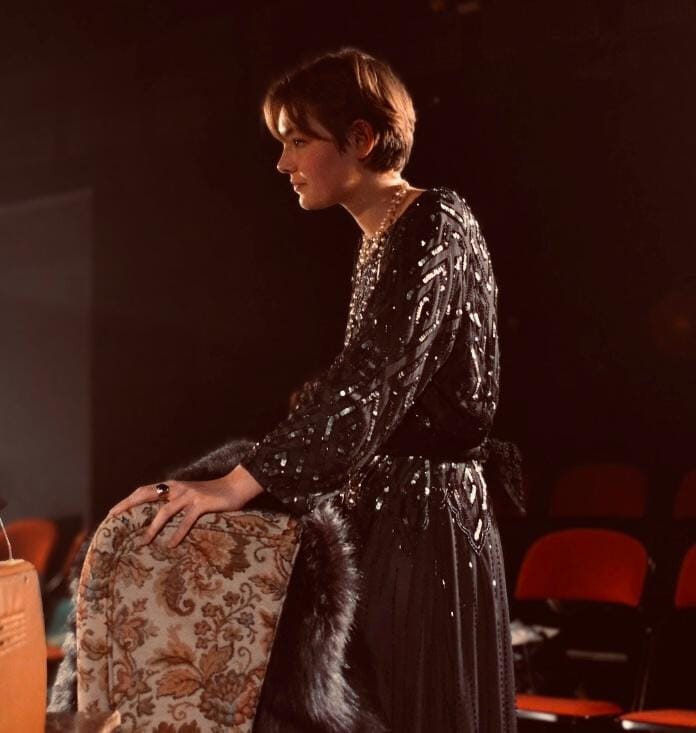
As the characters indulge in more and more alcohol, a trademark of Albee’s plays, and a great prop for the actors as they gravitate to and fro from the drinks stand, tensions continue to grow and demand release. In the interval, me and my friend traded opinions, and agreed that what was so exciting was that ‘it could go anywhere’ and we had ‘no idea’.
The appearance of Julia (Grace Rose), Agnes and Tobias’ daughter was an electric addition to the stage; as we watch her regress into the role of the child within the family dynamics, climaxing when she arrives gun a-blazing, demanding that Edna and Harry leave their home in a full blown temper tantrum (their extended stay at the house is so strange that it doesn’t feel like an entirely unmerited response). The dynamics of the room shift enormously at this moment, with the division between her and the other characters who have not yet caught the ‘plague’, a term which Agnes uses to describe those who have upset their delicate balance.
Julia’s breakdown seems to precipitate further chaos. Agnes powerfully levels with Tobias and demands that he call the shots in regards to their guests, liberating herself from the role of the decision-maker, in a performance which resonated powerfully. This spurs Tobias’ frank and cathartic reckoning with Harry; Holmes revealed a rich underside to the composed character in this scene. Once again, the rest of the characters seem to sit back and watch along with the audience while this occurs, suggesting that breakdown can only be contained if they each have their go one by one. Ironically, Claire’s characterisation as ‘unstable’ (for lack of a better word) makes her immune to this disease, providing interesting commentary on perceptions of ‘normal’ that were enforced at the time.
The theatre company said it would be bringing a new ‘experimental’ spin to the production; which was evident in the use of the DJ set in the corner which Claire periodically takes charge of, providing comedic relief. Edna (Celia Kelly) and Harry (Max Kersey) also provide a great source of comedy with their bizarre non-chalance in the face of their extraordinary demand to stay at Agnes and Tobias’ house. Their portrait of a dysfunctional, repressed marriage was particularly strong, as well as Kelly’s embodiment of Edna’s strange, reserved quality.
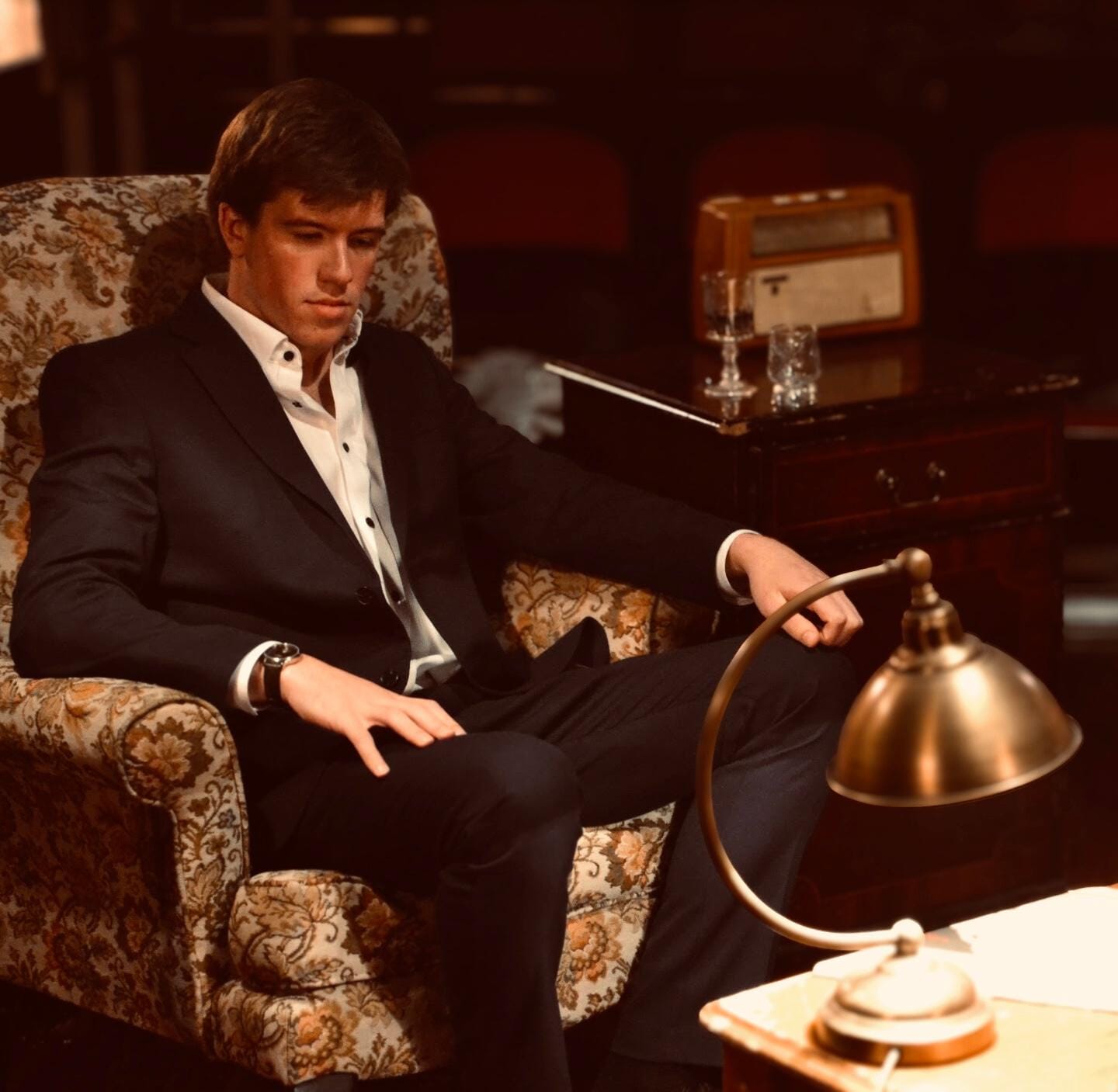
At the end of the play, the sudden departure of Edna and Harry from the house is as quick as their entry, and I think both the characters and audience are left thinking- what next? The characters decide they must ‘start their day’, attempting to move forward and sink into their normal routines, a sentiment which feels both admirable and uncertain in the face of the play’s dramatic delineation. However, Agnes’ decline of Edna’s invitation to go to town later in the week might suggest something has unalterably changed, though it is all left wonderfully ambiguous and sure to leave you food for thought.
 Matilda Collard
Having previously watched Albee’s play Who’s Afraid of Virginia Woolf, I was intrigued to watch another work of his which utilises the similar dynamics of the domestic space and character driven plot. I enjoyed its more subtle though no less terrifying psychological explorations, and was distinctly impressed by the cast’s ability to bring it to life so masterfully. Impressive across all fronts from lighting under Nandini Kumar, Miloni Belgaonkar and Isabelle Taylor, to costume under Ziqin Chiodi, to cast, it was a great watch. Future performances by Bristol’s DramSoc this year are definitely ones to look out for!
Featured image: DramSoc / Harriet Leadbetter
Will you attend DramSoc's next production?