By Kashvi Cox, Third Year, English
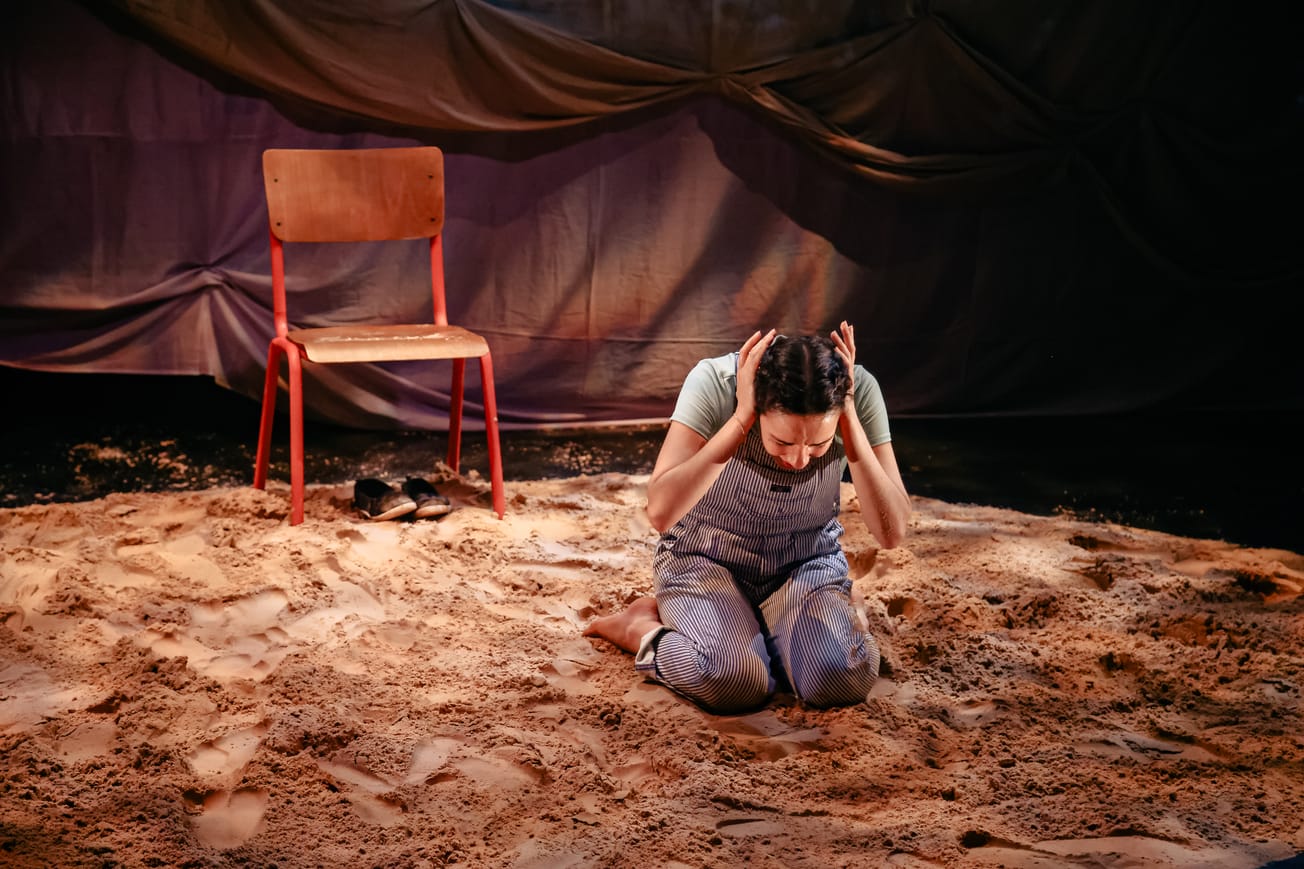
Framed by the bare church walls and imprisoned in a cage of light and shadow, Owen Ridley-DeMonick took to the stage to begin his character’s journey. Inspired by the figure of Caliban from Shakespeare’s The Tempest, the dance explored themes of enslavement, freedom, and community all through dynamic movement.
In The Tempest, Caliban occupied the island freely before Prospero arrived and forced him into servitude. Although there was no Prospero-figure in this performance, the audience was made to sense his presence through Ridley-DeMonick’s movements. He began the dance cowering in the corners of the stage, close to the wall as if afraid. From there, he started to travel and explore the space around him. The performance has been described as a dance that “examines dispossessed selfhood and the legacy of colonial violence”, and in this interpretation, it explored the aftermath rather than the violence itself.
The Mount Without provided the perfect eerie atmosphere for this performance. The tall ceilings, bright lighting and towering archways framed the stage. Ridley-DeMonick filled the vastness and commanded the stage well.
Trained at the Rambert School of Ballet and Contemporary Dance, Ridley-DeMonick moved with strength and confidence. His movements were controlled, but never hesitant. Despite the audiences' vantage point looking down from the tiered seating, he commanded the space with an authority that drew the viewer into his experience. At times he demanded our gaze, and at others he refused to look – he was not intimidated by all the eyes peering upon him.
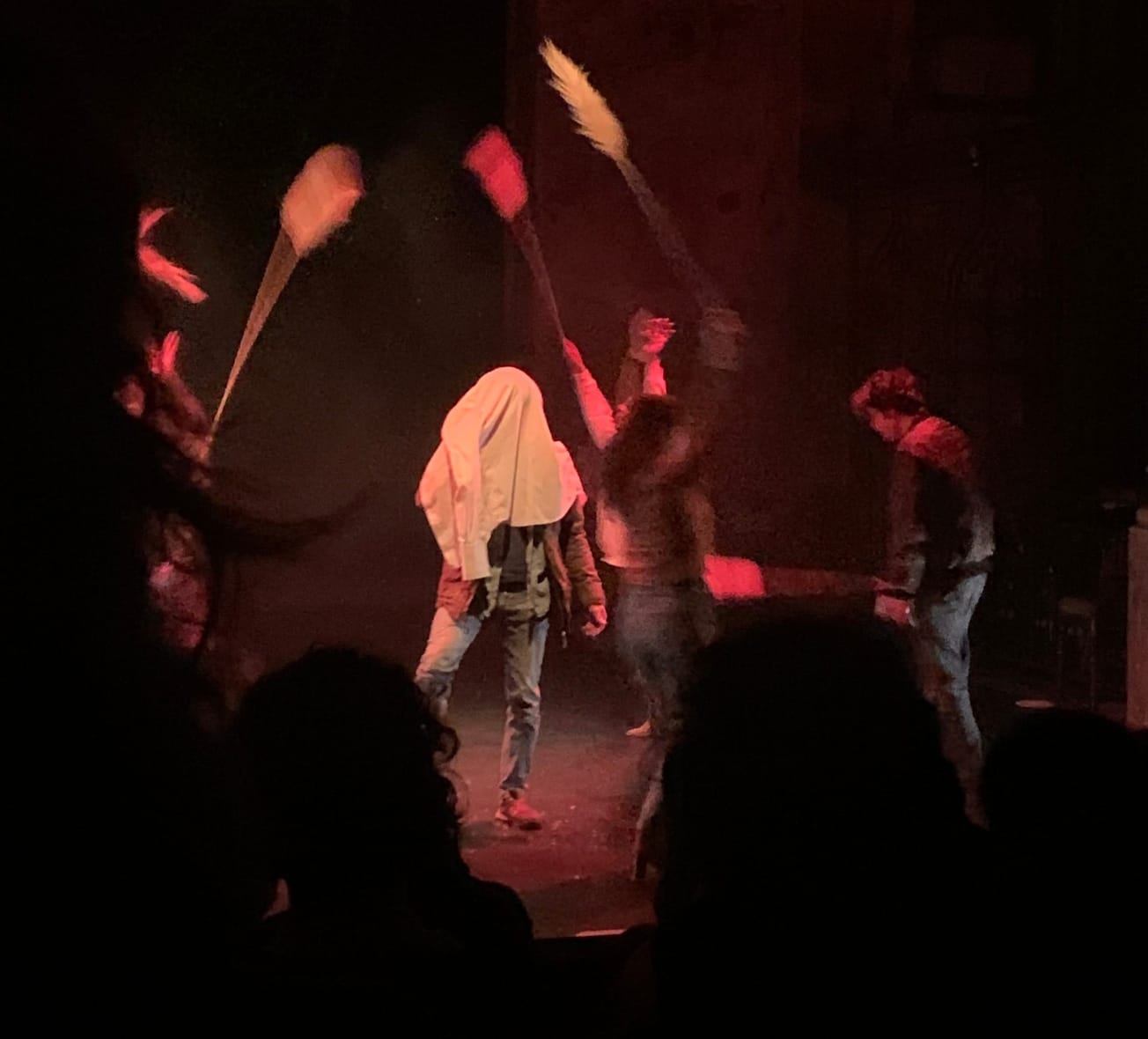
He also brought the audience into his performance. Ridley-DeMonick picked a couple of theatre-goers out of the front row and handed them each a feathered staff. They wafted them around frantically until the feathers dissipated in the bright lights, like dust floating in sunshine. It had a sense of ritual or religious ceremony about it.
My favourite section of the dance was close to the end when Ridley-DeMonick travelled across the stage with such speed, leaping and jumping while his arms windmilled so that everything blurred. In this moment, the audience could fully appreciate the power and strength of the dancer.
However, by the end I was left wanting more, and not necessarily in a satisfying way. Other than that fleeting moment of intensity, I found that the piece felt more like a series of burning fragments rather than a fully developed dance. From such a talented dancer I had expected more movement, more choreography. At one point Ridley-DeMonick balanced the long feathered staff on his head and walked around the stage. It was impressive, but not for very long.
Despite these reservations, Ridley-DeMonick’s performance was still captivating. Through movement, he communicated a feeling that words could not convey. He let us into the characters interior world and laid both raw vulnerability and strength bare for us to see. The loud cheers at the end were amplified by the church walls. The stage went black until Ridley-DeMonick re-emerged for one final bow.
 Charles Hubbard
Featured Image: Epigram / Kashvi Cox
How you ever seen Shakespeare reimagined through dance?