

By Gabriela Andrews-Simon, Second year, Economics
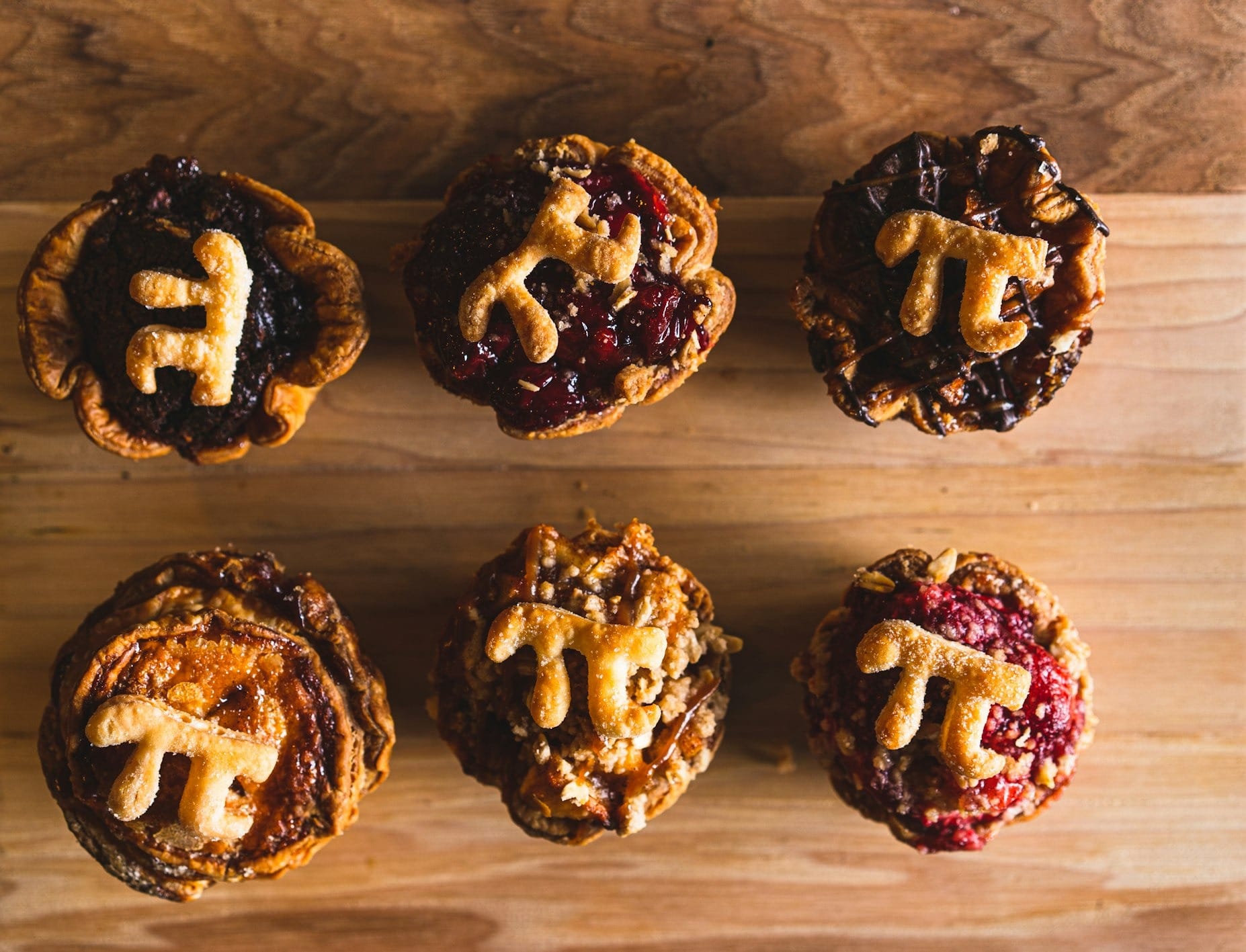
The 14th of March marked the anniversary of the day celebrated by all mathematical enthusiasts – Pi Day! You might not have celebrated Pi Day, and honestly, the universe didn’t care – circles kept spinning and planets continued orbiting – all held together by a number that you haven’t thought about since GCSE maths. But if you want to change your accumulated hatred of this number from our former school years into an admiration for it as a mathematical phenomenon, it might be interesting, and maybe even fun, to explore why this number is so important.
The background of Pi
The definition of pi (π), for those who don’t know, is the circumference divided by the diameter of any circle – yes, any circle ever. This applies to everything from the rim of your coffee mug that you sip on daily, to the circular camera lens on the back of your phone on which you may be reading this article.
The definition of pi, as the circumference over the diameter of a circle, has been known for almost 4000 years – initially approximated by the Babylonians and refined to a further extent by Archimedes and Egyptian mathematicians. What makes it interesting, however, is the way this irrational, never-ending number keeps appearing in almost all fundamental parts of our lives. As we know, anything that is a perfect circle is held together by pi, but it appears in so many more places than that from quantum mechanics to statistics.
Pi powering technology
One of the most intriguing places that pi pops up in, is the world of technology. With technology as the backbone of society, the importance and fame of pi only grows. Pi is built into the equations for the frequency, wavelength, and phase of waves. In today’s world Wi-Fi, Bluetooth and navigation systems use the electromagnetic waves that are modelled with formulas containing pi. Without this number, engineers would be unable to determine how signals carry data, travel or stay in sync. To an even further extent, pi is crucial in GPS and satellite systems, given that finding the shortest distance between two points on the Earth’s surface (which is curved) requires pi in its calculation – showing again how this number underpins vital aspects of our lives.
In today’s world the best example of pi being used remarkably with technology is through the work of NASA. According to NASA’s Jet Propulsion Laboratory, they use pi to discover and examine exoplanets. Essentially, their telescopes track the light emitted by distant stars. When planets pass in front, there is a large dip in light which is then utilised in calculations, that include pi, to determine their distance. Furthermore, NASA is then able to use pi (again) and Kepler’s third law to calculate how long it takes these exoplanets to orbit their star, revealing the location and ultimately whether or not it is habitable.
When randomness meets precision
Pi is often associated with very complex and intricate mathematics, but one of the most beautiful ways that this number can show up is through complete randomness. If you were to draw a square and then a circle perfectly inside it, and then proceeded to drop completely random points inside the square, the ratio of dots that appear inside the circle against outside would approach a fixed value. This method is known as the Monte Carlo simulation. Due to the law of large numbers, a larger number of dots would get us closer to the real value, but essentially the ratio would approach π/4 . This can be explained geometrically given that we know the areas of each shape. But what is so striking about this is the contrast between the fact that pi is usually linked with precise geometry and yet it can be obtained through complete and pure randomness.
 Milan Perera
The Pi capital of the UK – Bristol
The link between us, and the beautiful number pi, gets even more thrilling when we look around Bristol – the pi capital of the UK as some would call it. A Bristolian graffiti artist painted the digits of pi to 100 decimal places on the walls of the Bear Pit – an area just beside Cabot Circus. According to Bristol 24/7, Oliver Humpage, a University of Bristol graduate, said that despite a few mistakes, the number “is accurate enough to calculate the width of the galaxy to the accuracy of a hydrogen atom”.
Bristol made further pi news when a local 10-year-old broke the world record for being able to recite the most digits of pi in 60 seconds – reaching an outstanding 280 decimal places.
Ultimately, pi is a lot more than just a number, it is a reminder that even the simplest of concepts can hold so much depth. Pi has an inability to stay in its own lane from showing up in NASA’s exoplanet investigations to playground games. This is what makes it fundamentally interesting, and who knows, maybe next year we will all greet pi day with more interest and even a little excitement!
Featured Image: Unsplash / Morgan Bea