By Tom Forbes, 1st year History and Modern Languages
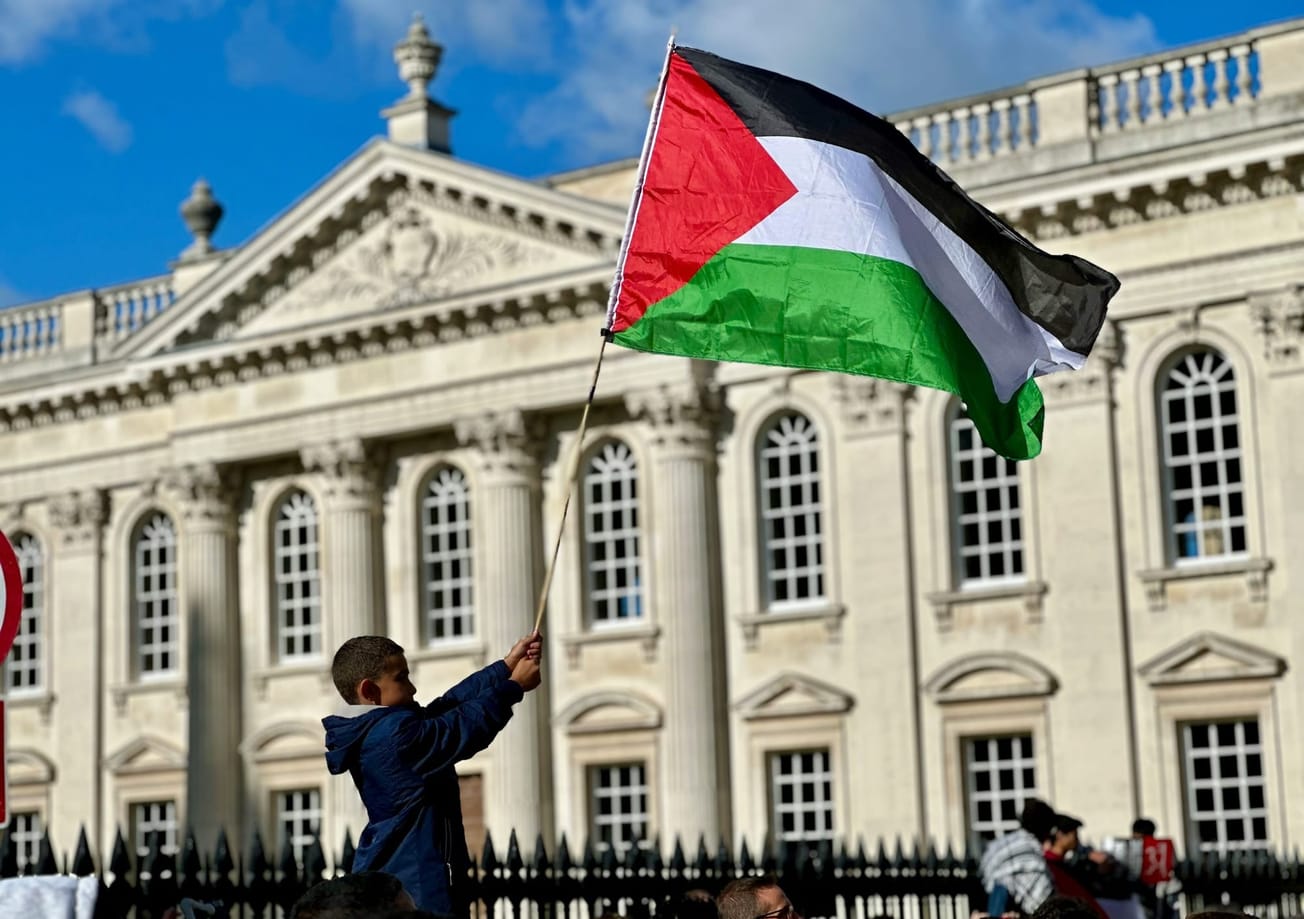
Amongst Clifton Literature Festivals eclectic lineup comes Jonathan Dimbleby. He reflected on the state of Palestine during the current conflict and it's people speaking about the recent revision of his book, The Palestinians.
In 1969, Israel's Prime Minister, Golda Meir, claimed 'There is no such thing as a Palestinian people. They do not exist'. Less than ten years later, a young journalist working for the BBC, Jonathan Dimbleby, published a book intended to prove that the contrary was in fact true; that the Palestinians were a real, distinct people. This was titled simply 'The Palestinians'. Several decades on, much has occurred but not enough has changed. The terrorist attack on October 7th and the ensuing all-out Israeli assault on Gaza (that many experts and international organisations consider a genocide) persuaded Dimbleby that it was necessary to republish the book, updated and revised.
What has changed and what has not in the intervening years? Tragically, not that much. Dimbleby, a resident Bristolian himself, gave the audience a tour de force of Palestinian history from the Ottomans onwards. Land in Palestine was largely held by the Arabs who had lived there for centuries, alongside another ancient minority population, the Jewish, who had also resided there for centuries and constituted around 5% of the population. Following the First World War, the Balfour Declaration, and the Sykes-Picot Agreement, a British mandate was established in the former Ottoman province of Palestine.
Dimbleby is a professional in this topic, having covered the region for the BBC for decades and having personally met and interviewed senior figures in both the Israeli and Palestinian governments, as well as countless refugees and displaced people. His great strength is his sense of awareness of the utter tragedy of the conflict. This stems from his father, Richard Dimbleby's, arrival at Bergen Belsen in 1945 where he saw first hand the horrors of the Holocaust, and coined the infamous warning 'never again'.
Sitting in the audience one felt a real sense of his personal appreciation of the pathos of what Palestinian-American critic, Edward Said, wrote of the Palestinians, and how they had become 'the victims of the victims'. In horrifying detail, he recounted stories from the Nakba, the ethnic cleansing of many Arabs from Palestinian land. He explained 'all of them were young men armed to the teeth. They decided to clean up a village. Men, women, and children were butchered, put up against a wall and shot. Stomachs were cut open'. Roughly 700,000 Palestinians were driven out to refugee camps in neighbouring countries. This is where the current conflict begins, and where much of the individuals that Dimbleby interviews in his book experienced their most traumatic experiences.
 Alex Boersma
Dimbleby's understanding of the scale and diversity of the Palestinian experience was particularly touching. Palestinians, he emphasises, are in spite of their displacement ultimately a people just like any other: with their own ambitions, hopes, and dreams. Here are doctors, militants, businessmen, teachers, intellectuals, and artists. From the tents packed into refugee camps to the drawing rooms of insurance brokers, from the smouldering ruins of towns and villages in the West Bank to the auditoriums of English public school, Dimbleby shows us in full technicolour the sheer scale and diversity of the Palestinian experience. His final message left a sour taste in my mouth while simultaneously both haunting and hopeful: 'The Palestinians do exist, and unless they are annihilated, will continue to exist'.
Featured Image: Unsplash/ Dixit Dhinakaran
Have you read The Palestinians?