By Grace Bourne, Third Year, English
In early January we kicked off the year with a media scandal that took over the gossip columns, the ‘podosphere’, and worked its way up into the newsrooms. Steven Bartlett, host of the hugely successful podcast Diary of a CEO came under heavy fire for two podcast episodes, one in which he interviewed former club promoter, and man of somewhat undefinable fame, Chris Williamson, as well as a resurfaced episode in which he interviewed a controversial neuroscientist Dr Alok Kanojia (commonly known as Dr K). The extent of the backlash to the misogynistic comments (mainly concerning the men’s takes on the declining birth rate) made in both episodes was a surprise, not because it was undeserved but because this kind of misogynistic social commentary has become increasingly dominant in non-traditional media spaces over the course of the last five years, and has been fairly unremarked upon.
Over the course of ten hours of listening to these interviews, the tone of voice of both guests was what first struck me. Both Dr K and Williamson spout questionable facts and pure opinion with incredible authority, and without actively interrogating what they say at every turn. It is almost forgivable that people tend to just nod along in agreement, blinded by the non-negotiable nature of their tone. There is a rambling yet fast paced nature to the episodes and one switches from being incredibly bored, to frustrated, and then at points involuntarily intrigued by the outlandish, often unfounded, assertions.
The most discussed quote after the Dr K episode resurfaced was Bartlett’s question after a discussion about declining birth rates: ‘Does society have a responsibility to intervene in some way to correct this?’ A suggestion that has implications of implementing a The Handmaid’s Tale esque philosophy into society. Dr K does disagree with this suggestion; however, the conversation develops into a back and forth about how important it is that men are able to pass on their genes. They suggest that male genes not being passed on is what is creating these incel communities where men become resentful. Bartlett posits that if this is the case, ‘should we put systems in place to make sure that those men meet partners?’ Is he suggesting here that it is women’s responsibility to take care of and subject themselves to these men who are part of a space which actively hates women and often encourages violence towards them? And expectedly, a woman's autonomy is not considered worth mentioning in this part of the discourse.
One of the most perturbing things I felt whilst listening to the endless drone of these three men was the level women were objectified throughout the conversations. At points I began to feel as if I was a member of a foreign species, whose psychology needed to be analysed in order to be understood and manipulated effectively by men. In Williamson’s episode in particular there is an uncomfortable undercurrent of incel culture. He references the ‘black-pill’ world and their ‘technique’ of ‘clown maxing’ as advice for men to pick up women. He also compares ‘black-pill culture’ to ‘boss-bitch culture.’ He is comparing women taking control of their lives, daring to claim a modicum of power in a world of inherently patriarchal structures, to an extremist misogynist online cuture which often encourages violence towards women, and is mostly linked to far-right, racist ideology.
33% of Gen Z men said ‘a husband should have the final word on important decisions’[...] Gen Z males were ‘twice as likely as baby boomer men to have traditional views on decision making within a marriage’.
This kind of blatantly sexist, and incredibly concerning discourse is no longer a thing of the past, and in fact is becoming increasingly a thing of the future. A Kings College Study published in early March, found that 33% of Gen Z men said ‘a husband should have the final word on important decisions’ and almost more disturbingly that Gen Z males were ‘twice as likely as baby boomer men to have traditional views on decision making within a marriage’. This is not just a problem for Gen Z men either, ‘18% of Gen Z’ women compared to ‘6% of baby boomer’ women agreed. Conversations and beliefs that women are required to give up their rights are becoming ever more dominant. These once considered extreme views have escaped from a small subsection of the internet with a fury. Large swathes of Gen-Z have consumed the Tate brother narrative that has been ever growing, and the Bartlett conversations slot right in perfectly to this discourse.

Podcasts are a fairly new medium in the media space, and their long form makes them an effective way to have meaningful discussions, but this also allows their hosts and guests to bury outrageous comments in the weeds of hours-long conversations. And generally, the people willing to listen to these sometimes-three-hour long broadcasts are unlikely to be the ones to call out how problematic they can be.
Included in the Top Ten global 2025 podcasts published by Spotify were: The Joe Rogan Experience, Diary of a CEO, Modern Wisdom (hosted by Williamson) and The Tucker Carlson Show. The manosphere has got a strong grip over the podosphere, and the message is disseminating to their young listeners. 81% of Joe Rogan listeners are male and 56% are between 18-34; the intended consumers of this misogynistic rhetoric are clear; young men are being targeted by the manosphere, and the results are permeating into society. During his campaign Donald Trump did podcast interviews with ‘Joe Rogan, Theo Von, Andrew Schulz and Shawn Ryan’, and this was a huge factor in the fact that ‘56% of the votes of young men 18-29’ went to Trump compared to ‘41% of young men’ in 2020. The lack of general interrogation of these podcasts because of their somewhat inaccessible nature in being so long, has meant their impact has been broadly underestimated.
I wrote this article in reaction to the Bartlett scandal, in a moment of quiet when it comes to manosphere backlash. As it happened, the day I finished, the Louis Theroux ‘Inside the Manosphere’ documentary came out on Netflix. Theroux, famed for putting himself in the most extreme contexts, spends time with a variety of British and American manosphere influencers, exploring the world of misogyny, racism and far right ideology that has established itself on the internet. Watching these young men in possession of inordinate amounts of dodgy money spout vile comments, physically abuse members of the public and harass women in the street was upsetting, but the scariest thing I found whilst watching was the number of teenage boys and young men who flocked toward them in the street, venerating them and captivated by their ‘wisdom.’
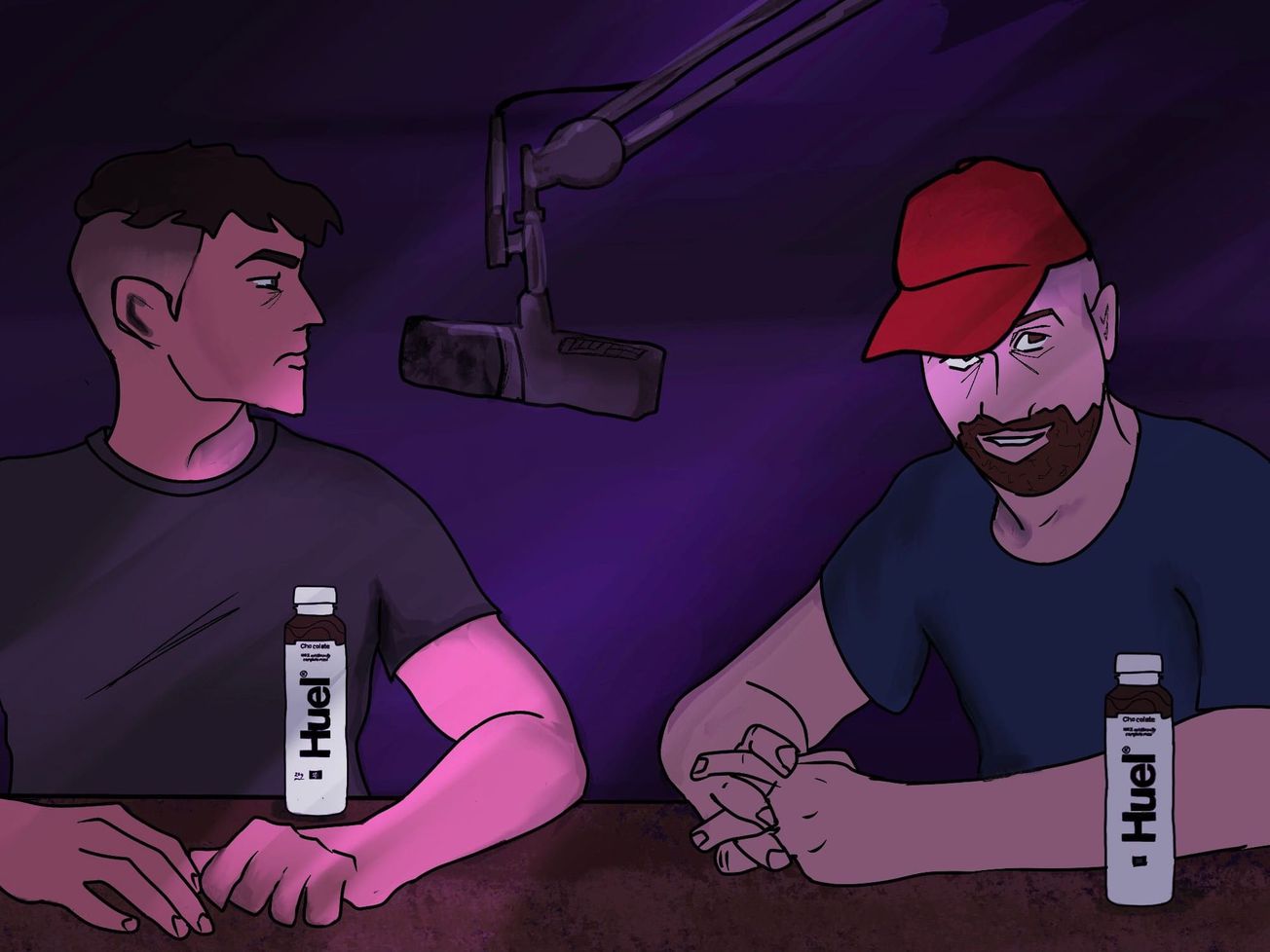
What is important to understand is that their impact is not limited to corners of the internet. The bravado, Huel fuelled, gym bro culture which at first glance can seem harmless, has morphed into an extremist ideology that has disseminated widely. The documentary exposes these new media forms as ways of broadcasting this extremism. Theroux sits in on a recording hosted by Amrou Fudl (better known as Myron Gaines), in which he spends hours berating women. There is zero regulation or fact checking to the claims made varying from the frankly ridiculous to the truly abusive. As well as the podcasts, all of these men have YouTube platforms in which they live stream pure vitriol. How societies react to these new media forms is not discussed in the documentary, but they are the cornerstones of the manosphere and how they are regulated, or at least how we create an alternative space, needs to be seriously interrogated when discussing how to limit manosphere influence.
 Lulu Shasha
 Grace Rose
The reaction to the Bartlett commentary and the documentary is a welcome intervention in this seemingly uncontrollable wave of manosphere podcasting being generally embraced without question. It is a reminder that this dark world lurks below the surface and has provoked an important conversation about how we divert these young men away from this toxic and dangerous culture. What is the antidote we can give Gen Z to the misogyny virus that has spread like wildfire?
Featured Illustration: Epigram / Erin Disney
What do you think about manosphere podcasting?