
By Tom Foley, Second Year, Film & TV
Caught Stealing (2025) is the newest title from Darren Aronofsky… and his most conventional film to date. A pulpy, pitch-black comedy thriller, it stars Austin Butler as a bartender swept unwillingly into a web of mobsters, murder and organised crime. It treads familiar genre ground for better and for worse, its stellar design and central cast clashing with a trope-filled and often unengaging script.
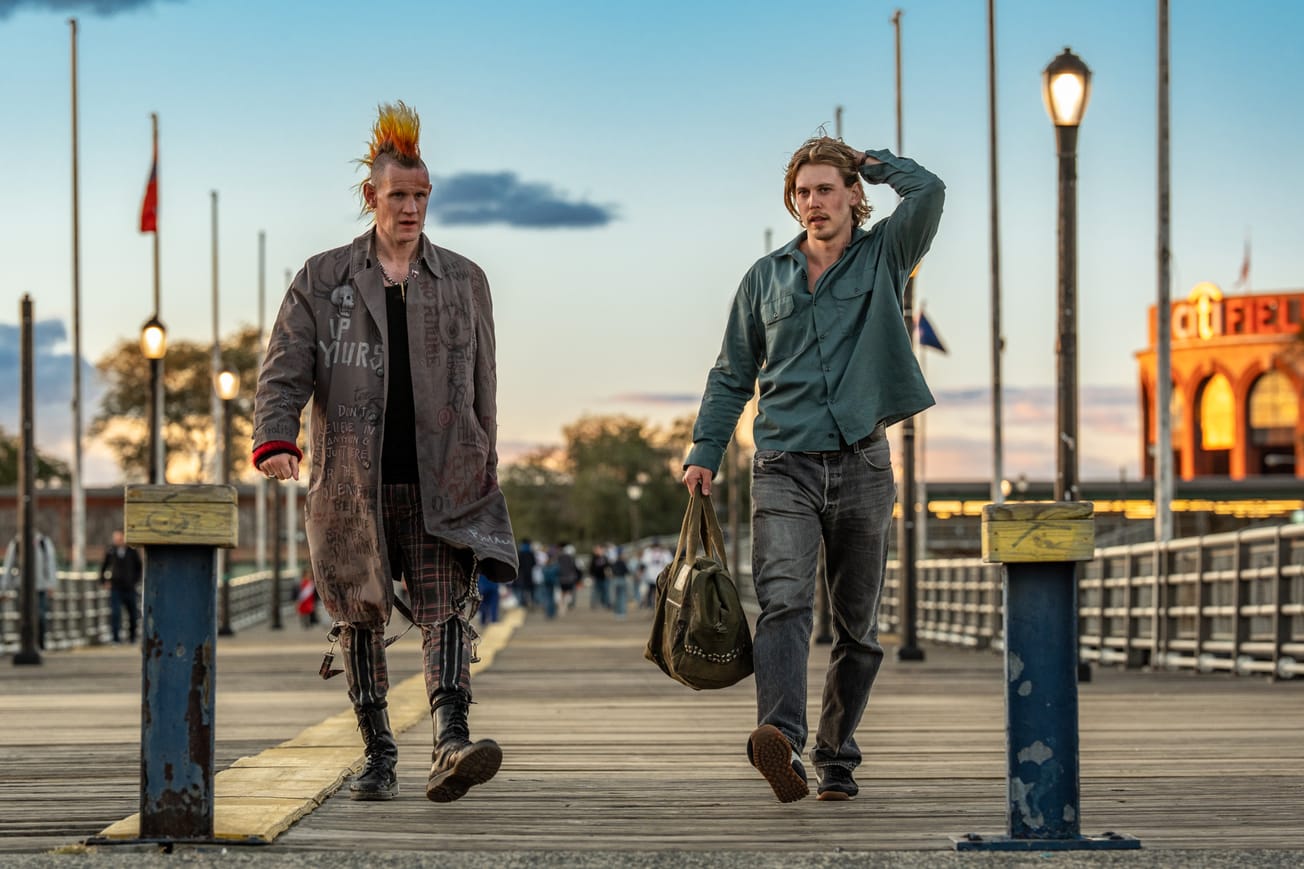
From its opening titles, Caught Stealing draws you into its meticulously crafted world of late-’90s New York, drenched in grime and gorgeous grit. Austin Butler’s portrayal of the trauma-tormented, baseball-obsessed Hank fits seamlessly into this visual ecosystem, and his chemistry with Zoë Kravitz’s grungy paramedic Yvonne invests us in their characters from the outset. It’s not a realistic depiction of New York, but a hyperreal one — an exaggerated level of grime allows the film its more outlandish elements. It’s a world well-suited to jovial yet brutal Hasidic hitmen, a gloriously mohawked Matt Smith, and a protagonist whose only concrete interest is the SF Giants baseball team. The punk atmosphere promised by the Clash-sound tracked trailer is upheld in its look, if not its themes — and it helps that Bristol’s own post-punk poster boys, IDLES, performed its score.

The strongest part of Caught Stealing is its first thirty minutes. Hank, tasked with cat sitting for his punk neighbour Russ (Matt Smith), runs afoul of a host of crime-thriller caricatures: skinhead Russian mobsters, a flashy Puerto Rican gangster, a tough-as-nails detective and the aforementioned Hasidic hitmen. While the plot is bog-standard, with all parties searching for a key, crossing paths and double-crossing, the writing is sharp enough to make it an enjoyable, if not especially tight, script. There are, however, two elements of the story handled so poorly that they warrant mention.
SPOILERS AHEAD
The practice of killing off female characters solely to advance the male protagonist’s arc (or ‘fridging’, as it is often called in shorthand) rarely adds more to a story than if that character had remained part of it. Caught Stealing is no exception, and its use of fridging greatly harms the narrative. Around a third of the way into the film, Hank visits Yvonne’s apartment to find her shot point-blank in the head. It serves no real purpose: Hank is so preoccupied with the rest of the story’s threads that Yvonne’s death receives little attention, glossed over until the film’s final moments. The mystery of who killed her isn’t one the film wants you to solve. It would have been far more interesting to see how Yvonne interacted with the story as it progressed, rather than cutting her out for mere shock value. The film quickly moves on, her death feeling like just another box-tick in an overcrowded crime thriller. For a film released in 2025, the blatant use of such a tired, misogynistic trope is baffling — especially when handled this ineffectually.
The film’s crowded plot also muddies its psychological dimension. From a director so unflinching in his exploration of the mind, Caught Stealing falls short compared with Aronofsky’s previous work. We learn early on that Hank has PTSD following a car accident in high school, which caused his friend’s death and ended his baseball career. It’s implied that he’s so fixated on the loss of that career that he can’t face his guilt over his friend’s death. But as the narrative swirls around him, his trauma is barely examined and rarely intersects with the plot. The only time the two neglected threads, Yvonne’s death and Hank’s PTSD, converge is in the film’s final act. Driving for the first time since the accident, Hank discovers that the two men in the car with him are Yvonne’s killers. He accelerates, and in a direct cinematic parallel, crashes into a pillar, killing both men and achieving… vengeance? Closure? The copycat car crash is presented as a moment of catharsis, as though it signifies growth. I was dumbstruck when I realised this was how the film chose to handle its PTSD plotline. Hank avoids his guilt for years, only to “overcome” it by causing the deaths of two more people in the exact same way? In any pulpy crime film it would seem lazy, but from Aronofsky, it’s inexplicable.
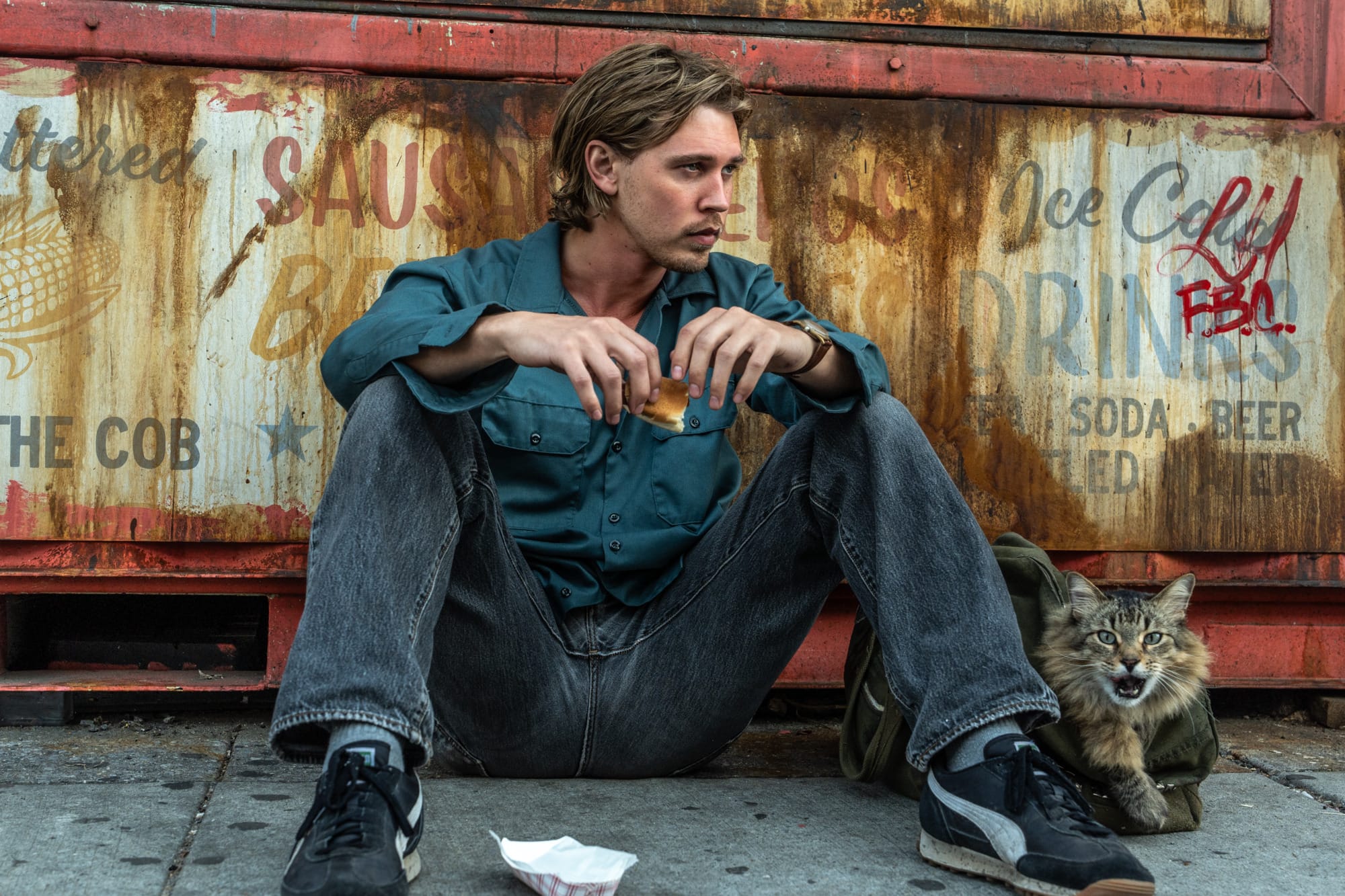
If judged on script alone, Caught Stealing is a funny but by-the-numbers thriller that doesn’t do anything new, juggling too many elements without giving enough attention to any of them, and weighed down by a poorly handled love-interest death. But Caught Stealing is more than its script, and as such, it’s an enjoyable film. It feels good to watch: the grungy atmosphere permeates every set and character, and the soundtrack drives its sequences forward with gleeful punk intensity. It’s got Matt Smith doing a whiny London accent; it’s got Austin Butler in ever-increasing states of bruises and blood; it’s got a cat with a survivability not seen since Alien. It’s occasionally disappointing and never surprising — but, more importantly, it’s fun.
Featured Image: Sony Pictures / IMDb
For a director known for psychological depth, is Aronofsky starting to lose his touch?