
By Yingqi Han, Third Year, Biology
Plant species identification plays a crucial role in scientific research, as well as in food and medicinal identification. It may seem that using DNA for plant identification is a more scientific and reliable approach. But is this really the case?
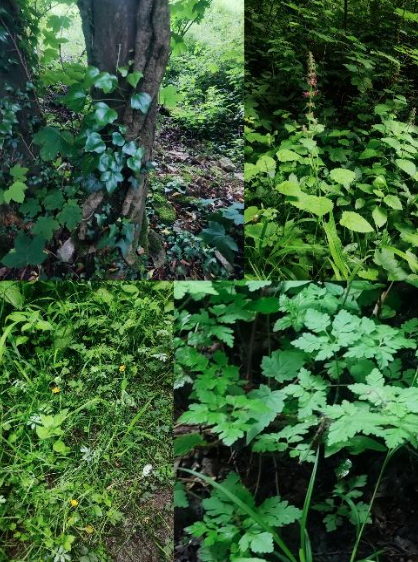
Traditional plant identification methods can assign an organism to a species by observing the leaves, flowers, and habitat of the plant and comparing these features with a taxonomic key. A taxonomic key can be used for identifying plant species by guiding users through a series of binary choices based on observable characteristics.
DNA barcoding is a molecular method for species identification; it involves extracting a specific DNA sequence from an unknown organism’s genome as a marker and comparing this DNA barcode sequence with reference sequences in a database to assign the organism to a species.
Commonly, people believe DNA barcoding is a faster and more accurate method for species identification compared to traditional taxonomic identification. However, DNA barcoding is not necessarily better in every situation.
We, a group of biology students from the University of Bristol, have conducted a study to compare traditional taxonomic identification with DNA barcoding and evaluate the effectiveness and limitations of DNA-based techniques.
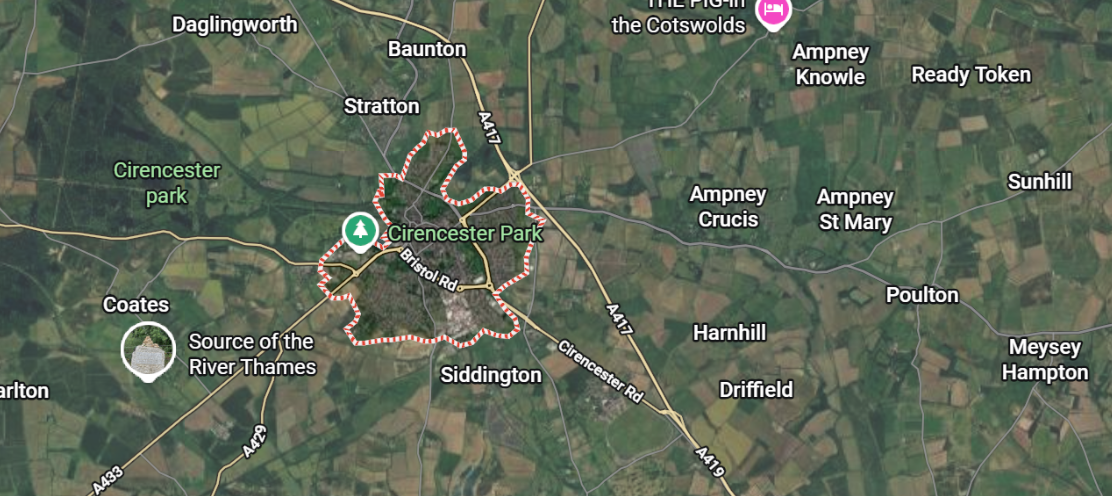
Plant specimens were collected from several localities around Cirencester in June 2026.
The plants' visible characteristics and habitats were recorded. The specimens were then investigated at the molecular level using DNA barcoding, following the steps shown in the figure below.
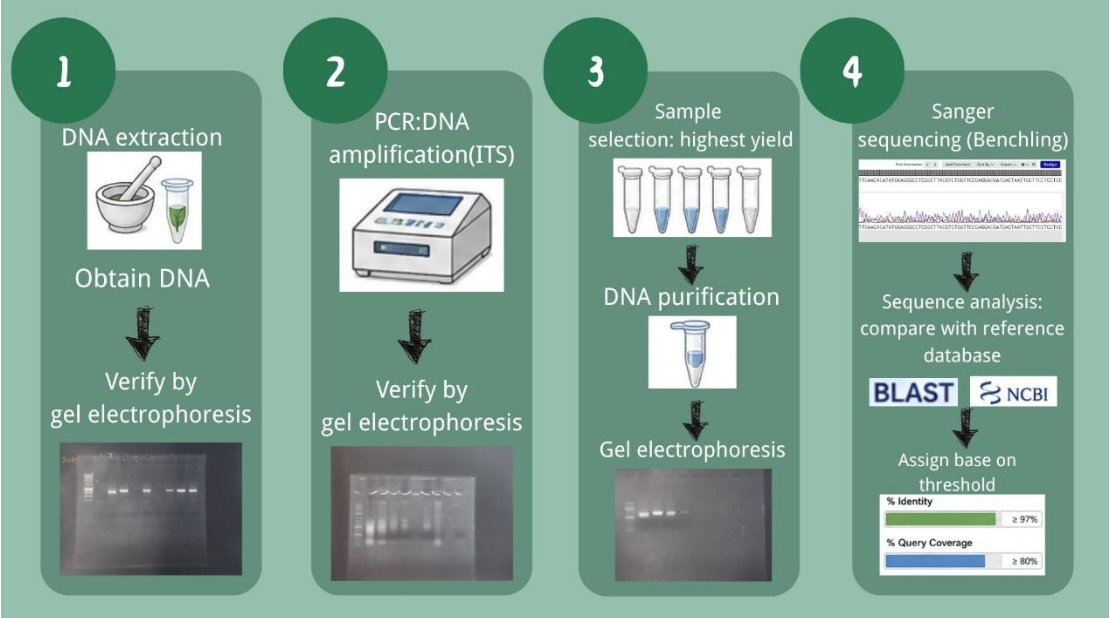
At first, we expected DNA barcoding, as a molecular technique, to provide a more accurate and reliable identification of all species. Unfortunately, the results did not provide species-level identifications as expected. The results showed that the barcoding IDs failed to identify most of the species. Mixed signals in chromatograms (meaning the quality of the sequencing was low and difficult to read; you can think about two voices talking at the same time), sequences that do not meet the thresholds for species assignment, and multiple species meeting the thresholds can complicate species-level sample assignment.
By contrast, traditional taxonomic identification successfully identified all specimens to species level based on their morphological characteristics using taxonomic keys.
It seems to show limited effectiveness in species identification compared with taxonomic identification. This made us realise that DNA-based methods are not necessarily the best approach in every biological research scenario. Limitations in DNA samples and reference databases, as well as technical errors, can all affect the reliability of molecular identification. This can be compared to scanning a product in a supermarket. If the barcode on the product is damaged or unclear, the product has not been registered in the system, or an error occurs during the scanning process, the product may not be identified correctly.
At present, there is still no clear-cut answer to the debate over whether traditional methods or molecular techniques are better. Remarkably, taxonomic keys are better for field surveys and projects with limited resources. DNA barcoding may be advantageous for studies involving incomplete plant samples or cryptic species (Two species that look almost identical but are genetically distinct). Therefore, different methods may be better suited to different research environments and research projects.
Impiö and Raitoharju (2024) proposed a re-ordering approach, where DNA barcoding is used as supporting information for image-based species identification, especially for previously undocumented plant species. This further suggests that combining traditional methods with molecular techniques may provide a more effective approach to species identification.
Overall, people usually think that using DNA for species identification is more reliable than identification based on the human eye. However, this is not always the case. The choice between traditional and DNA-based methods often depends on multiple factors, and the two approaches can also combine and complement each other. Nowadays, species identification methods are constantly evolving, which plays a crucial role in environmental science, as well as the food and medicinal industries.
Please see the full research here: Comparison of Taxonomic Identification and DNA Barcoding for Plant Species Identification Using ITS Sequences
Featured Image: CollectionsEducation
How do you identify the plants you see?