By Sam Couriel, Comment Editor
How do students shaped by Brexit, COVID scandals, and climate protest channel their resentment for politics into real solutions? Why is Bristol so progressive and environmentally active when other cities aren’t? And frankly, what is it about the Green party that isn’t working?
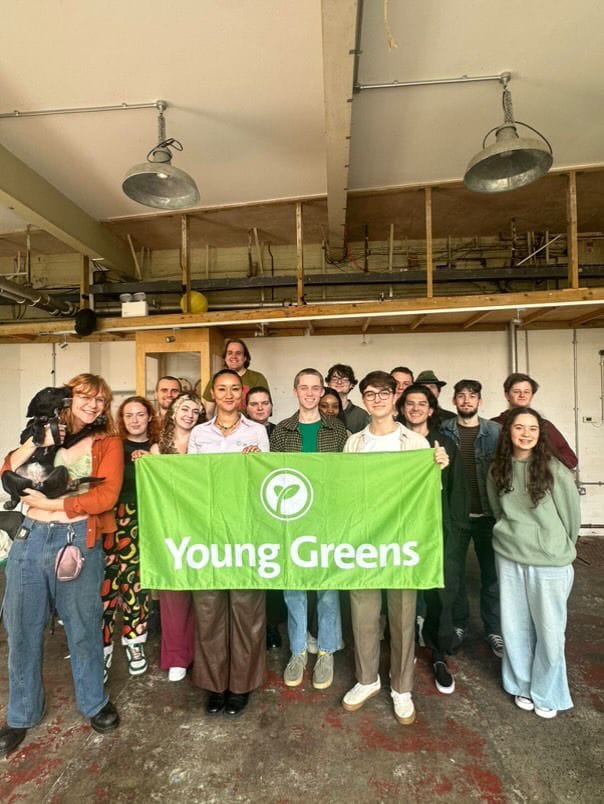
These are the questions I took into my interview with Harry Simpson (he/they): co-leader of Bristol Young Greens and Campaign Officer for the Young Greens. In light of his party’s recent movements, I wanted to find out if Harry really has the answers I’m looking for.
Bristol born and bred, Harry grew up in a middle-class, Labour-leaning household. He acknowledges that privilege, but politics was never far away. Every Summer for 10 years, Harry’s family would cycle a portion of Land’s End to John O’Groats for charity. About ‘30 miles a day’.
By 11, he was experiencing a full-on political awakening. He describes walking into his parents’ bedroom and watching his mum cry as a newsreader, ‘likely to their own shock and naivety’, delivered the results of the Brexit referendum.
From that moment, Harry’s political character started to develop: mistrusting, anti-establishment and convinced that politics is ‘skewed’ in favour of a particular archetype of person. That was only deepened by COVID. Half-joking, he tells me: ‘nothing radicalised me more than the Eat Out to Help Out Scheme, designed to prioritise economic growth over human life’. Throw in partygate, and you start to understand the roots of Harry’s anger.
So, in 2021, frustrated by corrupt Conservatives and an ‘increasingly authoritarian’ Labour, Harry joined the Greens, and never looked back.
‘Yes, there would be less money, but it would be distributed way more equally’
Student politics
There’s no doubt: Harry’s story is unusual. He recognises that. To most, the world of politics can feel alien and daunting. But he also warns against painting students as cynical and disenfranchised: ‘there’s a danger that this becomes a self-fulfilling prophecy’. Yes, we are less likely to vote, join a political party, or stand for office. But we are also increasingly likely to discuss politics and feel passionately about it. For Harry, the problem isn’t disillusionment, it’s anger and polarisation.
‘Have you heard of heterofatalism?’ he asks me. I’m stumped. ‘It’s the trend of young women entirely foregoing dating, because they are so frustrated with their generation of men’. That’s how polarised we really are.
So, if you feel like politics isn’t for you, Harry’s advice is this: ‘Change can begin in your community: faith groups, national parks or volunteering sites […] you don’t have to start by changing the world’.
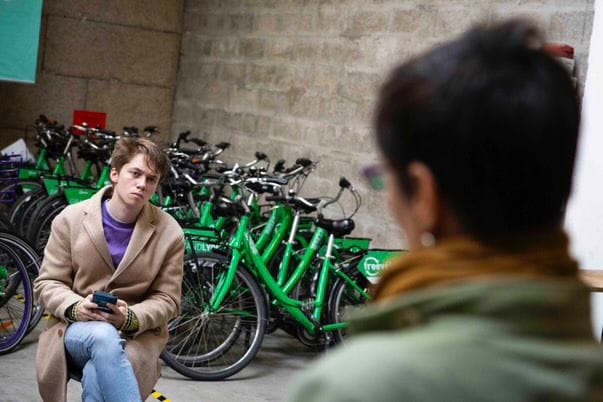
Bristol’s identity
By now, Harry’s bond with Bristol is clear. Almost anywhere else he would be a political outsider. But here he feels at home and his party is dominant, winning both council control and an MP in 2024.
When I ask why, he points to Bristol’s unique history. In a city so diverse, links to the slave trade and colonialism become unignorable. A kickback is sparked, and the city moves towards radicalism and compassion. Today that manifests through sympathy for international struggles, particularly in Gaza, something Harry wears proudly. Where other cities can feel isolating and career-driven, Bristol fosters connection, creativity, and even has a thriving arts scene. To Harry, it’s this sense of community that drives the city’s alternative energy and its green politics.
Communication problems
So, Harry recognises the problems at hand: social and economic injustice, anger, and polarisation. But when it comes to communicating solutions, it is safe to say his party are still figuring things out. They won four MPs in 2024, but Harry wants to win ‘four times that’. And as Carla Denyer has stepped down from Green leadership to focus on her Bristol constituents, the party’s landslide selection for her replacement, Zack Polanski, is promising to shake things up.
Harry frames the leadership election as one between the ‘business as usual’ duo of Ellie Chowns and Adrian Ramsay, and Zack’s more radical, eco-populist approach. ‘I back Zack’, he says, smiling at his unintentional slogan. But beneath the amusement, I notice sharp policy divides, especially over Ramsay’s inability to accept trans women as women, something Harry ‘obviously doesn’t respect’.
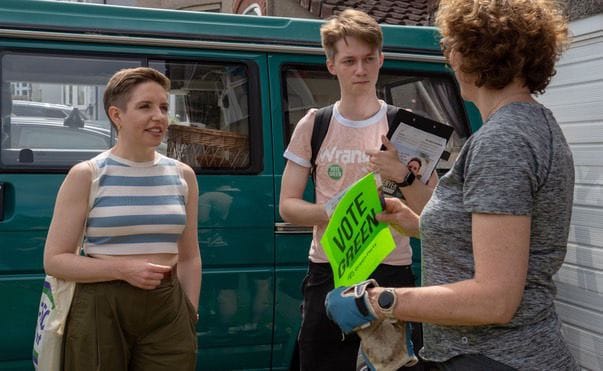
Nonetheless, with the Reform party leading in the polls, i’m told the biggest debate here is one about communication. Zack’s style, Harry argues, ‘cuts through’. ‘When I speak to people on the doorstep, it is now way easier to convert a Reform voter than a Tory/Labour voter’. It’s that same anti-establishment sentiment.
In Harry’s mind, the test of the Green party moving forward will be whether it can capture the anger so many of us feel, and redirect it towards justice, not division. That way, there is a radical, left-wing alternative also offering ‘reform’, just in Harry’s words, in a ‘much fucking different way’.
‘For Harry, the true measure of a country’s economic success is not its GDP, but its economic justice’
Behind all the talk
Harry makes a compelling case, but there’s a clear counter argument. The idea of a ‘Green’ party surely prioritises the environment over people’s day-to-day needs. And Harry’s economic plan advocates ‘post-growth’. How on earth can a party appeal to ordinary people when it is so disconnected from their real concerns? And maybe that’s the real reason why Reform, and even the new Corbyn/Sultana alternative, have found so much momentum?
You won’t be surprised to hear that Harry disagrees intensely. He addresses the point on economics: ‘yes, there would be less money, but it would be distributed way more equally’. ‘Infinite growth that purely benefits billionaires doesn’t benefit anyone and is completely unsustainable’.
He goes on, telling me that the idea of the profit motive as the driving force of our economy is exaggerated. Otherwise ‘teachers wouldn’t teach’. For Harry, the true measure of a country’s economic success is not its GDP, but its economic justice. ‘We can pursue endless growth, but I’m not feeling it – no one else is feeling it’. With Green values, he argues, you get more money in your pocket. Better public transport: lower car costs. More renewable energy: lower energy bills. Re-joining the EU: lower import costs.
And finally, after some consideration, he defends the party’s name. ‘If we were called The Ecologists’, he concedes, it might sound narrow. But ‘Green’ to Harry is broader. ‘If you go on holiday once a year, or you aren’t vegan, I don’t care. My issue is with the richest and most powerful, not Bristol students.’ Well, most of them anyway.
 Amaan Ali
Talking to Harry was genuinely fascinating, and not just LinkedIn-fascinating. Whatever you think of his politics, he is thoughtful, passionate and clearly committed to his cause. I agree, his politics can sound naive at times, and he definitely doesn’t have all the answers. But he makes you stop and think. And with people so unhappy with the way things are going, politics aside, surely talking to more Harrys is the only way new thinking actually begins.
Featured image: Bristol Young Greens / Harry Simpson
Has Harry's conviction convinced you that the Greens have the answers?