By Archie Human, News Reporter
Bristol SU’s Full-Time Officers and the University of Bristol's Executive Board (UEB) have agreed their shared goals for 2026/27, aimed at improving student experience in Bristol.
Laid out annually, the agreement comes as a result of direct student feedback, and attempts to address issues still outstanding from last year’s discussion.
The SU and UEB promised to keep students’ needs at the forefront, with the main target areas including ‘championing academic confidence, empowering our communities and tackling student poverty.’
The propositions come hopefully as a precursor for direct action to improve the student experience in Bristol.
The UEB admits areas requiring discussion remain outstanding, but aim to identify and address them through a ‘regular process of monitoring throughout the year’. The nature of these issues remains unclear.
The principles focus notably on students’ academic experience, including that of commuters. This will involve pushing for ‘earlier release of teaching and assessment timetables’ and the improvement of commuter representation and community.
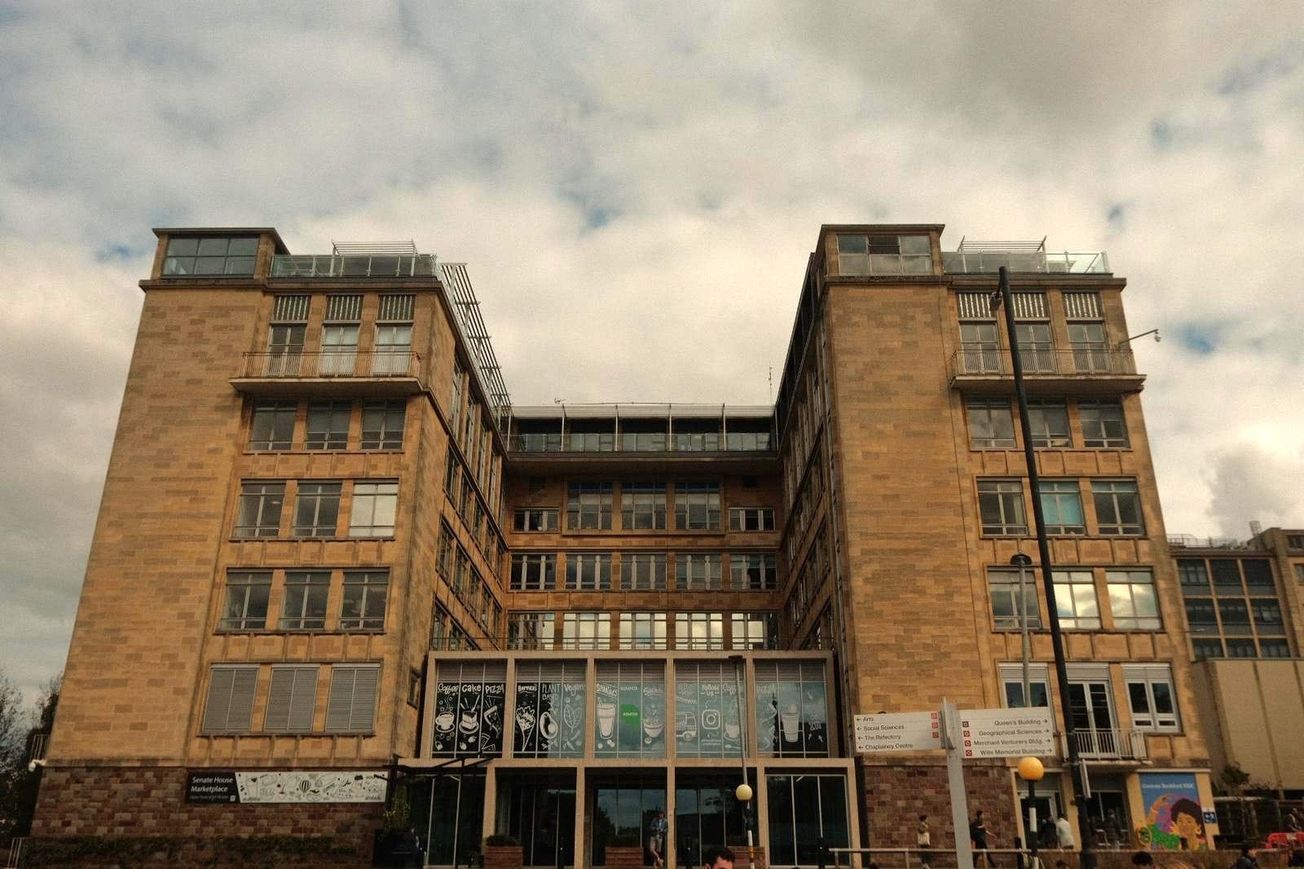
Among the proposals was converting the Richmond Building’s 2nd floor link space into a free space where students can ‘relax, study, connect with others and access facilities that make university life easier’ - with a view to improve commuter students’ access in particular.
 Nyx Osborne Sandford
More broadly, the officers want students to ‘continue shaping how assessments are designed, how feedback is given, and how marking criteria can be made fairer.’
Aiming to help students ‘build confidence in using AI responsibly’, in assessments and elsewhere, officers will push for ‘practical support and training’ in AI to aid research and future employment.
On transport, the agreement intends to develop a ‘student travel plan’ that works ‘across campuses’ – a pertinent issue given this year’s axing of the U1 bus pass, and many students having to commute to the Temple Quarter Enterprise Campus (TQEC).
Also discussed were issues to address were employability, food prices, affordable accommodation, and transparency surrounding rent and laundry prices.
Laundry costs was an area Vice-Chancellor Evelyn Welch, speaking to Epigram in September, described as ‘at the top of our agenda at the moment.’
Wellbeing and representation are another focus, with an aim to trial a ‘student-facing programme focused on respectful disagreement’.
 Lenny Osler
Consent education, positive masculinity and wellbeing were prioritised, alongside a promise to ‘embed racial justice’.
Other areas examined include facilitating easier booking systems for study, meeting and hosting spaces and the expansion of the SU sensory rooms.
To find more details, and learn who is involved in these decisions, visit the SU website.
Featured image: Epigram / Sophie Maclaren