By Lily Grace Oliver, Third Year Film and Television
The Kelvin Players’ imaginative staging of The Tempest transforms a cold December evening into an enchanted night. Directed by Katie Kneen and Tim Whitten, it was clear to see the hard work of the cast and creative team over their eighteen months of planning, and it was a lovely introduction to the company as someone completely new to it.
The final play Shakespeare wrote, The Tempest, reflects the Jacobean interest in New World exploration. First performed in 1611, the story is said to have been inspired by a historical shipwreck that occurred in 1609, where a ship on its way to Virginia was caught in a hurricane, causing the crew to be stranded in Bermuda. Shakespeare echoes this historical event in the play’s opening sequence, there is a choice to utterly immerse the audience into the chaos of a storm-tossed ship through frantic physicality from the cast, an enveloping soundscape of the roaring ocean and shadowed lighting amplifies the tension of the scene. Master (Lyz Brown) and Boatswain (Michael Shah) are frantic members of the ship’s crew, desperately trying to keep the ship under control alongside members of the court of Naples.
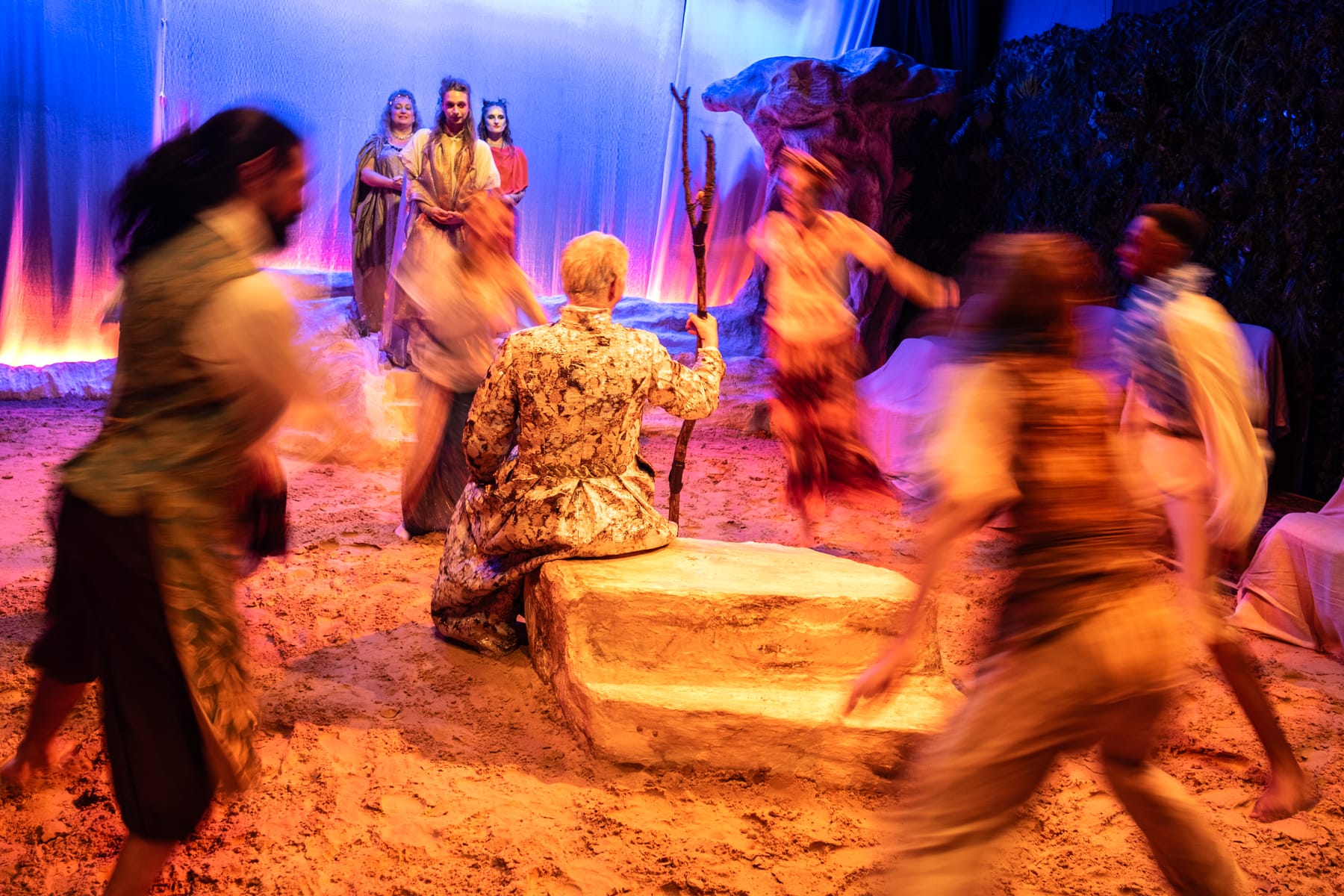
The production’s greatest strengths are its staging, clever set design, and effects. There is a remarkable attention to detail throughout the play undertaken by the production crew. The thrust stage draws the audience into the action, heightened by a constant undercurrent of an ominous soundscape. Tons of real sand lines the floor, as well as wild plants trailing the walls - in one scene transforming into dozens of beady red eyes. The set design creates a tangible sense of isolation, a wild, barren land where traditional hierarchies will be challenged. Once we land on the island, the lighting is rich - sunset tones illuminating the stage against stark beach rocks.
A former duke and sorcerer, Prospero (Steve Graham) lives on a remote island with his daughter Miranda (Annie Davies), slave Caliban (Pete Blacow), and spirit Ariel (Ryan McKenzie). Graham brings a commanding, grounding wisdom to his role, contrasted by the youthful idealism of his daughter Miranda. Their father-daughter relationship provides the production’s emotional core throughout. His wand is fantastically crafted to illuminate throughout the show, which enriches the magical atmosphere as he casts his various spells. Ariel was a delight to watch, and Ryan McKenzie brought a natural showmanship and flamboyance to the role, lending stunning vocals to beautifully arranged musical passages.
I particularly enjoyed the presence of the Sprites, their gossamer costumes allowing them to glide across the stage with an eerie, ethereal grace. A highlight of the show is the impressive use of puppetry to create a giant Harpy, a disguised form taken by Ariel to deliver a prophesied warning of doom to the shipwrecked members, combining spectacle with storytellin
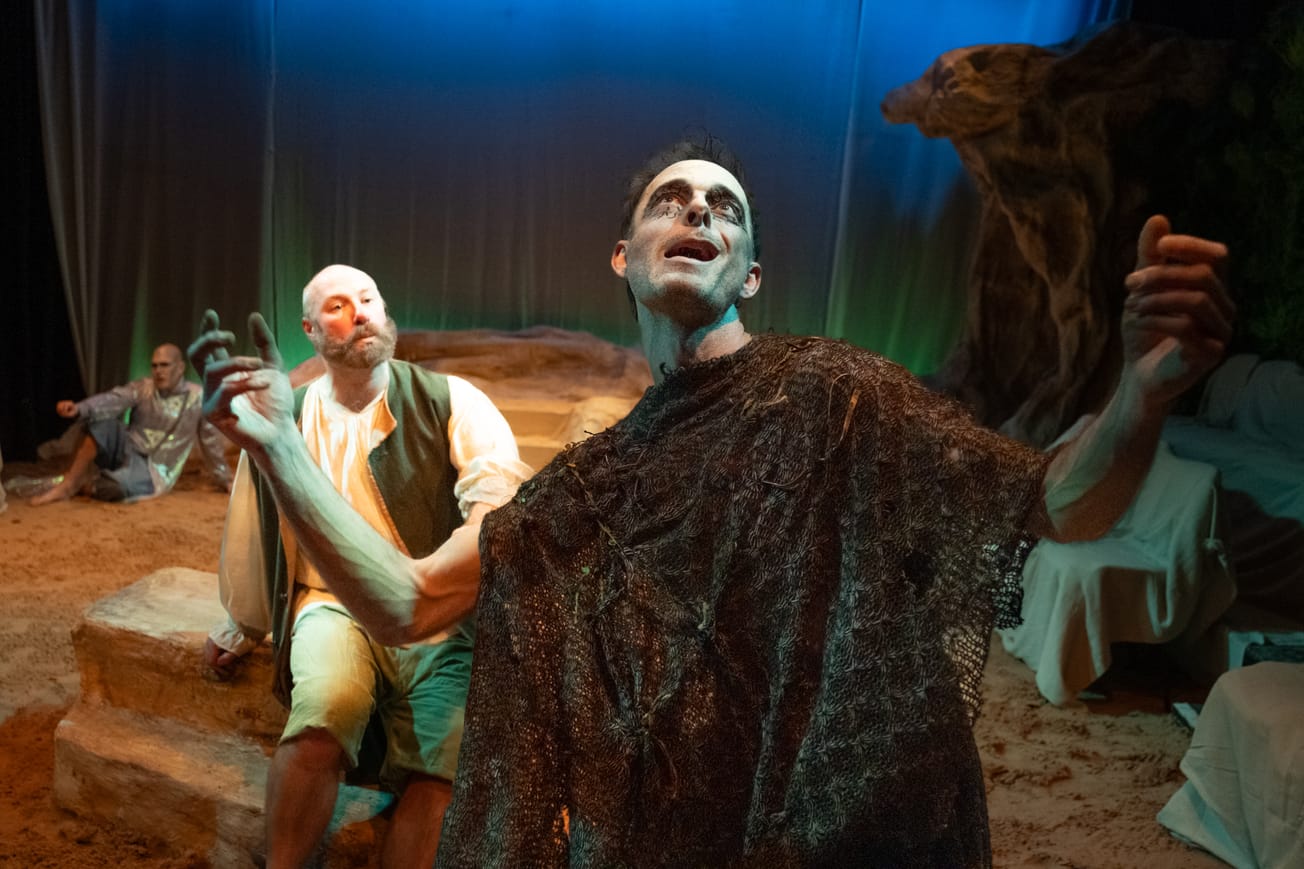
A standout performance was Pete Blacow’s Caliban, the half-human, half-beast slave. His beastly and yet sympathetic characterisation was reminiscent of Victor Hugo’s Quasimodo, or Mary Shelley’s Frankenstein, and the contortion of his body and physicality was superb. His gradual character arc into joy amongst his newfound ‘friends’ of chronically drunk Trinculo (Chris Hawkins) and butler Stephano (Pete Cottell) was both funny and unexpectedly moving, balancing the show’s lighter and darker elements. Blacow remarkably navigated comedy and pathos simultaneously as a performer.
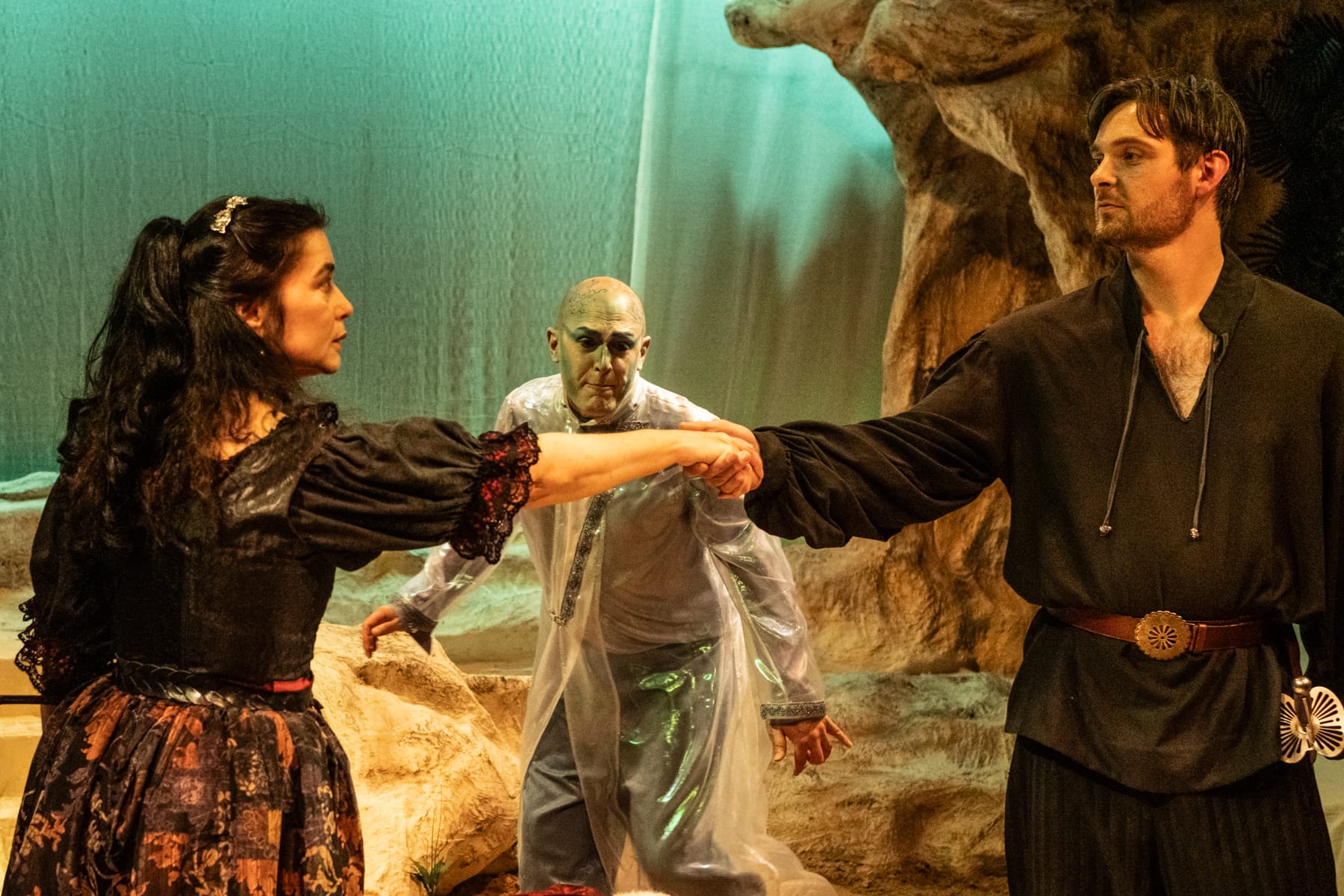
Prospero conjures the titular tempest, shipwrecking the royal party of Alonsa, the Queen of Naples (Kate Ryan), Ferdinand, Alonsa’s son, and the eventual love interest of Miranda (Abdi Mirreh). They are joined by Sebastian (Oliver Cumins), the scheming brother of Queen Alonsa; Antonia (Fiona McClure), the sister of Prospero; Adrian, a noble (Axel Carlsson), and Gonzalo, the loyal butler (Phil Joyner).
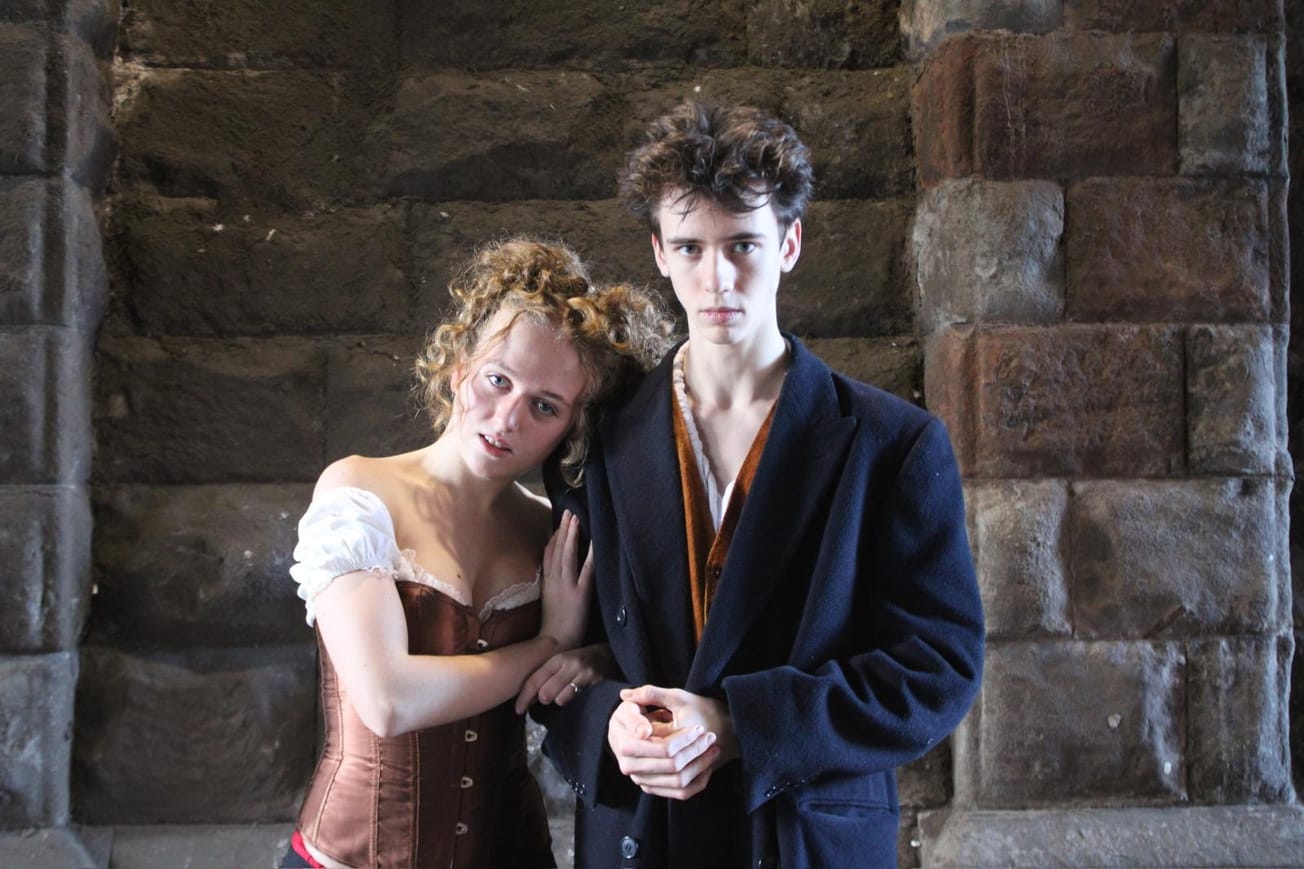
The interactions between the cocky Sebastian and ambitious Antonia crackle with delightful deceit, and Kate Ryan’s Alonsa perfectly executes a regal stillness and grounding to the play. Gonzalo’s long-winded speeches are amusingly grating, and Miranda and Sebastian’s romance is juvenile and awkward, reflecting their innocence and sheltered worlds. Their relationship is sweet, if not lacking depth. Chrissy Fryer’s lush costumes further enrich the production, perfectly conjuring the magic of the play, whilst staying historically entrenched. It is all in the details of Miranda’s foliage inspired corset, cornflower blue flower garlands for the wedding scene, the Queen’s gorgeously detailed frilled white gown, and Prospero’s striking metallic coat.
Overall, this is a solid production that provides an entertaining experience to audiences, particularly those drawn to inventive storytelling and striking visuals. The Tempest invites audiences to reflect on morality, freedom, and the power of revenge and forgiveness. The show will be continuing performances from 2nd December to the 13th, so get your tickets!
Featured image: Kelvin Players | Stewart McPherson
Will you watch the The Kelvin Players’ production of The Tempest?