By Elisa Dittrich, Third Year, English (Study Abroad)
One of the first things you will notice when walking through the streets of Bristol is the vibrant and colourful walls of buildings. Graffiti and street art are inseparable from Bristol's identity, and the city has played a crucial part in introducing this art style to the UK.
They emerged as a part of counterculture and serve as a tool to directly address political and social issues and to make marginalised people seen and heard. The illegal aspect of graffiti and the constant struggles between artists and the police are part of what makes it subversive in challenging authority.
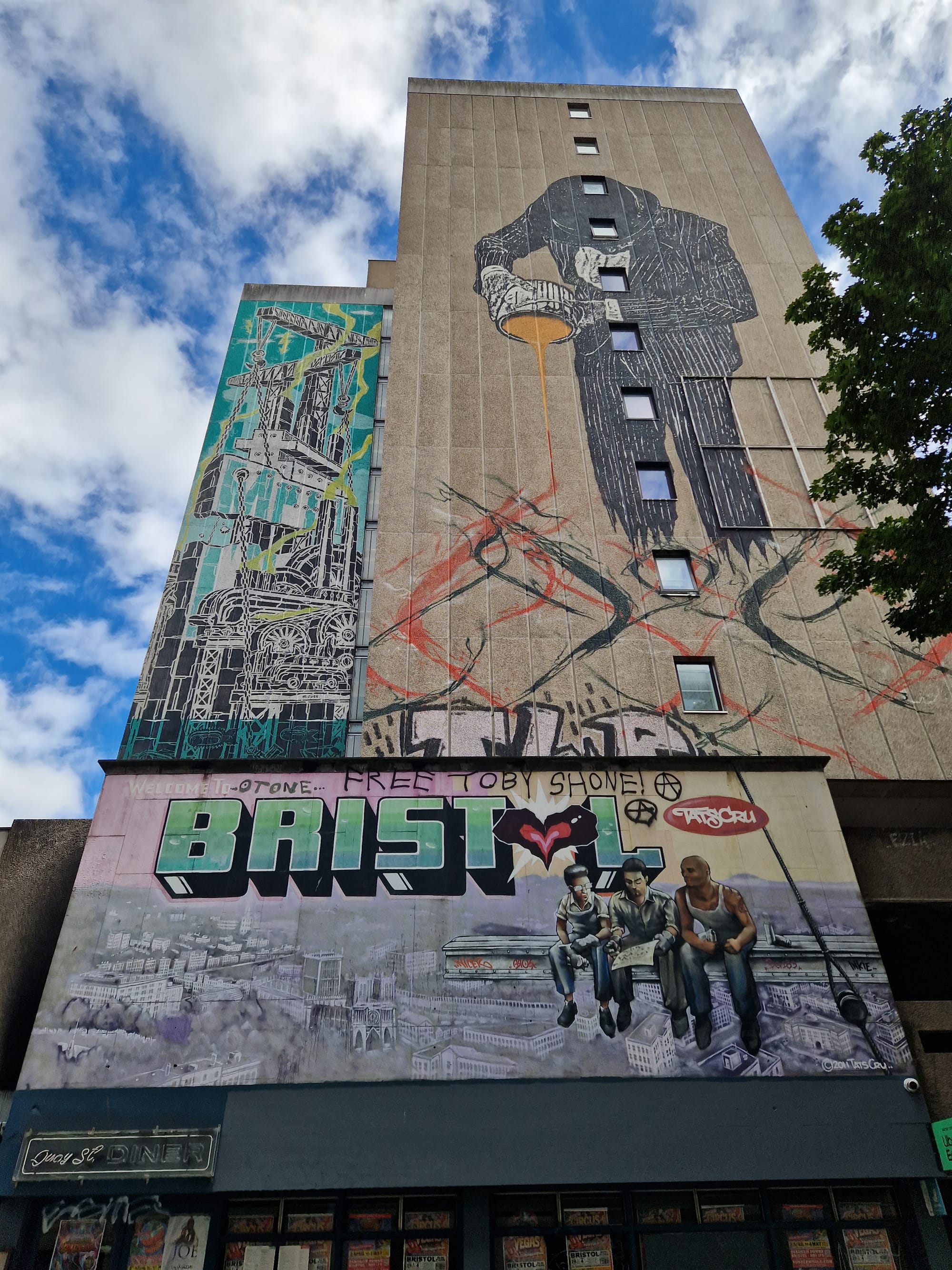
Street art is accessible to everyone, making it inherently democratic and inclusive. It also constitutes to the unique character of a city and evokes a feeling of community and belonging.
In the case of Bristol, this character is political, loud and open-minded.
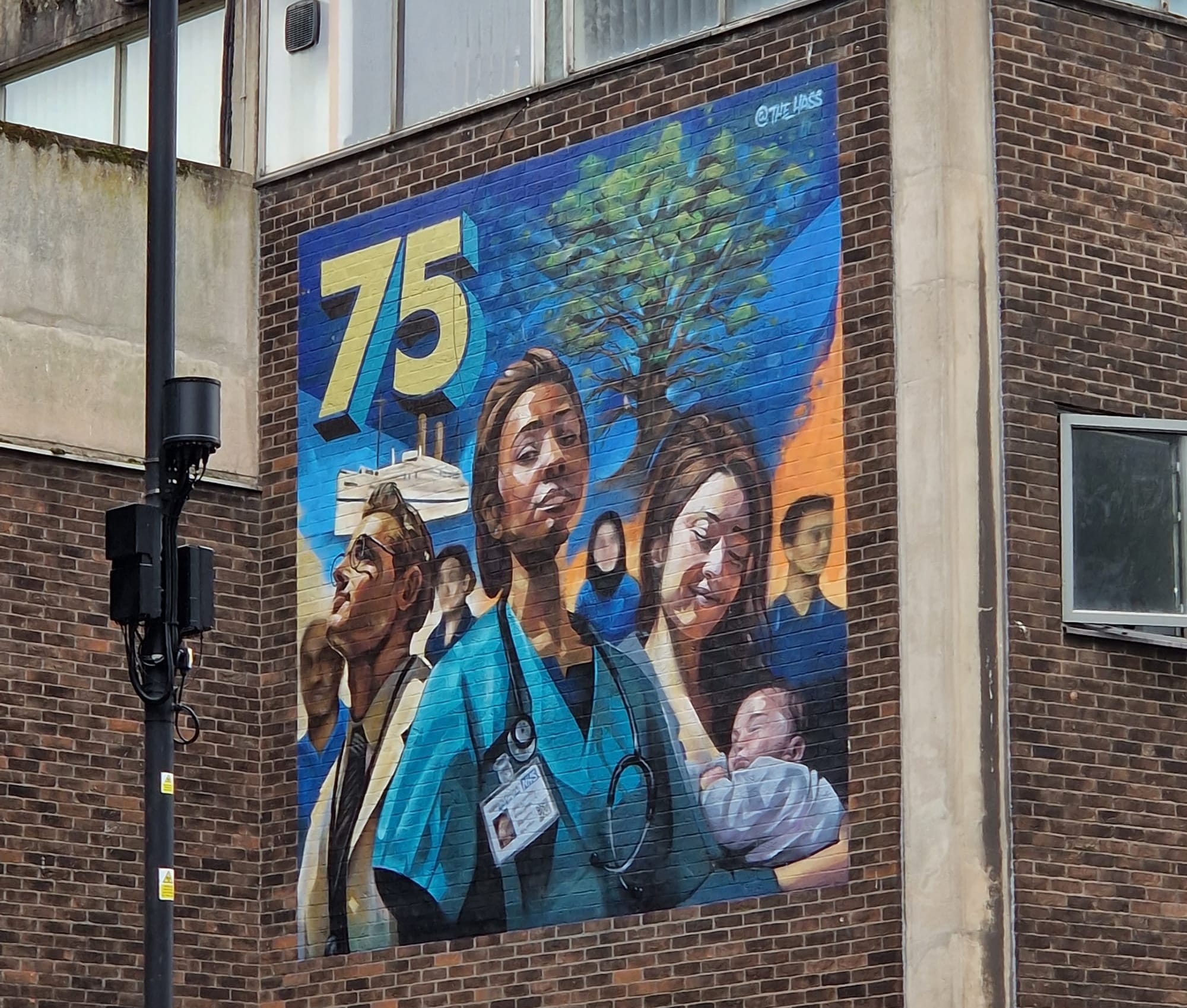
An important period for street art in Bristol was the early 1980s when tags and signatures became commonplace in the city. I spoke to John Nation, who is known for his love for street art and therefore as the ‘godfather of the urban art movement.’ He worked at the Barton Hill Youth Club, a space in which you could legally create graffiti, and he encouraged and supported upcoming artists, like 3D, Inkie, and Banksy.
Nation directly quoted Banksy from an interview that he gave for a book called ‘Children of the Can:’
‘Barton Hill turned out to be the most inspiring stretch of concrete in Bristol, and I made a pilgrimage there every weekend. What it showed me was very powerful: that there was a choice between compromising and following our own strange little dreams.’
In 1983, a mural with the pseudonym 3D appeared which marked the beginning of more evolved street art in Bristol. Also known as Robert del Naja of ‘Wild Bunch’ and ‘Massive Attack,’ 3D is considered the first well-known graffiti writer of the UK and inspired many young artists, using pioneering stencilling techniques.
A few years later, in the summer of 1989, came the biggest police crackdown on the graffiti and street art scene in the UK, known as ‘Operation Anderson.’ Barton Hill Youth Club was put under surveillance, and the houses of several artists were raided. Graffiti artists were prosecuted, arrested and convicted, an attempt to destroy Bristol’s street art scene. In the long run, ‘Operation Anderson’ achieved the opposite: some prosecuted artists were replaced by upcoming ones, who were motivated to revive Bristol’s street art scene.
During the 1990s and after ‘Operation Anderson,’ the lively music and hip hop scene helped bring graffiti back to the streets. Inkie and Nick Walker were some of the most successful artists at the time and, of course, Banksy.
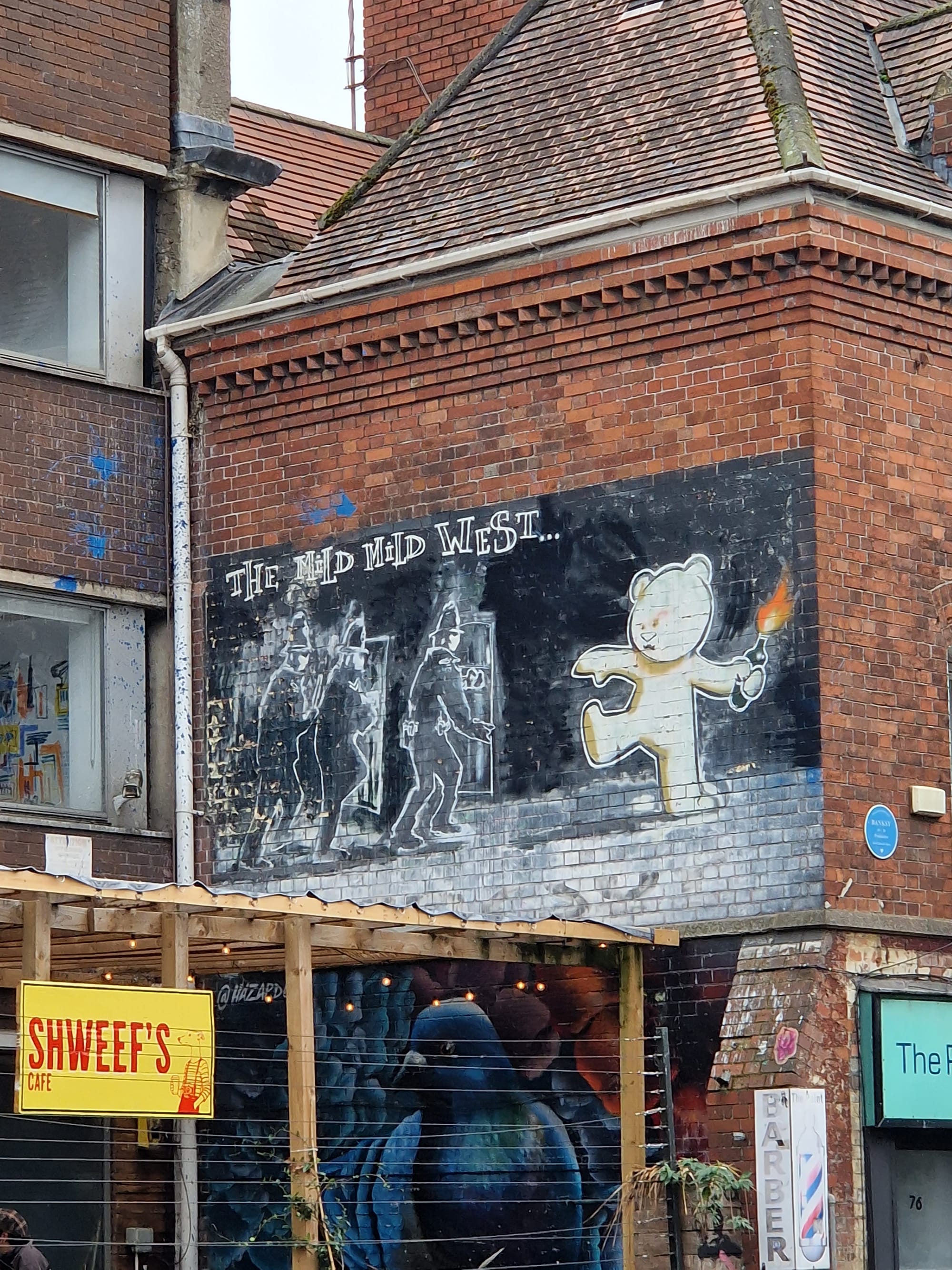
Banksy's art engages with contemporary political and societal issues. For example, the Mild, Mild West mural from 1999 is a statement against violent outbreaks between riot police and partygoers during police crackdowns on unlicensed parties. The bear represents Bristol’s identity, being outwardly gentle but ready for resistance if a line has been crossed. As Nation says, ‘Banksy is a product of Bristol’ and ‘he has been a catalyst for a lot of people becoming engaged with art.’
He adds that:
‘Bristol will always have an affinity with street art and graffiti and I think Banksy just enhanced that reputation and elevated it to another level. […] So many people associate Bristol with Banksy.’
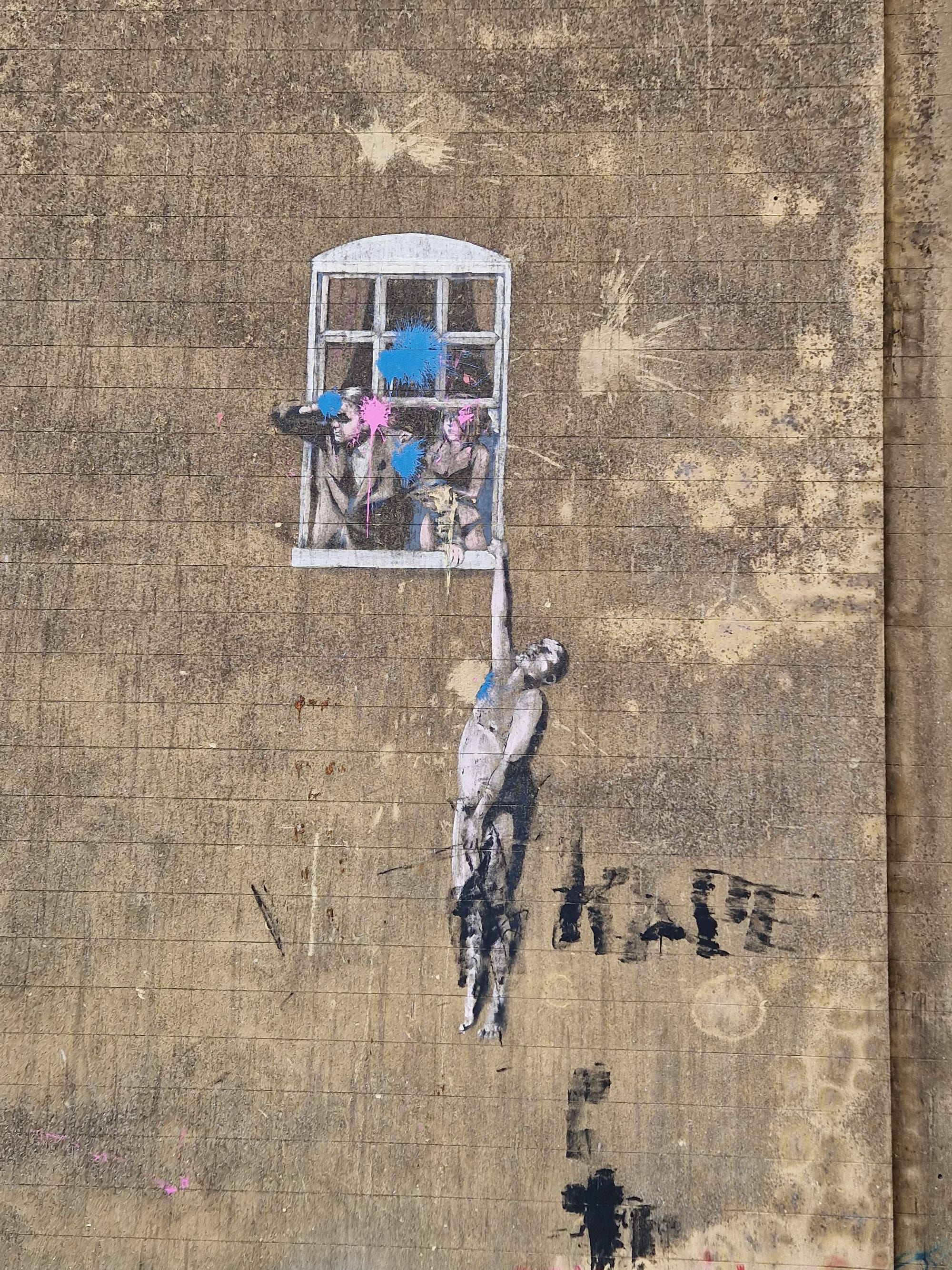
During that time and the 2000s, paint jams emerged which provided artists with the opportunity to cover a certain area with graffiti. In 2008, the biggest street art festival in Europe, Upfest, was founded, attracting thousands of tourists. One year later, the ‘Banksy vs. Bristol’ exhibition in Bristol City Museum and Art Gallery displayed new art by Banksy. In 2011, the See No Evil art commissions on Nelson Street served to brighten up the city, and were then repeated one year later.
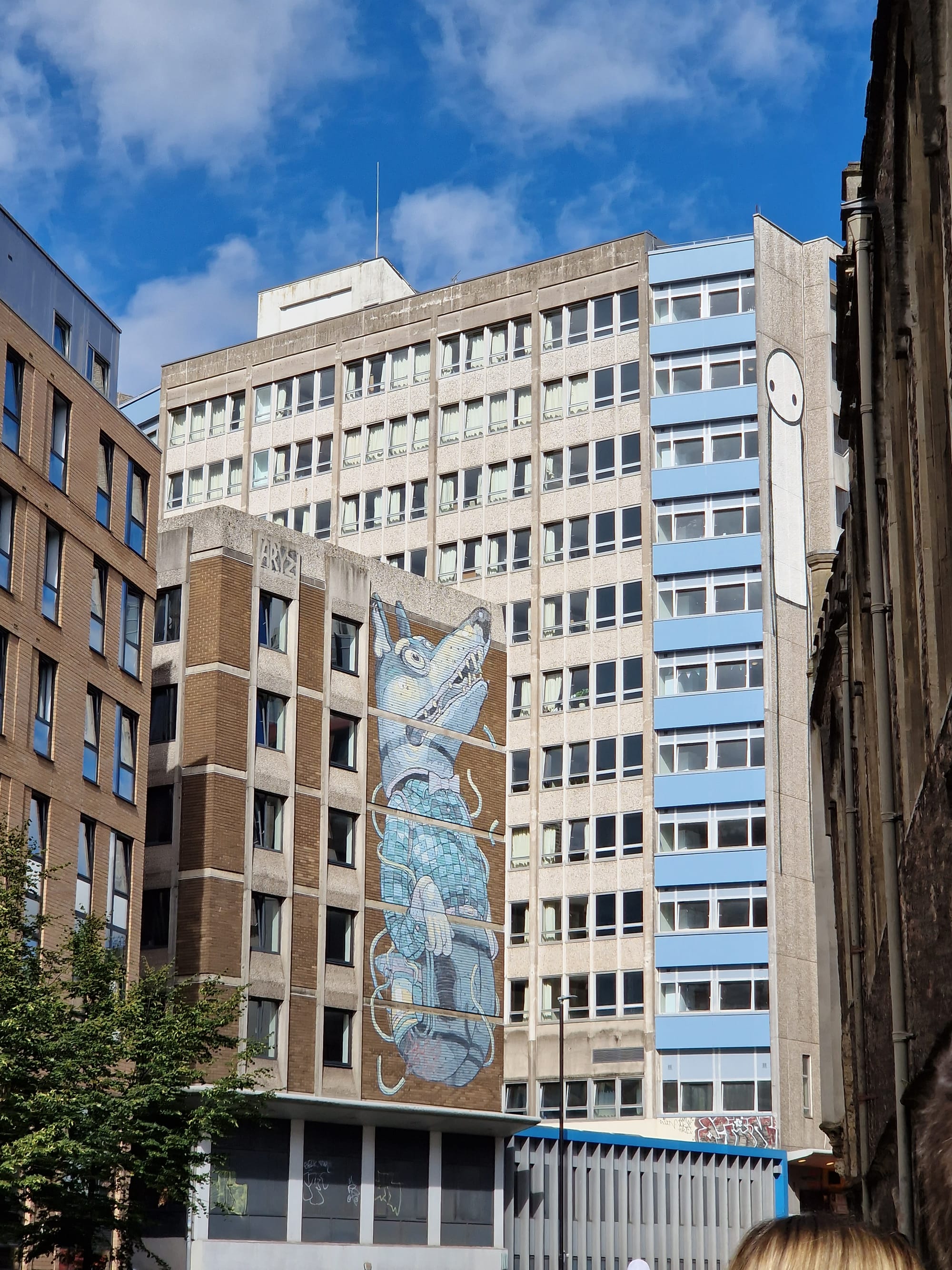
As the history implies, street art is important to Bristol’s identity. Some believe that was challenged when an AI mural appeared in Bedminster, not far from the location where the Upfest festival usually takes place.
Supporters of the use of AI in art argue that art is in the eye of the beholder. It can serve as inspiration for the artists and some purposefully only generate AI art based on their own work, giving them the opportunity to push their own limits. Additionally, AI can also spark creativity in people who may not feel creative, and, as is crucial for a capitalist agenda, is less expensive and faster than commissioning a piece by an artist.
Critics of AI highlight the ethical concerns in terms of plagiarism, data misuse and copyright because already existing art is used to train AI which can then appear in generated works, threatening the existence of artists. Creativity is considered to be an inherently human trait and Nation and ‘a lot of people in the [art] industry that [he] knows,’ see AI ‘100 per cent’ as a threat to human creativity.
‘What I didn’t like about the AI image: […] there were so many imperfections […] that just screamed the lack of real knowledge and integrity of the city.’
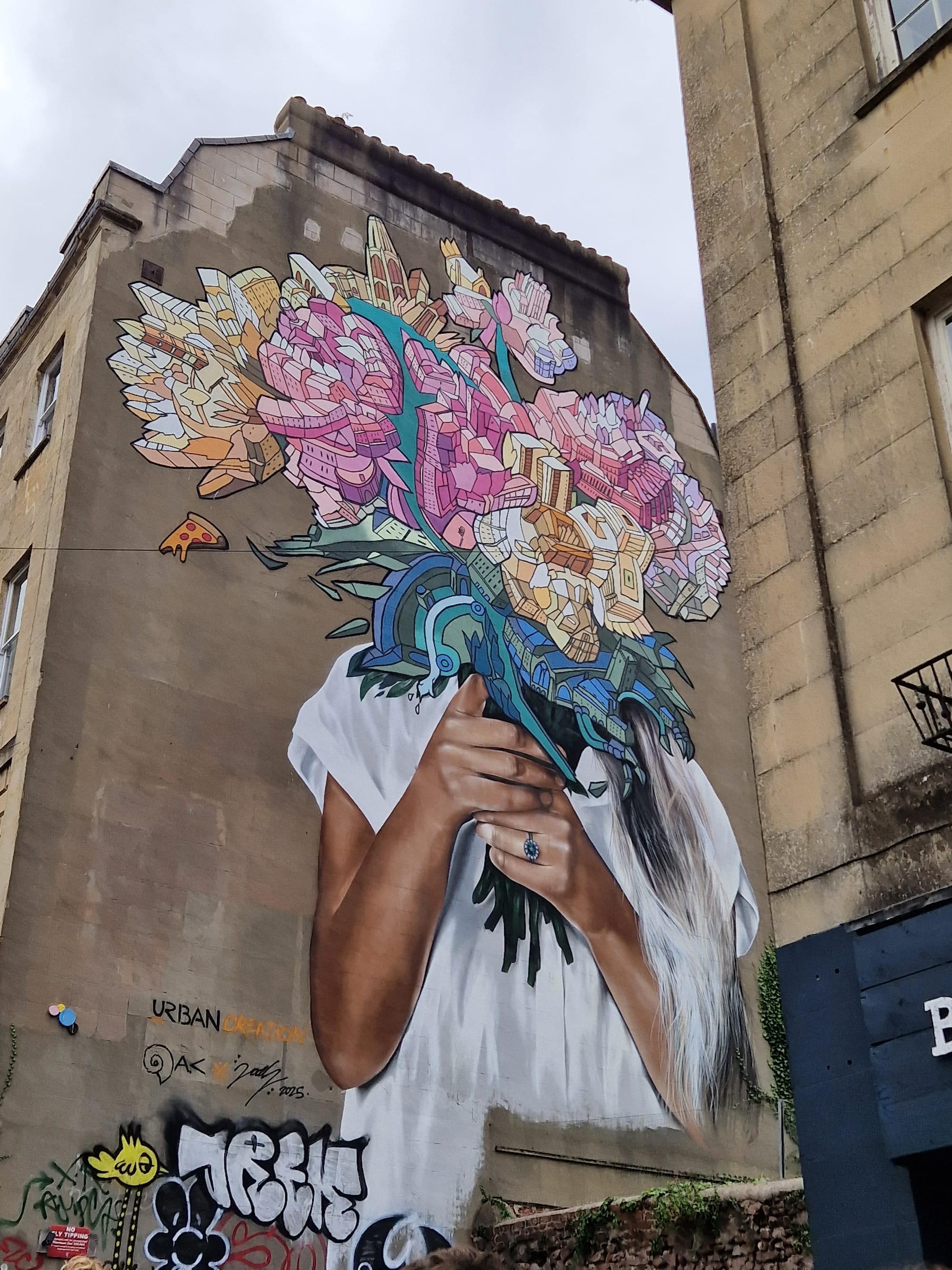
Considering that most graffiti conveys a meaningful political message through the artist’s creativity and dedication, the ability to produce street art is a human trait. Street art’s power to connect people and build communities, built into its history, further proves that. Nation adds that:
‘it’s got humility, it’s got feeling, it’s got an expressionism behind it’ and he does not think that ‘AI will ever achieve that’.
The AI mural in Bristol triggered outrage from the local community, considered an insult to local artists. Nation was ‘aghast’ and felt ‘disappointed by Bristol.’ The public outrage led the owners of the pub to remove the AI mural, wanting to replace it with a permanent mural by local artists instead.
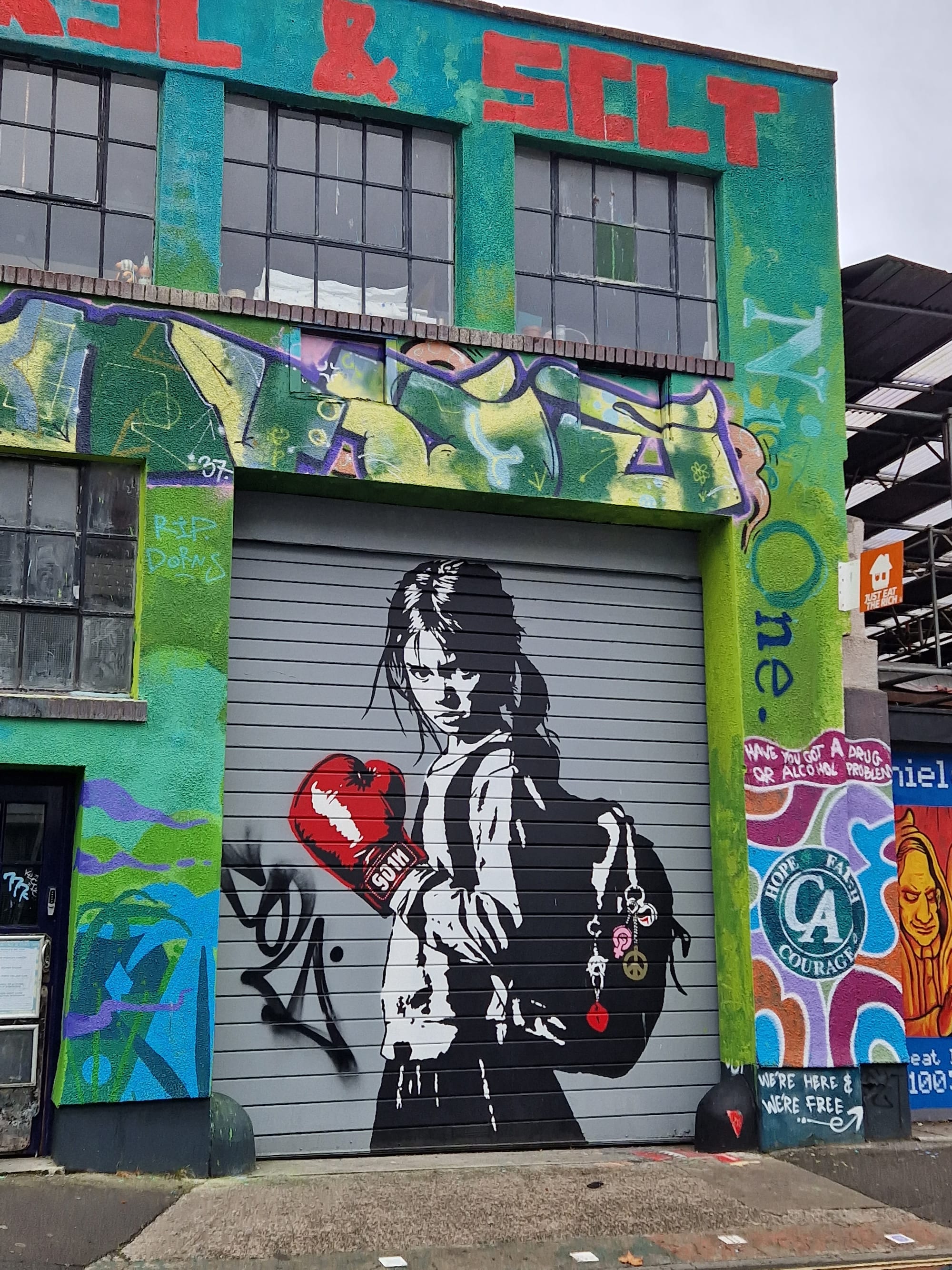
These reactions reflect that the use of AI is incongruous to Bristol’s identity and the fight for Bristol’s reputation as a centre of creativity is very much alive.
 Megan Oberholzer
 Anushka Dongare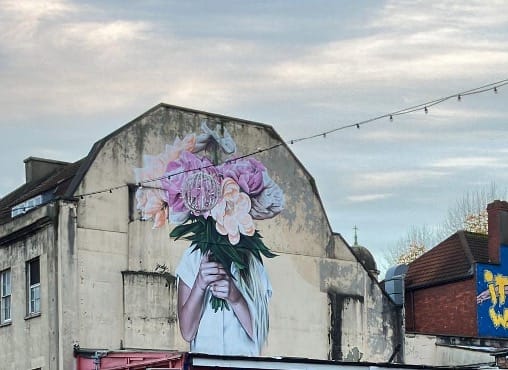
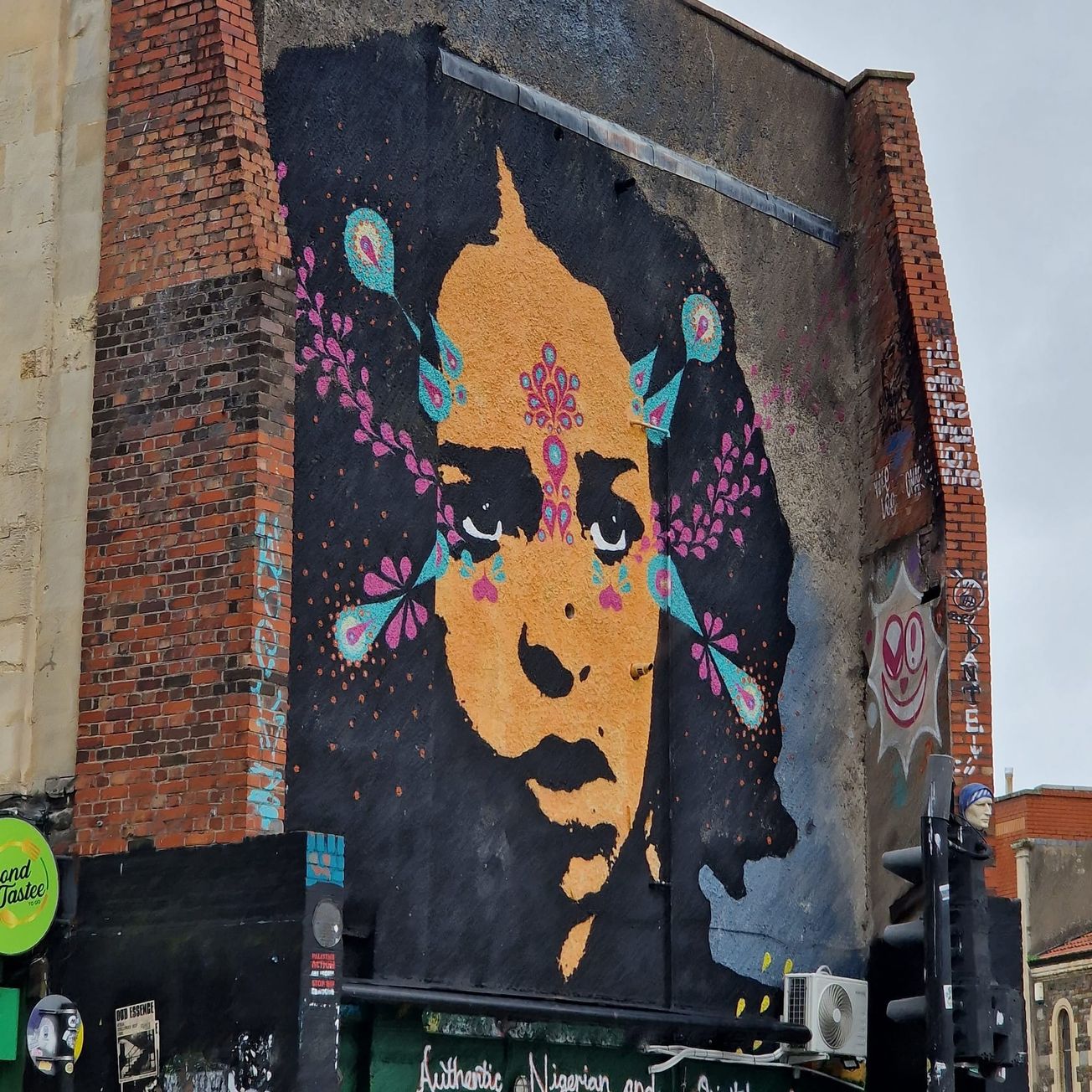
Featured Image: ‘Yellow Faced Lady’ by Stinkfish, Mina Road’ | Elisa Dittrich / Epigram
Do you think street art is integral to Bristol's identity?