By Charles Hubbard, Second year, Theatre and Performance
It’s been a rough couple of years for Danny Boyle. Thanks to a recent string of commercial flops and prestige TV shows that left little to no impact, the man who was once at the centre of mainstream film discourse (especially in terms of British filmmakers) barely raises a hint of recognition when mentioned around Zillenial cinephiles. However, I am glad to confirm that he is indeed back. While making a sequel to one of his best-remembered films may feel like a cynical ploy just to get something released in cinemas again, this film itself proves that Boyle has a lot more to get off of his chest than just his dinged reputation.
The film picks off, as you might have guessed, 28 years after the events of the first film after the UK has been entirely overrun by zombies and is thus sealed off from the rest of the world. That said, in the words of Jurassic Park’s Ian Malcolm, life has found a way. The remaining survivors of the undead apocalypse now live in carefully sealed and heavily fortified strongholds within which the rules and optics of society have been set back a good 800 years and ‘survival of the fittest’ is the law of the land once again. Spike (a tremendous find in Alfie Williams), a shy and sensitive 12-year-old, is about to come of age and must therefore leave his home island and see the infected with his very own eyes for the first time. For anyone mulling over the classic question of “Do I need to have seen the first film?” - do not fear. None of the original cast members return (although Cillian Murphy is thought to be returning in a planned sequel) and references to previous films are tangential at best.
All you need to know is that, in 2002, a rage virus was released, which caused a zombie apocalypse that annihilated the vast majority of the UK’s population. Additional content warning: the film features several instances of what I can only describe as ‘zombie full frontal’ and, if you understandably have a knee-jerk response to this, maybe stick to The Last of Us.
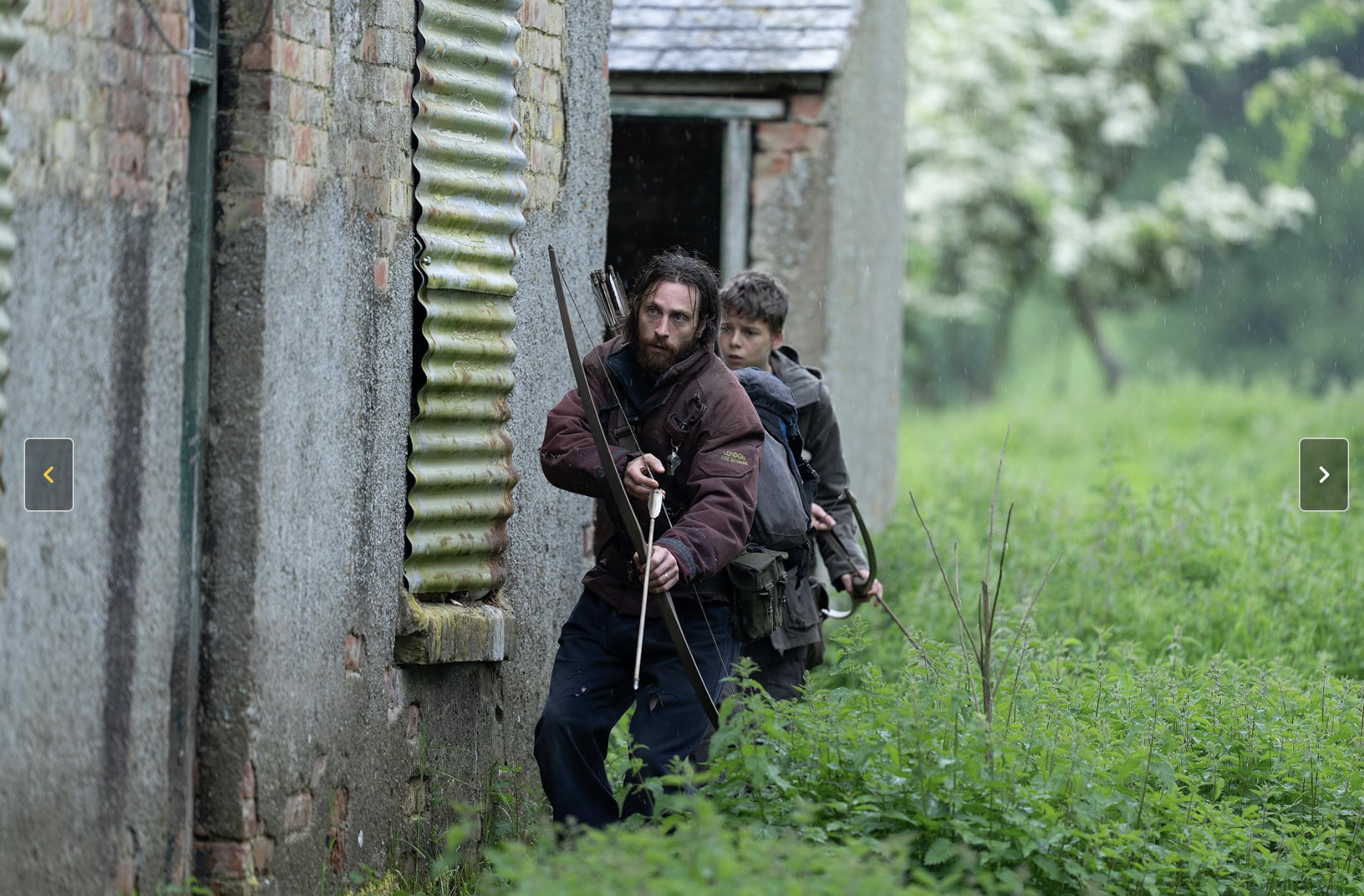
Like the very best sci-fi dystopias, Boyle and screenwriter Alex Garland use the guise of a zombie apocalypse not as an exercise in itself but instead as a vehicle to say something greater about humanity. In this case, it’s about how life goes on no matter what. Even after a zombie apocalypse, we will still find our way back to rules, regulations and strict protocol. The film actively invites its audience to consider the fact that, in another 28 years, the world of the film may not even contain anyone who remembers life before the Rage virus. Garland (a director in his own right) seems to posit that the chaos of an apocalypse isn’t the end point of humanity, but instead a mere stepping stone that we must get around to find our way back to how we lived before.
In this regard, the film actually turns out to be a fitting metaphor for the pandemic, even if Boyle will claim this to be unintentional. I know many people who, in the midst of the pandemic, insisted that it would be impossible for society to ever continue as it had before. And yet, five years after the height of the Covid-19 lockdown, we seem to be doing just that, albeit with more working at home and easier access to hand sanitiser. In this way, the film seems to take an almost optimistic viewpoint on the idea of a zombie apocalypse; humanity will survive, evolve and eventually triumph over it. This optimism and sentimentality plays well to Boyle’s strengths as a filmmaker. He’s always been best when telling stories of good people somehow escaping from dire situations, be it heroin addiction (Trainspotting, 1996), living in extreme poverty (Slumdog Millionaire, 2008) or having your arm trapped in a canyon (127 Hours). While Garland, a much more cynical and misanthropic storyteller, seems most compelled by humanity's worst tendencies, it’s Boyle’s cheery positivity that wins out here.
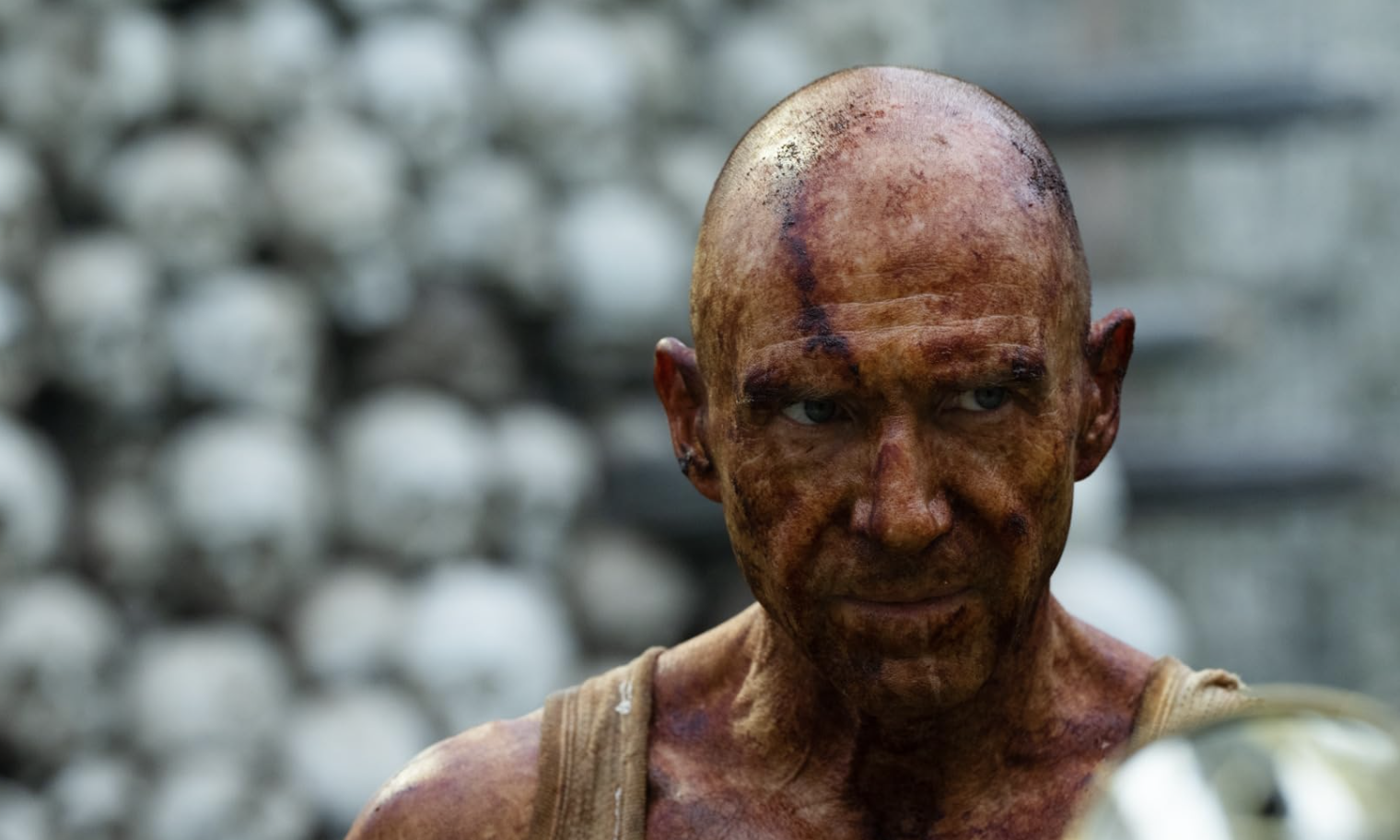
It may be surprising, considering how simple and elemental the film’s road trip premise is, how fragmented and weirdly structured the film turns out to be. You might have seen reviews commenting that the film is essentially three different films stacked end-to-end with minimal similarities to one another. Garland is very familiar with the ‘get from A to B through hostile territory’ superstructure, having directed films like Annihilation and last year’s Civil War (2024). And yet his scattershot script undercuts this formation at every turn. The film feels much more interested in the village where most of its characters live than what lies beyond it. However, the traditional conventions of the genre dictate that, if there aren’t at least a couple of zombie scares in the first thirty minutes, the audience will lose interest. This forces the film to keep jumping back and forth between the fortified village and the zombie-infested forest that lies outside its walls - seemingly unable to make up its mind about where it would rather take place. This gives it a sense of rudderlessness which is firmly at odds with Boyle’s energetic, maximalistic stylisations.
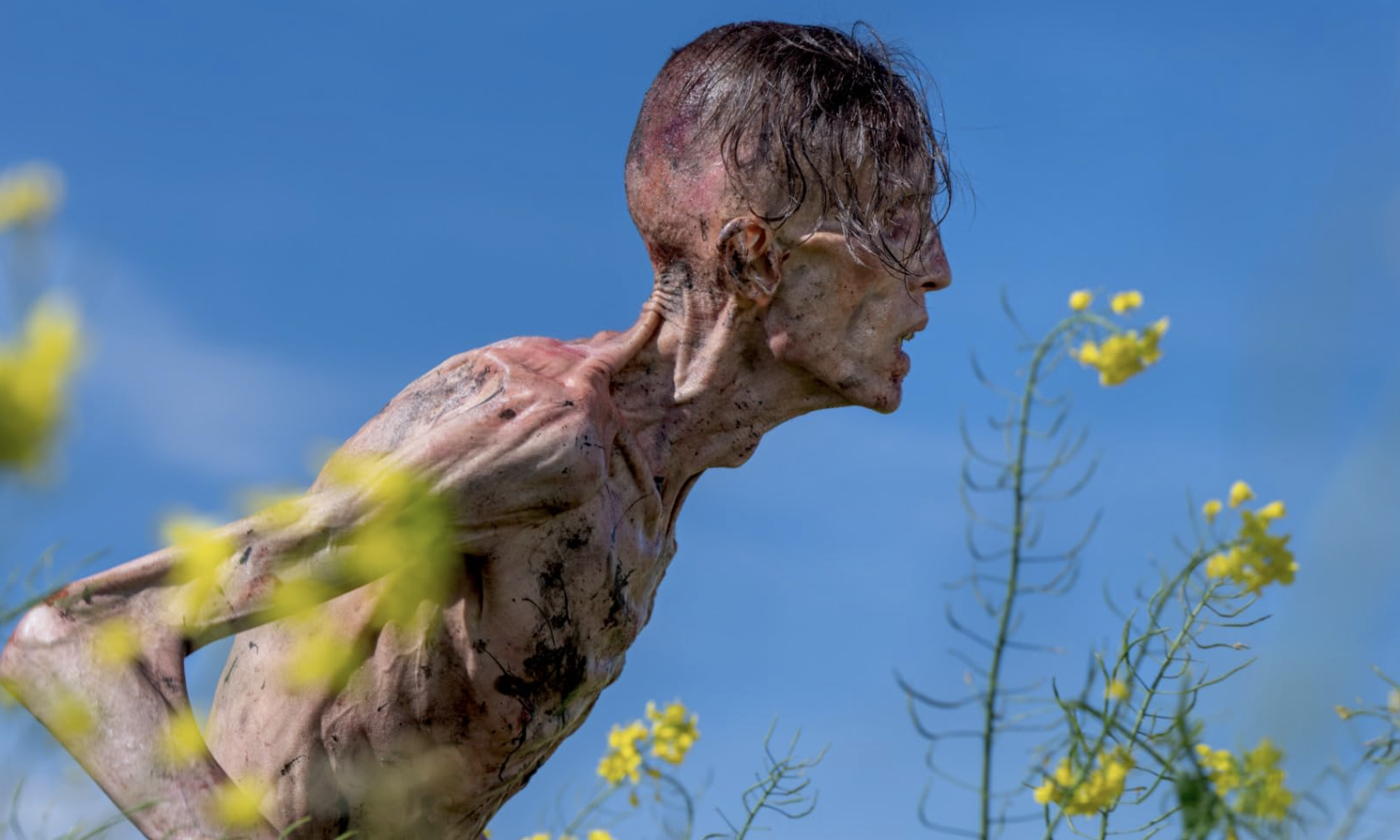
You’ll see a much simpler and, in my opinion, significantly more powerful version of this in M Night Shyamalan’s The Village (2004). Shyamalan waits patiently until his film’s halfway point before forcing its protagonist to enter the dangerous wilderness surrounding her home and then never lets her return. As a writer, Garland often has a habit of introducing fascinating ideas and themes and then moving swiftly on before the audience even has a time to properly get their hands around it. He’s like a waiter taking your plate away before you’ve had time to have more than a couple of bites. This maddening tendency is on full display here as Garland dangles the concepts of pregnant zombies, bands of vicious, tracksuit-wearing zombie hunters and a culture perpetually frozen in 2002 (a dystopia more terrifying than any undead outbreak) in front of the audience, only to snatch it away in favour of the next thing further down the line.
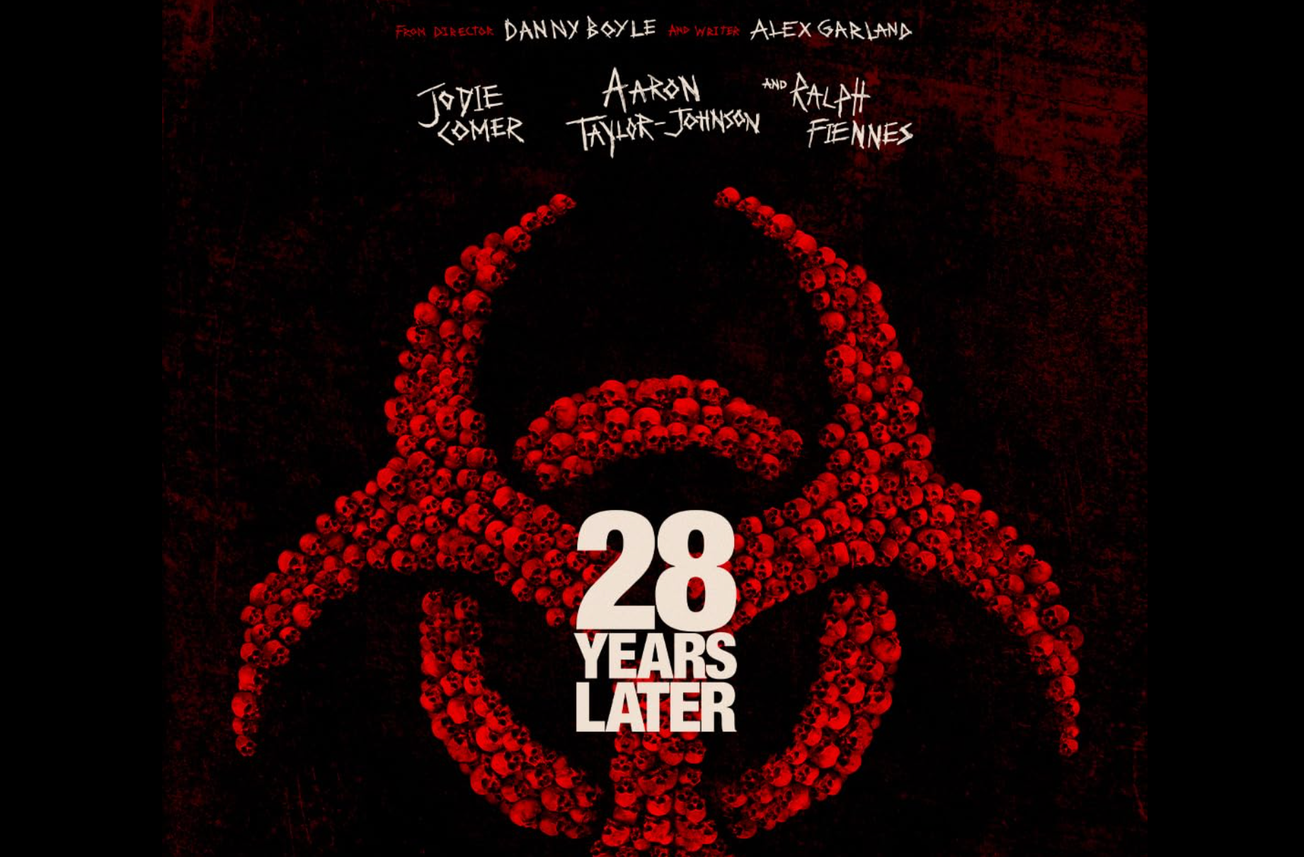
All this said, the place where the film enters its third act is almost worth its many frustrating narrative cul-de-sacs. I won’t spoil it here, but the emotional resolution for Spike’s arc, in which he accepts death as a natural occurrence in a world where death by the infected is the only concern on anybody’s minds, left me feeling a little misty. In particular, the image of a gigantic column of human skulls is so indelible that it’s very possible that Boyle started with that one tableau and then proceeded to build the film around it.
The final product here does certainly feel like a mish-mash of about four or five different ideas that Garland and Boyle have been holding onto for twenty years and the film never quite adds up to the sum of its parts. However, in a landscape of cash-grab legasequels that increasingly feel like they are being written by an algorithm and quality-controlled exclusively by a committee of shareholders, it’s almost impossible not to appreciate this rare franchise film that actually bears the fingerprints of its filmmaker - and I’ve really missed Danny Boyle’s fingerprints.
Featured Image: IMDb/Columbia Pictures
Did you think Danny Boyle's '28 Years' franchise will become a cult classic?