By Lucy H Watson, Third Year, Geography
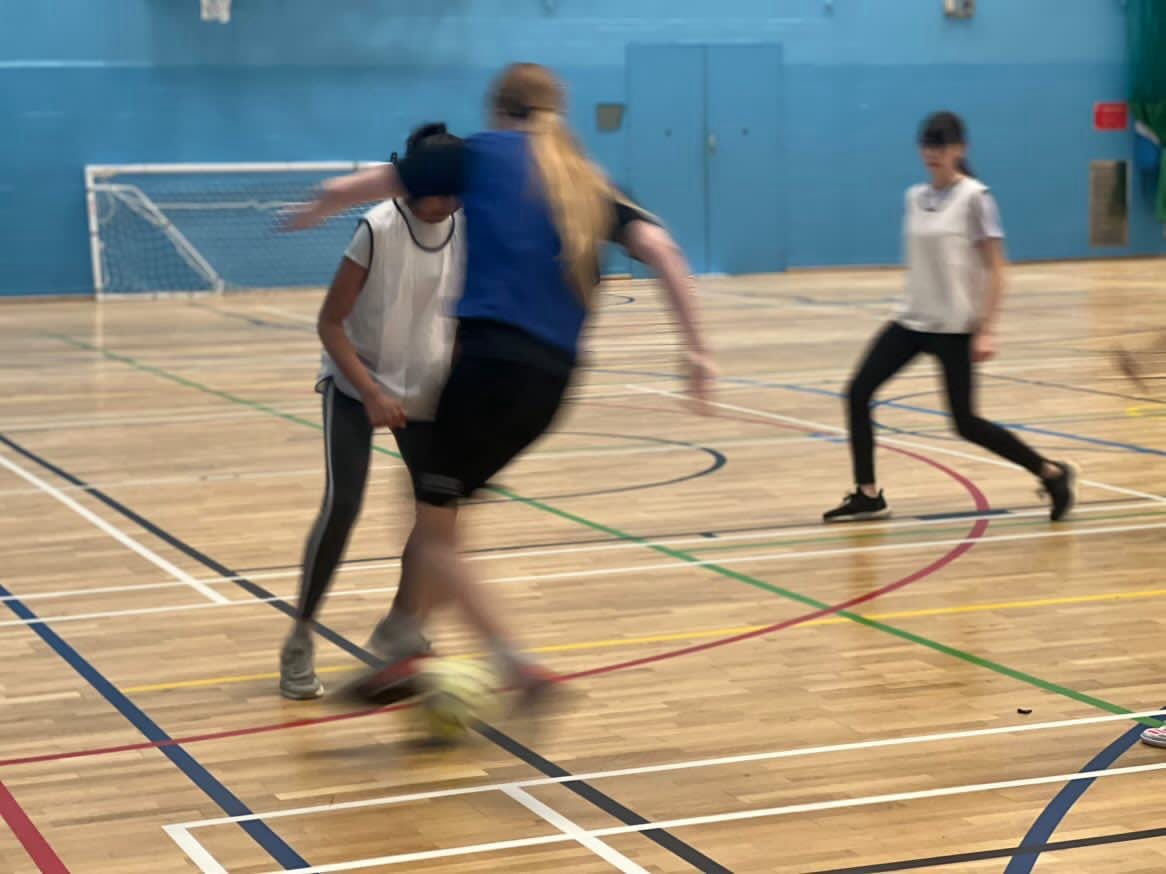
Whenever I tell the story of how I met my girlfriend, I lie just a little bit. It was a Friday evening, the sun was setting over the Indoor Sports Centre and there we were, catching each other’s eyes as we played football. Very romantic. Not entirely true.
It was in fact futsal that we were both trying for the first time that lovely Friday last year. Hailing from Uruguay, futsal, or futbol sala, was designed as a salvation for aspiring ballers who lacked enough players and/or pitch space for a traditional game of football. Five-a-side and on a smaller indoor pitch all you need is a village hall and someone to explain that you’re actually not allowed to do throw-ins (oh and a different goal, ball and shoes). Simple.
Nearly a century since its conception, the sport has boomed in popularity with an estimated 30 million players worldwide. Fast-paced and spatially-condensed, the game is credited with shaping the controlled play of its devotees from Ronaldo to Pelé and is now the dominant childhood sport in Spain, Brazil, and France. So, with just 17,000 players, why has the UK been left behind? Why is futsal still an unknown that I can’t quite be bothered to explain every time I talk about meeting the one? And, in a country where the Lionesses are a household name, where on earth is the women’s game?
The gender gap in sport is not exactly a new concept, but even I, a female athlete who might as well have ‘feminist’ tattooed across my forehead, was surprised to find out that while the first ever men’s futsal world cup was held in 1989, the first ever women’s one is... next month. While sadly, the England squad did not qualify for the tournament, it’s a marked improvement from their performance at the last Euros in 2023 where the team did not exist. Not only are our national players relatively unknown by the public, they are relatively unloved by the FA, receiving a grand total of zero pounds in funding. The men’s team has had the luxury of existence for 17 more years than the women but, in a fab step towards gender equality, the FA don’t give them any money either.
The governing body’s apparent reluctance to form and fund national squads is undoubtedly a big driver in the UK’s lack of futsal mania. The dividends of investing in the top are so easily seen when you turn to football’s Lionesses; as they lifted back-to-back Euros trophies, participation in girl’s and women’s football more than doubled nationwide. I myself am part of that statistic, taking to the beautiful game only after being exposed to the fantastic female role models within it. But the FA does not appear to be eagerly pushing this success across to the team’s futsal counterpart. Formed only last year, a future without funding could see them facing the same stagnant fate as the male players, never qualifying for major tournaments and never catching that magic ticket to boosting the sport’s name at home.
Despite this rather large obstacle, all hope is not yet lost. While English futsal players may not be making headlines on the world stage, there are plenty of players in Bristol who have got the ball rolling and are ready to share their love for the game.
Miren, a third year mathematics student, has been playing futsal for more than ten years and is part of the current movement to establish the University of Bristol’s first ever women’s futsal BUCS team. Speaking to Epigram, she said:
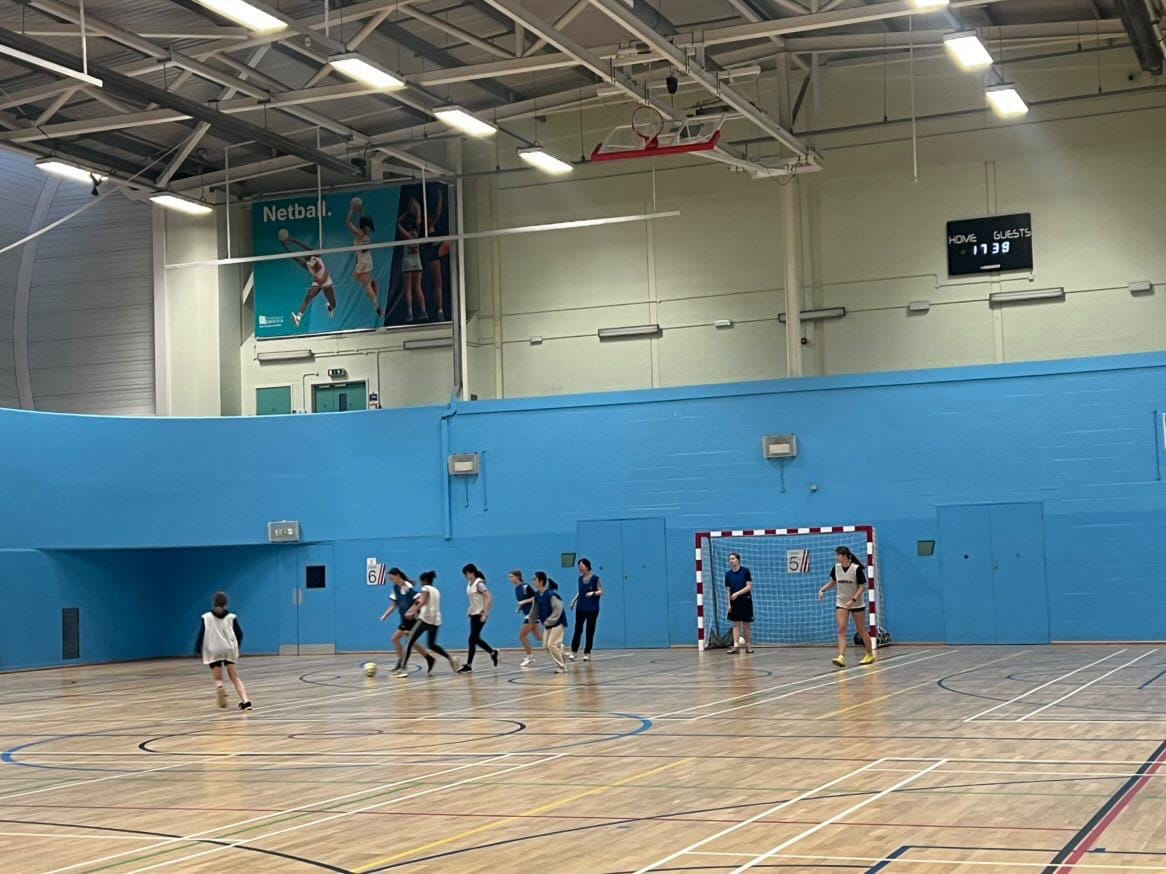
‘There’s no doubt that futsal is something that’s not really promoted as awomen’s sport, and isn’t well known to many, but I’m really keen for it to be pushed so that we can compete.’
What keeps her coming back to the sport?
‘To be honest with you, I prefer futsal over football, futsal has this great fun fast-paced feel to it that makes it so enjoyable, and it tests your technical skills in a way that I personally find so much more exciting than normal 11-a-side football.’
Christina, a third year law student and proud member of UBWFC (University of Bristol Women’s Football Club), sees the game as an entertaining way to improve her football skills. Speaking to Epigram, she said:
‘The two sports have a symbiotic relationship.’ ‘Futsal improves my football, and football improves my futsal.’
Like Miren, Christina is keen to see the sport grow at the uni, hoping it can one day reach the great social heights of the six-team UBWFC massive (see Benidorm Tour 2025), or at least start building the recognition it’s well earned by now.
With the odds stacked against it, women’s futsal in Bristol has persevered and created something rather special. Something that, upon reflection, I feel guilty about overwriting all of those times. Speaking as a player myself, I cannot recommend getting involved enough. Who knows? You might even find true love.
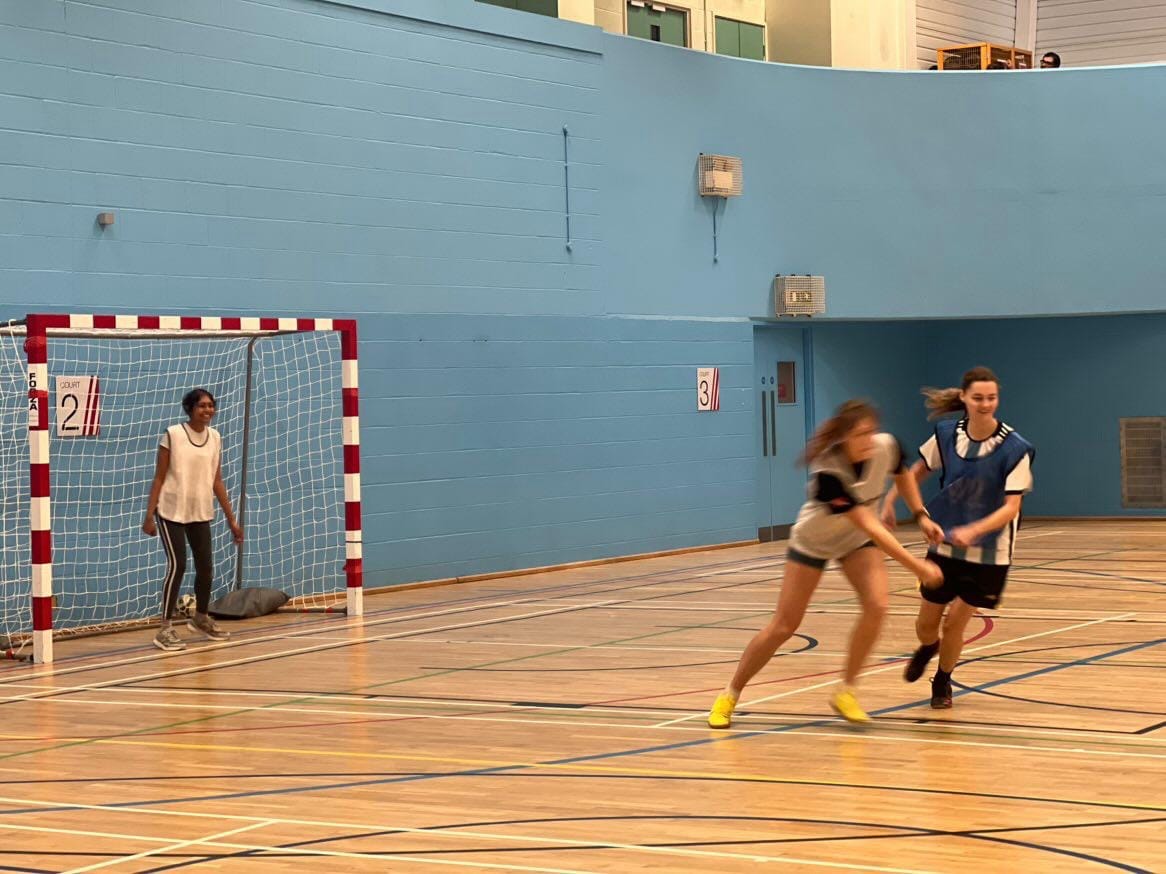
Women’s futsal is on every Friday from 17:00 to 18:00 in the Indoor Sports Center. You can book a place on the B-Active app, no experience or boots required.
If you do fall in love (with a player or the game) our coach Jono would love to let you know that you can get a year-long membership for just a tenner (!). You can also play outside of the uni every Monday night (18:20) at a casual training session at Bristol City Academy, and every Friday night (19:00) with National Futsal League team Futsal 360 at Ashton Park School.
P.S. there’s lots of interest from other universities (so far Derby, Bath, Birmingham, Cardiff Met and Solent) to play some friendlies against us soon so don’t miss out on the fun!
Featured Image: Epigram / Christina O'Neill
Will you help push women's futsal into BUCS for 26/27?