
By Jed Dixon, Co Editor-in-Chief
In June, the UK government announced that starting from Spring 2027 social media would be banned for under 16s. According to their consultations, 9 in 10 parents and two thirds of young people agreed with the ban, aligning with the 67 per cent of Epigram readers polled on the subject. Why, then, do many experts on the effects of social media on children seem far less supportive of the ban?
While public perception has been generally positive, professors around the country have cited a wide variety of reasons for disagreeing with the policy. The majority of the criticism is not levied at the spirit of a social media ban (protecting young people from online harms), but rather the manner in which the government is attempting to achieve this goal.
The UK is not the first to implement an age-based ban on social media, with Australia prohibiting children under 16s holding accounts on social media platforms as of December 2025. While the policy is still in early stages, early evidence suggests it has had very little effect in cutting down social media use for under 16s.
Contrast this blanket ban strategy to the result of recent legal rulings against Meta in the US. As part of the settlement agreement, Meta must implement a variety of changes aimed at protecting children, including a default two-hour daily time limit, hiding like counts on teen’s profiles, and the ability to choose a feed that is not driven by an algorithm.

I spoke to Dr Lizzy Winstone, a senior research associate at Bristol Medical School, who agreed that these algorithmic changes were a step in the right direction. She believes the debate around social media has been too focused on the notion that ‘harms arise because children spend too much time online, encounter individual pieces of bad content, or make poor choices.’
‘The US cases have started to place much greater scrutiny on commercial incentives or platform business models, including profit-making design features intended to maximise attention and engagement.’ In contrast, it seems that a blanket ban for children is more geared towards the harms created rather than the root causes of them.
‘Age restrictions could potentially form one part of a precautionary approach, but they shouldn't become a substitute for addressing the underlying systems. If engagement-maximising and harmful recommendation systems remain unchanged, we don't deal with the mechanism that I feel generates many of these problems, we're just changing the age at which people encounter it.’
Furthermore, a ban potentially ignores the upsides of social media use, Dr Winstone warns. Young people use these spaces for ‘friendship, entertainment, creativity, identity exploration, information and social support,’ with online communities being particularly important for those who feel isolated offline.
These positives, however, do not exist in a vacuum. Even content that is ‘supportive, funny, or informative can become overwhelming if an algorithm repeatedly pushes increasingly similar or emotionally intense material,’ and high algorithmic awareness is often insufficient to prevent this. This again highlights the importance of properly enforced algorithmic regulation.
Clearly, the success of such regulation depends on it actually being enforced by social media companies. While the recent ruling against Meta demands algorithmic changes and time controls for children, it remains to be seen whether these will be implemented in a way that allows tech-savvy teens to circumvent them. Former Meta safety engineer Arturo Béjar testified that the company adopted a ‘don’t ask, don’t tell’ strategy to child safety, despite being repeatedly being made aware of the dangers.

Perhaps some would then argue that there is some merit in a strategy that doesn’t solely rely on the cooperation of technology companies. The success of a blanket ban does rely on proper implementation by social media sites, but also places some responsibility on parents. It is far easier for a parent to check that their child is cooperating with a black and white ban than with unspecified algorithmic changes.
Sadly, this too creates a whole host of problems, the most concerning being an amplification of pre-existing inequalities. Dr Winstone commented that ‘families differ enormously in time, digital confidence, resources and their ability to supervise children's online lives. If public policy relies heavily on parental monitoring, we risk producing better protection for children whose parents have the greatest capacity to provide it.’
A number of Epigram readers shared a disdain for policy that pushed responsibility onto parents, with one claiming that a blanket ban ‘takes pressure off tech companies to regulate.’
Does the ban mean less work for tech companies and more work for parents already under pressure?
So, where does this leave the ban for under 16’s? Dr Winstone thinks the best solution involves ‘multiple layers of protection’, including ‘safer platform design and algorithmic regulation at the structural level; schools supporting algorithmic and media literacy; families having useful tools and guidance; and young people having meaningful control over their feeds.’
The future of social media regulation remains to be decided, but the next few years will undoubtedly be vital in shaping the online landscape for generations to come. While broad sweeping policies like complete bans may garner popular support, we must strive to understand the deeper rooted issues at play for a safer and happier future.
 Sonal Korlipara
 Claudia Dupé
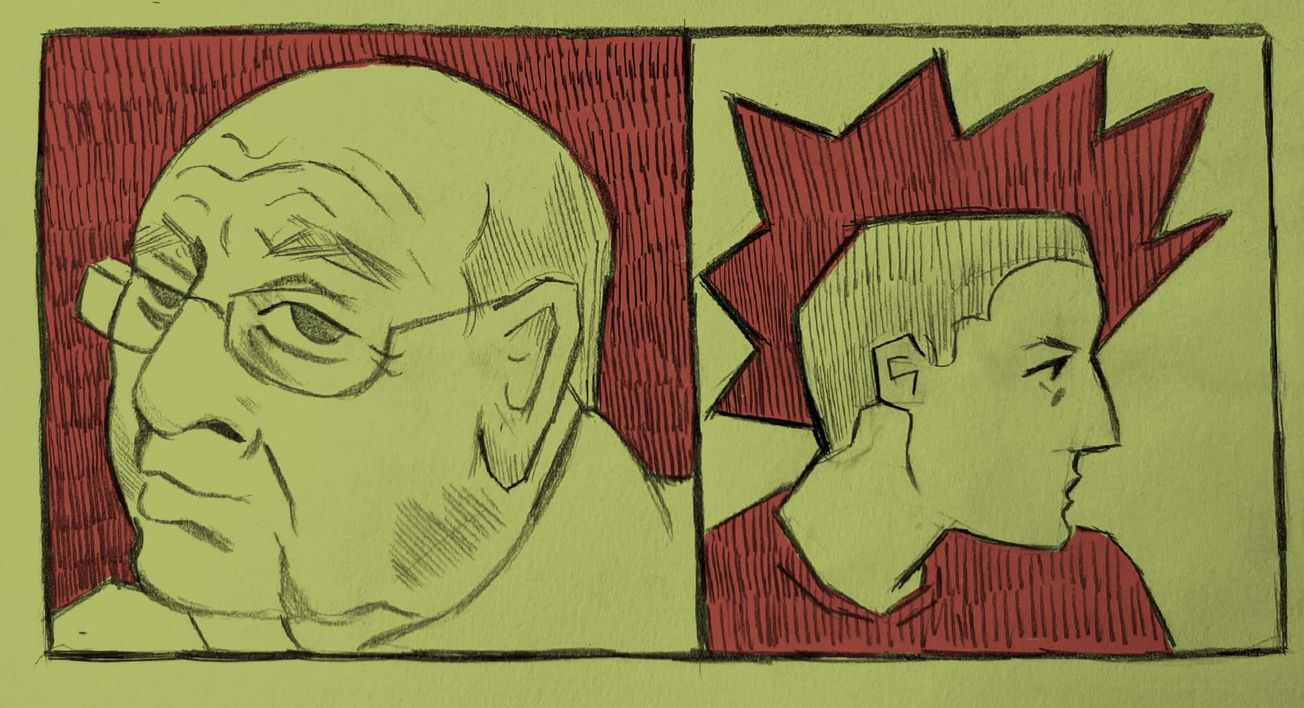
Featured Image: Griselda Yorke / Epigram
What are your thoughts on the social media ban? Do we need to go further in reducing it harms or should we embrace the positives and accept that the cat is out of the bag?