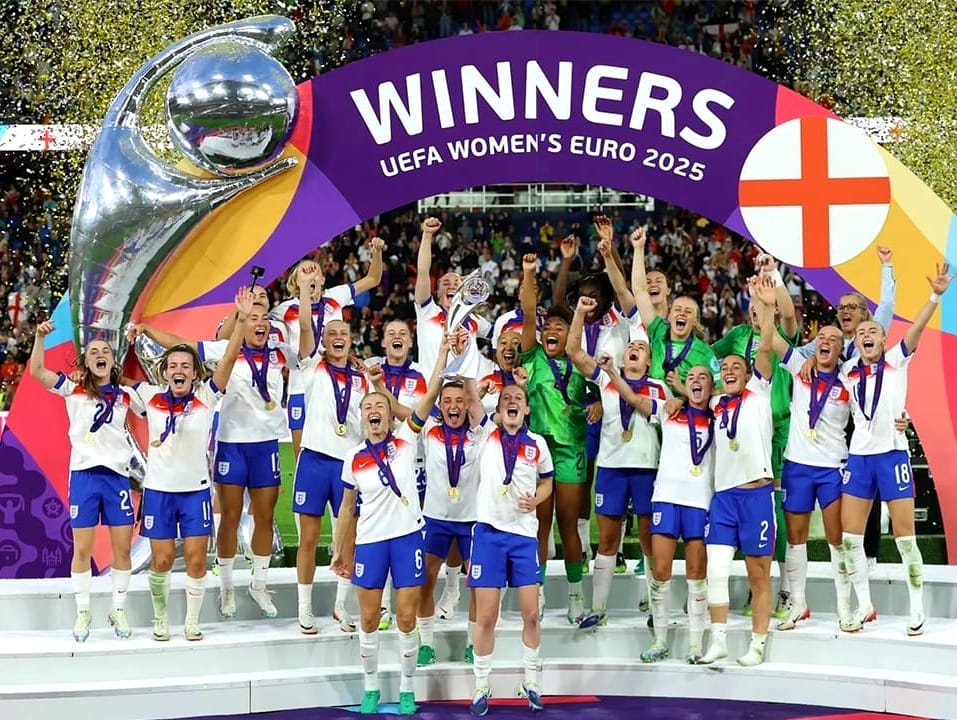
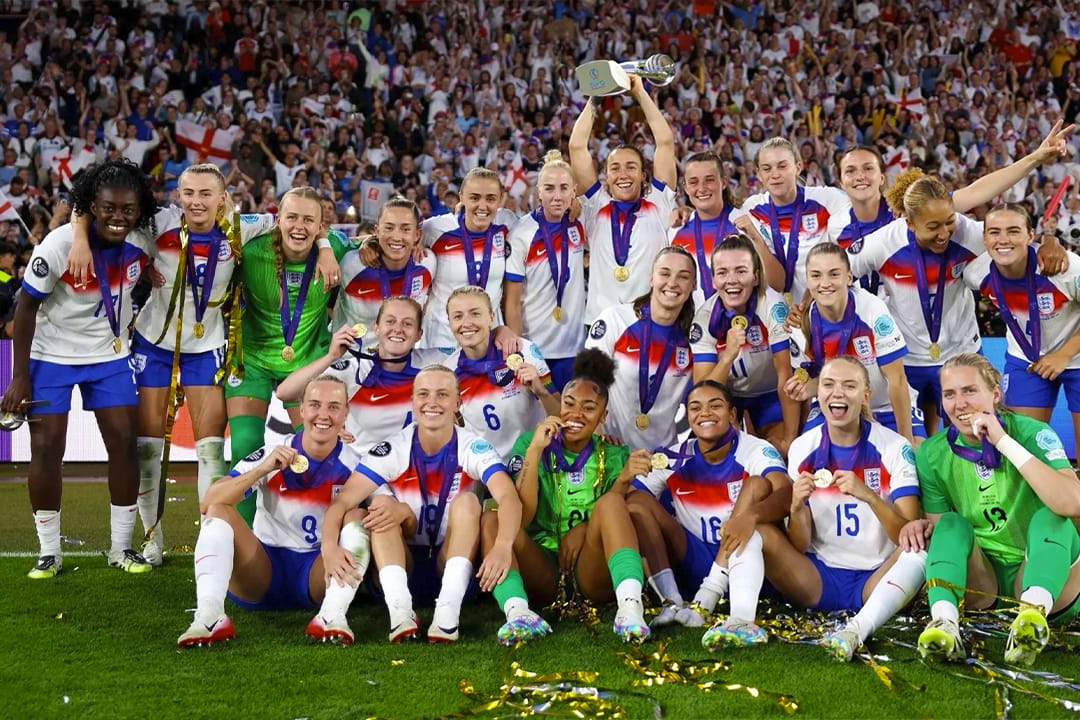
England's Lionesses have made history (again) as the first English team to triumph on foreign soil - and the only back-to-back champions in English history. Yet, equality in reach, pay and culture of women’s sport has a long road ahead.
Freed from Desire is blasting from the speakers – and I’m staring at the TV in a restaurant by the sea in the late July sun. The waves are crashing, and the entire pub is dancing. Everyone is buying each other pints as we watch England Captain Leah Williamson carry the trophy to the Lionesses waiting on the podium, who have done it again. I can’t remember a time when, walking down the high street, I have ever seen women’s sport on every screen in sight. I caught snatches from shop fronts and living rooms, of Chloe Kelly breathing slowly, before her historic leap into the air that came crashing in a kick (clocking stronger than any in last year’s Men’s Premier League) that sent the ball soaring over the goalkeeper’s head - breaking records, rewriting history and inspiring the whole nation – again.
Equality is about opportunity and choice – and the Lionesses are paving the way for young girls to not only have the opportunity to play sport, but to aspire to do so by having role models who look like them playing on BBC1 with 16 million people watching – with Sarina Wiegman at the helm, the only manager ever to lead her team to four back-back finals of major tournaments.
The Lionesses’ recent back-to-back victory has taken me, and the country, by storm. It has completely altered my perception of what my future could look like, as I’d never considered a career in sport before watching the Lionesses - thus proving how crucial representation is. Since they won their first major league title, the FA has found that 129,000 more girls played football in 2024 than before the 2022 Euros.
UBWFC (University of Bristol’s Women's Football Club) has, on the back of incredible success in the last few seasons, now expanded to umbrella 6 teams – four of which compete competitively. UBWFC represented Great Britain in 2023 in Tirana, and this season the 1s won the Southern Premier League in January, with the 2s ranking in a close second in the Western 2B.
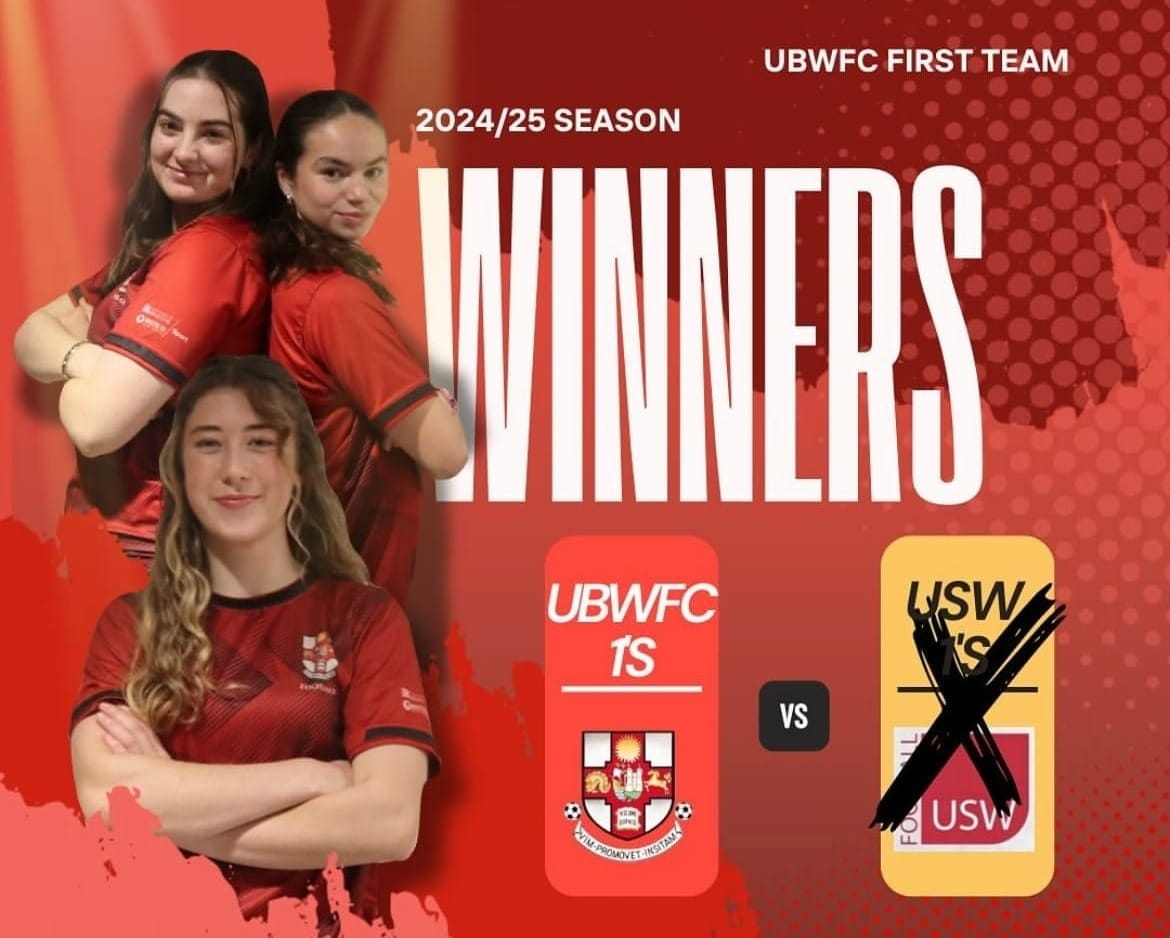
I had the amazing opportunity to ask UBWFC’s 4s player Weronika Lecka some questions about her experiences with football. The 4s debuted this season in BUCS and she referees local football U11-U14s – which gives her a great insight into grassroots football.
Captain Leah Williamson has said that to understand and play as a team, what is crucial is to know each other’s ‘why’ in order to get you through the dark moments. What is your why?
'In terms of football, my 'why' is enjoying playing the game and how much football has taught me in life, different cultures, skills and how important it is to work in a team.'
It means a lot for so many to see women's football changing so much and gaining such momentum. In Williamson’s words, ‘we’re not done yet’ – in terms of equality throughout the game. Sarina would be incredibly successful if she coached the men’s team but there would likely be uproar if she did (even though no-one has ever been as successful as she has), yet if a man managed the women’s team that would be seen as normal.
What do you think is next for Bristol's own WFC?
'For Bristol City Women, I think a next objective and step could be getting promoted to the WSL [...]. After getting their own kit this season, they are starting to create their own identity away from the men’s team'.
Football is just football: and women aren’t men - which is why comparing the two games is a ridiculous thing to do. However, up until (certainly the 2022 Euros victory) football has been male dominated. According to the BBC, crowds of 50,000 people watched women’s football games before the 50-year ban was enforced in 1922 which left lasting damage - the Women’s Super League wasn’t officially professional up until 2018.
This generation of Lionesses are the face of progress in women’s sport, but the direction they are fighting in has been paved by previous unseen generations, who’ve worked and fought to wear the England badge and play professionally. Women’s football is growing tournament to tournament – which is very exciting – but we still have a long way to go. In an interview with Fearne Cotton, Williamson said that ‘it's not women in sport – it's just women’. Almost 30 players missed out on the 2023 Women’s World Cup in Australia due to ACL injuries. Societal inequality has bled through to the health of the players: who have been wearing men’s kit their whole lives and when faced with this devastating injury had no answers because no research is done for women.
Weronika, have you found it difficult to continue (especially when you were younger) in such a male-dominated sport?
'Sometimes I have found it difficult, however I always stayed focused on my own abilities, enjoyment and willingness to learn more. Even as referee when I was the only girl on the course, I still tried my best to show willingness to learn'.
Can you see a change (besides the popularity of the club) in how people talk about the club and approach/support it?
'I’m very happy to be part of a positive change in UBWFC, it’s definitely getting more attention because of its amazing social media presence and multiple trials or GIAGs throughout the year. People have talked about it though collaborations with women’s rugby [...] for example, or people participating in The Fighter, so overall UBWFC has a huge presence across society events'.
As a phenomenal group of players, every single Lioness has an incredible story to tell: the incredible year Kelly’s had, Agyemang debuting for England aged 19, Williamson returning as Captain after overcoming her ACL injury, Toone played phenomenally after her grandmother passed away the morning of the final, Bronze (currently the player with the most appearances for England at major international tournaments ever) playing the tournament on a broken tibia. Carter – the target of horrific racist abuse throughout the tournament - reclaimed her Euros crown as a starter in the final. Greenwood earned her 100th cap in Switzerland after coming back from her MCL surgery in December. These women, and so many others I don’t have time to list, are absolutely extraordinary.
Which player in the women's Euros was most important for you, Weronicka, in their drive/execution/journey?
'With Chloe Kelly, her impact has been really big since even now everyone is copying her penalty style [...] Hannah Hampton because of her story of how she was told she wouldn’t play football because of her eye operation, but how she played every minute of the tournament'.
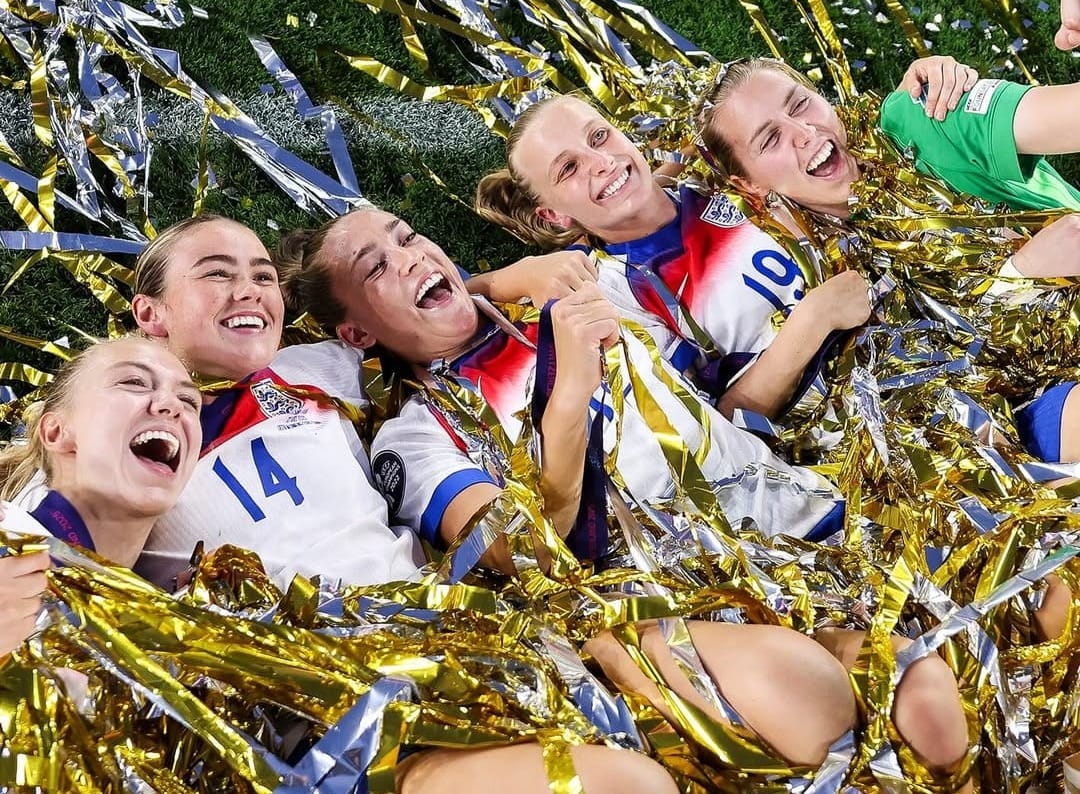
These women are sisters, daughters, Lionesses, back-to-back European champions, the most successful English football squad ever. Above all of the noise – it’s incredible how exciting this is that we can actually see progress happening for the cause of equality right in front of us.
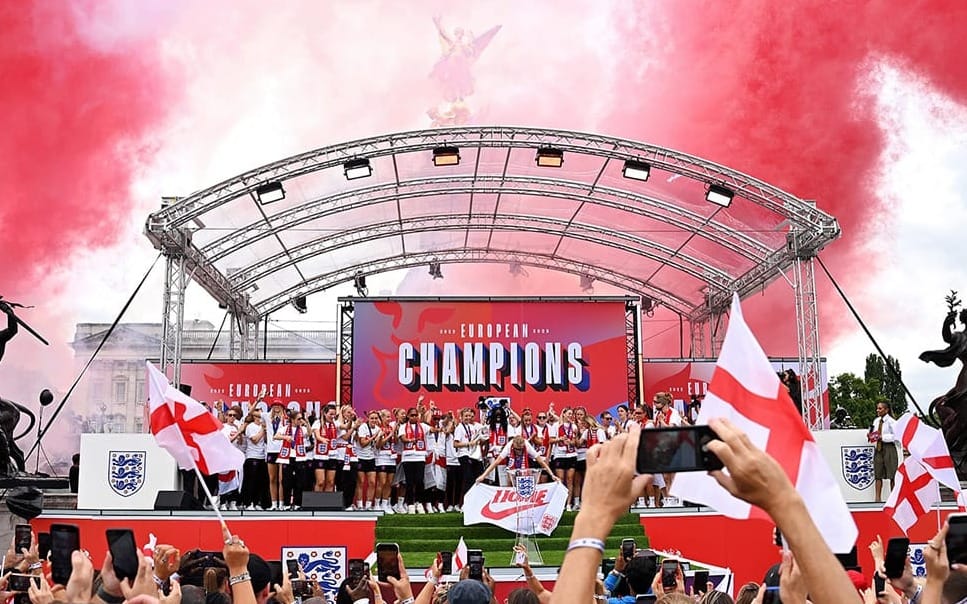
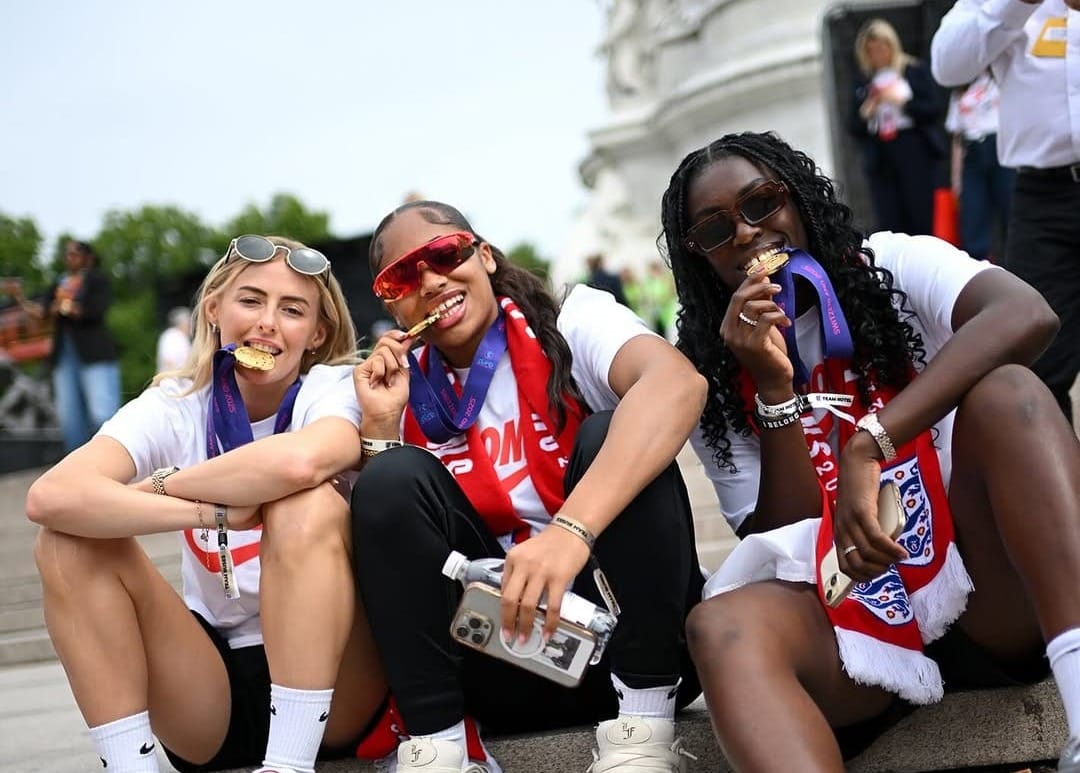
So, the Lionesses euphoric return to home and victory parade up the Mall to Buckingham Palace was the place I had to be. I will never forget 65,000-strong crowd dancing and chanting around us. Everyone we spoke to was lovely, and buzzing to be part of this historic moment. I will never forget seeing the tour bus drive slowly in front of us, homing in on Buckingham Palace.
'My YouTube upload documenting this incredible moment'.
And when the lights went down, and the canons fired red and white streamers sky high – to dazzling performances by Heather Small and Burna Boy – we all felt part of something very special. Our Lionesses were right there, lifting the trophy before us. I will never cease to be thankful for them, their behind the scenes team that we don’t see and all the brave women who have fought for equal rights on and off the pitch and who will continue to do so.
‘Stay with us – this story’s not done yet’ – Captain Leah Williamson, Buckingham Palace.
Featured Image:The Lionesses via Instagram