By Tylah Hendrickson, Arts Subeditor 25/26
‘A pub, a church and a farm mark time differently, with dialects threaded in different directions, yet at times coalescing. Connection is the blessing that comes from courage. Take a step into the nook of your neighbours neck of the woods and forage for their treasures…’ - On Phillip Street, Leeza Awojobi.
Easy exchanges in frequented coffee shops, light-hearted chit-chat over a cheap pint, or a lazy lounge on the grass with your mates – these interactions foster a safe space where people come together for a purpose. Places are rooted in identity and in the people that reside there, and by honouring these spaces we honour the connection that follows.
This is the heart of Leeza Awojobi's project. Formed through an eight-month residency, ‘Common Threads’ invites the local residents of Bedminster to reflect on what makes this part of Bristol unique – and what connects its diverse communities. Leeza is a Bristol-based restorative poet, and through poetry, facilitated gatherings, and creative conversation, she is capturing the cultures and perspectives that shape the fabric of local life.
An essential segment of the showcase was ‘Swapping Chairs,’ which facilitated informal dialogue between neighbours to broaden perspectives, experiences, and understanding of local history. Admittedly, as a student on the North side of the River Avon, Bedminster is not an area I explore often, which I'm sure is true of many University of Bristol students (with the exception of the new Metalworks accommodation that's opened up this academic year). So I felt quite bashful walking into the showcase as an outsider. However, during ‘Swapping Chairs,’ I spoke to Katie, a former Bristol student who now lives next to Victoria Park with her two children, who also stated that she didn’t know about Bedminster until she had left university; a comment that made me feel less guilty about living in the student bubble of Clifton Village.
'Bedminster is a place that feels like home, it’s a place where you find community’
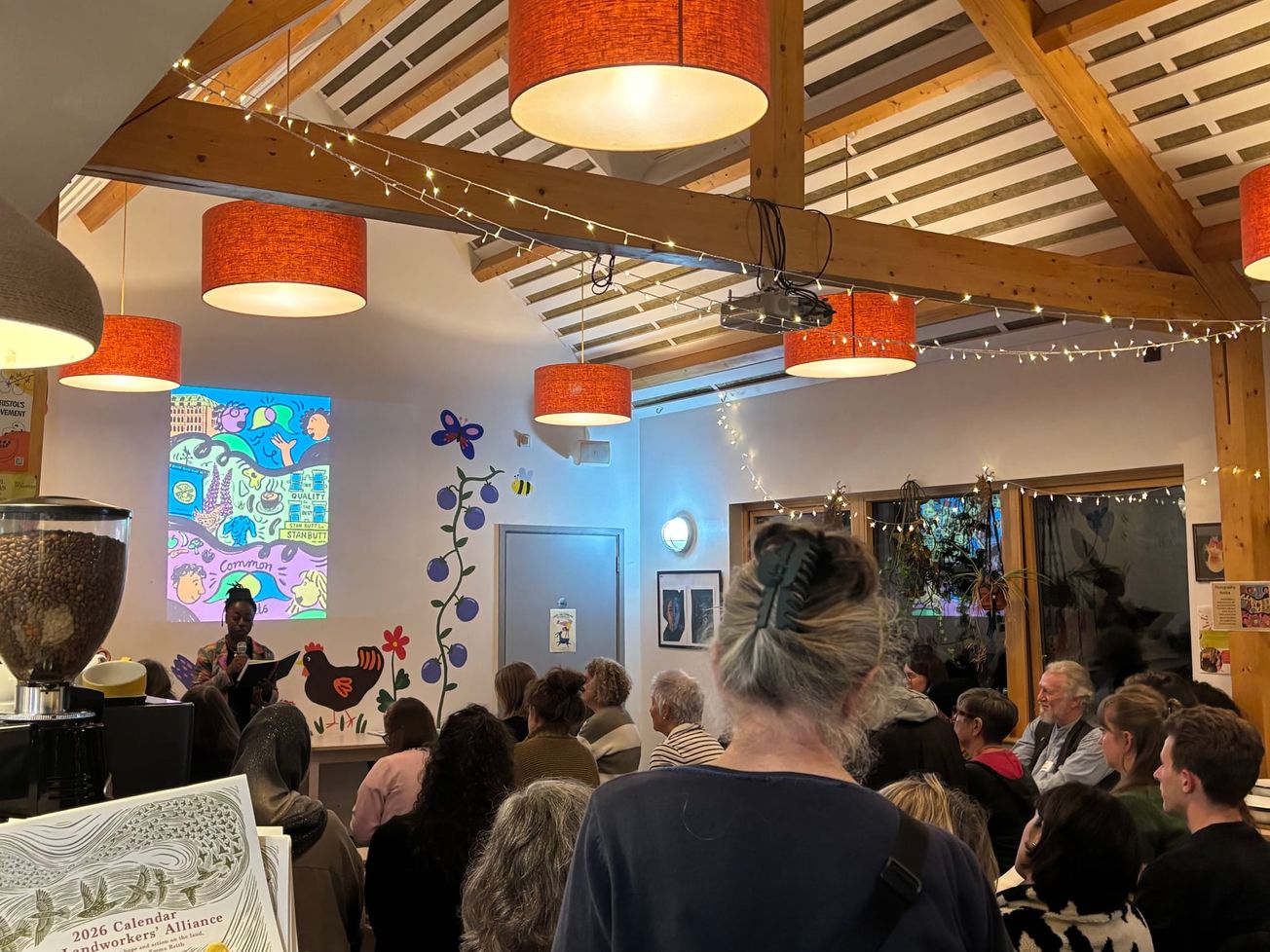
The room was lively, full of all ages, with strangers and families coming together to support and learn from one another. During the showcase two participants of the project, Amber and Alex, commented on their experiences with Common Threads. Alex, a former student at Tobacco Factory, found Leeza’s project through Zoe Gibbons – the project's leading textile artist – and viewed the experience as very enlightening, as he met new people from different cultural backgrounds that he wouldn't have otherwise spoken to. He feels as if 'Bedminster is a place that feels like home, it’s a place where you find community,’ and the space to communicate with others so freely is essential for widening perspective and for growing confidence.
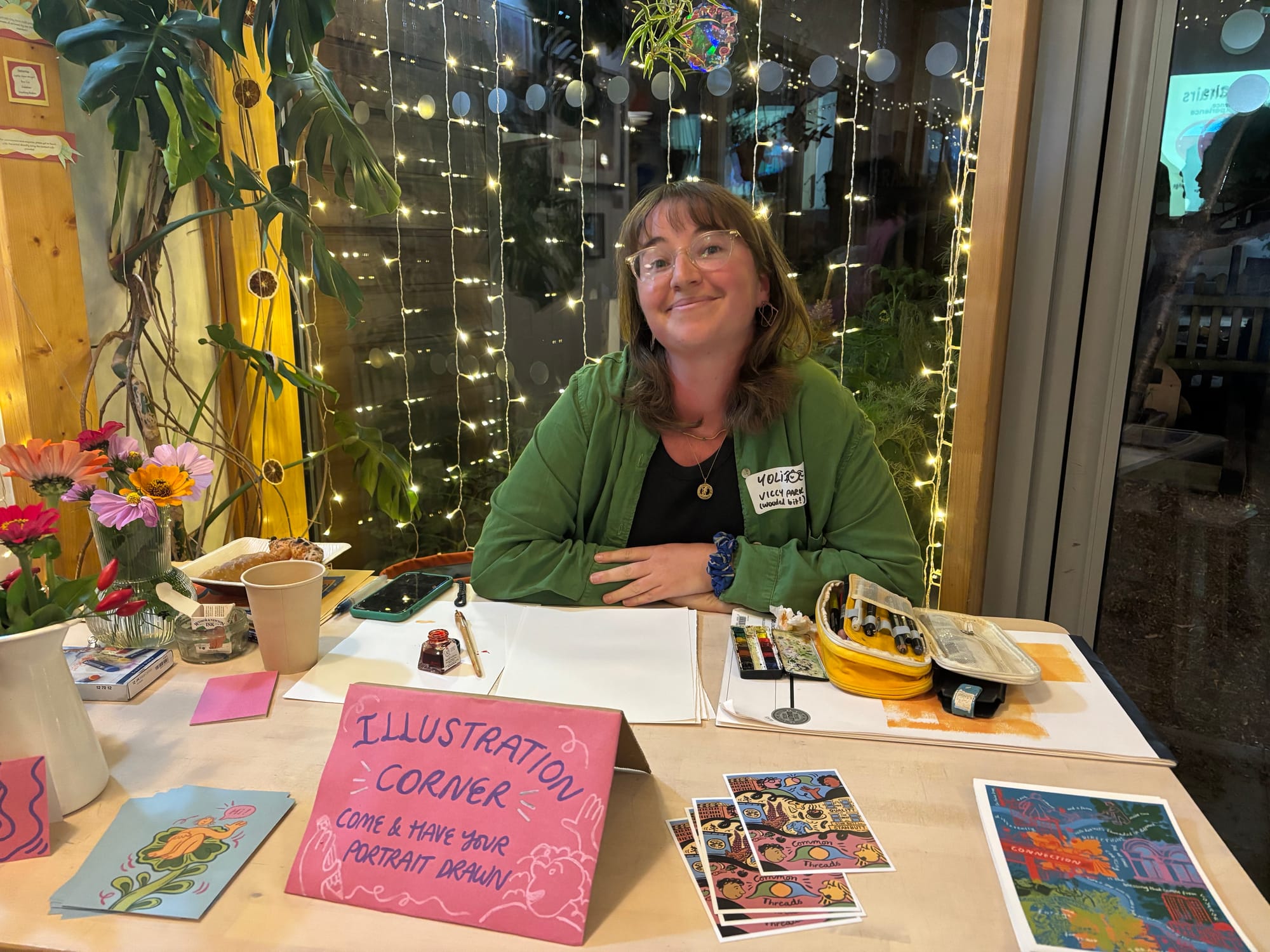
The project involved more visual-based artists alongside Awojobi’s poetry readings. Illustrator Yoli Ward-Streeter and Textile Artist Zoe Gibbons had their own interactive stations at the showcase. A multi-disciplinary artistic approach to the project enhances its inclusive nature.
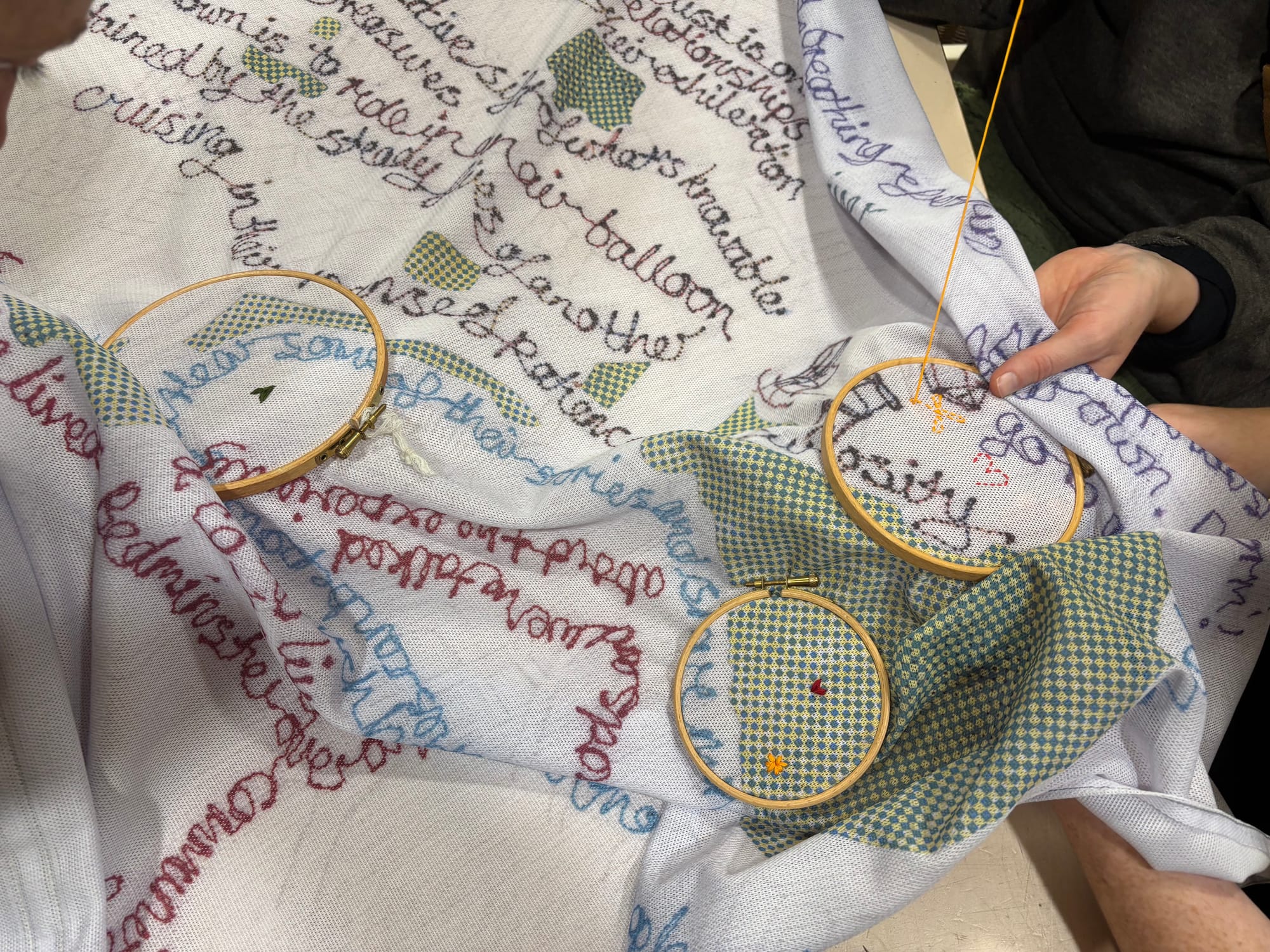
Zoe Gibbons, who specialises in freehand machine embroidery, was approached by Leeza to create some textile based artwork based on the poems she had written during the project.
Her poems are interwoven into the material – a coarse fabric she sourced from scaffolders and building sites – in different coloured threads overlaid on a map of Bedminster. Five chairs are also threaded into the fabric, representing the participants and paying homage to the conversations and memories shared in them. At the showcase, people were invited to stitch places of personal significance into the banner, and the piece will subsequently be displayed at Windmill Hill City Farm for visitors to reflect upon.
The event's second half featured a poetry reading by Leeza. Her poems, from an observant perspective, commented on the nature of life and highlighted the importance of conversation between different age groups: ‘Life is like a swing, a bench, a rocking chair … The rocking chair is a form of comfort for the generations growing up in an age of anxiety.’
I like to believe Leeza views humanity’s importance through the community it facilitates, the social spheres it nurtures amidst change and turmoil. A short film – a product of the project– was played at the end, titled ‘The Apple Tree,’ based on a local pub in Bedminster. The film documented the experiences and viewpoints of the space's regulars. And despite the guy next to me joking to his girlfriend about the ‘state of the place’ (which I also laughed at), these old, weathered buildings have history. Whilst an outsider can gaze upon a mural, or walk into a building and have no sentiments; the people attune to these places – whether newly moved in or settled for generations – have prescribed their familiar spaces with deep meaning.
 Kashvi Cox
It makes us question if there's any ‘true’ definition of the spaces we inhabit. Is it in the crumbling buildings desperate for a plaster, or in the minimalist independent £4.80 coffee spot that opened up down the street? It can be easy to laugh at the cadence of the voices on the bus intercom, but after our three-to-four-year stay, the city's existing communities remain. Their history and memories are entrusted to the stories of its residents.
Featured Image: Epigram / Tylah Hendrickson
Have you visited Bedminster?