By Hana Sakurai Wernham, Second Year, English
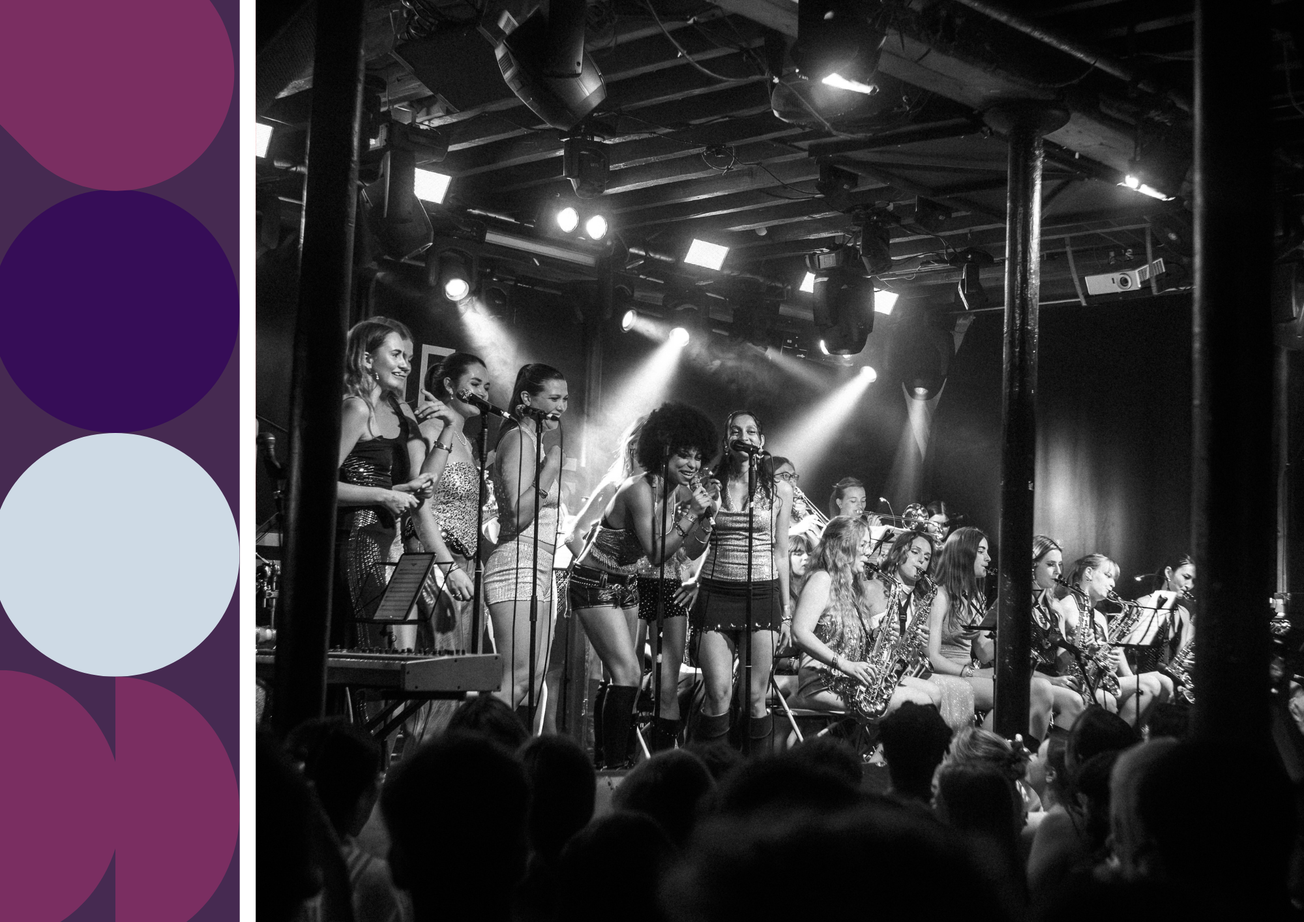
Returning for its fourth year in a row (and eighth overall), Big Band Society and Jazz Funk Soul Society’s love child Soul Divas promises to deliver one of the biggest nights in the jazz calendar, performing everything from expertly student-arranged RAYE tunes to swinging 1930s big band epics.
The event, which began as a JFS charity night in 2018, has since outgrown its familiar domicile of Mr Wolf’s; in 2025, Soul Divas sold out The Fleece, Bristol’s largest independent music venue. This year, Soul Divas returns to The Fleece on the 27th of May, bigger and better than ever. I was hesitant to invoke that promotional cliché, but I have because it is true; Soul Divas 2026 will see an all-female 25-piece band tear through a set of soaring ballads, danceable classics and iconic funk and soul tunes. All this to say it’s not a night to miss.
I sat down with JFS vice president, Soul Divas conductor and keys player Isobel R K Black and saxophonist, gear manager extraordinaire and Big Band vice president Sophie Bloom to talk all things Divas. Speaking on the ethos of Soul Divas, Isobel and Sophie stress that the event is not necessarily a call for women to crawl ‘out from the woodwork’ to get involved in jazz music but rather serves to cast a glimmering stage-light on the simple truth: that women do play jazz.
Sophie says ‘we have plenty of female musicians. I mean, we've had to turn people away because we have so many’. Indeed, the Soul Divas trombone section is five players strong, defeating the commonly held idea that women don’t play lower-end brass. Isobel agrees, ‘we don't need to promote women into music’, then we all chime in at once: ‘we’re already here!’
But women’s presence in jazz music is obscured. Female jazz musicians seem to enjoy conditional visibility – a majority of the genre’s most revered singers are female, and they are put centre stage as the auditory and visual spectacle of musical settings from big bands to soul numbers. But this centrality does not translate into power – female singers are often assumed to be less musically competent (‘they just turn up and sing!’), while their female instrumentalist peers are completely sidelined.
This paradox of visibility is not limited to jazz music, of course. As in classical music, the opera cannot function without its diva who sings the most virtuosic arias and commands the most attention – yet she always dies at the end. The subversively and appropriately named Soul Divas, then, refuses the fate of the visible female musician. With arrangements composed by women, as well as being organised, conducted and performed by women, the visibility of women extends beyond spectacle. The Soul Diva certainly does not die at the end of the night!
Visibility in jazz music is not some abstract, political manifestation of access but an issue of the physical, visual and auditory. The JFS weekly jam night at Mr Wolf’s (which every UoB student has surely attended at some point or another) demonstrates that visibility is physically negotiated. You must push past the swathes of drunk attendees, get the attention of a jam manager and then get up on stage. When it comes time to solo, you must be the first to say you will take it. To be seen and heard on stage requires a self-confidence found more often in men than women. Women are conditioned to diminish themselves; men move through the world comparatively less inhibited.
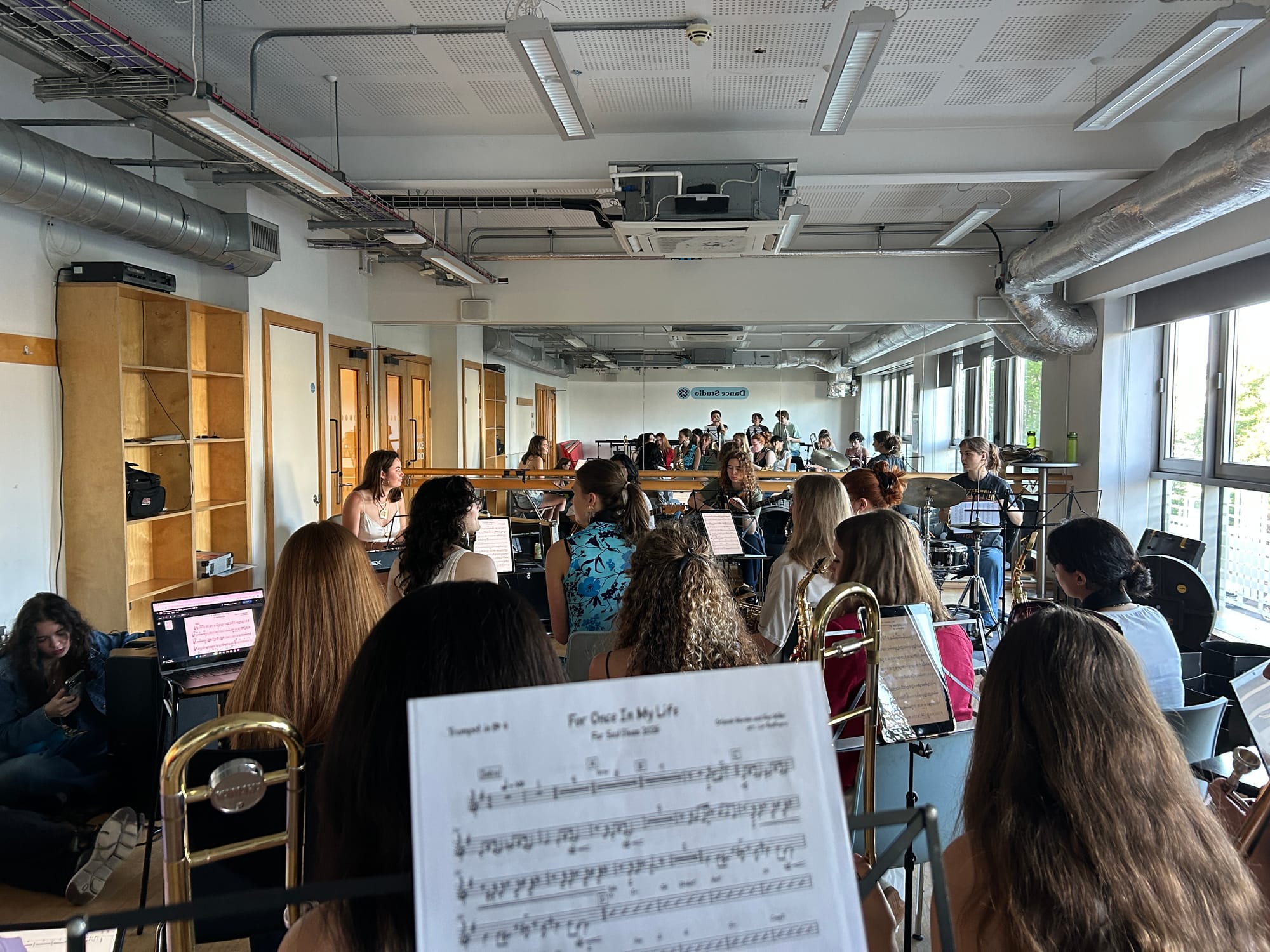
Even at Soul Divas rehearsals, which I can attest to having an entirely non-judgemental atmosphere, most players will preface their solos by saying they’re going to be bad before even having played them. What a remarkable thing to say before playing a completely improvised solo!
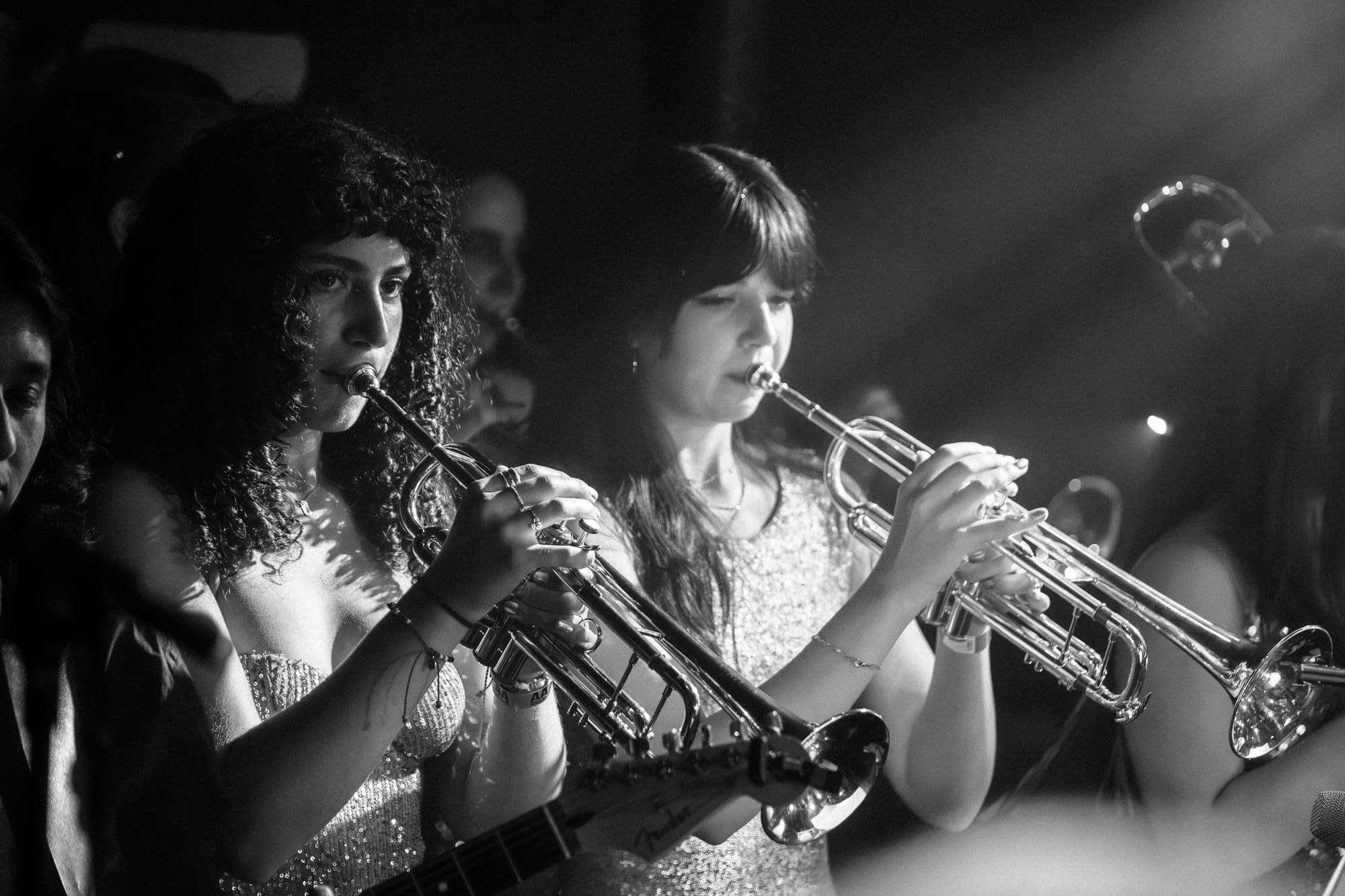
Trumpet player and JFS jam manager Lana Shaw ran soloing workshops across the rehearsal period, seeking to increase our confidence in our aural skills. She taught us to play the head to Lee Morgan’s ‘Personality’ by ear, hoping that ‘it would show the girls that they could trust their ears and not need chords or music in front of them’. Lana added, ‘I feel especially lucky to have had my mum show me what it looks like to be a confident horn player and take up space onstage through soloing’. Sometimes all it takes is someone to look up to – Sophie shared with me that seeing Lana and Eleanor Jeffery (Soul Divas and JFS tenor saxophonist) on the stage at Mr Wolf’s made her finally feel like ‘there was a space for me there’.
 Hannah Roberts
All proceeds from Soul Divas are going to Refugee Women of Bristol who provide services including lunch clubs and ESOL classes for refugee and asylum-seeking women. Contributing to a cause was a ‘big deal’ for the committee. Sophie told me that ‘everybody who's buying a ticket is directly contributing to helping women in the world, whilst also supporting women doing what they love, and I think that's really important for the public to get involved in.’
Not only will buying a ticket be contributing towards a great cause, Soul Divas is ‘probably going to be one of the best nights in jazz music [in the Bristol calendar]’ Sophie tells me. Isobel cuts in, ‘let’s not be a woman about this: it will be the best night!’
Tickets are out now for Soul Divas at The Fleece on Wednesday the 27th of May 2026.
Featured image: Isaac HowieWill you be at Soul Divas 2026?