By Lilja Nassar, Comment Subeditor
When fondly recalling the days of my youth, my nostalgic, rose-tinted view is frequently marred by traumatic memories of my U1 days as a fresher in North Village. Having only stayed at Churchill Hall for two months before transferring to Goldney Hall, I am still haunted by my brief stint with the daily bus to and from campus. Our little love affair was brief but memorable, and tragically one sided. I begged and I pleaded, waited and waited, soaked in the rain for the bus to come pick me up, but it never showed. I felt I was never important enough for a timely pick-up, and every experience I shared with the U1 was tumultuous and left me contemplating: surely this isn’t how it’s supposed to be?
After a tearful recount of my experience to my closest friends, I came to find out that the aficionado that goes by 'U1' has left deep scars in many others. That two-timing dick. What’s more, I’ve come to find out that every bus on the market in Bristol seems to be of the same, demonic kind.
It's no secret that every student relies on public transport to some extent, especially in a city so unfriendly to cars, and largely, bicycles. If you aren’t to walk, then you are to take the bus. Though many of our first experiences with Bristol’s bus services have been with the character-building U1, many other services are also popular amongst the student population. The University of Bristol currently only subsidises travel for students in halls of accommodation in Stoke Bishop, with them having ‘received a U1/5/77 Academic Year bus pass for 2025/26.’ This is exceptionally disappointing considering all those living in first-year halls used to be offered a free bus pass.
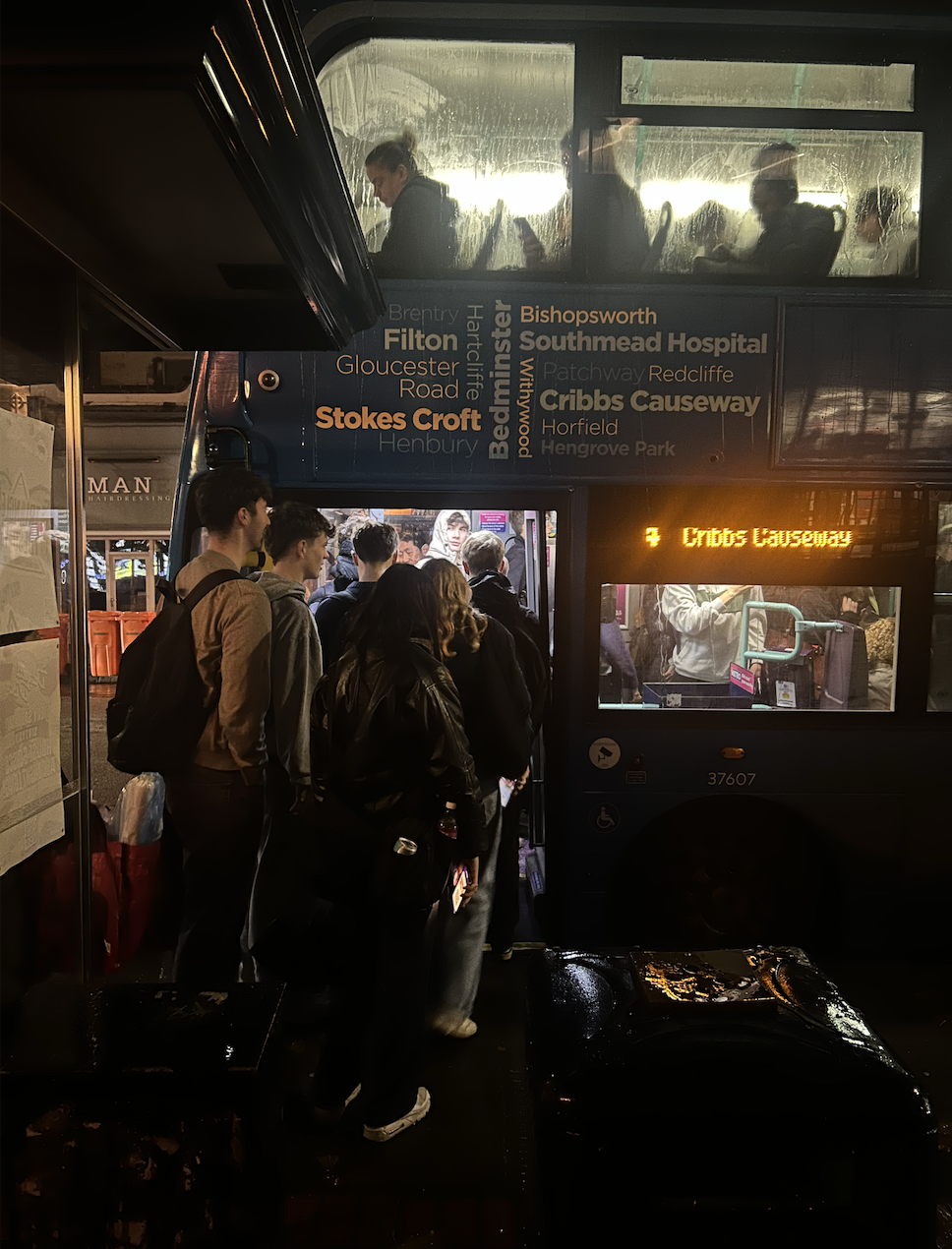
This is where the problems arise; when buses are consistently late, students left high and dry by the bus stop are missing out on not just their lectures and seminars, but their other commitments. The unreliable schedules are most detrimental when it comes to exams, which are not so easily made up for. Many students end up having to move a significant distance away from university buildings, especially following the rising cost of living in Bristol (particularly in central Bristol).
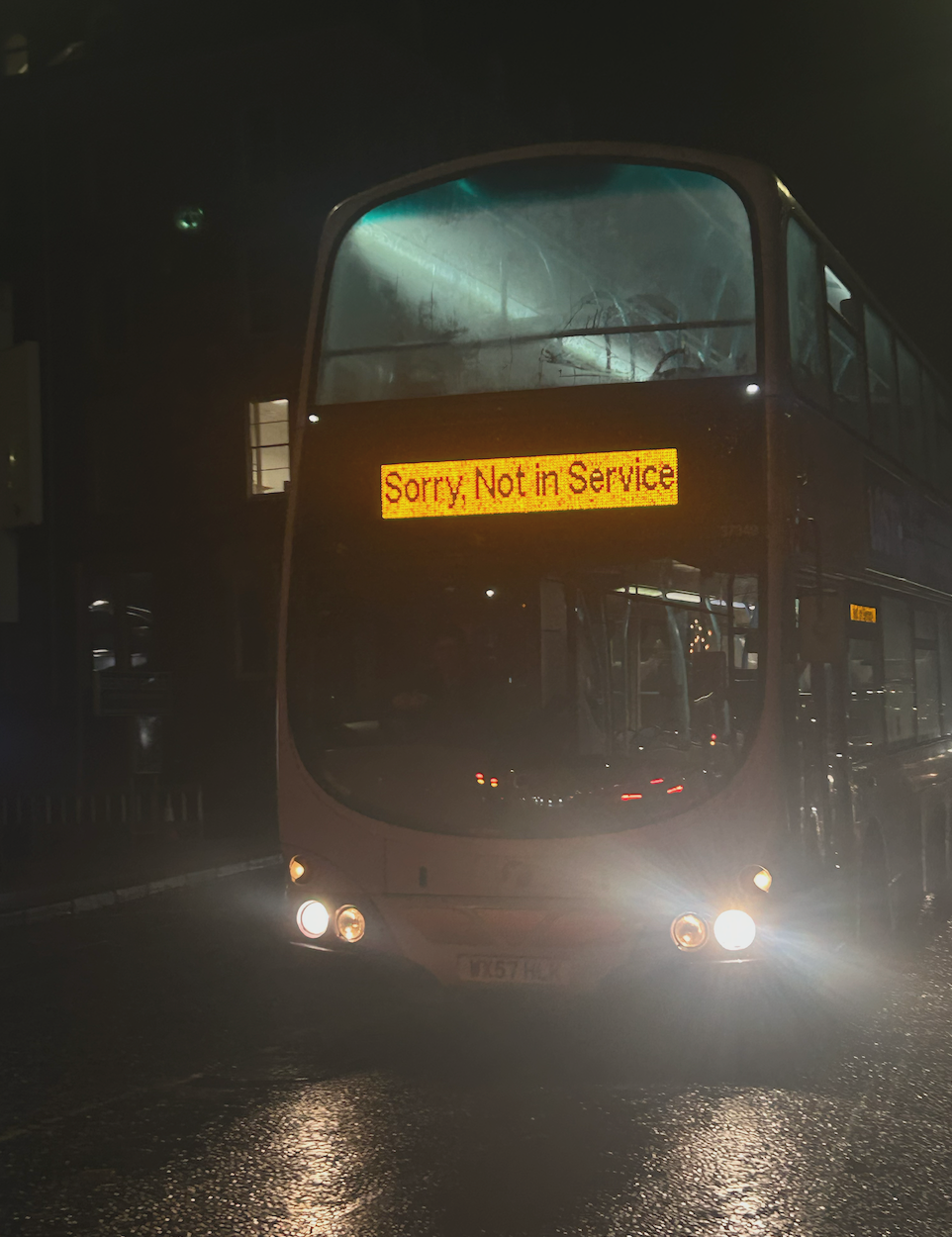
Many cancellations are last-minute, and what’s worse is that they’re often not reflected on bus-tracking apps which many students rely on. Nothing comes without impact, and many of these last-minute bus cancellations result in attendance penalties, which cause a further strain on students’ mental health. Inconvenient schedules, such as limited night-time services, neglect students who require a bus service to get back to their house after a night out – quelling the night before it's even started. Although these services do exist to a degree, their coverage should ideally be more thorough. Many of my friends have had to miss out on social events in the evenings - not out of choice - but out of a lack of safe, reliable transportation back to theirs.
'With the state of Bristol buses, it may no longer be a good judgment to commit to an annual bus pass'
Not only do students have to start budgeting for extra time in the mornings in the case of a bus cancellation, now they must start budgeting for the bus itself. Despite their poor service, bus prices have inflated just as much as their egos. Bristol Live reported in July 2024 that 'Student and Young Person tickets across all zones will now only be discounted by 10% rather than the current 20% and will only be available through the First Bus app,' a change which came into effect later that month. The cut in the student discount for bus tickets, especially when their costs add up, is proving them to be a naïve and unreasonable exploit when the chances are higher that you won’t find a seat than that you will. Standing in the overcrowded U1 back as a fresher was even more humiliating when it seemed that the driver had a personal vendetta against you and would drive so choppily it would be a miracle if you did stay standing the whole ride. With the state of Bristol buses, it may no longer be a good judgment to commit to an annual bus pass.
Ironically, our so-praised eco-friendly city of Bristol is driving its habitants towards driving cars. Despite being so hilly, and awfully designed for driving, many students choose to bring their cars from home to combat the deteriorating public transport system. The rise in cars as a main mode of transport has contradicted Bristol’s climate goals. To give credit where credit is due, Bristol City Council is focusing efforts on improving infrastructure to accommodate a better public transport system, however the interim period is still frustrating for many students.
It was common and easy for my friends and I to blame bus drivers for the frequent delays we were experiencing, and the generally poor running of bus services. It’s important to note, however, that wider, systemic issues are what to point your finger at. The public transport system has been historically underdeveloped in Bristol, although leaders across the West of England have recently 'welcomed more than three-quarters of a billion pounds set to be invested in transport projects in the West' in June of this year, raising our hopes for a much-needed reform being on the horizon.
 James Lewis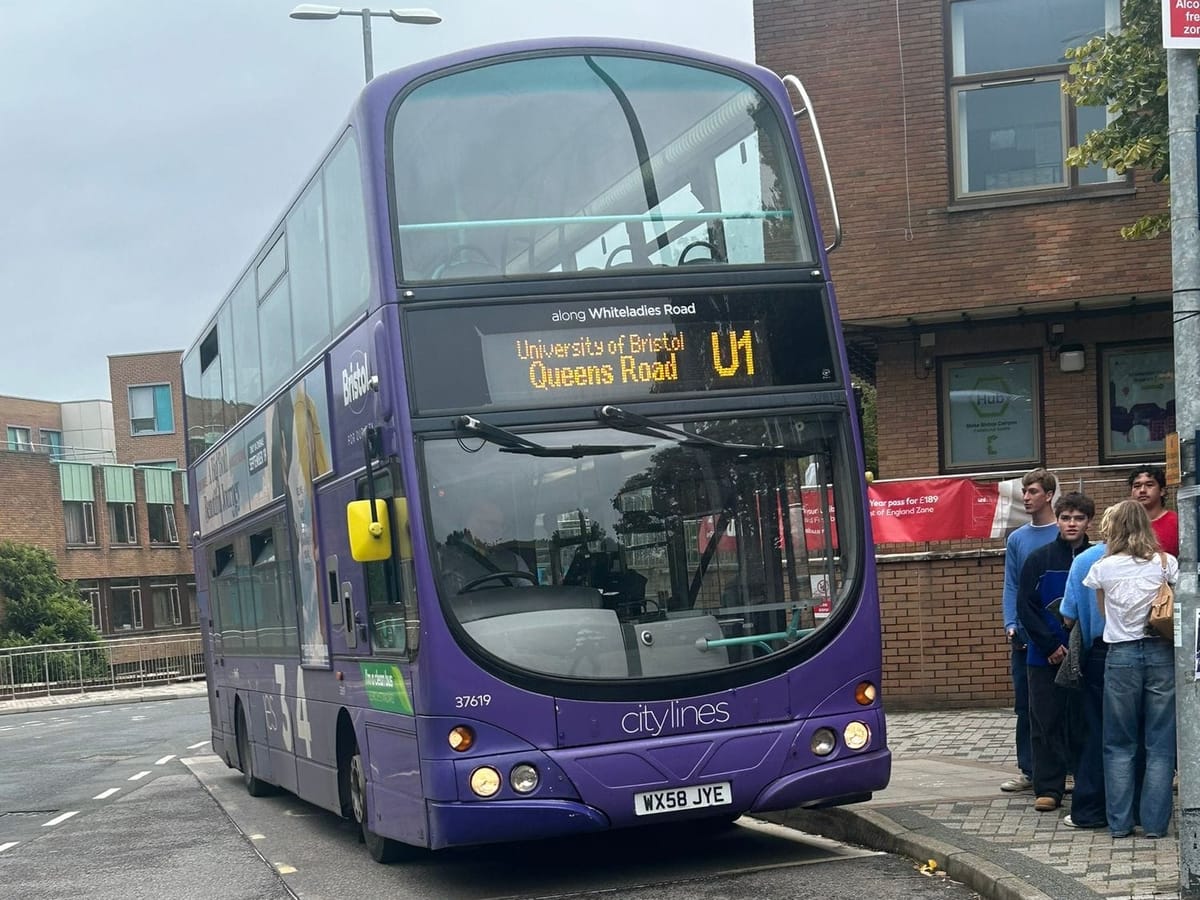
Driver shortages are a nationwide issue, however particularly prevalent in Bristol due to the high cost of living. The BBC reported in September of this year that 'More than 1,000 drivers working for First West of England rejected what they called an "unsatisfactory" pay offer' in Bristol earlier that month. The stress of not running on schedule due to various factors, for instance issues with the vehicle, can result in rash departures and/or missing out bus stops entirely to get back on track. Acting as agents of a less-than-ideal public transport system, drivers are rarely to blame for your frustrations (so always remember to thank your driver!).
Bristol’s public transport system needs to change – subsidised student fares need to exist for a wider range of bus services, better night-time and weekend/holiday coverage must exist, and collaborative efforts between the universities in Bristol, Bristol City Council, and transport providers must be strengthened.
Featured image: Sam Couriel / Epigram
Have you ever been late to a lecture because of a bus cancellation?
Corrections:
The original copy referred to First Bus as a monopoly. This has now been corrected.
The original copy said that the public transport system was 'underfunded', the West of England has recently received substantial funding to improve its public transport system. This has now been corrected.
The original copy said that due to driver shortages, bus drivers are 'having' to pick up extra shifts, and are 'expected' to keep services running on time; it has been clarified that they are not under any obligation to do so. This has now been corrected.