By Beth Robinson, News Reporter, Cara Hene, News Digital Editor, Lenny Osler, News Reporter and Sofia Lambis, Deputy Editor
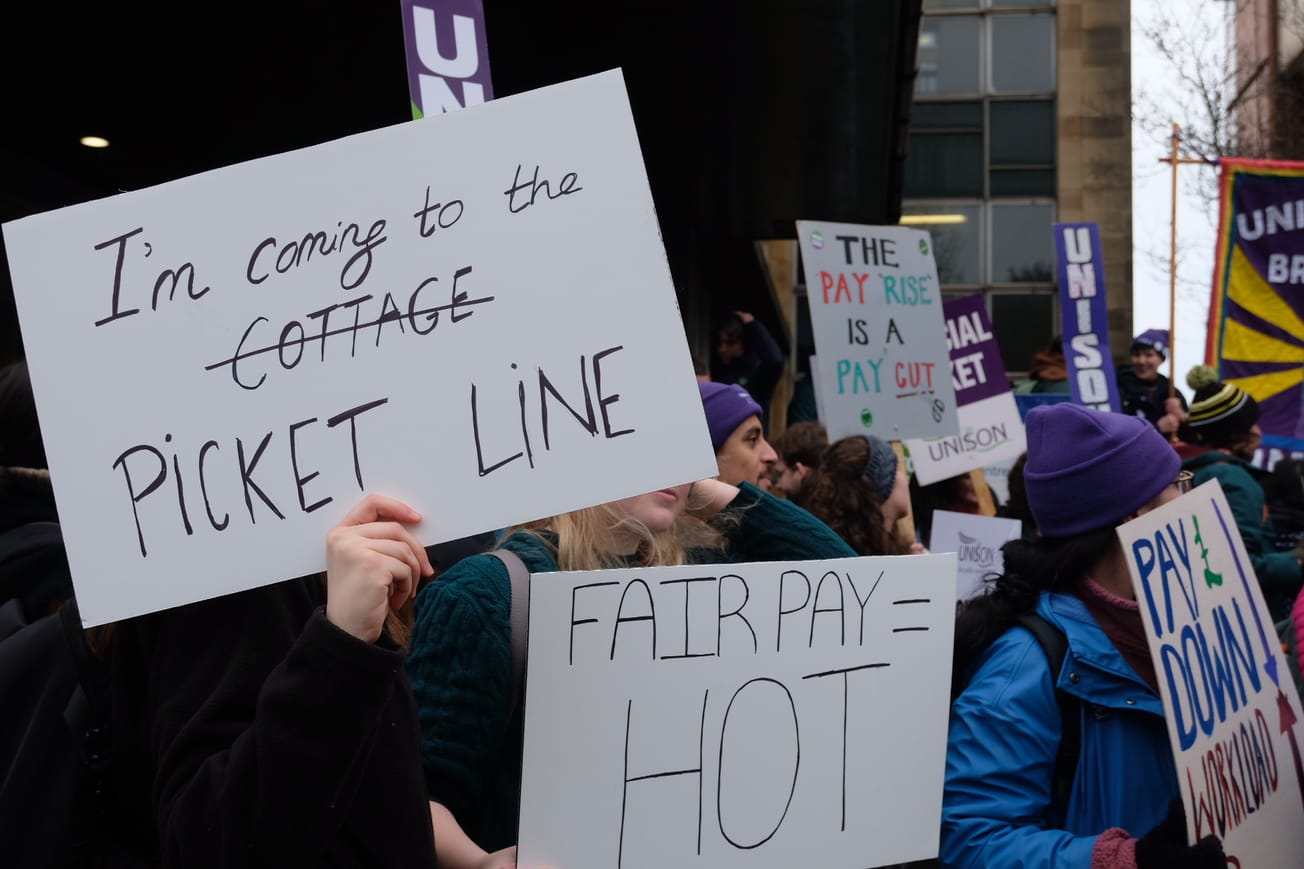
On February 10, UNISON’s Bristol branch began five days of national action over pay which coincided with University of Bristol’s winter graduations.
Strikes are also taking place today and Thursday February 12, which will coincide with the Workplace Day of Action for Palestine.
According to a press release from UNISON, one of the UK’s largest trade unions, those striking are professional services staff, which includes administrators, library staff, IT services, and student support.
Action was sparked after the Universities and Colleges Employers' Association (UCEA) imposed a 1.4 per cent pay point increase, which was branded ‘insulting’ by UNISON and described as a ‘real terms pay cut of at least 2.5 per cent.’
Regarding the 1.4% UCEA increase, a University of Bristol spokesperson said, ‘We cannot unilaterally change this award.’
UNISON balloted their members in November 2025 - on a 60 per cent turnout, the Bristol branch voted by 92 per cent to strike. That was the second highest percentage across all British universities, according to UNISON co-Branch Secretary Nathan Street.
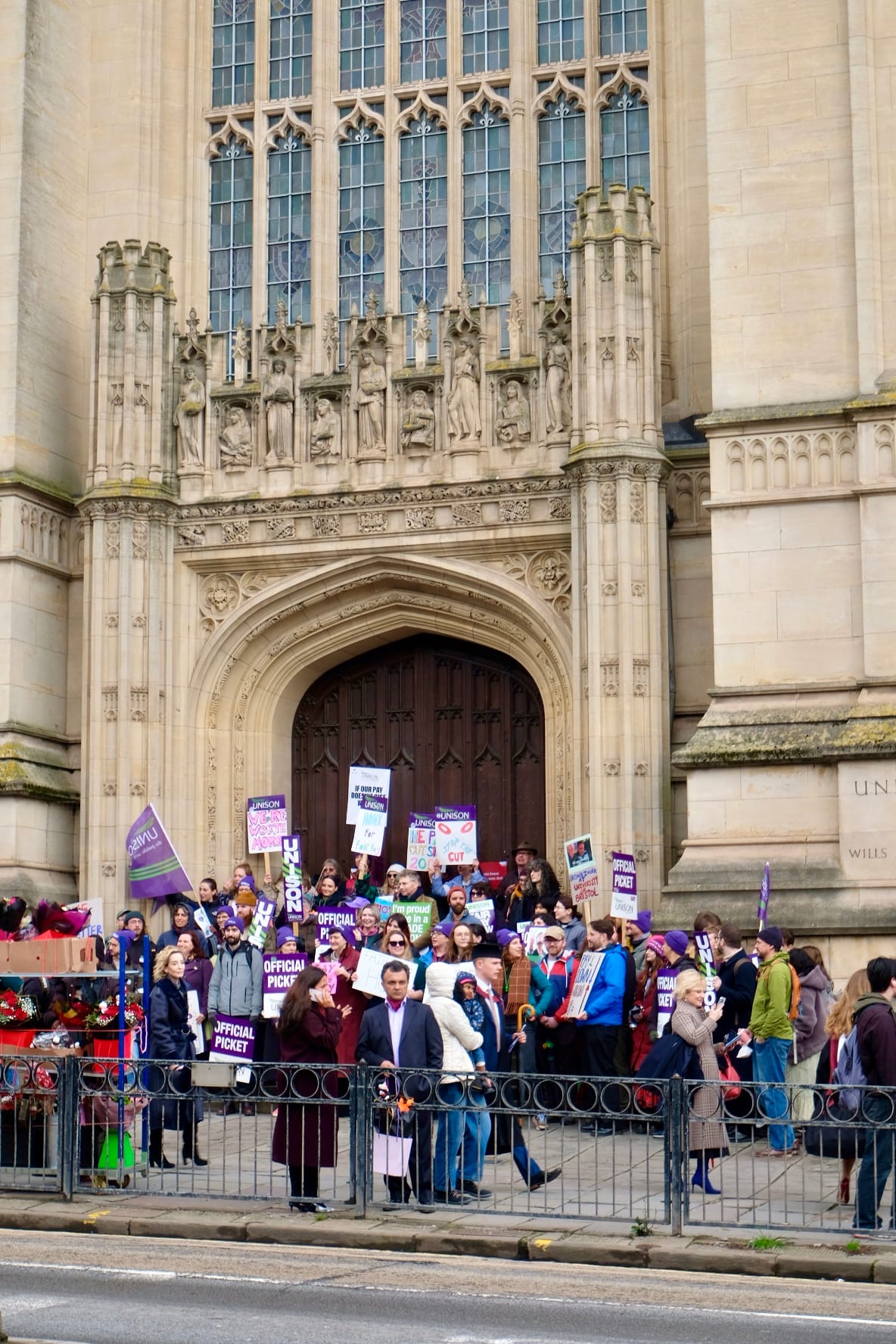
By 9.00am there were more than 30 UNISON members outside of the ASSL and around 50 staff and students outside Wills Memorial Building at 11:30am.
Many strikers remained outside Wills Memorial Building until late afternoon, disrupting the photograph opportunity of those graduating that day.
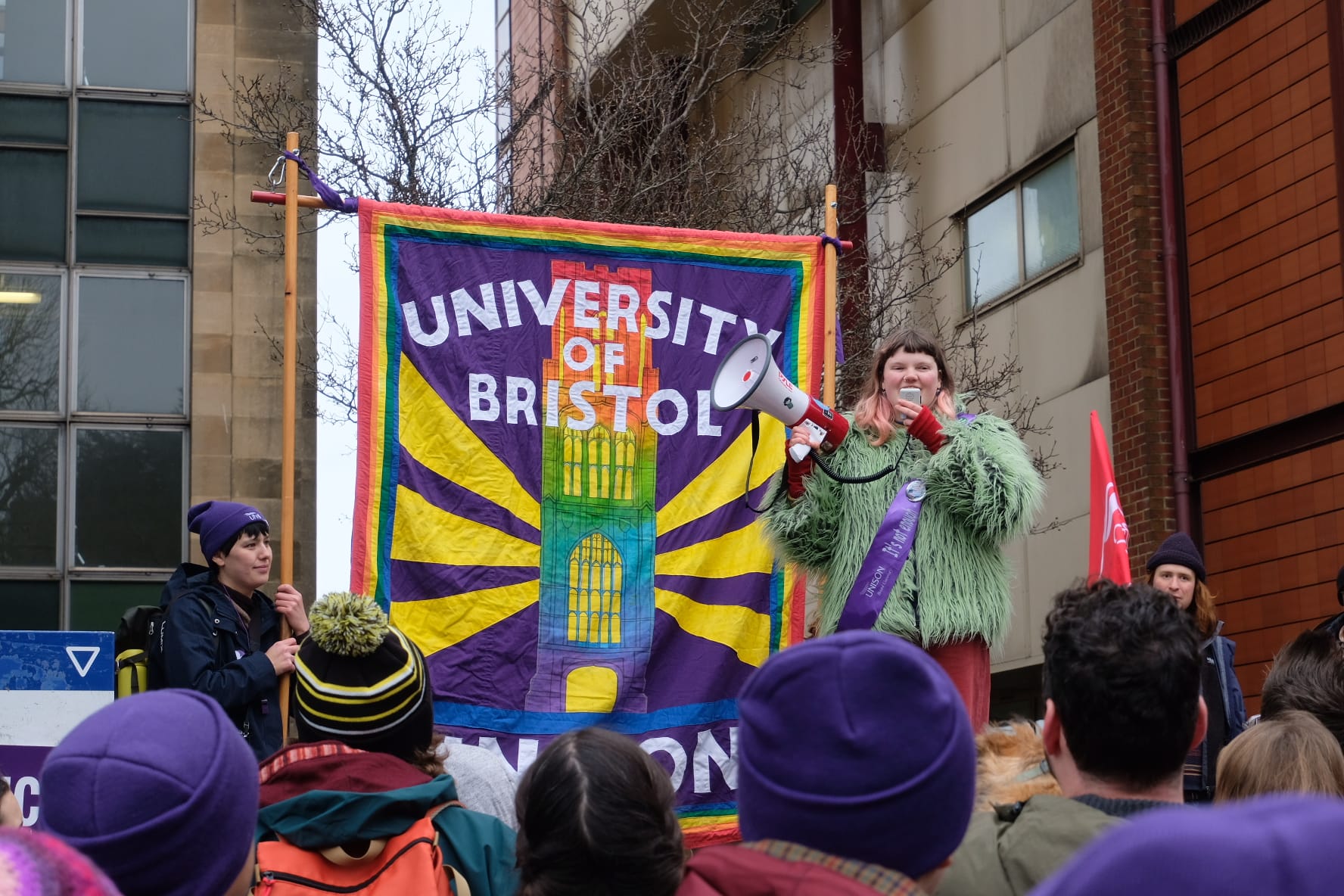
The first day of action culminated in a rally held between 12.00pm and 13.00pm outside Senate House, with over 100 attendees and speakers from UNISON, Unite, UCU, staff, and student representatives, including the Socialist Society.
Rachel, a Student Administrator, said to Epigram that ‘It’s a shame that we’ve got to this point, but I’m proud to be striking today.’
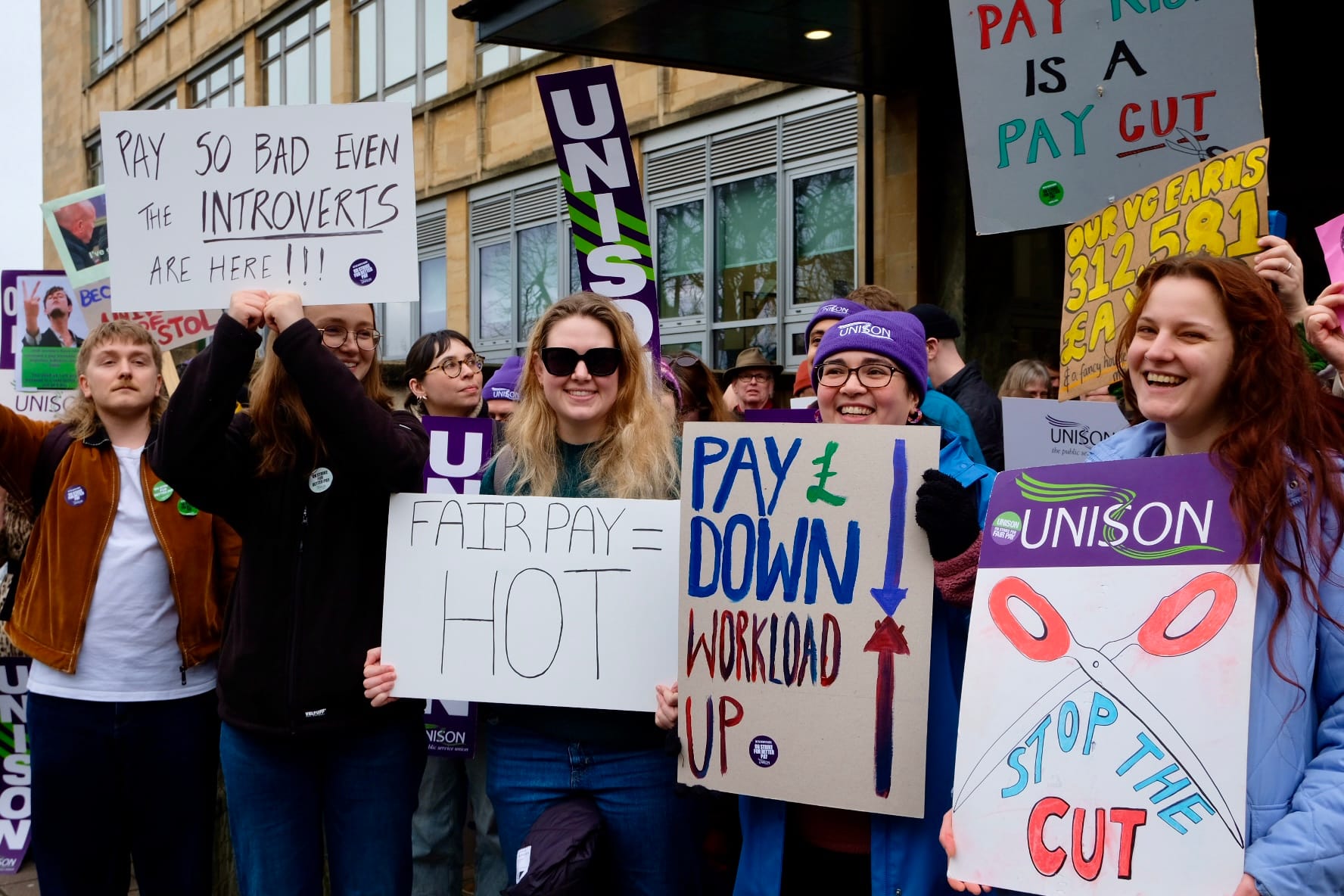
Co-Branch Secretaries Nathan Street and Alexander Kidd said, ‘We have been asked to work too hard for too long with workloads rising as wages drop… Enough is enough.’
For Abbi Dayre, a senior student administrator in the Business School and UNISON workplace representative, this point came when she realised that it would be cheaper for her to quit her job than put her child in nursery full-time.
Dayre said to the crowd outside Senate House, ‘We are admin, support staff, timetabling, library services… We are the people who make it possible for those students to study here. We are the University.’
 Ariella Greenfield
Street said that while he acknowledged the UCEA pay award cannot be changed, other universities such as the University of Oxford and those located in London offer staff an additional ‘weighting.’
This could be a way for the University of Bristol to ‘get around’ the national pay offer, Street suggested.
UNISON co-Branch Secretary Alexander Kidd also spoke at the rally. ‘Well done for deciding to take the power back into your own hands to defend your own rights,’ he said.
Throughout the day, strikers handed out flyers titled ‘a real pay rise for staff’ issuing their demands:
‘An increase on all pay points of at least RPI (as of August 2025) + 3.5 per cent, or a flat rate increase on each employee spine point of at least £2,500 – whichever is greater.’
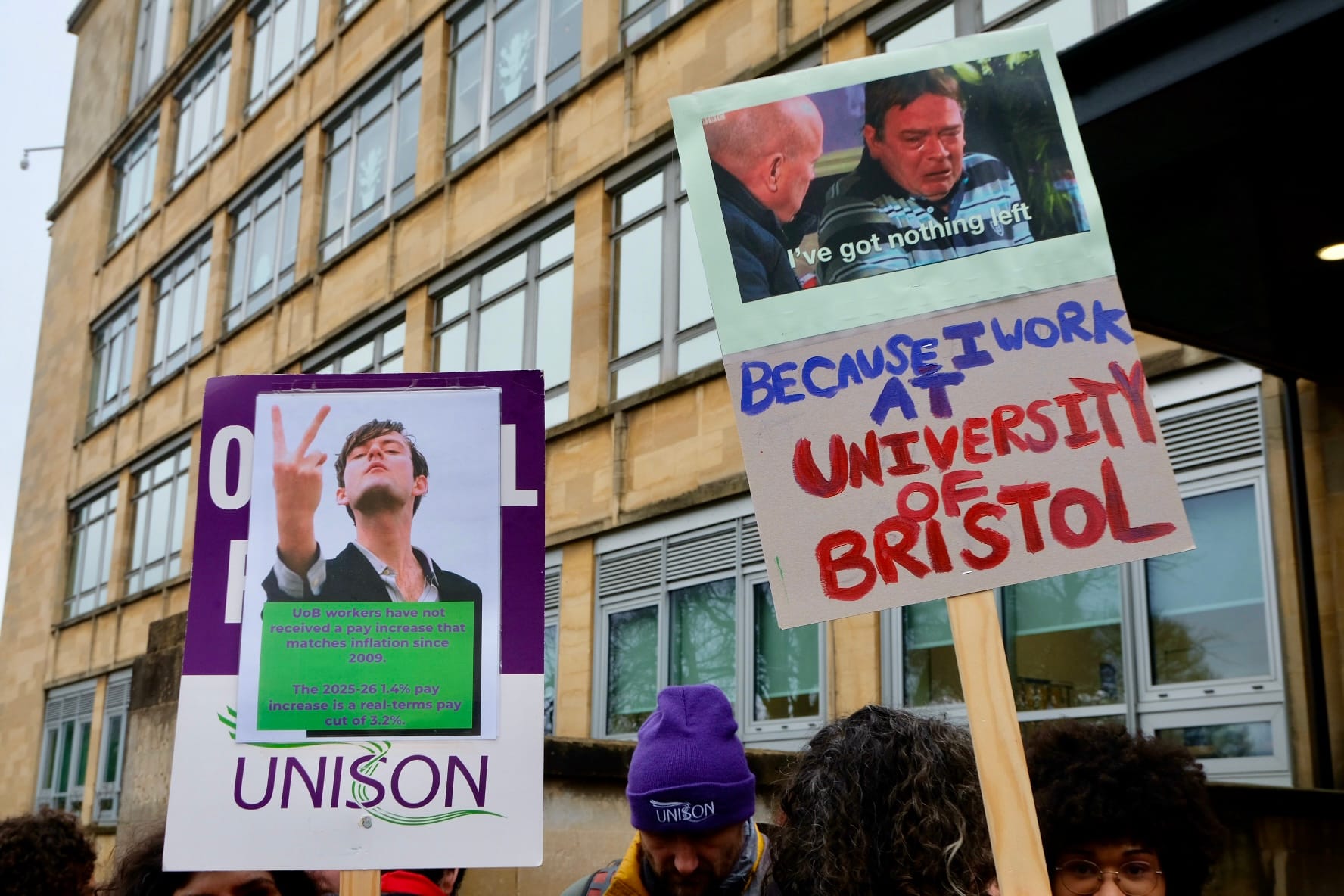
Epigram spoke to a member of the Wellbeing team who said:
‘We've gone through three restructures over five years. Staff need to have security in their jobs so that we can provide security for students as well.’
One striker outside Senate House lamented the fact that to cover striking staff, the University had brought in a third party security company to the ASSL who were not library trained.
She added that ‘the money always seems to go to you and new developments like Mumbai and Temple Quarter - not the staff, who are the backbone of this university.’
 James Lewis
UNISON claims Vice-Chancellor Evelyn Welch’s salary is 847 per cent higher than the average staff salary, adding that senior leadership ‘consistently responds to financial pressure through real-terms pay cuts, recruitment freezes, and restructures resulting in job losses and increased staff workloads.’
Strikers spoke to Epigram about their wellbeing, with a member of Library Services saying ‘The University always says it cares about our staff’s wellbeing but ultimately, we can’t be well if we can’t pay the bills.’
A Student Administrator told Epigram their message to students would be: ‘We are doing our best to support you […] so you have an amazing experience throughout your degree, but we can’t do that if we are sick and worried about how we are going to afford our rent. We need better pay to support our students better.’
Speaking to Epigram about the remainder of the week, Alison, a Student Administrator, claimed ‘The Vice-Chancellor has said this shouldn’t cause too much disruption but I think we’re here to show just how much it can cause.’
Further action is also scheduled for March 10, and March 11, the latter two dates coinciding with the University of Bristol’s Post-Graduate Open Day.
A University of Bristol spokesperson said:
‘We respect the rights of our staff to act where they feel strongly about issues which affect them, but are disappointed that colleagues represented by Unison have voted to take part in this industrial action. The action relates to the 2025-2026 national pay award negotiated by the Universities and Colleges Employers Association (UCEA) on behalf of all participating institutions. We cannot unilaterally change this award.’
‘While these are challenging financial times for the University and wider sector, we recognise that investing in our staff is a priority. We therefore ensure that staff pay continues to be as competitive as possible within the sector and continue to pay the Real Living Wage.’
‘Mindful of the importance of supporting our students' learning and wider experience, we have robust plans in place to ensure our support services continue to operate and be accessible. We do not anticipate this strike action will impact teaching and assessment.’
 Natalie Payne
 Keira Guy
Featured image: Epigram / Ellen Reynolds