By Tom Henworth, Second Year, History
Although the cynical observer may claim that the Halloween we know today, with a vast plastic industrial complex behind it, is merely a relic of prior communitarian and religious traditions hijacked by western decadence. A ghost, if you will, of activities rooted in spirituality and the human experience now reduced to a commercialised extravaganza. Should we dismiss Halloween as empty consumerism? If so, is there anything that can be done about it?
I think I speak for many people, when I declare my affection for Halloween. In its modern conception - trick-or-treating, pumpkin carving, and now the partying - it is essentially a festival of hedonism. From that perspective, what’s not to love?
Rather embarrassingly for a history student, who apparently prides himself in being a scholar of the past, my understanding of the origins of Halloween prior to penning this article was extremely limited. In fact, the sole reason I had even the vaguest idea of its Celtic origins was from an advert promoting tourism in Ireland. Now not to acquit my ignorance, but it does speak of the stark disconnect between the modern Halloween and the traditions from which it stems.
The tourism advert, claiming Ireland the birthplace of Halloween, was not wrong. The festival of Samhain, originating in Gaelic Ireland, is the earliest we can trace the traditions that have since moulded into Halloween. However, it's highly likely that even this ancient tradition evolved from Neolithic practices, which now have been lost to time. Samhain constituted the celebration of the end of harvest and the beginning of winter, held halfway between the autumnal equinox and winter solstice, on the first of November. Additionally, it was a liminal festival, in which the veil between this world and the Otherworld was said to be at its closest or even blurred. This allowed contact with spirits and the dead, much more reflective of the ghoulish culture of our Halloween, leading the lighting of bonfires and costumes to ward off spirits.
'Yet the returning ancestor or roaming spirit were as real to them as the trick-or-treat bucket and plastic skeleton are to us. Perhaps it is we, with our almost satirical renditions of once serious ritual observance, that have made a mockery of them?'
That said, the essence of Samhain could not be more different from the Halloween of today. It was not in any sense hedonistic. Most obviously, the ritual activities which constituted it were made from religious devotion; people dressed up not for a good craic but out of real fear of rampant malevolent spirits. It's perhaps easy for us to look back mockingly on those people and characterise their beliefs as crude and absurd. Yet the returning ancestor or roaming spirit were as real to them as the trick-or-treat bucket and plastic skeleton are to us. Perhaps it is we, with our almost satirical renditions of once serious ritual observance, that have made a mockery of them?
The evolution from Samhain into Halloween was multifaceted. It entailed the miscellaneous assimilation of Samhain with various Christian practices; ‘All Hallows’ Eve’, All Saints’ Day’ and ‘All Souls’ Day’, which together constitute Allhallowtide. For many Christians, despite the incremental secularization of some of its characteristics, it remains an important aspect of their faith to this day. In the ninth century All Saints Day was officially declared by the Western Church to fall upon the first of November, coinciding with Samhain; it is claimed that this was a result of the influence of Irish missionaries. The Christianised Allhallowtide remained eschatological, commemorating the dead in both saints and the souls of the recently deceased. However, as the festival became more formalised across Europe a broad array of practices developed idiosyncratic to the area in which they evolved. This was exacerbated by the protestant Reformation by way of its rejection of certain theology that were crucial to Allhallowtide. Many of these subsequently went on to form part of the composition of Halloween; the baking of soul cakes in Bavaria, jack-o’-lanterns and costumes to ward off vengeful ghosts (sound familiar?), and divination across Britain and Ireland. The latter was particularly prevalent in Celtic speaking areas as a direct echo of its pre-Christian origins.
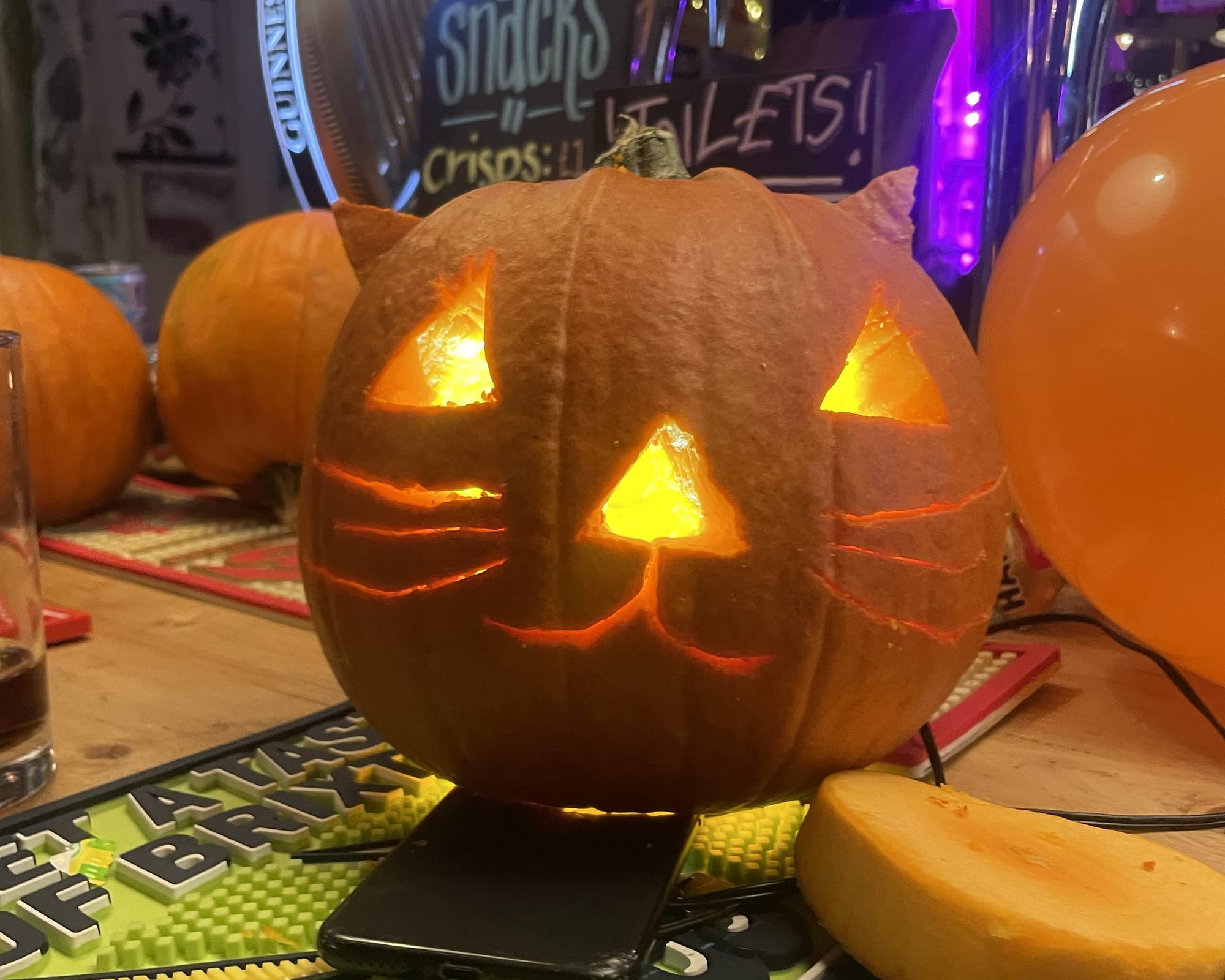
It was, however, Irish and Scottish immigration to the fledgling United States of America that can be cited as the pivotal factor in propelling the diverse first of November customs of Europe into a commercial enterprise. Though activities emblematic of modern Halloween such as pranks and pumpkin carving had originated outside of the continent at an earlier time, they were iterated into mainstream public consciousness centrally in America. This process began in the early 1900s, with the production of Halloween-themed postcards and paper decorations, and then upshifted with advancements in printing technology and mass production that enabled Halloween merchandise to become more affordable - for example relatively inexpensive materials such as crepe paper began to be used in costumes.
 Meg Pantry
The current reality is that Halloween has now proliferated into a brand of economic enormity, only surpassed perhaps by Christmas. It extends to film, food and even tourism. As an illustration of this, a 2023 article published by the BBC reported that some haunted houses, as an attraction alone, extend to six-figure sums. The National Retail Federation in America, after a consumer survey in 2024, announced that they expected total Halloween spending to reach 11.6 billion dollars in that year alone. While undoubtedly a far cry from its humble genesis on the Emerald Isle, is all this actually bad? One might suggest that, fundamentally, the essence of Halloween as a communitarian event has not been lost at all. While the emphasis may have shifted from explicitly religious to more secular activities, Halloween serves as a vessel for human interaction nowadays just as much as it did during Celtic times. The great communal bonfires and feasts of Samhain ultimately brought people together, as costume parties and trick or treating do to this day.
Ultimately, the question of Halloween’s evolution is also a question of humankind’s evolution. As societies have been shaped over time, their cultural expressions have changed too. One may, with equal validity, claim that this is both a good and bad thing. Halloween’s transformation was largely inevitable; it may, in all probability, continue to evolve again in the future. Perhaps the exigencies of a future society, even one not so distant with the pressures of pollution threatening to render the synthetic underbelly of the Halloween economy untenable, could result in it reverting somewhat into a pre-industrialised form. Though maybe only the Celts, aided by Samhain divination rituals, had a certain answer to the future of Halloween.
What intrigued you most about Halloween's evolution?
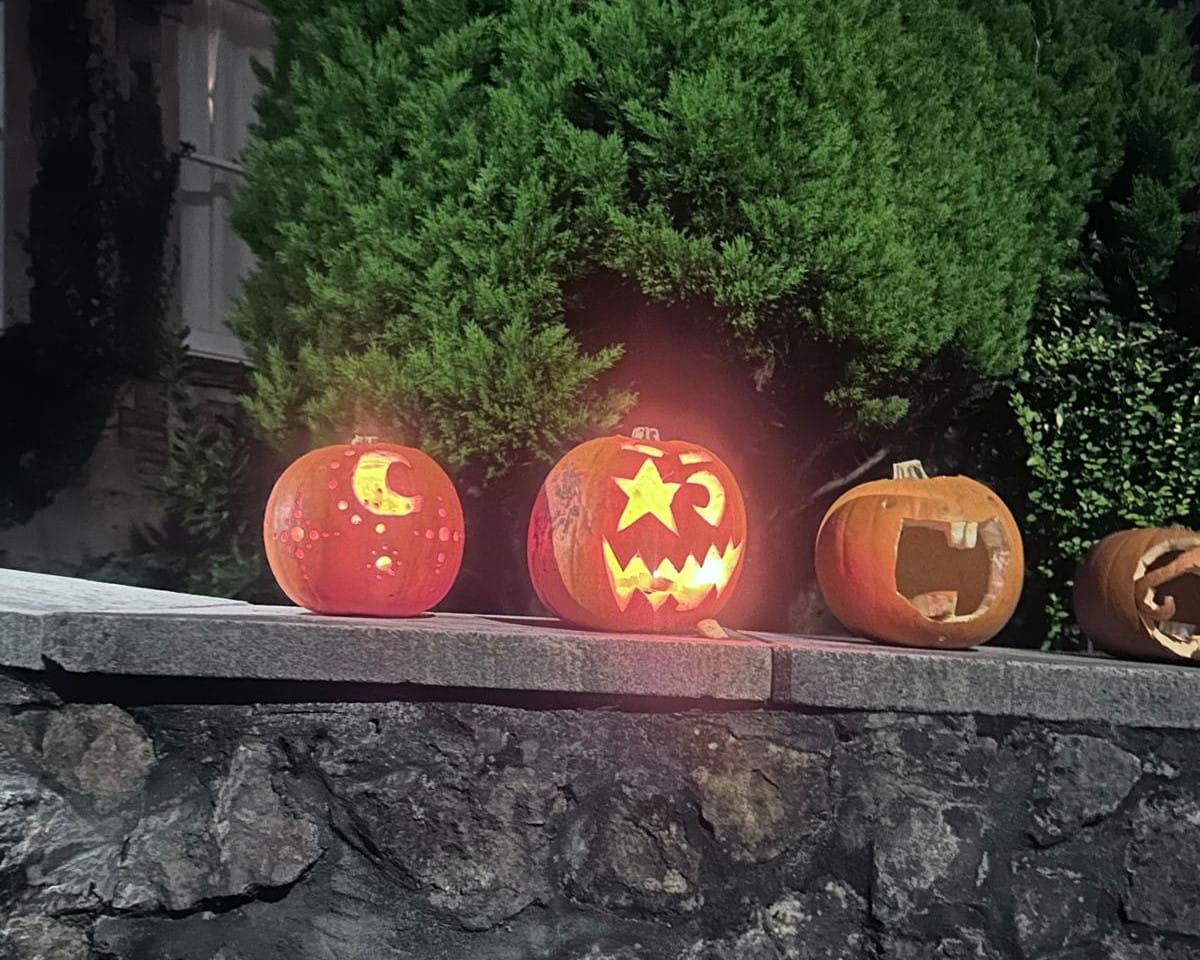
Featured image: Epigram/ Anna Dodd