
By Nyx Osborne Sandford, News Subeditor, and Hannah Roberts, News Subeditor
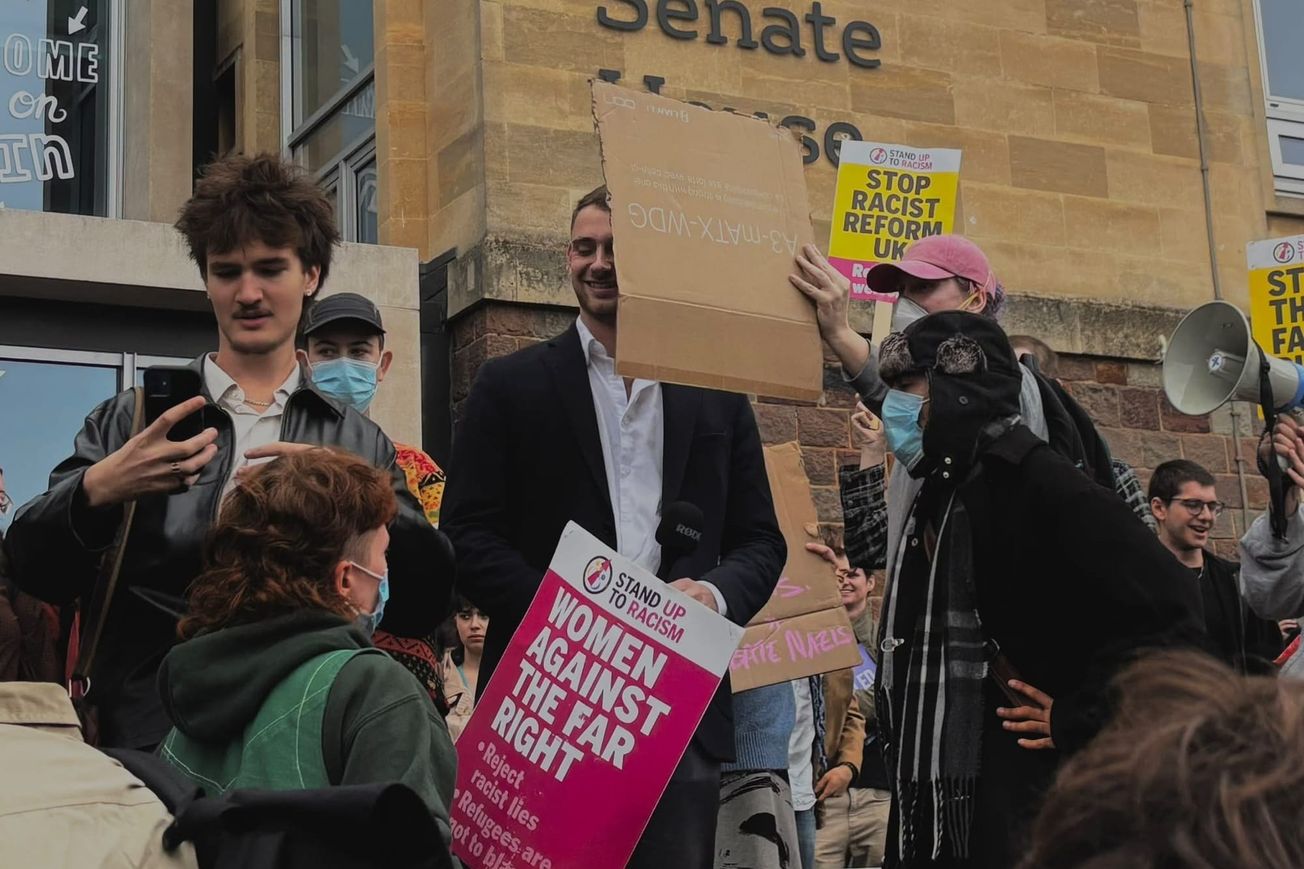
At 1pm on Tuesday, students set up at the entrance to Royal Fort Gardens, carrying French flags and chanting in support of student protesters in France.
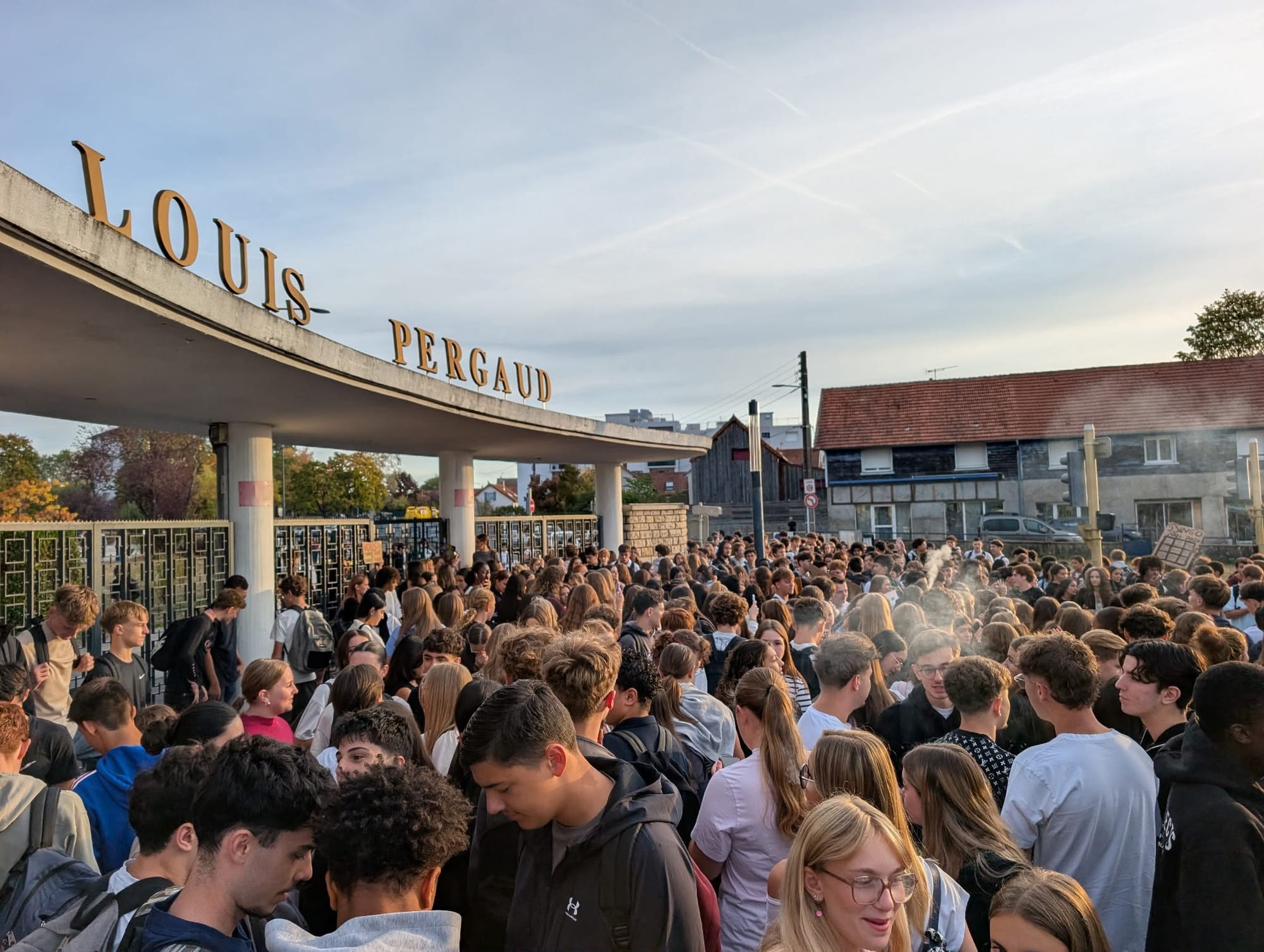
The students organised to show support for striking French students and staff in the third week of national protests, which started as local strikes against French Prime Minister Lecornu’s proposed €54 billion budget cuts but have since grown as protesters resist police violence.
Protests were inflamed by the brutal response of the CRS, the National Police's riot squad, which included blindings with rubber bullets, broken jaws and lost teeth, and a 15-year old boy’s hand being blown off by a tear gas grenade.
On campus, Bristol’s French Society and Socialist Workers’ Student Society waved flags, gave speeches, and chanted French and English slogans in support of French students.

Epigram spoke to Bristol students Elliot and Josh about why they decided to show support for French students: ‘I’m here at the protest today because of the violence and police repression that we’re seeing in France,’ said Elliot.
Both of French origin, they spoke of the need for students to show solidarity with French students facing violence, such as plain-clothes police officers attacking protesters - a concern shared by Amnesty International, who published a statement on Monday calling on the government to ‘stop the disproportionate police response.”

Epigram also spoke remotely with a Bristol student currently studying in France in her year abroad about the direct impact of the protests on French students and educators.
Sadie, who was working as a language assistant at a collège (middle school) and lycée (high school) before strikes shut both down, found herself in ‘quite a surreal’ situation.
Although she hasn’t taken part in protests on advice from the University, for fear of losing her work visa, Sadie described the protests as ‘admirable,’ suggesting that British students should ‘take a page out of France’s book’ and ‘be vocal about budget cuts, because we’re the ones affected.’
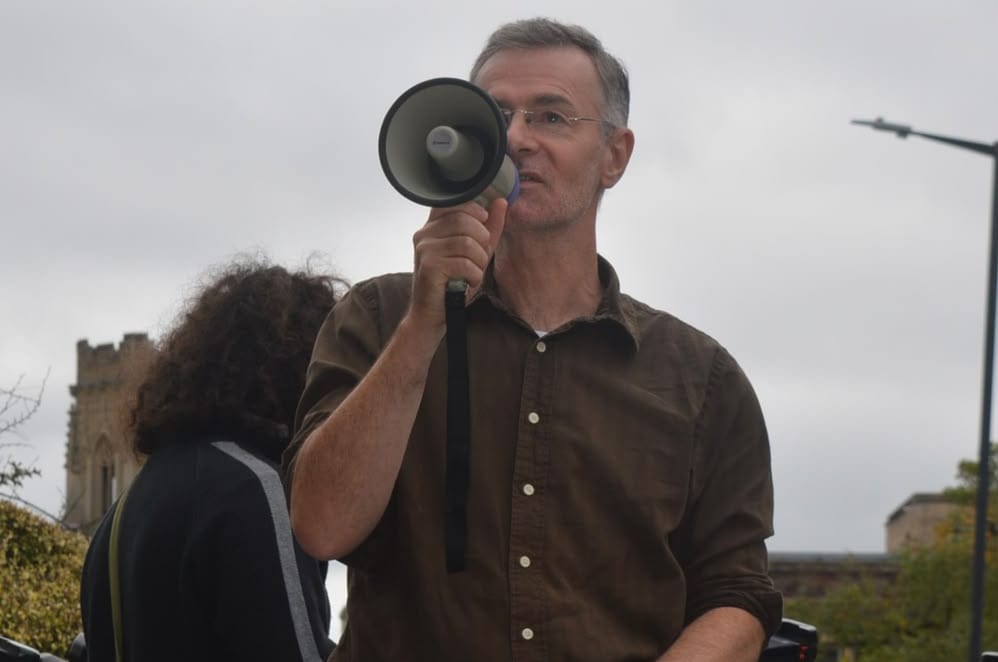
At Bristol’s protest, a lecturer and UCU member spoke about how British higher education was in ‘the same situation’ as French education: ‘UK higher education is in terminal crisis.’
Referring to recent voluntary severance schemes offered to several Schools, he claimed that universities ‘care about profit more than education’ and called on students to resist cuts for the sake of their education, echoing the feelings of French students protesting dilapidated and crowded schools: ‘Cuts in staff numbers have a bad effect on students. It means more crowded lecture theatres. It means more stressed out staff.’
An administrator at one of the University’s Engineering schools, who wished to remain anonymous, addressed Bristol students at the protest: ‘Your education is getting worse because it is profitable for senior management at your university.’
Budget cuts and department closures aren’t limited to the University of Bristol: QMUL counts 90 British universities that have announced redundancies since 2023, while in France all 75 public universities have fallen into budget deficits in 2026, up from 33 at the end of 2024.
The protest ended with chants of ‘Students and teachers must unite / education is a human right’ and ‘Tout le monde déteste la police’ - the latter heard increasingly loudly across France in the past weeks.
A Bristol SU spokesperson said:
‘We recognise that recent events in France have generated strong feelings and discussion across our student community. Students have the right to peacefully express their views and take part in a lawful protest, and we support them in exercising those rights.’
A University of Bristol spokesperson said:
‘As part of a prudent approach to managing our finances we routinely take focused actions to respond to changing student demand and research income streams, and to deliver our services more effectively and efficiently.
‘The university is in constant dialogue with our trade unions about any proposal that may affect staff. We are committed to working with them to find ways of delivering any necessary staffing changes through voluntary means where possible, and to supporting our staff.’
Featured Image: Epigram / Oscar Francke Coco