By Suzanne Célérier, Second Year, Politics and International Relations
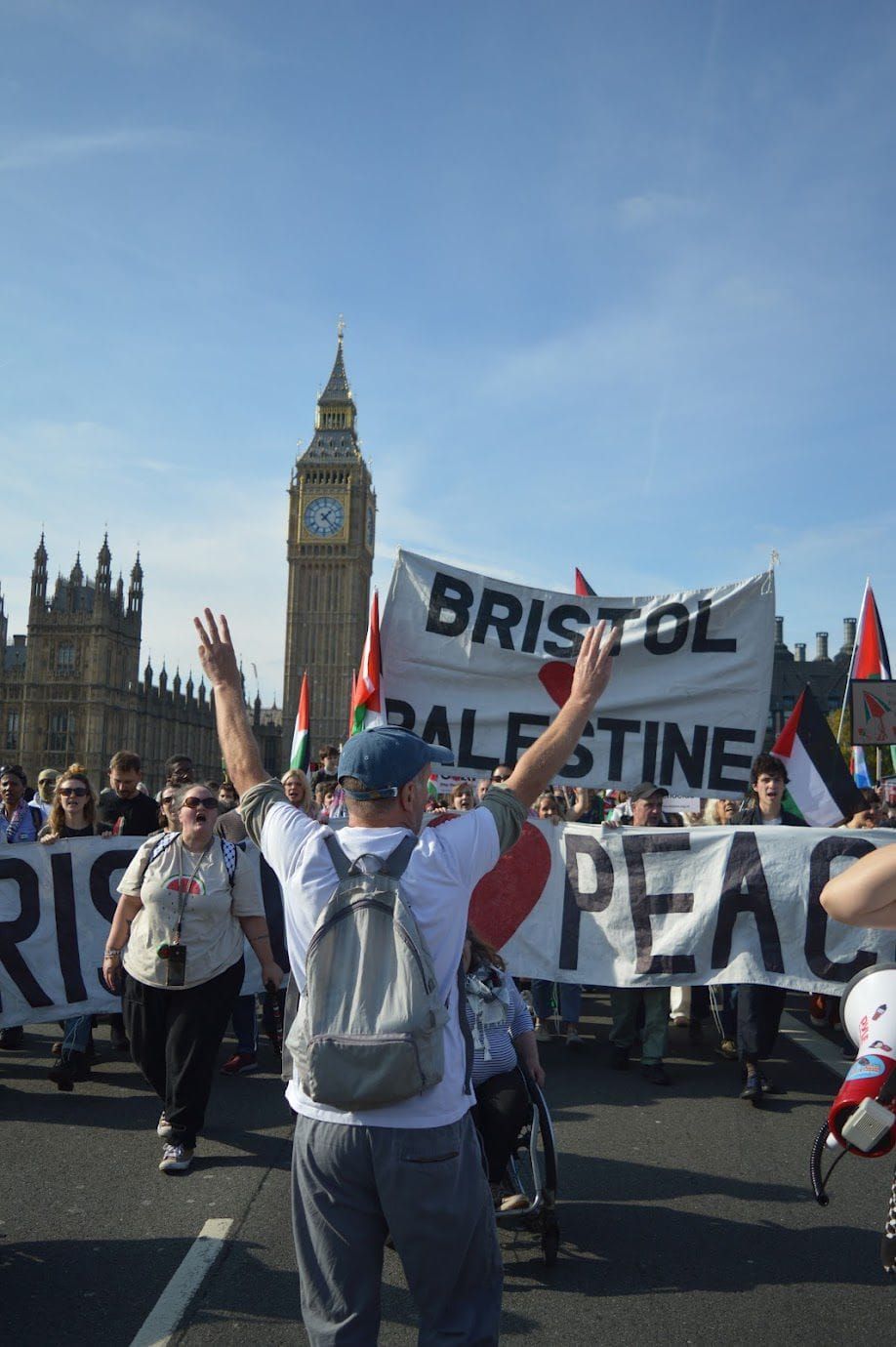
After demonstrating regularly since the 7th of October, and relentlessly denouncing the inhumanity of the Israeli military operation in Gaza, there were still 500,000 people in London on 11 October, despite the signing of the ceasefire. Among them were more than 600 of us from Bristol.
The work came from local collaborations, with a coalition front of the Palestine Solidarity campaign (PSC), Bristol Stop the War and Friends of Al-Aqsa UK. These collectives have successfully rallied people from three cities, Weston-Super-Mare, Bath, and Bristol with a total of eleven coaches. I was there during this massive protest which gathered for four hours, to raise a collective voice and denounce the two years of the genocide in Palestine. This legal term has been recognised as legally applicable for the Gaza offensive by multiple international NGOs like Amnesty International.
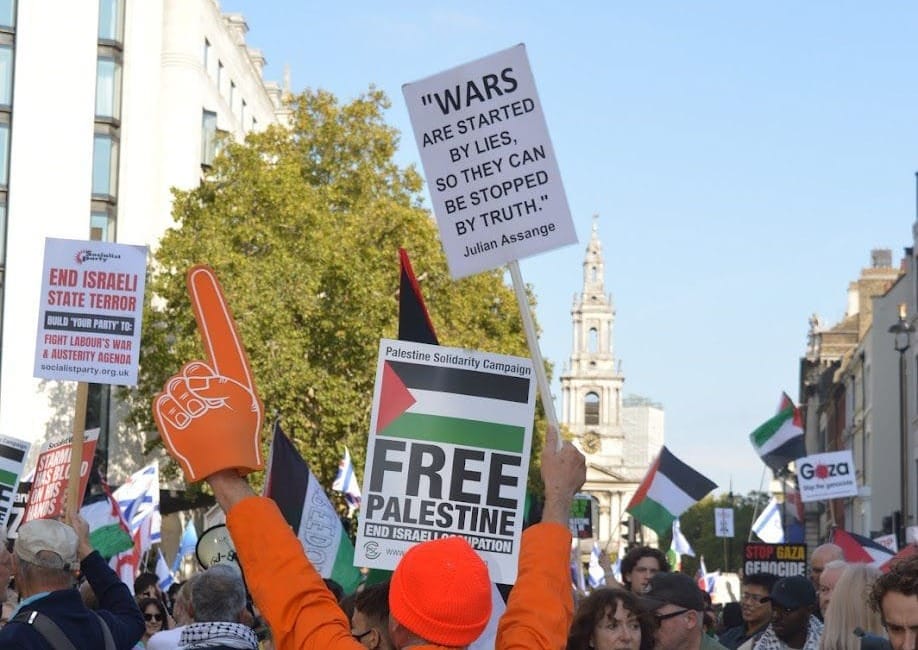
The general sentiment was to make a broader call beyond supporting the recent ceasefire. Crucially, to express rejection towards foreign involvement for the post-conflict reconstruction of Palestine, embodied by the plan put forward last month by the jokingly ambitious Donald Trump and the well-known Tony Blair. This was inevitably criticised by numerous speakers, among them was Jeremy Corbyn who strongly declared that ‘the only people who should govern Gaza and the West Bank are Palestinians.’ The general secretary of the PSC union cited UN statistics about malnutrition and said that ‘our hearts are with the Palestinian people’, while stressing the need for the ‘perpetrators to be brought to justice.’
This protest was met with little political contestation with no more than 100 counter protesters, (according to my own approximation) mainly waving Israeli, American, British and St George's cross flags. They were positioned right at the end of the demonstration route, near Waterloo Bridge, at the corner of Wellington Street. The separation was established with a line of police men and women surrounding them to calm potential clashes and attempted interactions.
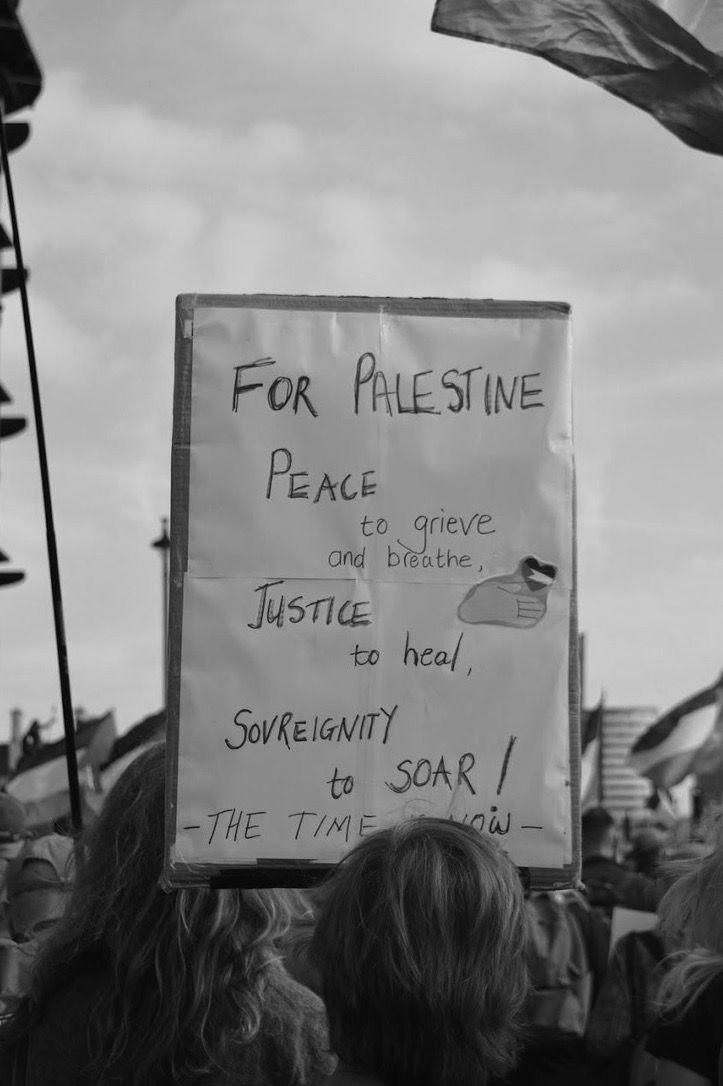
These initiatives for Palestine are just as important on a local scale in Bristol. In fact, since the beginning of the year 2025, protests have been happening one after another in the city. From raising awareness and denouncing the genocide perpetrated by the Israeli army in the Gaza strip, to counter protest members of groups like Bristol Patriots or Bristol Says No to Migrants. Collectives join forces and step up their commitments and campaigning alongside Bristol residents to encourage local activism.
The main source to find out about coming activism events are Whatsapp groups. For example, the day of action that was announced on the 25th of July which gathered activists to bang pots and pans in unison to denounce the genocidal campaign of starvation imposed on Gaza, on the Cascade Steps. More recently, an event took place at College Green on the 8th October and was shared through the BAFZ group. This peaceful remembrance gathered in the name of the Palestinians victims, in collaboration with Stop the War and PSC and demonstrates the significance of peaceful action. This event holds power in its form by emotionally touching the audience, with the integration of musical and poetic performances. Individual commitments matter as well to demonstrate support towards the Palestinian cause, which can be as simple as signing a petition (the number of signatories have reached 4,000 to the BAFZ group’s pledge.)
 Luke Buckland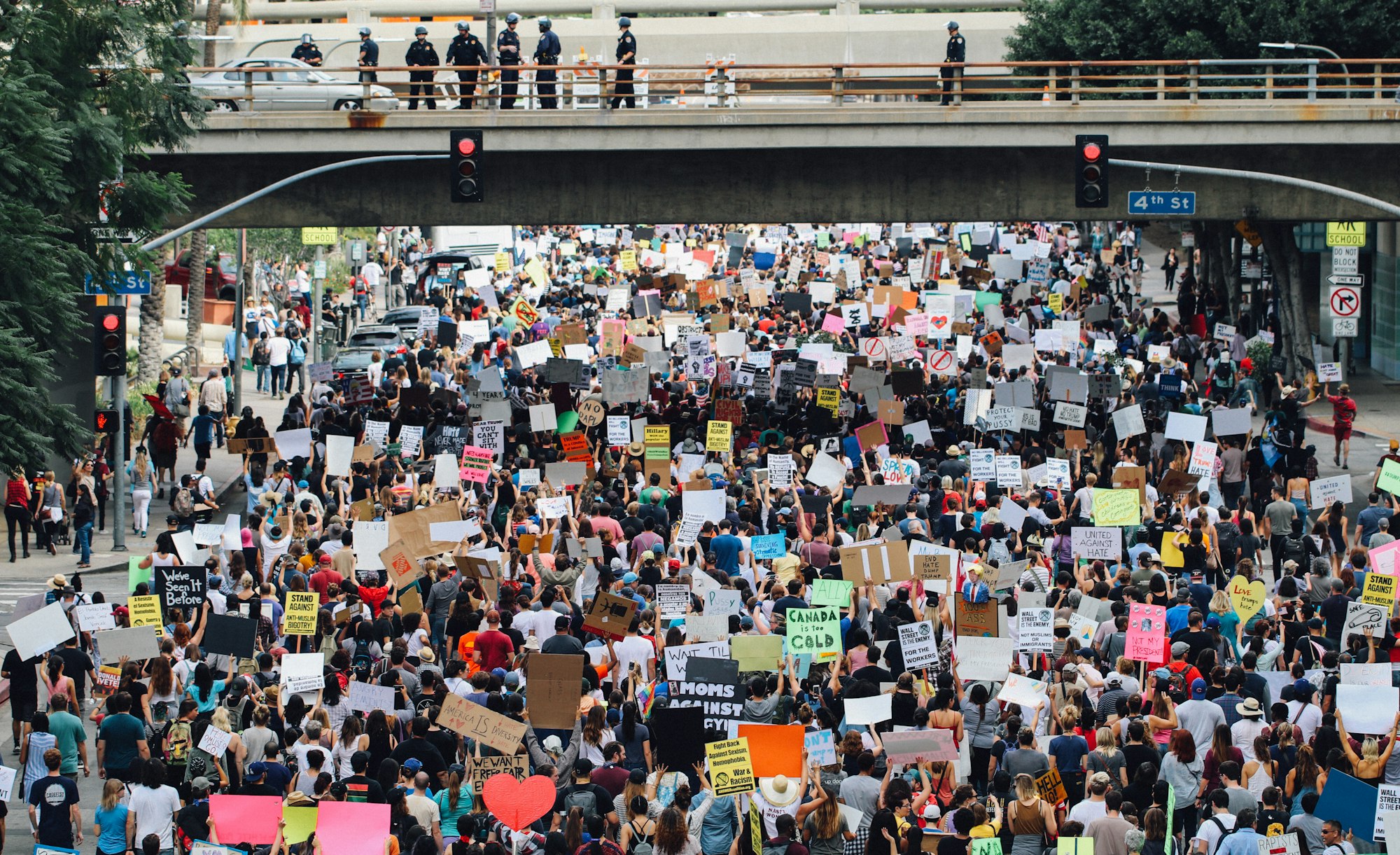
 Cara Hene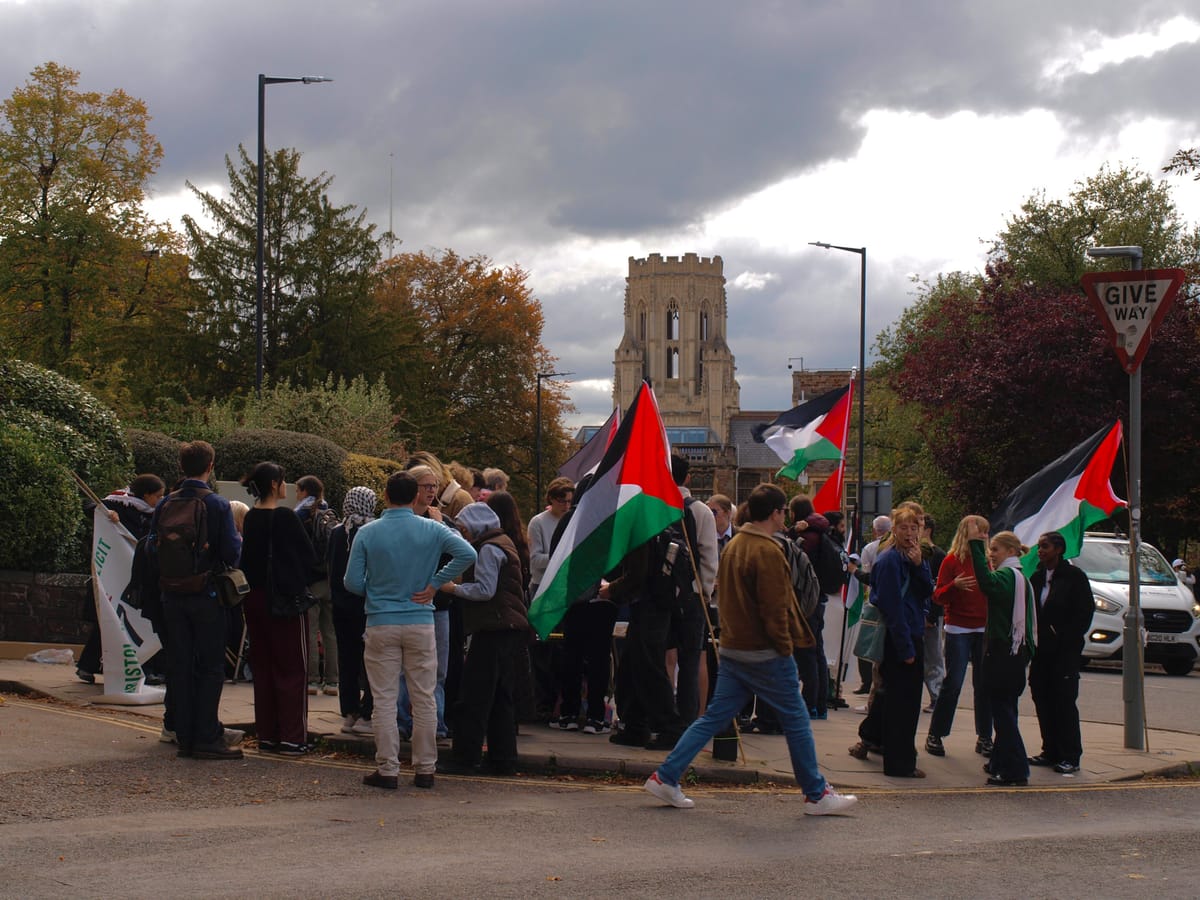
What remains one of the most active forms of youth engagement in Bristol are social initiatives organised by University of Bristol and University of West England students. From boycotting the computer university IT system put in place, to organising gatherings to denounce the university’s financial ties to defence companies while coordinating with activist groups like Palestine Solidarity Campaign. This also includes rallies calling for a boycott of coffeehouse chains accused of complicity with Israel, like Costa Coffee which is owned by Coca Cola, a company included on the Boycott Divest Sanction list. It works through the effectiveness of youth movements being efficiently coordinated thanks to social media. The notion of community behind shared social causes is widely shared as it touches the minds of every individual, particularly in light of this genocide that has been exposed on devices of the youngest members of society. Student pressure is managing to sway university boards of directors, not only in the UK but around the globe; the impact of student’s constant fight for recognition of direct universities' complicity to Israel resonates strongly.
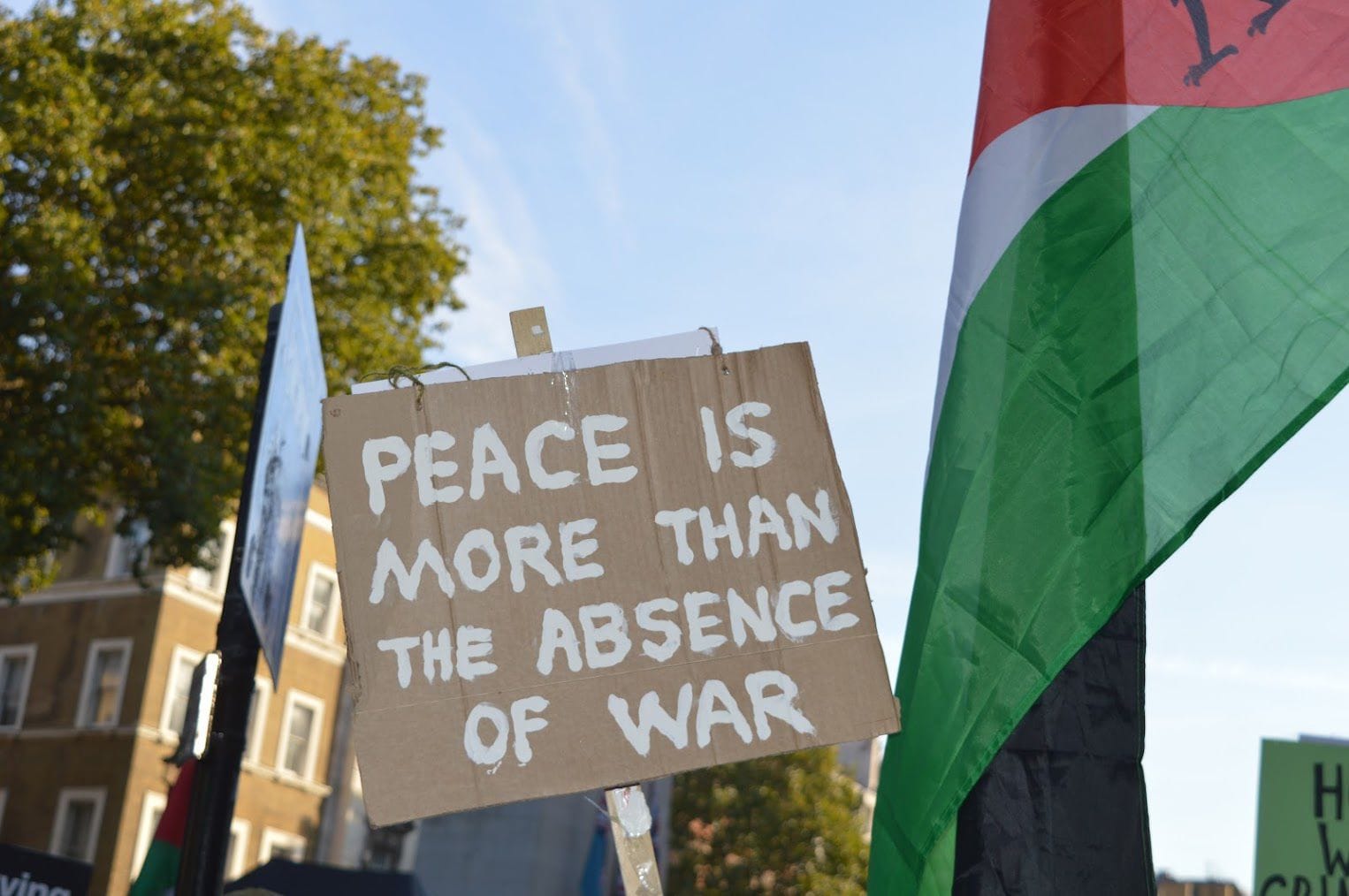
These peaceful events are part of a broader strategy, demonstrations are effective and can be part of change, specifically through repeated collective social uprising. The pillar for it is not only the good organisation part, but the lack of violence, showing up in large numbers, joined together in songs of resistance, to create a voice that is as striking as those of insignificant physical blows.
Featured Image: Epigram / Suzanne Célérier
Why do you think local activism important?